


Why Choose HANSA UHMW-PE Rod
- Custom UHMW Rod up to 200 mm Diameter
- Certified quality: ISO 9001 certified,Food-Grade UHMW Rod (FDA Compliant), RoHS & REACH compliant, SGS test reports available
- Fully integrated in-house production — dedicated compression molding, extrusion, and CNC machining workshops under one roof
- Flexible worldwide shipping: FedEx, DHL, UPS, and more
- Fast lead times: in-stock UHMW rod with Fast 7-Day Lead Time, custom specifications ship in 15–20 business days
What is UHMW-PE Rod
Molecular Weight Grades
UHMW PE rod (ultra-high molecular weight polyethylene rod) is available in four molecular weight grades: 3 million, 5 million, 7 million, and 10 million. The higher the molecular weight, the greater the wear resistance and wear performance — and the higher the cost per grade.
Colors & Customization
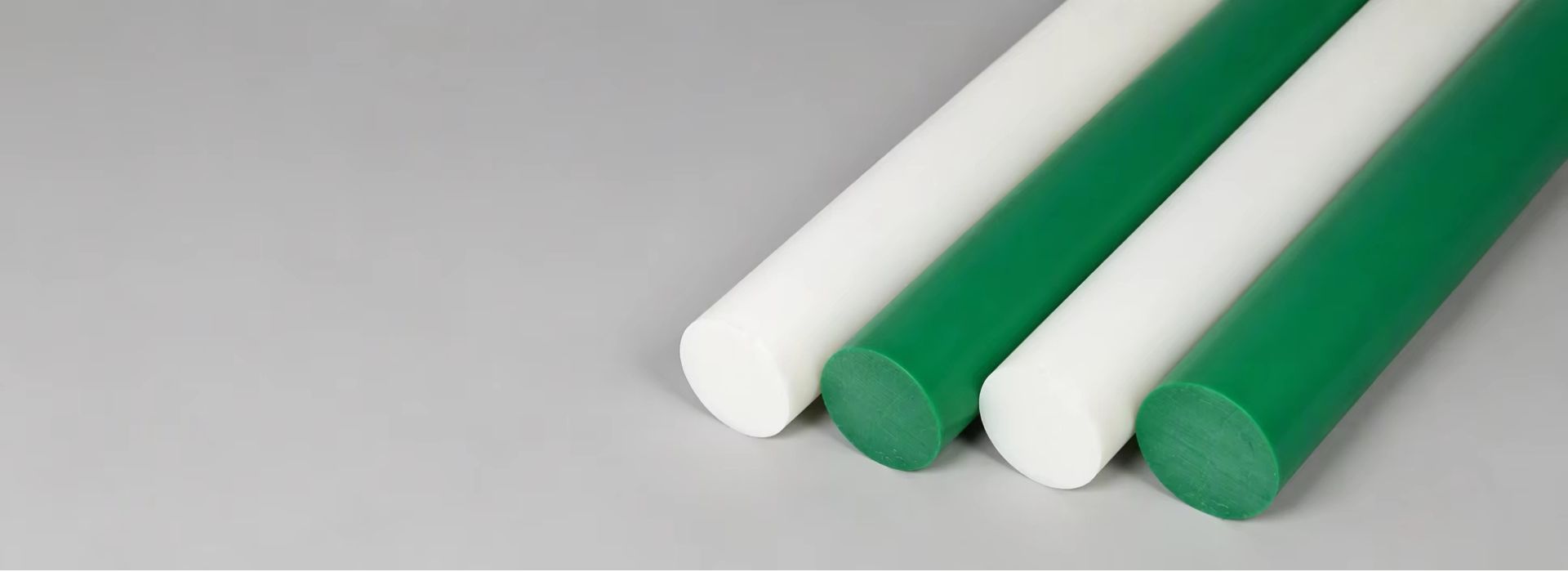
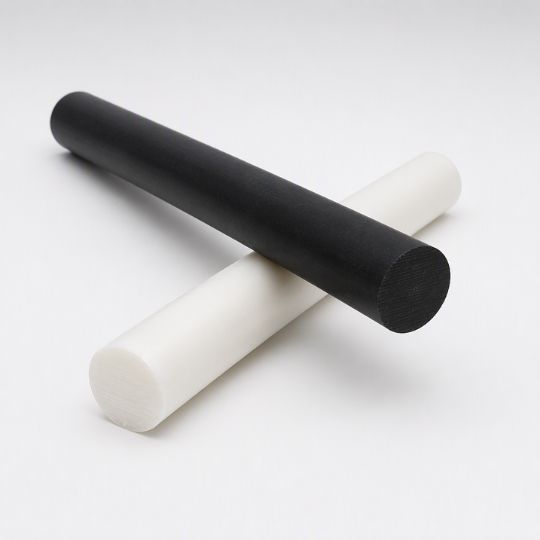
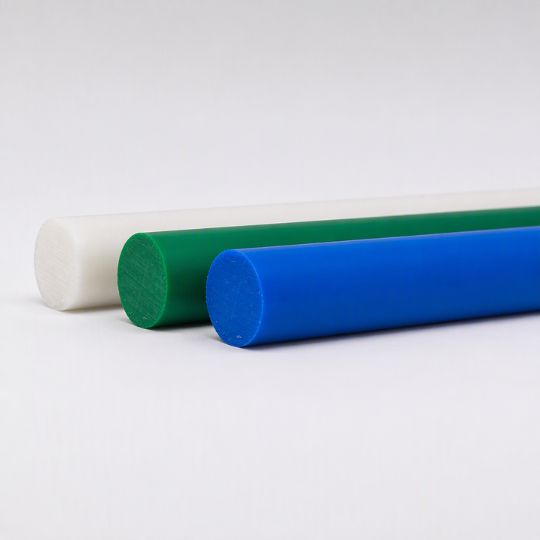
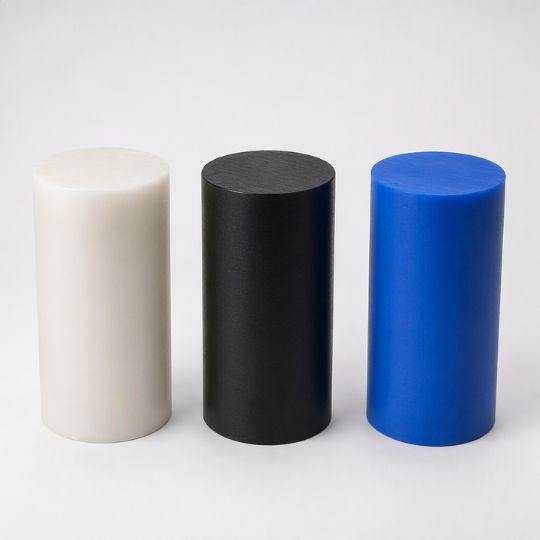
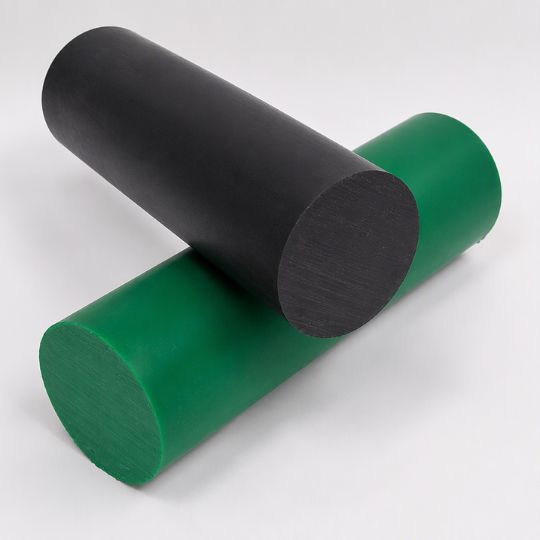
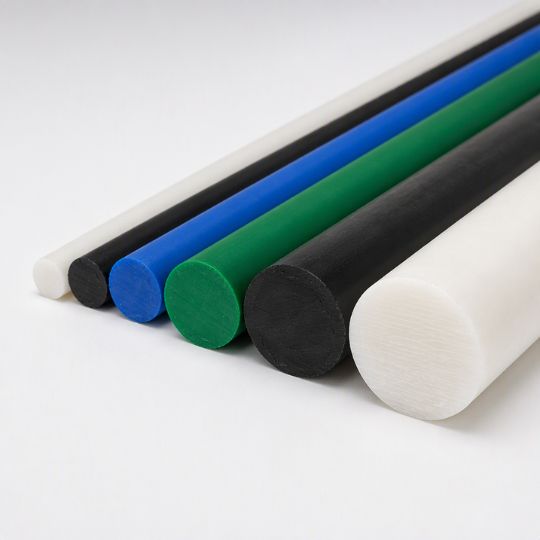
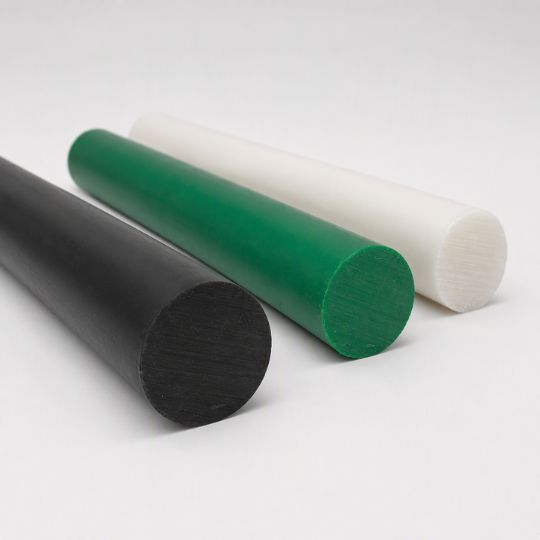
UHMW-PE rod can be produced in a wide range of colors. Natural (white) UHMW rod is the standard base material; black, green, and blue are our regular stock colors. HANSA also offers custom color matching, custom color UHMW rod MOQ 300 kg
Why UHMW Rod Performs
With molecular weights in the millions, UHMW rod delivers excellent wear resistance and withstands continuous friction. UHMW also has a low coefficient of friction — approximately 0.1–0.14 — which is why UHMW-PE is the material of choice in any application involving friction, abrasion, or high wear. UHMW-PE also offers excellent chemical resistance, low-temperature performance, and low moisture absorption. For detailed performance data, see the UHMW-PE properties table below.
In-House Machining
HANSA operates its own machining workshop and offers a full range of processes, including cutting, turning, drilling, thermoforming, welding, surface finishing, and CNC machining. Our UHMW rod is cut burr-free and chip-free with a clean, dust-free finish that meets FDA food-grade standards.
Shapes of UHMW Rod
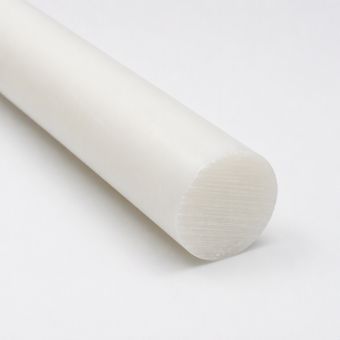
HANSA extrudes UHMW-PE round rod in 20–200 mm, in natural, black and color grades. Low friction, high abrasion resistance. Choose your diameter and length.
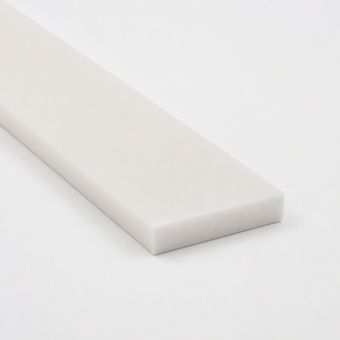
HANSA flat bar UHMW bolts down more easily than round profiles — for your wear plates, liners and chute lining. Cut to size.
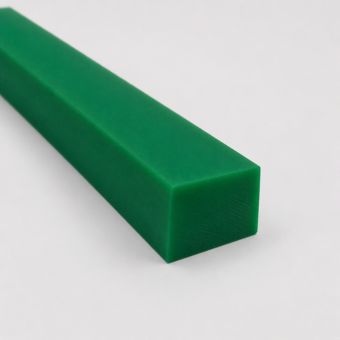
HANSA rectangular UHMW-PE bar stock for your pads, blocks, guides and wear parts. Machine it in-house, or send us your drawing.
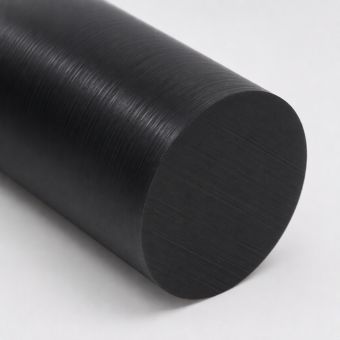
HANSA mills your UHMW rod to ±0.02 mm on machined features, so parts fit the shaft, bore or seat first time.
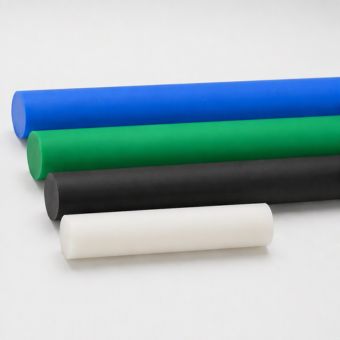
Send HANSA your cut list — diameters, lengths, quantities. In-stock UHMW rod stock leaves within 7 days. Discounts from 300 kg.
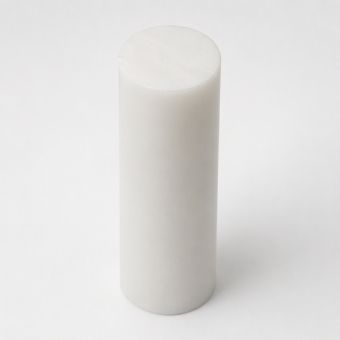
HANSA UHMW plastic rod replaces bronze, nylon and steel in your wear applications: self-lubricating, corrosion-free, quiet. Supplied 20–200 mm.
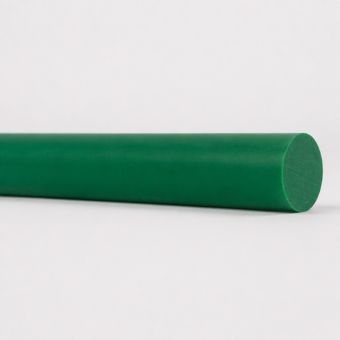
UHMW polyethylene rod from HANSA in virgin, reprocessed and UV-stabilized grades, plus antistatic and food-contact options. Certificates come with your order.
Colors of UHMW Rod
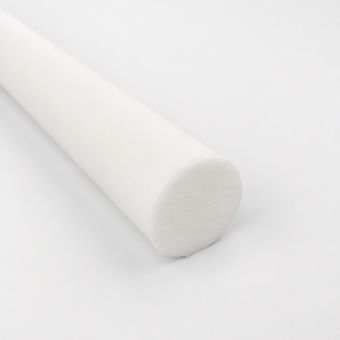
HANSA natural UHMW, also called white, has the highest impact strength and abrasion resistance. For your outdoor parts, specify black instead.
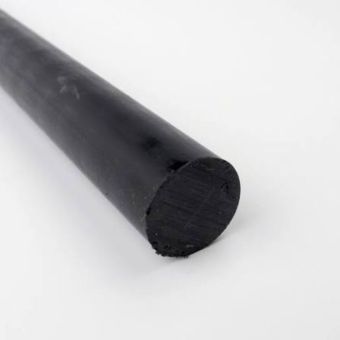
For your outdoor and UV-exposed parts, HANSA black UHMW rod holds color and light resistance better than natural grade. 20–200 mm.
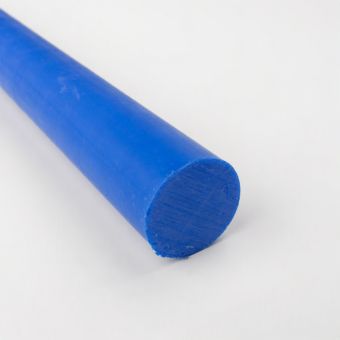
HANSA blue UHMW rod lets you identify parts on sight, simplifying replacement and changeover. Same mechanical properties as natural.
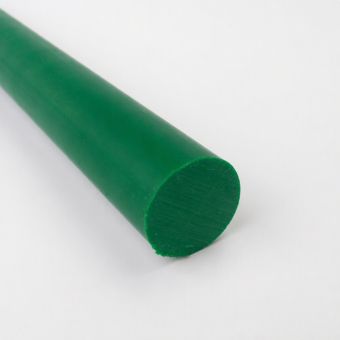
Green UHMW rod from HANSA helps you identify parts by color during maintenance and changeover. Supplied 20–200 mm, cut to length.
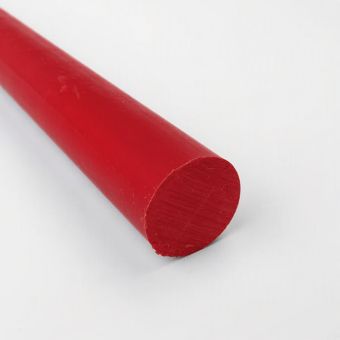
HANSA red UHMW rod gives you high-visibility wear parts — worn or missing components are easier to spot during inspection.
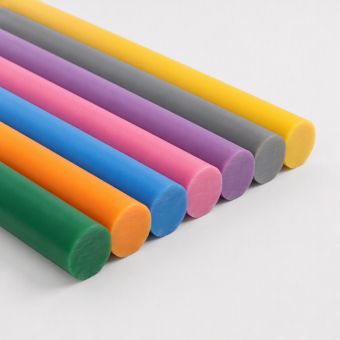
HANSA matches UHMW rod to your specification, including machine and corporate colors, from 300 kg. Send your sample or reference code.
Specifications of HANSA UHMW Rod
- UHMW-PE Rod
| NO. | Diameter (mm) | Diameter (inch) | Length (mm) | Length (inch) | Weight (kg/pc) |
| 1 | 20 | 0.79″ | 1000 | 39.37″ | 0.38 |
| 2 | 25 | 0.98″ | 1000 | 39.37″ | 0.57 |
| 3 | 30 | 1.18″ | 1000 | 39.37″ | 0.8 |
| 4 | 35 | 1.38″ | 1000 | 39.37″ | 1.07 |
| 5 | 40 | 1.57″ | 1000 | 39.37″ | 1.38 |
| 6 | 45 | 1.77″ | 1000 | 39.37″ | 1.73 |
| 7 | 50 | 1.97″ | 1000 | 39.37″ | 2.12 |
| 8 | 55 | 2.17″ | 1000 | 39.37″ | 2.55 |
| 9 | 60 | 2.36″ | 1000 | 39.37″ | 3.02 |
| 10 | 65 | 2.56″ | 1000 | 39.37″ | 3.52 |
| 11 | 70 | 2.76″ | 1000 | 39.37″ | 4.07 |
| 12 | 75 | 2.95″ | 1000 | 39.37″ | 4.65 |
| 13 | 80 | 3.15″ | 1000 | 39.37″ | 5.28 |
| 14 | 85 | 3.35″ | 1000 | 39.37″ | 5.94 |
| 15 | 90 | 3.54″ | 1000 | 39.37″ | 6.64 |
| 16 | 95 | 3.74″ | 1000 | 39.37″ | 7.39 |
| 17 | 100 | 3.94″ | 1000 | 39.37″ | 8.17 |
| 18 | 105 | 4.13″ | 1000 | 39.37″ | 8.99 |
| 19 | 110 | 4.33″ | 1000 | 39.37″ | 9.85 |
| 20 | 115 | 4.53″ | 1000 | 39.37″ | 10.75 |
| 21 | 120 | 4.72″ | 1000 | 39.37″ | 11.68 |
| 22 | 130 | 5.12″ | 1000 | 39.37″ | 13.68 |
| 23 | 140 | 5.51″ | 1000 | 39.37″ | 15.83 |
| 24 | 150 | 5.91″ | 1000 | 39.37″ | 18.14 |
| 25 | 160 | 6.3″ | 1000 | 39.37″ | 20.6 |
| 26 | 170 | 6.69″ | 1000 | 39.37″ | 23.22 |
| 27 | 180 | 7.09″ | 1000 | 39.37″ | 26 |
| 28 | 190 | 7.48″ | 1000 | 39.37″ | 28.94 |
| 29 | 200 | 7.87″ | 1000 | 39.37″ | 32.03 |
Wear parts that slide, rub or corrode: bushings, bearings, shaft sleeves, conveyor rollers, guide rails, wear strips, star wheels, augers, chain guides and dock fenders.
-200 to +80 °C (-328 to 176 °F) in service. Above +80 °C (176 °F) UHMW-PE loses the mechanical properties you specified it for, and no UHMW grade recovers them — for hotter duty, specify PTFE or PEEK rod.
Extruded rod is supplied oversize: roughly +0.4 mm to +3 mm depending on diameter, and never undersize. Machine the allowance away to your finished diameter; HANSA holds ±0.02 mm on machined features.
It machines easily with sharp tooling, but UHMW-PE is soft, so tool pressure and heat must be controlled or the part deflects. Treat clearances as a function of service temperature, not as metal tolerances.
Not with standard adhesives — its very low surface energy prevents a reliable bond. Design for mechanical fastening; if bonding is unavoidable, activate the surface first and pair it with a low-energy-polyolefin adhesive system.
Virgin is unfilled UHMW-PE with the highest toughness and purity, and is the grade for food-contact parts. Reprocessed is lower-cost recycled-content material for non-food wear applications.
Yes, and the compliance documentation is supplied with your order. See our compliance documentation page.
300 kg per order. In-stock items ship within 7 days; custom parts ship in 15–20 working days.
UHMW Rod: What It Is and When to Specify It
A UHMW rod is a solid round bar of ultra-high molecular weight polyethylene (UHMW-PE) — the same polymer as UHMW-PE sheet, supplied as round stock so you can machine bushings, rollers, guides and wear parts directly from the bar. You will also see it written UHMWPE rod or UHMW polyethylene rod; all names mean the same material.
Specify UHMW rod for wear, not for load. UHMW-PE is one of the toughest, lowest-friction thermoplastics you can machine, but its strength and stiffness are low and it moves with temperature. If your part slides, rubs, squeaks, corrodes or wears out the metal it runs against, it is usually the cheapest answer you can buy. If it carries structural load, it is the wrong answer. HANSA has extruded and machined this material since 1995, so the guidance below comes from the production floor rather than from a catalogue.
Round Stock or Sheet? Where the Material Savings Are
Most buyers start from sheet because that is what a cut-to-size catalogue lists first — and for round parts, that is an expensive habit. Turning a bushing, bearing, roller or auger out of sheet means cutting away everything outside the circle, while round rod lets you buy the diameter you need and machine the profile you need. On a repeated 100 mm (3.94 in) bushing run, the material you throw away is not marginal.
The practical rule: flat parts and liners → uhmwpe-sheet; round, turned and cylindrical parts → UHMW rod.
Where UHMW Rod Pays for Itself on the Line
These are the applications where UHMW rod has replaced bronze, nylon, rubber and mild steel — usually because maintenance hours, not material cost, drove the decision:
| طلب | Why UHMW rod wins there |
| Bushings, bearings, shaft sleeves | Self-lubricating — no grease point, no oil on product |
| Conveyor rollers and idler wheels | Wears without scoring the shaft; lighter than steel, so less drive load |
| Guide rails and wear strips | Low friction cuts drag and power draw on long runs |
| Star wheels, sprockets, change parts | Machined to your drawing; quiet running, no sparking |
| Augers and screw conveyors | Non-stick surface releases sticky bulk product |
| Chain guides — sawmills, mining, grain | Outlasts steel in abrasive service and will not rust |
| Dock fenders and pile guards | Replaces timber: does not rot, splinter or absorb water |
If your part sits in bulk material handling, packaging machinery, food processing, marine construction or heavy equipment, that table is your shortlist. HANSA machines these parts from rod stock in-house — see our application mechanical-engineering و application food-and-beverage pages.
The Tolerance Trap: Why Machined UHMW Parts Move
This is the most common cause of a failed UHMW part, and almost nobody warns buyers about it. UHMW-PE has a relatively high coefficient of thermal expansion. A part that measures dead-on in a temperature-controlled inspection room will close up on its shaft after a shift at elevated temperature, or open up in a cold store. Nothing is wrong with the material or the machining — the drawing simply assumed metal-like dimensional stability.
Two rules keep your part in spec:
- Do not specify metal clearances on a plastic part. Size the fit to the temperature the part actually sees.
- Machine and measure at service temperature where the fit matters.
Where your geometry must be tight, HANSA machines UHMW-PE parts to ±0.02 mm on machined features, with dimensional inspection before dispatch.
HANSA extrudes the rod in-house, and it arrives oversize — that allowance is deliberate: it is the material you machine away to reach your finished diameter. Expect roughly +0.4 mm to +3 mm depending on diameter: the larger the diameter, the wider the band. A 50 mm (1.97 in) extruded rod typically arrives between 50.6 and 51.8 mm (1.99–2.04 in). Rod is never supplied undersize, because an undersize bar leaves you no finishing allowance at all. So specify the finished diameter you need, not the diameter you expect to receive.
Send your drawing with the operating temperature on it, and we will flag the fits that will move — see uhmw-parts.
Can You Glue or Weld UHMW Rod?
Straight answer: gluing UHMW is hard, and you should design as though it is impossible. UHMW-PE has a very low surface energy, so ordinary adhesives do not wet the surface and form only a weak bond. The same non-stick property that makes the rod slide so well makes it resist bonding, printing and painting.
What works, in order of preference:
- Mechanical fastening first. Bolts, pins, keyed or dovetailed joints, retaining plates or a machined shoulder. Most successful UHMW assemblies are built this way.
- Surface activation plus a specialty adhesive where bonding is unavoidable. Flame, corona or plasma treatment raises surface energy enough for a low-energy-polyolefin adhesive system to grip — treatment and adhesive must be chosen as a pair.
- Welding is possible with specialised equipment and procedure, but joint preparation decides the result more than the material does.
Other limits to know before you commit a design: UHMW-PE serves from -200 to +80 °C (-328 to 176 °F), it has poor dimensional stability, and it cannot be thermoformed. Above +80 °C (176 °F) it loses the properties you specified it for, and no grade of the material brings them back. If your duty cycle runs hot, send HANSA your operating temperature and contact pressure — we will confirm the right grade or move you to ptfe-rod أو peek-rod, which handle heat UHMW-PE does not. For more strength and stiffness at moderate cost, nylon-rod is the usual alternative. Our guide to UHMW vs HDPE covers where the two polyethylenes diverge.
How to Choose the Right Grade
A wrong grade fails for reasons that have nothing to do with machining. Four questions settle it:
- Does the part touch product? Specify food-contact compliant UHMW-PE and keep the compliance documentation with the shipment — see our food-grade plastics guide.
- Does it sit in permanent sunlight? Dock fenders, marine wear strips and outdoor guides need a UV-stabilised grade; standard natural will degrade.
- Does static build-up matter? Conveyor and guide parts running against moving product in dust or solvent environments need an antistatic grade. Antistatic rod is produced to order, and its surface resistivity is established by test on the produced material rather than quoted as a fixed catalogue figure — tell us the target your application requires.
- Is cost driving the decision? Reprocessed UHMW rod suits non-food wear parts; virgin is the default where you need maximum toughness and purity.
Colour is a maintenance decision as much as an aesthetic one: colour-coded rod lets anyone on your floor identify a part on sight, which shortens replacement and changeover. HANSA matches custom colours to your specification from 300 kg per colour.
How to Order: Diameters, Cut Lists and Lead Times
To quote your UHMW rod accurately, HANSA needs three things from you: diameter, length and quantity. Everything else follows.
- Diameter range: 20–200 mm (0.79–7.87 in) — the standard UHMW rod range, supplied in metric sizes and matched to inch requirements on request.
- Extruded rod tolerance: supplied oversize — roughly +0.4 to +3 mm (+0.016 to +0.118 in) depending on diameter, never undersize. Machined features are held to ±0.02 mm.
- Service temperature: -200 to +80 °C (-328 to 176 °F).
- Colours: natural (white), black, blue, green and red; custom colours matched to your specification.
- Cut to length: send a cut list — diameter × length × quantity — and rod is cut to your list rather than shipped as random lengths.
- Minimum order: 300 kg.
- Lead time: in-stock items ship within 7 days; custom parts ship in 15–20 working days.
- Grades: virgin, reprocessed, UV-stabilised, antistatic and food-contact compliant.
For the wider rod range across other polymers, start from plastic-rod. If your specification falls outside the standard 20–200 mm band, or your volume calls for an OEM programme, send your drawing and annual volume and we will quote against it. Every order you place is backed by the inspection and documentation process on our quality-assurance page.
Send Your Drawing, Get a Quote
Send your drawing, cut list or operating conditions and HANSA will come back with the grade, the diameter, the tolerance and the ship date. HANSA has manufactured engineering plastics in Yangzhong, Jiangsu since 1995 and has exported since 2005, extruding UHMW-PE rod in-house in 20–200 mm diameters alongside PTFE, PEEK and nylon. Contact us with your diameter, length and quantity and you will have your quote the same working day.

 Arabic
  English
  Tibetan
  German
  Spanish
  French
  Hindi
Hindi  Indonesian
  Italian
  Japanese
  Korean
  Dutch
Dutch  Portuguese
  Thai
Thai  Russian
  Swedish
  Chinese