


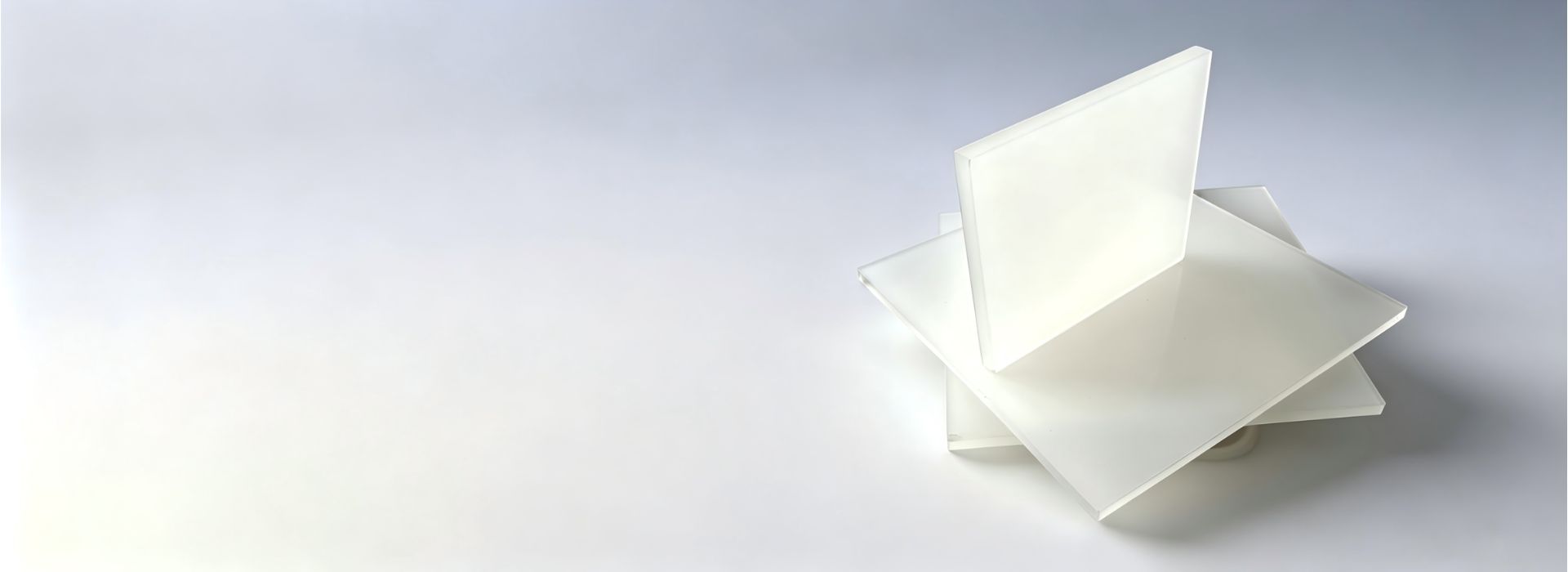
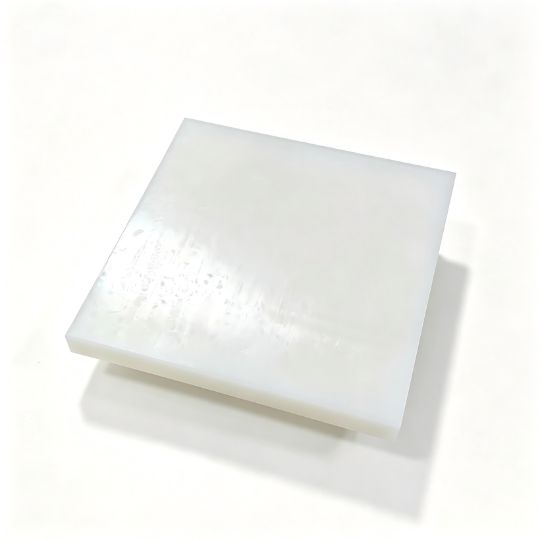
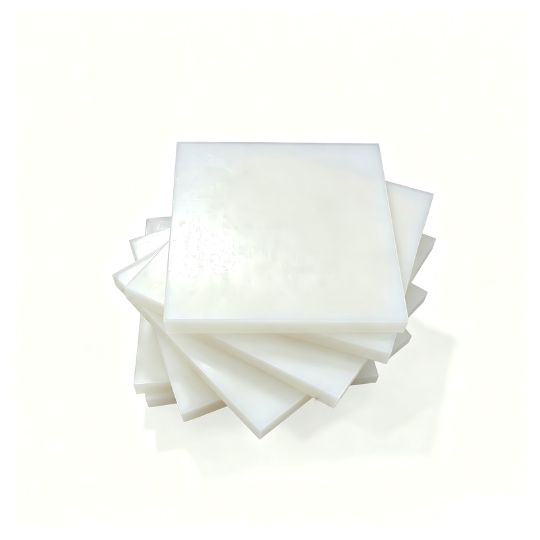
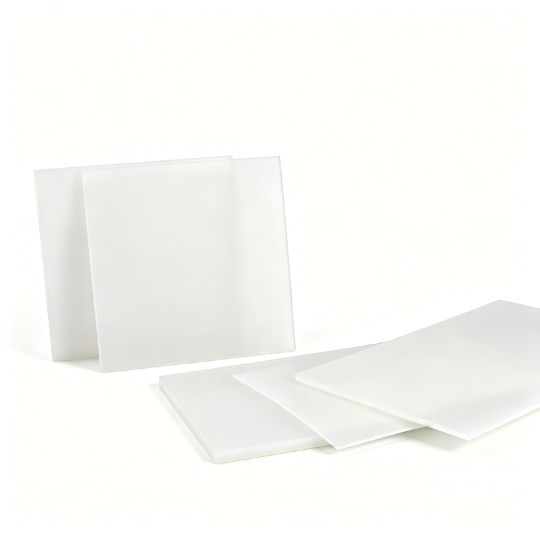
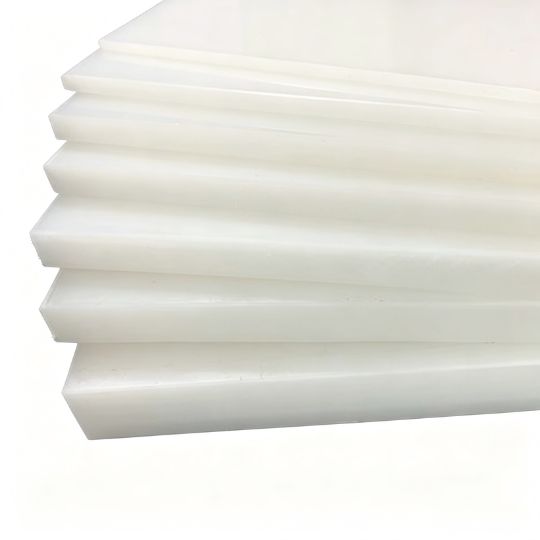
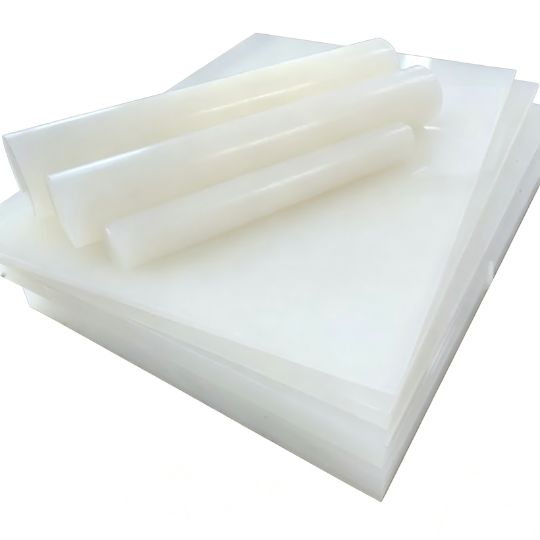
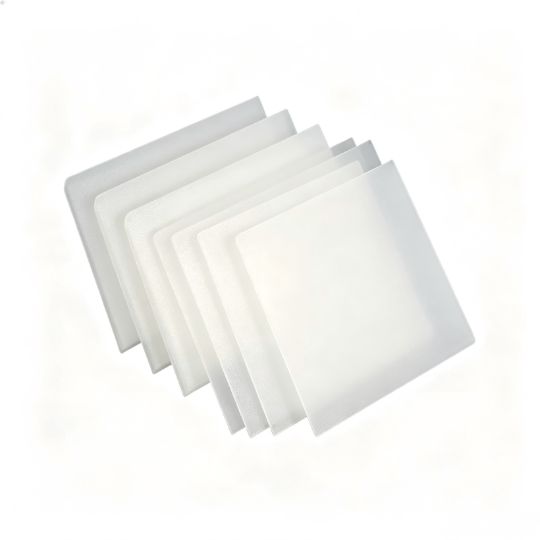
Why you need PVDF Sheet
- PVDF Sheets resist corrosion even in highly aggressive chemical environments.
- PVDF Sheets maintain excellent dimensional stability during machining and fabrication.
- Long service life means fewer shutdowns for maintenance and part replacement.
- HANSA provides one-stop PVDF Sheet manufacturing and machining services.
- HANSA’s PVDF sheets hold certifications such as ISO, RoHS, REACH, and FDA.
What is PVDF Sheet?
PVDF (Polyvinylidene Fluoride) has a long-term service temperature range of -62°C (143.6°F) to 50°C (302°F). It has a relatively low melting point of around 170°C, which allows for excellent processability. PVDF can be easily formed using a variety of methods, including injection molding, compression molding, extrusion, and blow molding.
Thanks to its outstanding chemical resistance, PVDF sheets are widely used as corrosion-resistant linings in harsh chemical environments. In addition, PVDF offers high mechanical strength and can maintain structural integrity even under moderate load and pressure at elevated temperatures, making it ideal for applications such as chute liners, sliding guides, and wear-resistant plates.PVDF sheet also provides excellent electrical insulation properties and is commonly used in transformers, motors, and cable insulation systems.
With over 30 years of experience in plastic sheet manufacturing, HANSA produces a wide range of engineering plastics including PVDF. We also offer custom machining services, equipped with laser cutting, milling, turning, CNC machining, bending, and bonding capabilities.We support OEM and private label production, and deliver highly competitive pricing to help you maximize cost efficiency and overall value.
Which PVDF Sheet Thickness Do You Need
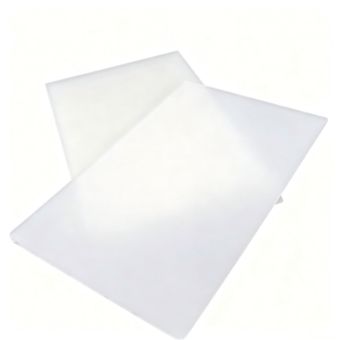
Lightweight and easy to thermoform for corrosion-resistant lining systems.
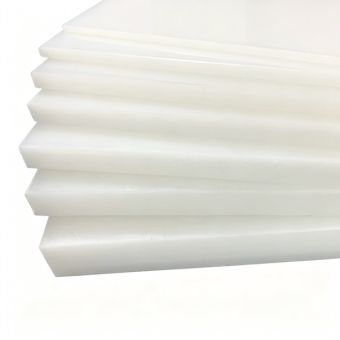
Excellent dimensional stability for CNC machining and fabricated components.
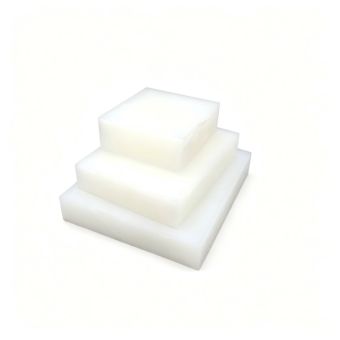
Enhanced rigidity and durability for long-term demanding environments.
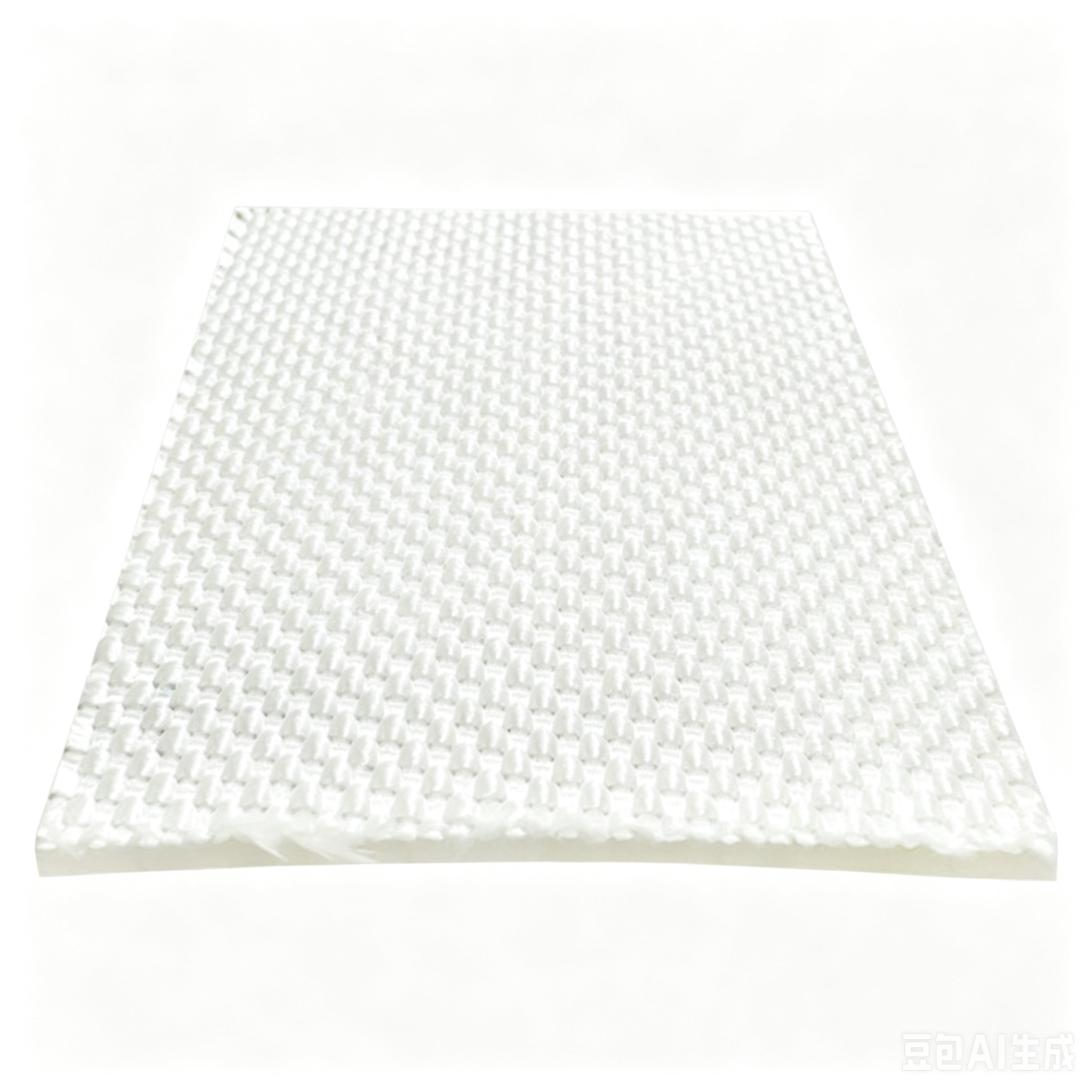
It is commonly used as corrosion-resistant lining materials for chemical tanks, scrubbers, ducts, and process equipment.
Why You Need PVDF Sheet
PVDF possesses numerous excellent properties and is widely used in the chemical, semiconductor, and electronics industries, among others.

PVDF resists strong acids and alkalis, making it a common corrosion-resistant lining material for storage tanks and chemical reactors.

PVDF can typically operate continuously up to 150°C (302°F).

PVDF sheets perform well in outdoor environments and are resistant to cracking, yellowing, and aging caused by UV exposure.

Naturally flame resistant, with typical UL94 V-0 performance for demanding industrial applications.

PVDF offers good mechanical strength and maintains structural integrity under moderate load and pressure.

Easy to weld using thermoplastic welding methods, enabling strong and leak-free fabrication.

High material purity makes PVDF suitable for semiconductor and high-cleanliness applications.

Excellent dielectric properties make PVDF widely used as insulation in wires, cables, transformers, and electrodes.
One-Stop PVDF Fabrication Service
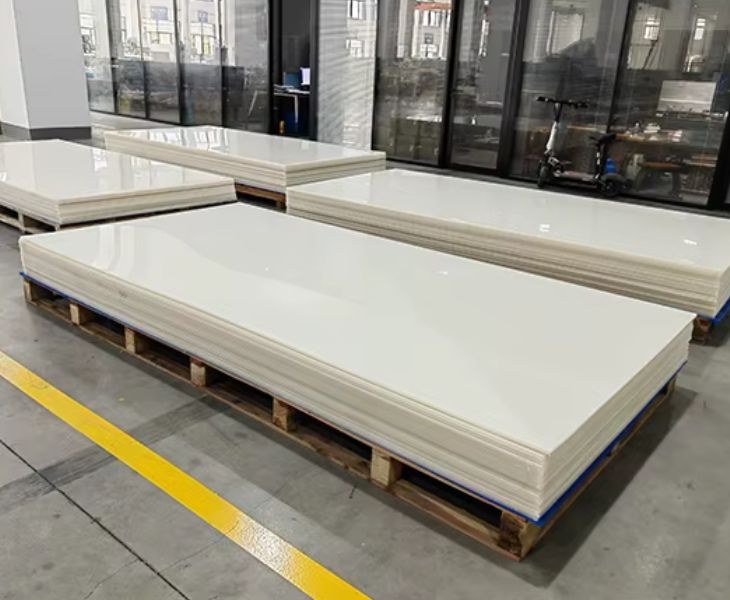
If you need to further process PVDF sheets after purchase, HANSA can help you eliminate that extra step. With our in-house machining capabilities, we can directly fabricate PVDF sheets into finished parts right after production.HANSA offers CNC machining, cutting, drilling, welding, thermoforming, and full fabrication services. This helps you save both time and labor costs, while improving overall production efficiency.
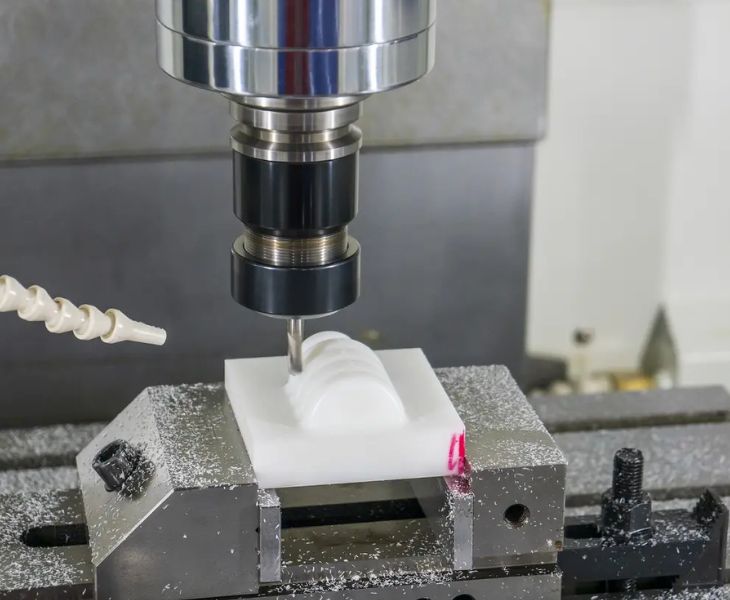
OEM Manufacturing Support
We keep standard PVDF sheet sizes in stock for fast delivery, including 1000×2000 mm, 1220×2440 mm, 1500×3000 mm, and 2000×4000 mm.If you need non-standard dimensions, HANSA also offers full customization. We can produce PVDF sheets in different thickness ranges, lengths, widths, and colors to meet your specific application requirements.
Precision Quality Control
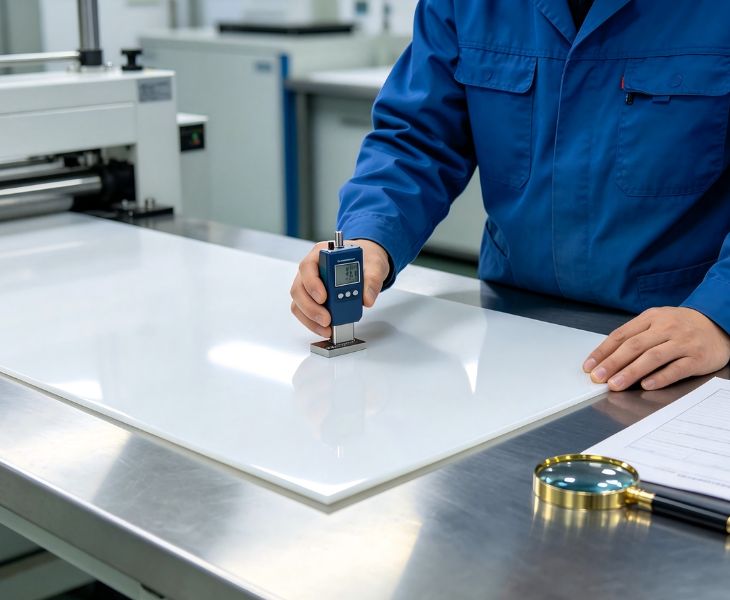
HANSA maintains strict quality standards for every product we sell, guided by a customer-first approach and a commitment to precision.We work with stable and reliable PVDF raw material suppliers to ensure consistent quality across every production batch. Thickness tolerance is tightly controlled within ±0.1 mm.In addition, every stage of the production process is inspected and recorded, ensuring full traceability and reliable, repeatable product quality.
Custom PVDF Sheet to Skyrocket Your Brand
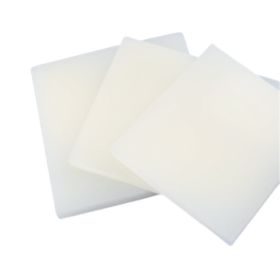
Made from 100% virgin PVDF resin, offering the highest purity and best chemical resistance. Ideal for high-cleanliness applications such as the semiconductor industry.
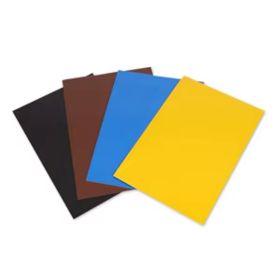
Available in common colors like white, gray, and black with added masterbatch. It provides a more stable appearance and better light-blocking properties, commonly used for building facades and protective covers.
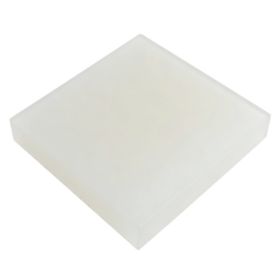
Reinforced with glass fiber to significantly improve stiffness and strength. Typically used for industrial structural parts and load-bearing components.
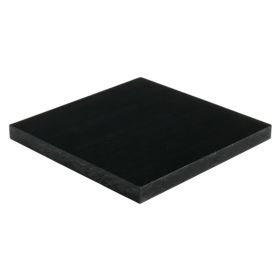
Filled with materials such as carbon fiber, PTFE, or mineral fillers to enhance specific performance characteristics depending on application needs.
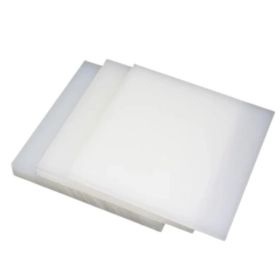
The most widely used industrial grade, suitable for general-purpose applications across multiple industries.
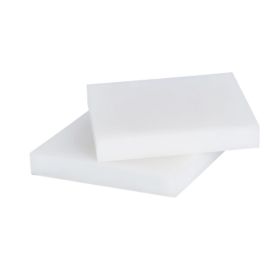
Standard industrial sheet and one of HANSA’s most common stock items, with the highest annual demand.
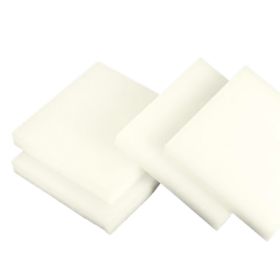
Higher density and lower internal stress compared to extruded sheets, making it suitable for high-precision machining and premium components.
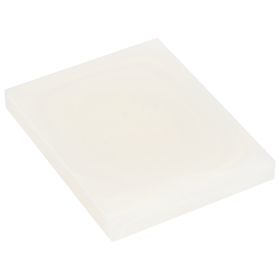
Complies with FDA hygiene standards, suitable for food processing and pharmaceutical equipment.
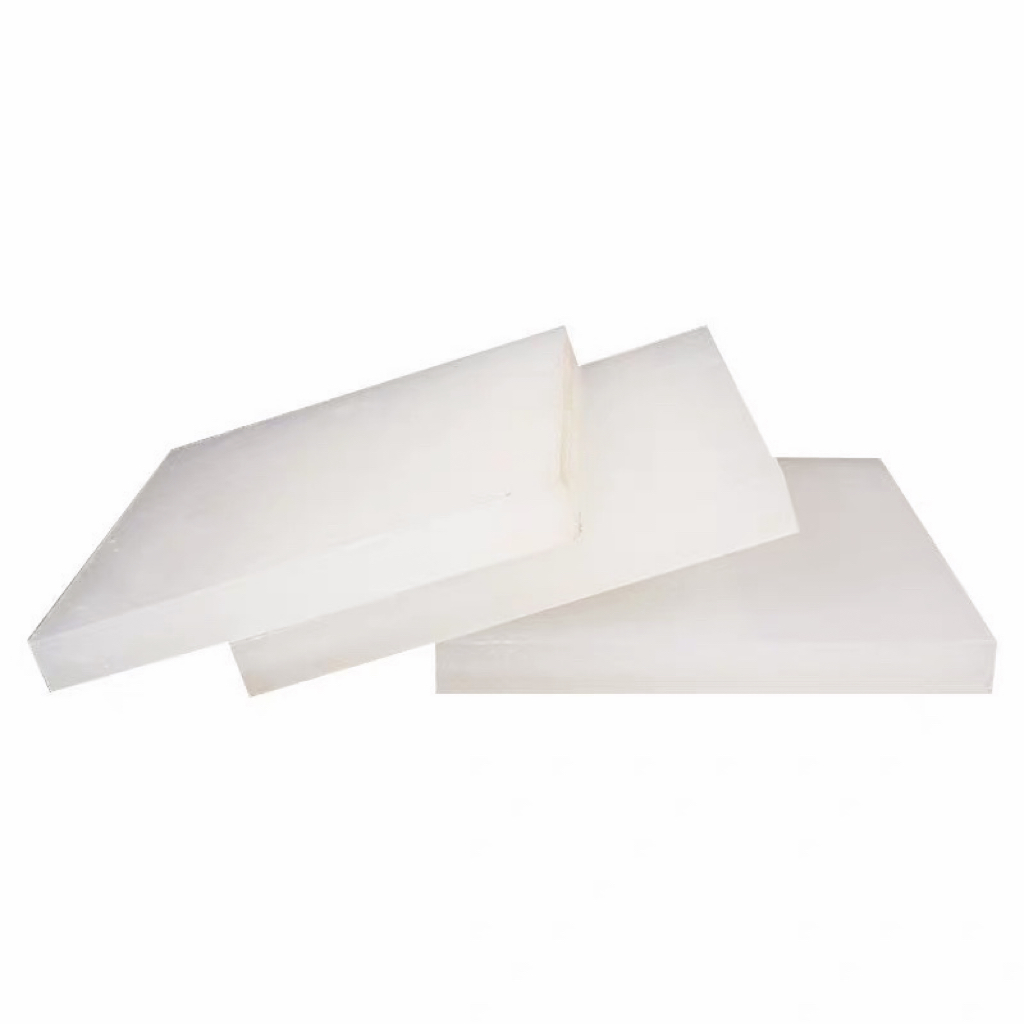
Hydrophobic and highly resistant to chemical corrosion, commonly used in ultrafiltration systems, membrane modules, and housings.
Excellent weather resistance. Suitable for long-term outdoor exposure without yellowing or cracking.
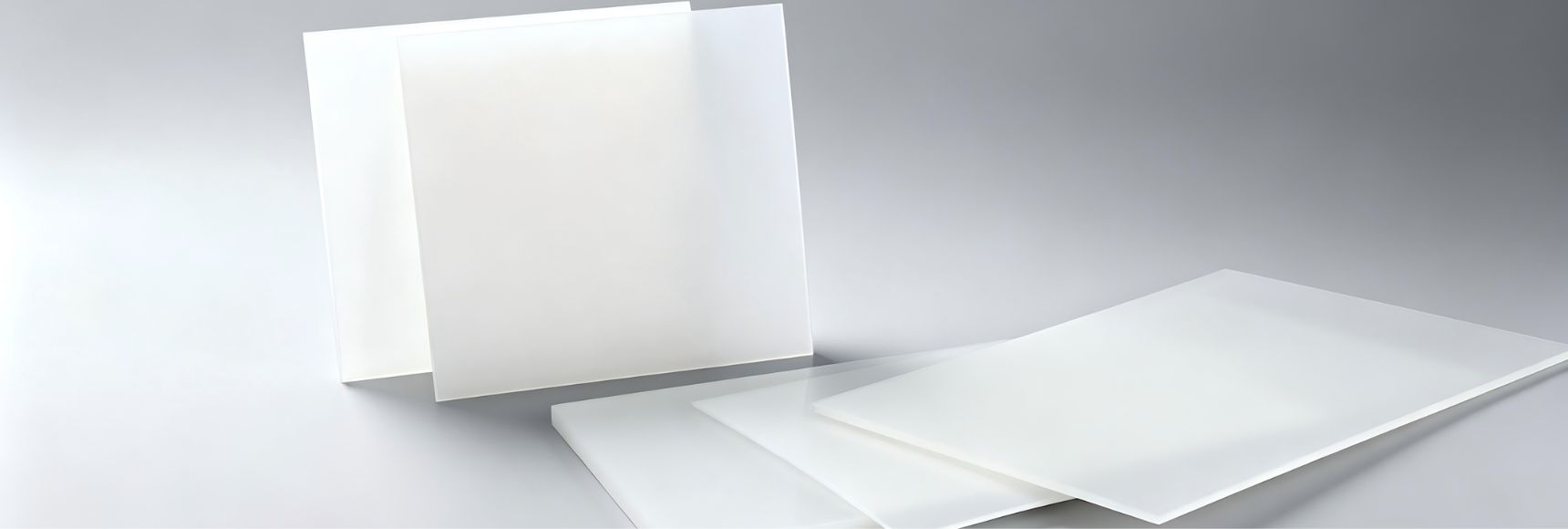
PVDF Sheet from HANSA
- ملكيات
- تحديد
| غرض | وحدة | Data |
| نقطة الانصهار | درجة مئوية | 175 |
| Glass Transition Temperature (Tg) | درجة مئوية | -35 |
| Max Continuous Service Temp | درجة مئوية | 150 |
| Min Service Temperature | درجة مئوية | -40 |
| الموصلية الحرارية | W/cm*k | 0.13 |
| صلابة | Shore D | 75-85 |
| قوة الشد | ميجا باسكال | 40-85 |
| Compression Strength | ميجا باسكال | 13-14 |
| الاستطالة عند الكسر | % | 30-50 |
| كثافة | جم/سم3 | 1.76-1.78 |
| Molding Shrinkage | % | 1.4 |
| Dielectric Constant | – | 6.43 |
| Water Absorption (24 h) | % | <0.04 |
| Volume Resistivity | Ω·cm | >1015 |
| معامل الاحتكاك | – | 0.4 |
| منتج | Width x Length (mm) | Thickness(mm) |
| PVDF Sheet | 630×2000 | 50/60/70/80/90/100 |
| 1000×2000 | 3/4/5/6/8/10/12/15/20/25/30/35/40/45/50/60/70/80/90/100 | |
| 1220×2440 | 5/6/8/10/15 | |
| 1500×3000 | 3/4/5/6/8/10/12/15/20 | |
| 2000×4000 | 3/4/5/6/8/10/12/15 | |
| PVDF fiberglass-backed sheet | 1500×3000 | 2/3/4 |
| 1500×200000 | 2/3/4 |
What Our Clients Say
-
We needed ultrapure PVDF sheets for wet processing, and HANSA’s strict tolerance control ensured extremely precise dimensions. This significantly reduced our workload and costs. Moreover, during operation, the stability of PVDF prevented any contamination of our products.
-
Previously, we used PVC linings that couldn’t resist strong acids or alkalis, which meant frequent tank replacements and maintenance. After consulting with HANSA, we switched to PVDF sheets for our tank linings. This perfectly solved the issue and lowered our maintenance costs.
-
We provided HANSA with drawings for part fabrication, and their skilled technicians delivered precise components that fit our equipment perfectly.
HANSA provides PVDF sheets with strict tolerance control. Custom sizes and thicknesses are available, with tolerances maintained within ±0.1 mm.
Absolutely. We offer CNC milling, laser cutting, drilling, welding, thermoforming, and other machining services.
Yes. The long-term service temperature of PVDF sheets is 150°C (302°F), with short-term use up to 150–170°C.
Yes. HANSA’s PVDF sheets are FDA-certified, non-toxic, and safe for use in food processing and medical equipment.
Yes. HANSA provides custom machining, OEM, and private-label services, aiming to meet your requirements while offering highly competitive pricing.
HANSA keeps standard PVDF sheet sizes in stock, such as 1000×2000 mm and 1220×2440 mm, with typical delivery in 5–10 business days. Custom sizes depend on dimensions and order quantity.
HANSA provides material test reports with full batch traceability, ensuring consistent quality across all PVDF sheet batches.
Any Other Plastic Sheets You Might Need
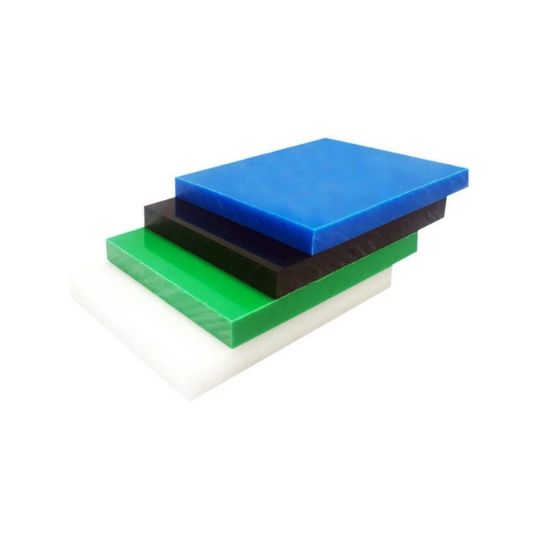
Why Choose PVDF Sheets From HANSA?
HANSA is a direct manufacturer of PVDF sheets, with our own factory and 30 years of experience in producing fluoroplastic products.
Our plastic products are widely used in industries such as chemical, semiconductor, and electronics & electrical. With deep knowledge of the end-use applications for different types of plastic products, we can provide expert guidance to help you choose the right materials for your needs.
What is PVDF Sheet?
PVDF Sheets are made from PVDF resin, also known as Polyvinylidene Fluoride, a high-performance fluoropolymer thermoplastic.
Thanks to its excellent chemical resistance, high-temperature stability, wear resistance, and electrical insulation properties, PVDF sheets are widely used in applications such as corrosion-resistant linings, chemical piping, insulation for wires and cables, medical equipment, and food processing pipelines.
What are the Types of PVDF Sheet?
- Translucent PVDF Sheet
Typically semi-transparent when the sheet thickness is ≤3 mm, allowing easy visual inspection of the interior. Suitable for optical applications.
- Milky/Opaque PVDF Sheet
The most common colors for PVDF sheets, widely used in industrial corrosion protection and applications requiring mechanical strength.
- Flame-Retardant PVDF Sheet
Added flame retardants allow the sheet to meet V-0 or V-1 ratings, ideal for applications with strict fire-safety requirements.
- Glass-Fiber Reinforced PVDF Sheet
Offers improved acid and heat resistance, and the glass fiber reinforcement makes it easier to machine.
- Extruded PVDF Sheet
Provides uniform thickness and consistency, suitable for producing large-area sheets.
- Compression Molded PVDF Sheet
Higher density and enhanced chemical resistance make compression-molded PVDF sheets ideal for high-end, demanding applications.
Why use PVDF Sheet?
PVDF offers an ideal balance of performance and cost, making it suitable for a wide range of applications.
In the chemical industry, it meets high corrosion-resistance requirements. In the semiconductor industry, it provides the purity and cleanliness needed. For medical applications involving contact with the human body, PVDF offers biocompatibility. In short, PVDF can meet the diverse demands of these industries efficiently and affordably.
What are the differences between PVDF and PTFE?
PVDF has higher mechanical strength, greater toughness, and better creep resistance compared to PTFE.
With a lower melting point, PVDF is easier to process and shape using common methods such as injection molding, compression molding, extrusion, and blow molding. In contrast, PTFE has a much higher melting point (327°C) and high melt viscosity, requiring specialized forming techniques.
PVDF is also more cost-effective than PTFE. While its chemical resistance is slightly lower than PTFE, other performance characteristics are generally comparable.
Where is the PVDF Sheet used?
Most of our PVDF sheet customers are from the chemical industry, followed by those using it to manufacture mechanical components.
Based on our experience, PVDF sheets are widely used as corrosion-resistant linings for storage tanks and chemical reactors, as well as for liquid transport piping in chemical plants. Many customers also provide us with drawings so we can custom-fabricate PVDF parts to their exact specifications.
What are the disadvantages of PVDF Sheets?
Compared to other high-performance plastics, PVDF has a relatively narrower temperature range. Its long-term service temperature is -40°C to 150°C. In extreme hot or cold environments, PVDF is less stable than PTFE or PEEK. When used continuously near 150°C, its mechanical properties may begin to decrease.
What is the Melting Point of PVDF Sheets?
The melting point of PVDF sheets is around 170°C(338℉).
Are PVDF Sheets UV Stable?
PVDF sheets have a certain degree of UV stability. While PVDF is naturally UV-resistant, prolonged exposure to strong sunlight may cause slight yellowing on the surface and a gradual decline in performance.
If you plan to use PVDF sheets outdoors under intense UV conditions for extended periods, we recommend specifying UV stabilizers when purchasing. This will help extend the material’s service life.
Can you Recycle PVDF?
PVDF is recyclable, but it requires specialized equipment and processes. Being a thermoplastic fluoropolymer, PVDF can be remelted and reprocessed into pellets or extruded for reuse.
However, it’s important to note that during thermal decomposition, PVDF may release HF (hydrofluoric acid), which must be carefully captured and treated to ensure safe handling and environmental compliance.

 Arabic
  English
  Tibetan
  German
  Spanish
  French
  Hindi
Hindi  Indonesian
  Italian
  Japanese
  Korean
  Dutch
Dutch  Portuguese
  Thai
Thai  Russian
  Swedish
  Chinese