


HDPE (high-density polyethylene) is a plastic that offers both cost efficiency and excellent performance. It ranks second in global plastic usage, behind only PP (polypropylene). That position comes not only from its outstanding mechanical properties — high stiffness and high tensile strength — but also from a complete recycling system that is now well established, which allows HDPE to be recycled and reused.
The article below will take you through a complete picture of what HDPE is, how it performs, its advantages and limitations, and its common applications, and will show you how to judge whether HDPE is the right material for your project.
What is HDPE?
HDPE, or high-density polyethylene, is a thermoplastic in the polyethylene family. It offers excellent stiffness, corrosion resistance, and processability, and its uses span both everyday household products and industrial manufacturing. The plastic bottles in your home are almost all made of HDPE or PP, and the vast majority of municipal piping, chemical plants, and wastewater treatment plants also use HDPE. In the plastic recycling identification system, HDPE is classified as No. 2 plastic. It can be reused repeatedly while maintaining stable performance, which greatly reduces production costs and environmental pollution.
What Is the Chemical Structure of HDPE?
HDPE is made by polymerizing ethylene monomer derived from petroleum. Its chemical formula is –[CH₂–CH₂]ₙ–. The molecular chains are linear, with very few branches. As a result, the chains line up more regularly, the molecules pack efficiently, intermolecular forces are stronger, and crystallinity is higher — typically around 70–90%. The benefit is higher density, hardness, stiffness, tensile strength, and resistance to chemical attack.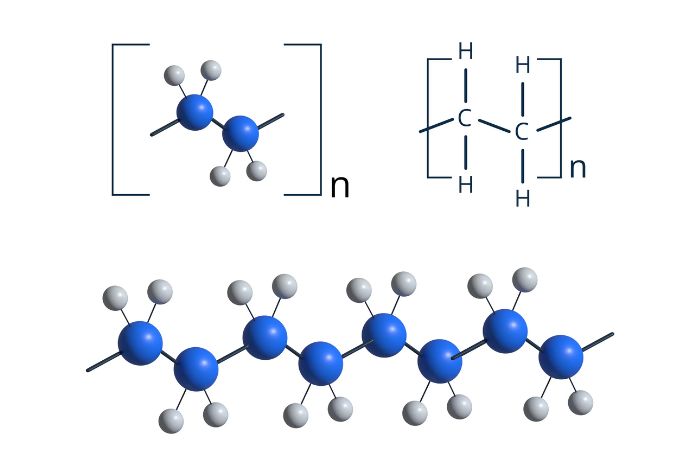
How is HDPE Synthesized?
HDPE is produced by polymerizing ethylene monomer at low temperature and low pressure. The reaction runs at roughly 60–85 °C and 10–80 bar. Industrially there are three synthesis routes, and each one produces a different form of HDPE.
Slurry process
Ethylene is dissolved in a specific solvent and a catalyst is added. Polymerization takes place, producing a slurry of suspended polymer. The slurry is then flash-evaporated to strip the solvent, and after drying the result is HDPE powder.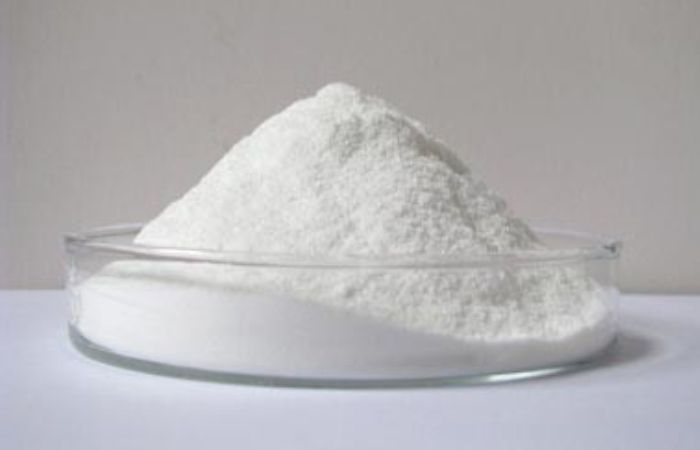
Gas-phase process
In a fluidized-bed reactor, gaseous ethylene is brought onto the surface of a solid catalyst. Polymerization takes place there and solid HDPE granules form directly.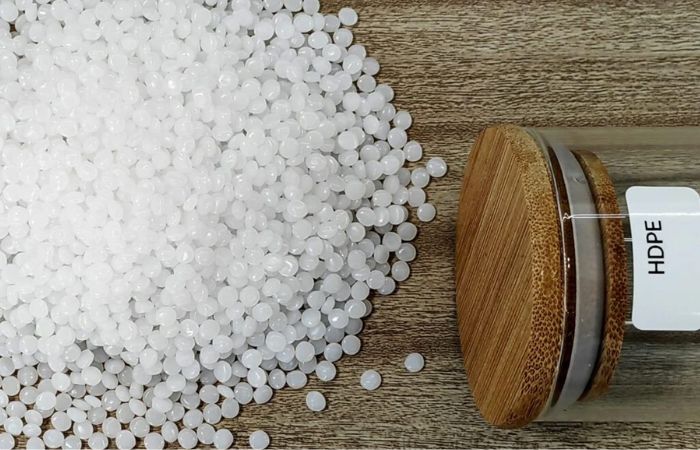
Solution process
Both the ethylene monomer and the polymer are dissolved in a specific solvent, and under high temperature and high pressure, with stirring, polymerization proceeds. The solvent and unreacted ethylene monomer are then removed by flash evaporation and other steps, leaving HDPE in a molten state.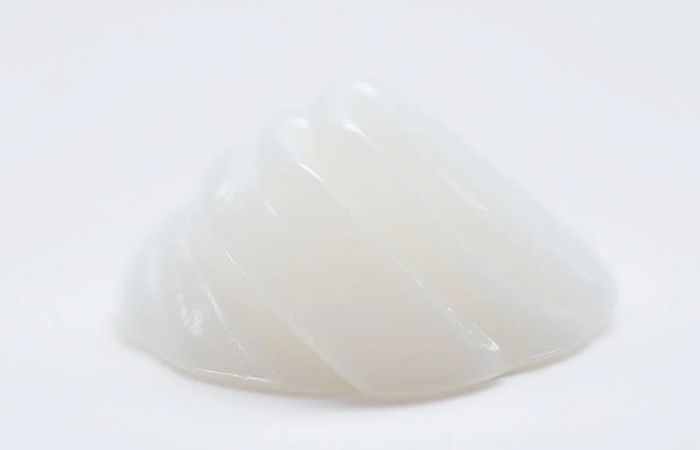
Properties of HDPE Material
Mechanical Properties
HDPE offers excellent stiffness, tensile strength, and impact resistance. Its stiffness is even higher than that of UHMW-PE. Because HDPE has shorter molecular chains, the molecules arrange more regularly and crystallinity is higher. UHMW-PE has a much higher molecular weight, so its chains are very long and tend to become entangled. Even at low temperatures, HDPE keeps good stiffness and impact resistance.
HDPE also has outstanding wear resistance. Its coefficient of friction is typically between 0.15 and 0.3, and shifts slightly with molecular weight or additives. Combined with its high stiffness, it commonly replaces PTFE in wear guide rails, liner plates, and similar parts.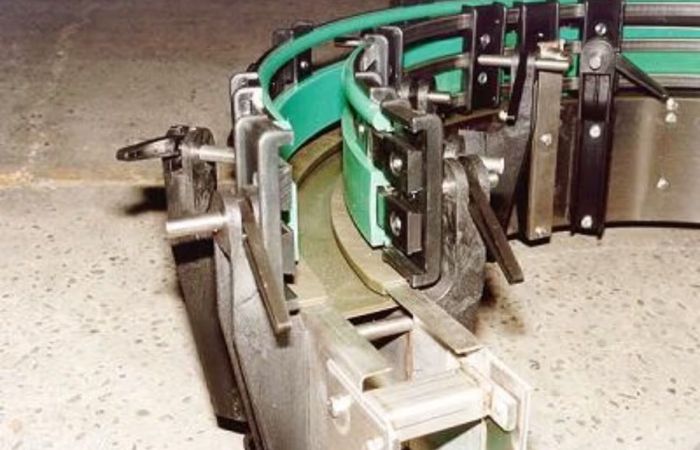
Physical Properties
HDPE density is typically 0.93–0.97 g/cm³, which gives it a high strength-to-density ratio. In other words, HDPE can carry very large stress, pressure, and impact loads while staying extremely light.
HDPE has very low water absorption — it takes up almost no water. For many marine engineering projects, economical and durable HDPE is the first choice for consumables: it does not absorb moisture and it resists seawater corrosion.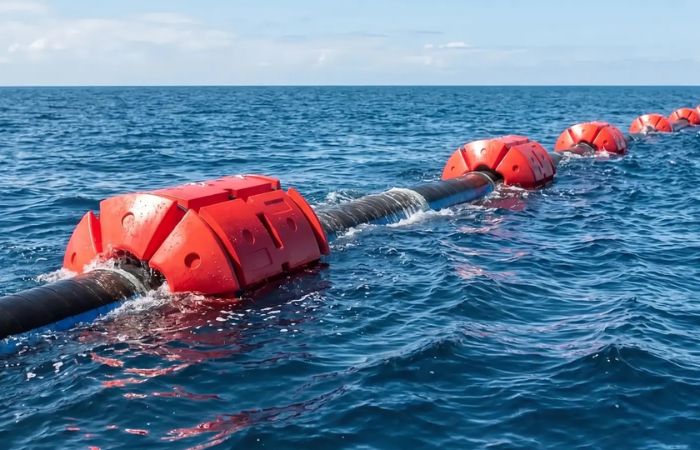
Chemical Properties
HDPE offers a certain degree of chemical resistance.It resists acids, alkalis, and many organic solvents, alcohols among them.
Thermal Properties
HDPE has a long-term service temperature range of -58 to 176 °F (-50 to 80 °C), with a melting point around 248–266 °F (120–130 °C). Under specific load conditions, its short-term temperature resistance can reach 212 °F (100 °C).
What Are the Advantages of HDPE?
Easy to Melt and Form
Using the plasticity inherent in HDPE, heating it above its melting point lets you shape it quickly and efficiently. HDPE can be vacuum-formed with heat into parts with complex shapes — packaging for automotive components, insulating enclosures for equipment, custom trays, and more.
High Strength-to-Density Ratio
Because of its high strength-to-density ratio, HDPE is often used to replace metal and other heavy materials. In wet environments, or where corrosive chemicals are present, HDPE is an economical and reliable choice.
Corrosion and Weather Resistance
Its chemical resistance and weatherability make HDPE well suited to buried applications such as underground water lines, sewer pipes, and geomembranes. HDPE is not attacked by chemicals in the soil, and it resists mold.
Low Moisture Absorption
HDPE absorbs almost no water: its saturated water absorption within 24 hours is under 0.01%, giving it excellent moisture resistance.
Easy to Fabricate
HDPE machines very well. Ordinary woodworking tools can cut, drill, and mill it. It can also be welded, which makes seamless tanks and similar assemblies possible.
Easy to Recycle
HDPE recycling technology is now mature. It is mechanically recycled, and it carries recycling code #2.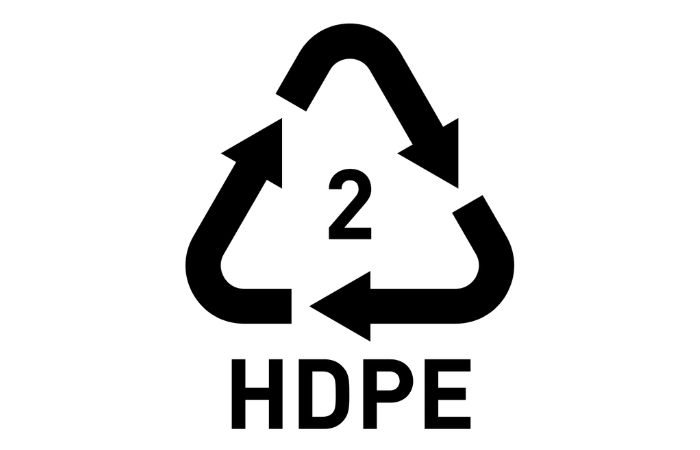
What Are the Limitations of HDPE?
- HDPE’s chemical resistance is a double-edged sword. The same property that keeps chemicals from attacking it also makes it hard to bond. HDPE needs special adhesives, such as two-part epoxy, before anything will stick. Bonding is not the only option, of course — you can also use mechanical fastening or welding.
- If HDPE is used outdoors for long periods, it needs a UV stabilizer, or 2–3% carbon black. Its resistance to ultraviolet light is not especially strong, so it is prone to photodegradation.
- HDPE has a low limiting oxygen index (LOI), and in air it ignites readily when exposed to an open flame. Overcoming that flammability requires adding flame retardants.
- HDPE machines well, but it also shrinks considerably during processing. That drawback has to be accounted for at the drawing stage.
How is HDPE Processed?
Different HDPE products are made by different production methods. Here are several of them:
Injection Molding
Molten HDPE is injected into a mold, then cooled and set. This method is mostly used for containers such as plastic bottles and crates, and also for caps and trays. Thin-wall containers and food packaging in everyday life, as well as structural parts and wear parts in industry, can all be made by injection molding. It suits high-volume production.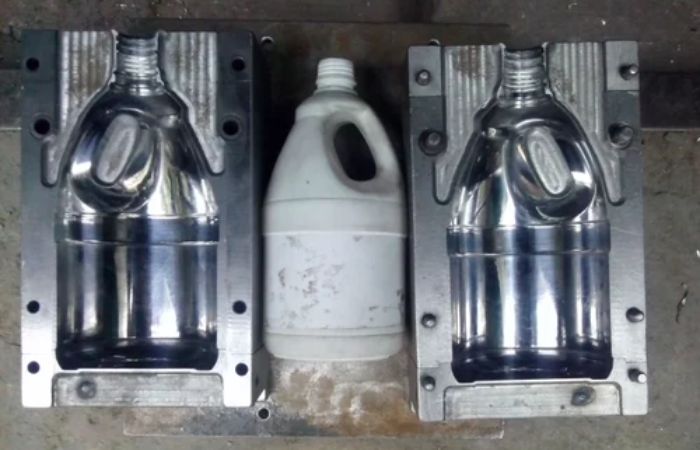
Extrusion
This method is generally used to produce industrial stock shapes — plate, rod, tube, sheet, and custom profiles. These profiles are usually purchased in large volumes by major importers, who buy competitively priced HDPE stock shapes and resell them in their own countries. The end users are typically machine shops or engineers.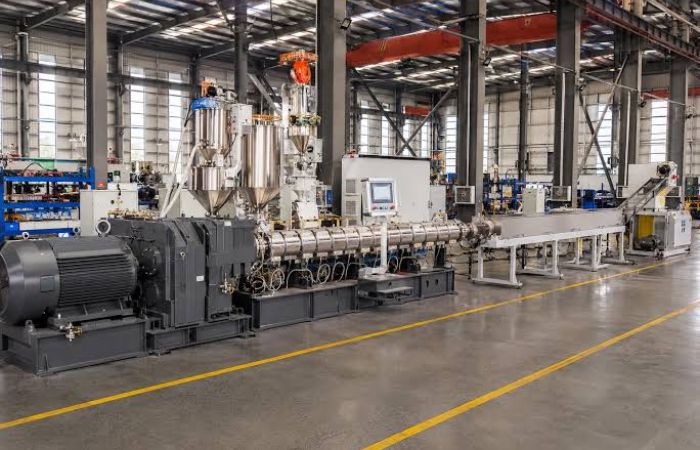
Blow Molding
PP is the material most often used with this method, since it is mostly used to produce hollow containers such as plastic bottles. HDPE bottles resist drops and impact better than PP bottles.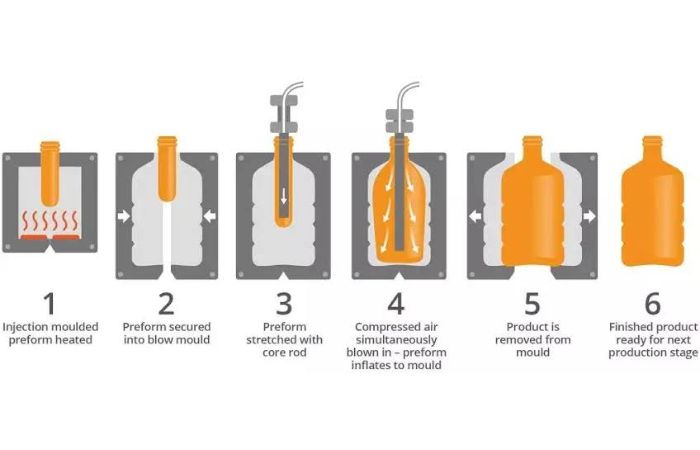
Rotational Molding
Rotational molding is also called rotomolding. HDPE powder or liquid is poured into a mold, heated, and rotated simultaneously around two perpendicular axes so that it coats the inner wall evenly, then cooled and set. The advantage of this method is that it leaves no stress and no weld seams. It suits large or complex hollow parts. Common rotomolded products include automotive fuel tanks, road barriers, and kayaks.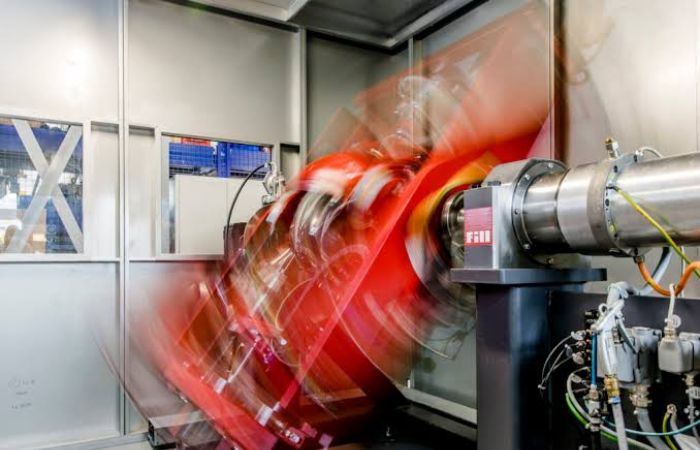
What Forms does HDPE Come in?
HDPE is used in a very wide range of applications and comes in many forms. The most familiar are the everyday bottles and jars — cylindrical, square, custom shapes, and so on.
Beyond consumer products, industry also uses HDPE stock shapes such as HDPE sheet, HDPE rod, and HDPE tube. These are generally produced by extrusion.
Common Uses of High-Density Polyethylene
Industrial & Manufacturing
✔ Chemical processing equipment
HDPE has stable chemical resistance and is not attacked by organic solvents, and its high strength-to-density ratio lets it replace heavier metal components. That makes it suitable for chemical equipment parts such as HDPE gears and HDPE bushings, and for containers such as tanks.
✔ Automotive parts
HDPE’s corrosion resistance and electrical insulation make it suitable for fuel tanks, coolant reservoirs, battery housings, and similar parts.
✔ Wire and cable jacketing
HDPE has excellent electrical insulation, high dielectric strength, and does not absorb water, so it is often used as the insulation layer on power and communication cables, effectively preventing current leakage and signal interference. It also performs underwater, which makes it suitable for subsea cable sheathing.
✔ Material handling
HDPE’s outstanding wear resistance and very low coefficient of friction make it a common sight in bulk material handling systems at mines: conveyor belt liners, wear liners for truck beds, pallets, and more.
✔ Agriculture
HDPE is durable and relatively low in cost, and it is widely used in agriculture. Many irrigation pipes are HDPE, because it does not absorb water, resists moisture, withstands chemical attack, and resists substances present in the soil. Grain silos and agricultural chemical containers are other examples.
Infrastructure & Construction
✔ Piping systems
Any discussion of HDPE has to include pipe, its widest and most common application — almost any pipe you can think of is made of HDPE. Water supply lines, sewer lines, gas transmission lines, industrial process piping: all of them can be HDPE. Its overall performance is strong, the price is reasonable, and it lasts.
✔ Geomembranes and liners
HDPE’s moisture absorption is close to zero, and water molecules and gases permeate it only with great difficulty, so in construction it is often made into geomembranes for seepage control. Typical sites include landfills, ponds, mine heap leach pads, and canals.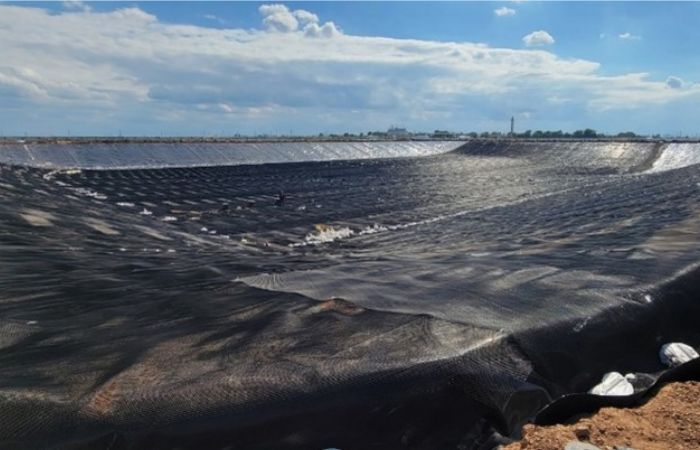
✔ Marine engineering
HDPE is widely used in marine applications because of its excellent stiffness, impact resistance, water resistance, and seawater corrosion resistance. It goes into floating docks, dock components, boat fenders, marine pilings, and similar structures.
Packaging
✔ Food and beverage
The material must first meet food safety standards and FDA food-contact requirements. Food-grade HDPE provides moisture protection.
✔ Chemical and household product bottles
HDPE’s excellent chemical resistance makes it suitable for storage bottles for all kinds of chemical solvents, including but not limited to detergent, bleach, shampoo, and motor oil.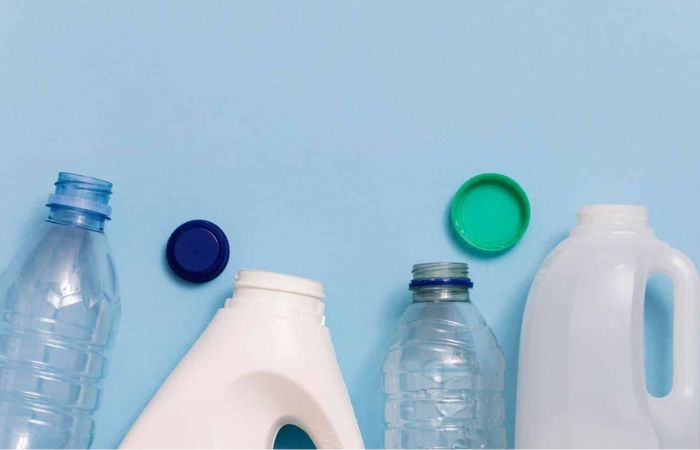
✔ Snack and shopping bags
HDPE is often used for reusable plastic bags, and for merchants who put a priority on environmental responsibility — its cost is higher than LDPE, after all. Disposable bags and film bags are usually made of LDPE.
Consumer & Outdoor Products
✔ Household consumer products
HDPE is closer than you might think: the trash cans, cutting boards, and storage containers in your home may all be HDPE.
✔ Outdoor products
Playground equipment, kayaks, park benches, outdoor seating, and more.
HDPE vs Other Plastics
HDPE vs LDPE
LDPE is the softer cousin. Branched chains, less tight packing, density 0.91 to 0.94 g/cm³, and a material that stretches a long way before it breaks.
Pick HDPE when the part has to hold a shape: containers, caps, pipe, structural panels, cutting boards. Pick LDPE when the part has to bend and keep bending: stretch film, squeeze bottles, liners, cold-chain bags.
HDPE vs UHMWPE
Same chemistry, different chain length, and the difference lands in wear.
UHMWPE has an extremely high molecular weight. That gives it outstanding resistance to sliding wear and a lower friction coefficient than HDPE. It also machines harder, and it costs more.
Spec UHMWPE for conveyor rails, wear strips and chain guides. Spec HDPE for tanks, structural panels, cutting boards and anything that has to be welded into an assembly.
HDPE vs PP
PP is lighter and takes more heat, which is why it owns hot-fill packaging and the living hinge on a bottle cap.
Choose PP when the service temperature runs past what HDPE can hold, or when the part has to flex a million times. Choose HDPE when the part takes an impact in the cold, needs a moisture barrier, or gets welded into a chemical line.
HDPE vs PVC
PVC is rigid, dimensionally stable and cheap, and it owns a lot of dry construction profiles.
Choose HDPE for buried pipe, tanks, welded assemblies and food contact. Choose PVC for dry rigid profiles, window systems, and parts that need tight tolerances without heat or impact.
HDPE vs POM
POM is the precision engineering plastic: harder, stiffer, more stable in the dimension, and the right answer for gears, bearings and small mechanisms.
It also costs more, bonds badly, and dislikes strong acids.
Choose POM when a mechanism has to hold a tolerance for years. Choose HDPE when the part is large, welded, chemically exposed or cost-driven, and a tolerance in tenths of a millimetre is not what you are buying.
Final Thought
Taken together, this covers everything about HDPE: how it is synthesized, how it performs, where it is used, its advantages and limitations, and how it compares with other materials. HDPE’s excellent stiffness, wear resistance, and ease of processing make it the most cost-effective material in industries such as chemical processing, marine engineering, and electrical and electronics. Its safety, reliability, and low maintenance cost make it the answer for engineers, purchasing managers, and product designers working on demanding applications.
If you have a requirement for HDPE, contact us at any time. HANSA is a professional HDPE manufacturer, with deep product knowledge and extensive project experience.

 English
 Arabic
 Tibetan
 German
 Spanish
 French
 Hindi
 Indonesian
 Italian
 Japanese
 Korean
 Dutch
 Portuguese
 Thai
 Russian
 Swedish
 Chinese