


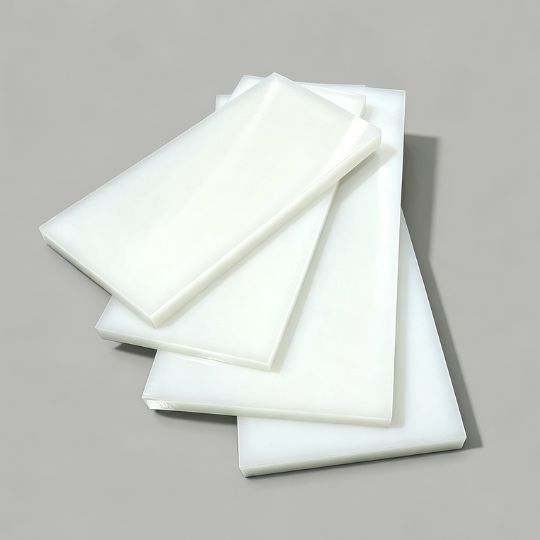
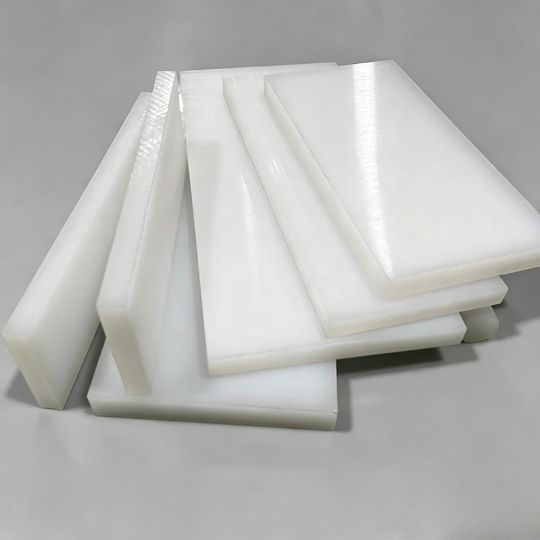
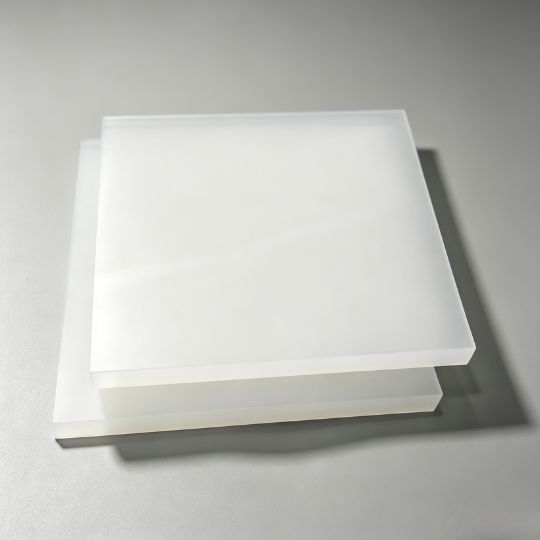
Why You Choose HANSA PFA Sheet
- HANSA has 30 years of experience in manufacturing fluoroplastic products.
- We maintain stable partnerships with suppliers of 100% pure PFA raw materials.
- We possess strong CNC machining capabilities for PFA sheets.
- PFA sheets in standard sizes (1220x2440mm and 1000x2000mm) are available in stock.
- We provide professional guidance on material selection for PFA, PTFE, and FEP.
What is PFA Sheet
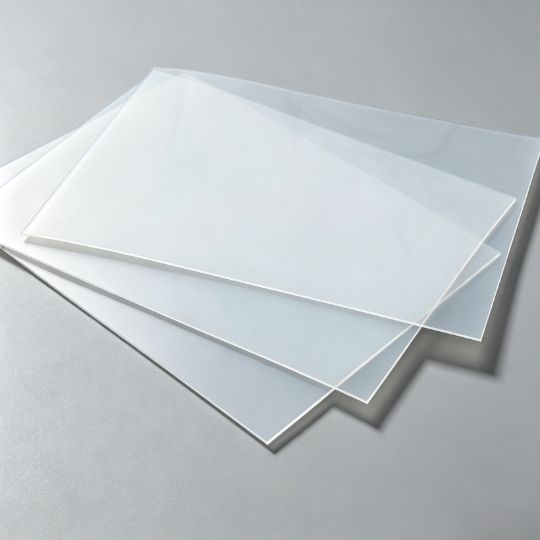
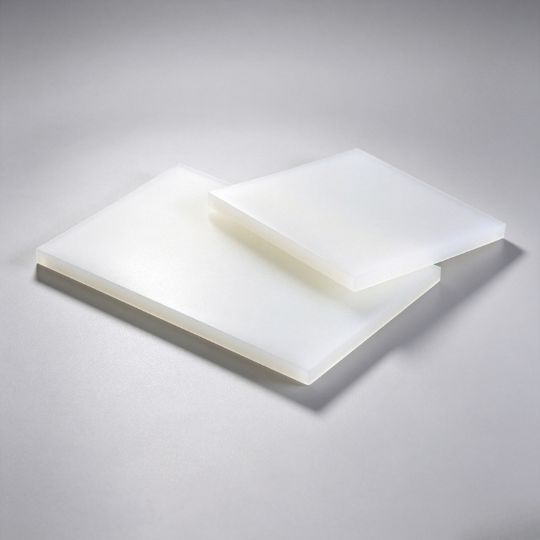
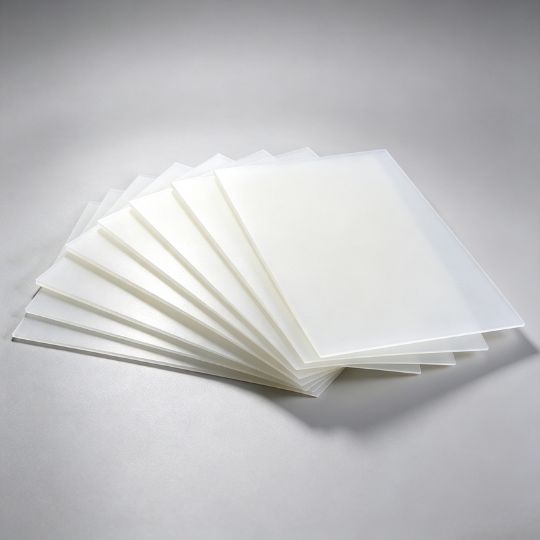
PFA sheet—short for Perfluoroalkoxy Alkane sheet—is a high-performance, fully fluorinated thermoplastic sheet; it can be described as a melt-processable, modified version of PTFE.
PFA offers chemical and heat resistance comparable to that of PTFE, withstanding strong acids, strong alkalis, organic solvents, and oxidizing chemicals, and is suitable for continuous use at temperatures up to 260°C.
Compared to PTFE sheets, PFA sheets offer higher purity and superior processability, though they also come at a higher cost.
PFA sheets are widely used in industries such as semiconductors, biopharmaceuticals, petrochemicals, and photovoltaic new energy.
HANSA supplies PFA profiles—including sheets, tubes, and rods—and offers custom PFA component fabrication for your projects. We utilize a range of processing techniques, such as turning, cutting, drilling, welding, and CNC machining.
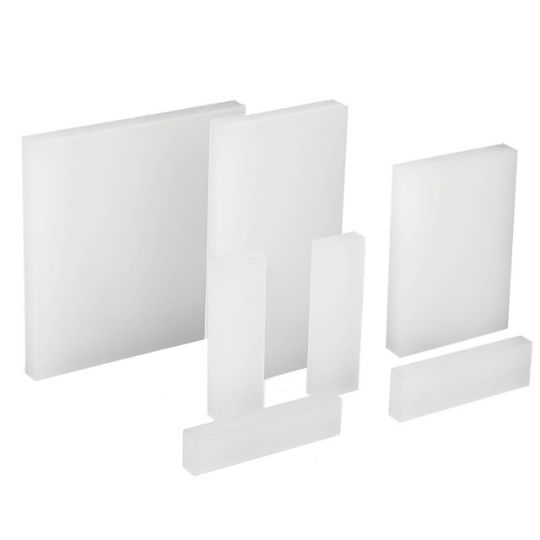
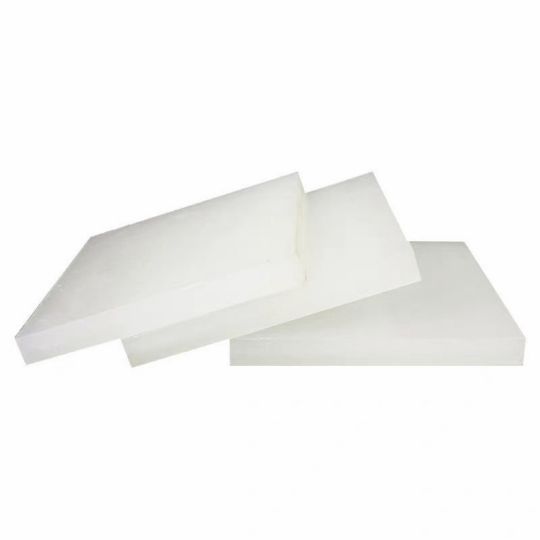
Various PFA Sheets
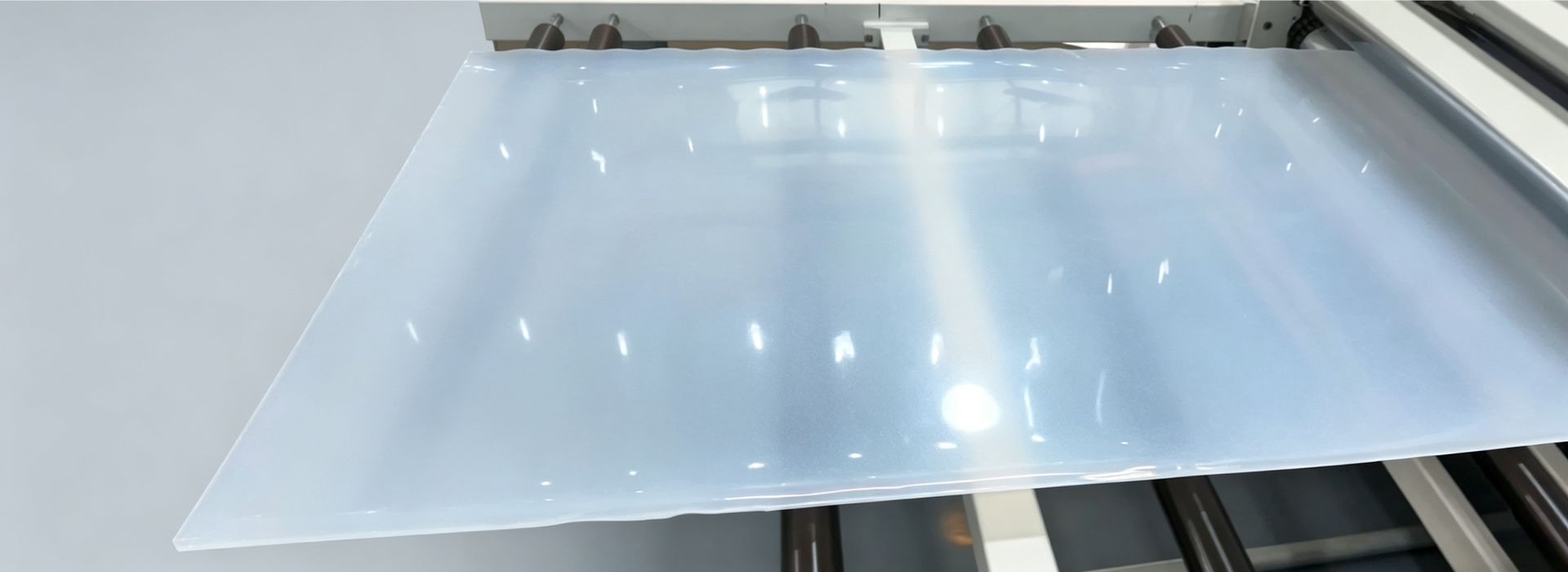
The vast majority of PFA sheets are produced via extrusion. PFA resins come in various grades, and environmental factors further influence the process, resulting in sheets with differing levels of purity and intended applications.
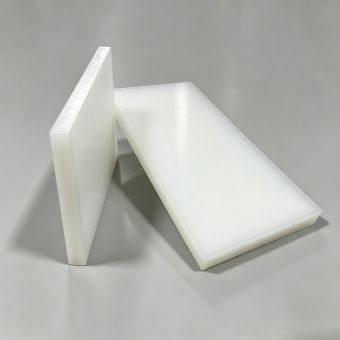
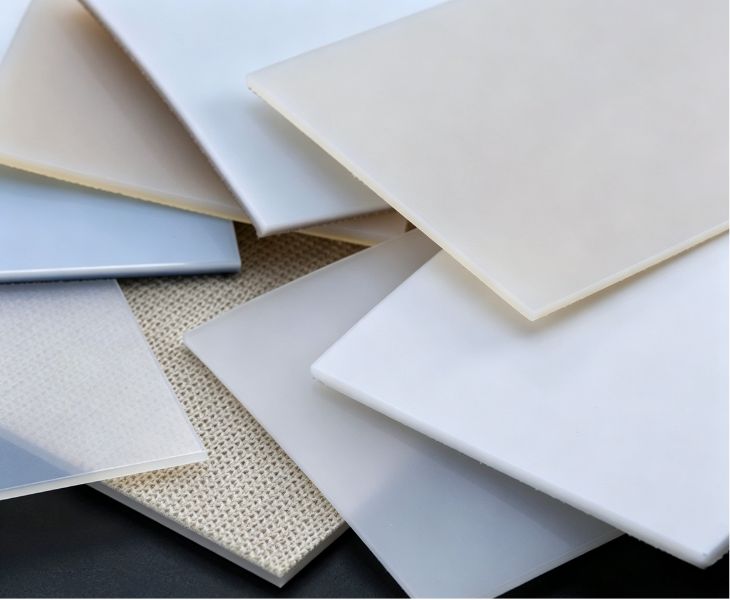
Suitable for standard corrosion-resistant applications and general chemical processing equipment, HANSA’s industrial-grade PFA sheets are competitively priced, offering you a cost advantage.
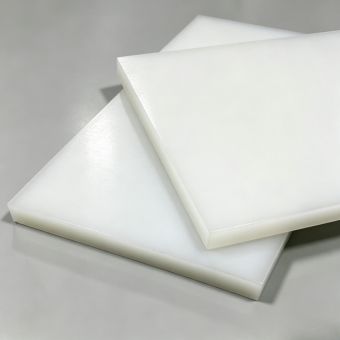
Manufactured in a clean, contamination-free facility using high-purity PFA resin, the resulting PFA sheet is virtually free of additive residues, making it suitable for the chemical and pharmaceutical industries.
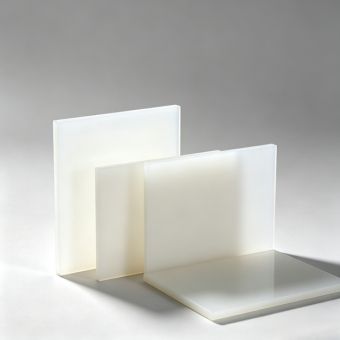
With higher purity, dedicated production lines for semiconductor-grade PFA sheets ensure no compromise to the cleanliness of wafers or chemicals.
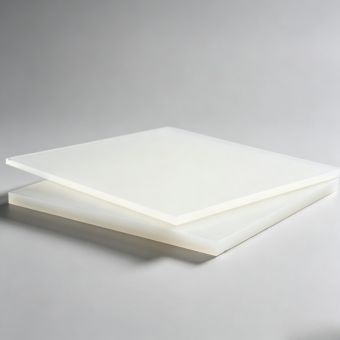
Compliant with FDA standards and offering superior biocompatibility, this material is suitable for use in sterile systems and is commonly found in the medical and pharmaceutical industries. HANSA can provide FDA certification reports for its PFA sheets.
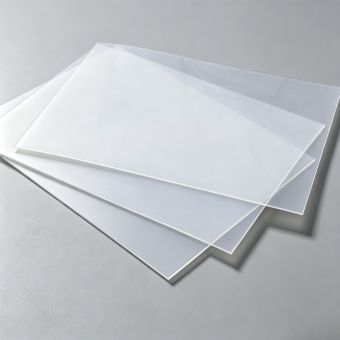
We strictly use 100% virgin PFA resin—without any recycled material—to ensure the stable performance of our PFA sheets. We support small-batch sample orders and can provide test reports.
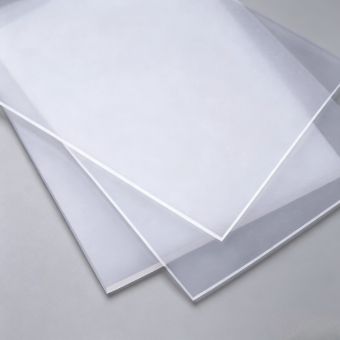
PFA offers chemical resistance comparable to that of PTFE, capable of withstanding long-term exposure to corrosive media such as strong acids and alkalis. It is commonly used for linings in chemical storage tanks and reaction vessels.
Why You Need PFA Sheet
PFA sheets are high-end fluoroplastic panels that offer a range of excellent properties, making them suitable for diverse industries. PFA sheets are utilized across sectors such as chemicals, semiconductors, electronics manufacturing, biopharmaceuticals, and photovoltaic new energy, as well as in chemical experiments and high-end scientific research equipment.

PFA offers corrosion resistance comparable to PTFE, remaining resistant to almost all corrosive media. It withstands strong acids, strong alkalis, organic solvents, and oxidizing chemicals, though it is not resistant to a few molten alkali metals or high-temperature fluorine gas.

PFA is suitable for long-term use within a temperature range of -200°C to 260°C and can withstand short-term exposure to temperatures up to 290°C. Its melting point is 300–310°C.

Its high purity stems from stable C-F bonds, which prevent reactions with media and minimize the release of contaminants. Additionally, strict hygiene controls are maintained throughout the production process.

PFA is compatible with various processing methods, including machining, thermoforming, and welding. It is particularly well-suited for precision machining and applications requiring high levels of purity.
Ultra-low Contamination for High-purity Applications
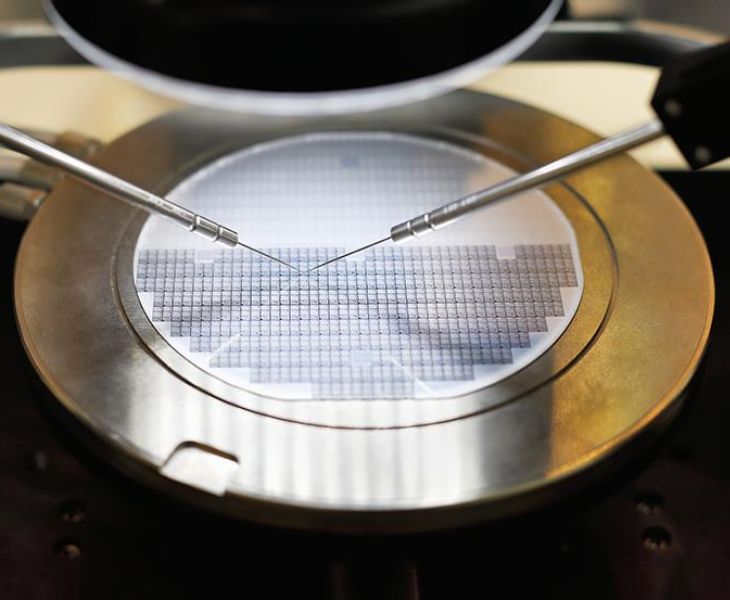
Manufactured using premium, high-purity PFA raw materials in cleanroom facilities, these PFA sheets ensure exceptional purity and are widely used in industries such as semiconductors, pharmaceuticals, and photovoltaics. Utilizing PFA sheets significantly reduces the risk of contamination for sensitive products, including chemical fluids and semiconductor wafers.
Easier to Process than PTFE Sheets
PTFE cannot be melt-processed, its extremely high viscosity in the molten state makes standard injection molding or extrusion impossible. In contrast, PFA is known as “melt-processable PTFE.” Furthermore, PTFE Sheet is difficult to machine via CNC; its extremely low surface friction hinders stable cutting, while its soft texture and low rigidity make it hard to maintain dimensional accuracy. PFA’s unique molecular structure effectively overcomes these challenges.
Certified for High-purity Industries
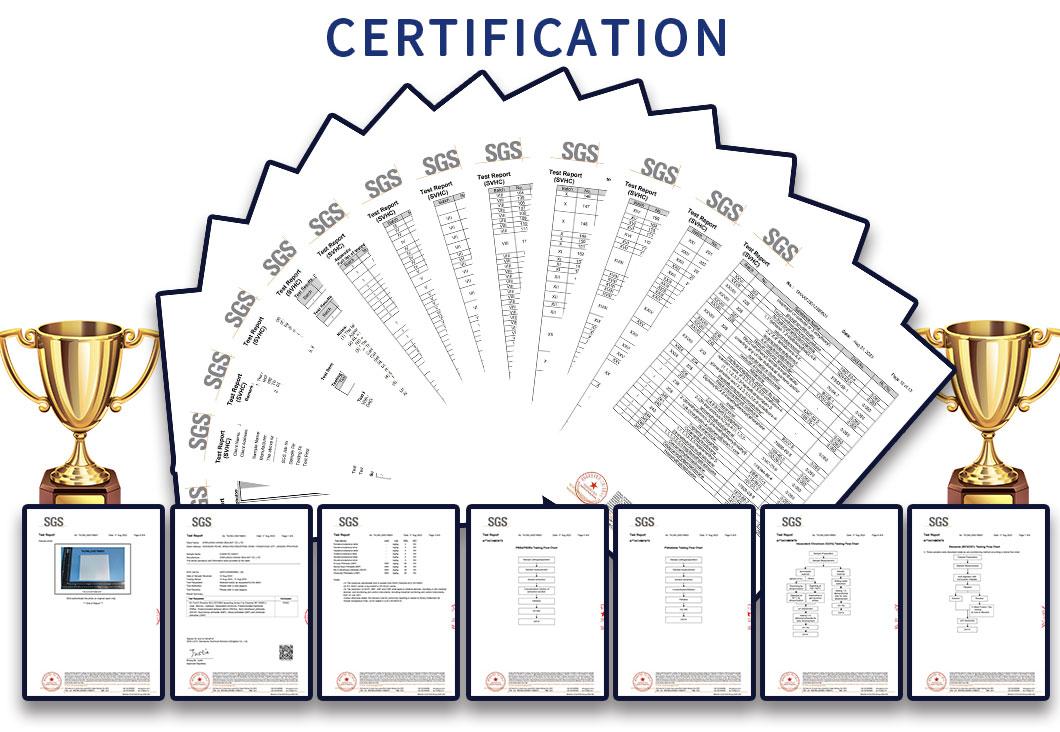
HANSA guarantees the quality of its PFA sheets, holding certifications such as ISO 9001, RoHS, REACH, and FDA. Batch inspection reports are available upon request; HANSA employs a comprehensive quality testing system covering everything from raw materials and intermediate products to the final machined components.
HANSA: A Leading PFA Sheet Manufacturer in China
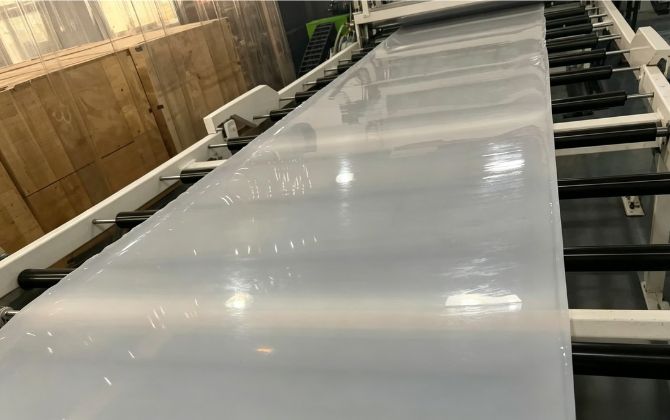
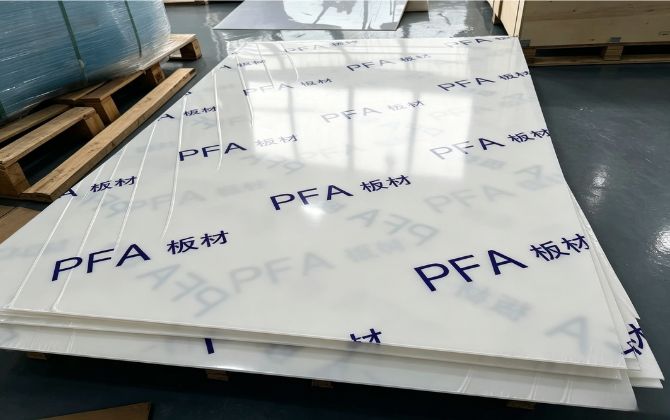
Established in 1995, HANSA is a reliable supplier of PFA sheets with a decade of export experience, utilizing mature production processes and advanced manufacturing equipment.
With a monthly production capacity of 50–100 tons, HANSA ensures a consistent supply capable of meeting long-term procurement needs and large-volume orders.
The company offers customization of PFA sheets in various specifications and dimensions, and manufactures PFA Sheets, PFA Rods, and custom-machined PFA components. HANSA’s processing capabilities include CNC machining, milling, cutting, and welding.
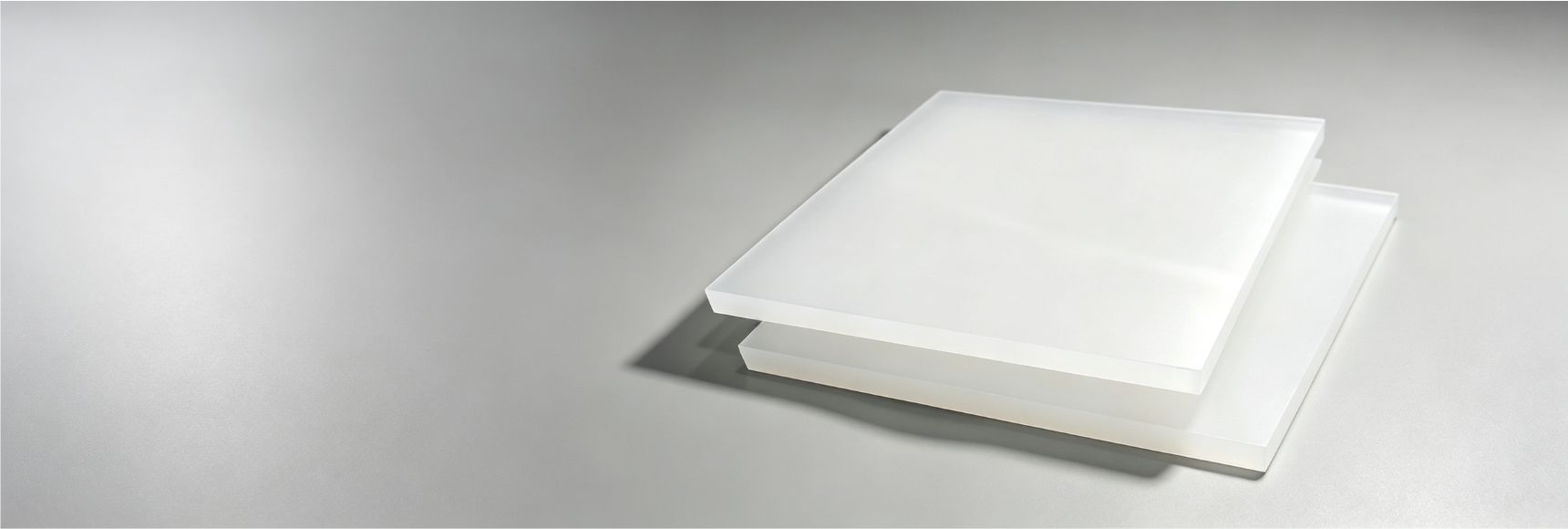
Properties
| Item | Test Method | Typical Value |
| Density | ASTM D792 | 2.12–2.17 g/cm³ |
| Water Absorption (24h) | ASTM D570 | <0.01% |
| Tensile Strength | ASTM D638 | 20–35 MPa |
| Tensile Elongation at Break | ASTM D638 | 250–400% |
| Compressive Strength | ASTM D695 | 10–20 MPa |
| Hardness (Shore D) | ASTM D2240 | 50–60 |
| Coefficient of Friction (Dynamic) | ASTM D1894 | 0.15–0.30 |
| Melting Point | DSC | 300–310°C |
| Continuous Service Temperature | —— | -200°C to +260°C |
| Coefficient of Thermal Expansion | ASTM D696 | 100–150 ×10⁻⁶ /°C |
| Dielectric Constant (1 MHz) | ASTM D150 | 2.0–2.2 |
What Our Clients Say
-
We needed a high-purity material for our chemical delivery system, and HANSA’s PFA Sheet met our requirements. The material showed excellent chemical resistance and stable performance in our clean process environment. The batch consistency and documentation were also important for our project.
Semiconductor Equipment ManufacturerUSA -
The PFA Sheet has been working well for our corrosion-resistant equipment. Compared with other plastic materials we used before, it provides much better stability when exposed to aggressive chemicals and high temperatures.
Chemical Processing Equipment SupplierGermany -
We purchased PFA sheets for machining custom components. The material quality was consistent, and the sheets arrived with good surface finish and accurate dimensions, which helped reduce machining adjustments.
Precision Machining CompanyJapan -
For pharmaceutical applications, material purity is critical. HANSA provided PFA sheets with reliable quality and the technical support we needed during material selection.
Pharmaceutical Equipment ManufacturerSwitzerland -
We have been sourcing fluoropolymer materials for years, and stable supply is always our biggest concern. HANSA provides consistent PFA Sheet quality, competitive lead times, and good communication for repeat orders.
Industrial DistributorMiddle East
PFA sheet is a high-performance perfluorinated thermoplastic; like PTFE, it belongs to the fluoroplastic family. PFA is often described as a melt-processable, modified version of PTFE. PFA sheets can be machined, thermoformed, and welded, making them particularly suitable for high-precision components.
PFA sheets have a wide range of applications, serving unique purposes across the chemical, semiconductor, pharmaceutical, and manufacturing industries. Examples include linings for reaction vessels and storage tanks, as well as pump and valve gaskets in the chemical industry; high-purity components and wafer carriers in the semiconductor sector; and contact-grade material components and pharmaceutical transfer parts in the biopharmaceutical industry.
PFA possesses three outstanding characteristics: corrosion resistance, high purity, and ease of processing. PFA sheets offer chemical corrosion resistance comparable to that of PTFE, withstanding strong acids, strong alkalis, organic solvents, and oxidizing chemicals. During use, PFA does not shed particles or leach metal ions, thereby maintaining high levels of cleanliness and ensuring ultra-low contamination. PFA sheets exhibit excellent dimensional stability, making them suitable for precision CNC machining, as well as thermoforming and welding.
The fundamental difference between PFA and PTFE lies in their processability. PTFE is difficult to process because it cannot be melt-processed; its melt exhibits poor flowability and high viscosity, making standard injection molding or extrusion impossible. Additionally, PTFE is relatively soft and lacks rigidity, offering poor grip for cutting tools and making dimensional control difficult.
Yes. PFA is resistant to strong acids, strong bases, organic solvents, and oxidizing chemicals, but it is not resistant to molten alkali metals or high-temperature fluorine gas.
The long-term operating temperature range for PFA is -200 to 260°C, and it can withstand a maximum short-term temperature of 290°C. The melting point of PFA sheet is 300–310°C.
Certainly. Semiconductor applications require materials that are free from contamination, leaching, adsorption, and chemical reactivity. PFA sheets meet these requirements perfectly. We are actively expanding our customer base in the semiconductor industry, progressively optimizing our production technology, and continuously conducting research and development on our products.
Yes. PFA sheet offers excellent processing characteristics; it can be melt-processed, thermoformed, and welded.
Currently, HANSA can produce PFA sheets with thicknesses ranging from 1.5 mm to 5 mm, and we are continuously expanding our capabilities, with plans to reach a thickness of 100 mm.
First, the raw materials for PFA are more expensive than those for PTFE, and the production equipment required is more advanced. Because PFA applications demand high material purity, the production environment must be clean, and the use of cleanrooms adds to the cost. Naturally, PFA also offers superior processing performance compared to PTFE.

 English
  Arabic
  Tibetan
  German
  Spanish
  French
  Hindi
Hindi  Indonesian
  Italian
  Japanese
  Korean
  Dutch
Dutch  Portuguese
  Thai
Thai  Russian
  Swedish
  Chinese