


The biggest advantage of Nylon 6 is its excellent toughness and impact resistance. It performs well in applications that are exposed to shock loads or repeated impacts, such as bumper blocks, conveyor system components, wear pads, and guide rails. However, Nylon 6 absorbs more moisture and has a lower heat deflection temperature, making it less suitable for applications involving hot water or prolonged exposure to elevated temperatures.
Nylon 66 offers higher stiffness, greater strength, and better heat resistance than Nylon 6. It is often the preferred choice for components that must withstand continuous mechanical stress, friction, or higher operating temperatures. Typical applications include high-speed bearings, bushings, gears, automotive under-hood components, and other demanding industrial parts.
What Are Nylon 6 and Nylon 66?
Nylon 6
Nylon 6 can be produced in two main forms: extruded Nylon 6 and cast Nylon 6. The production processes are different, which also leads to differences in performance and available sizes.
Extruded Nylon 6
Nylon 6 is typically manufactured through an extrusion process. The resin is melted and forced through an extruder, then shaped and cooled to form the final product. This continuous production method offers high manufacturing efficiency and is well suited for large-volume production.
One of the key advantages of extrusion is its versatility. Nylon 6 can be produced in a wide range of stock shapes and sizes, including Nylon Sheets, Nylon Rods, and Nylon Tubes, making it a popular choice for machining custom industrial components.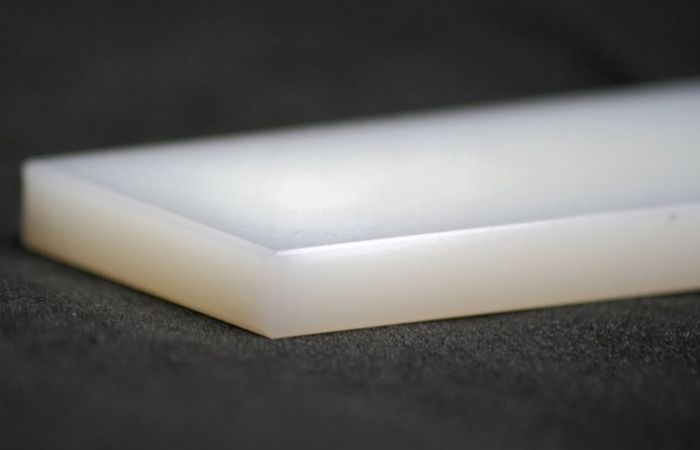
MC Nylon 6
Cast Nylon is produced by casting liquid caprolactam into a mold, where it polymerizes and cures into a solid material.
This process results in a higher molecular weight than standard extruded Nylon 6, giving Cast Nylon better wear resistance and load-bearing performance. It is also available in much larger sizes and thicker sections, which is why it is commonly used for large gears, wear pads, rollers, and other heavy-duty machined parts.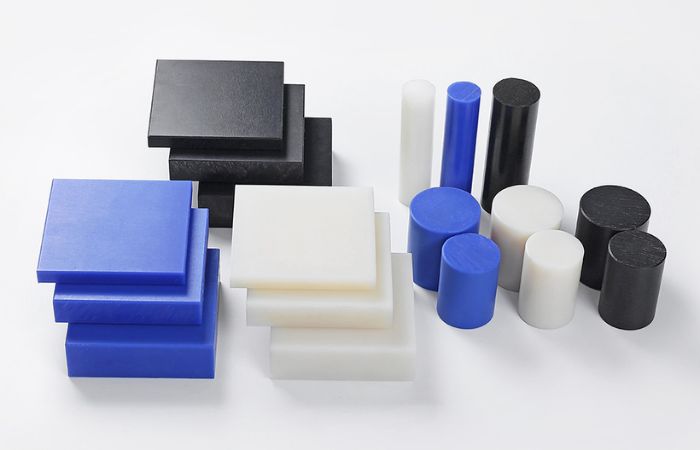
Nylon 66
Cast Nylon 66 generally does not exist; Nylon 66 is typically produced through extrusion. Nylon 66, also known as PA 66, is a high-performance engineering plastic.
It offers higher strength and stiffness, as well as better heat resistance and dimensional stability.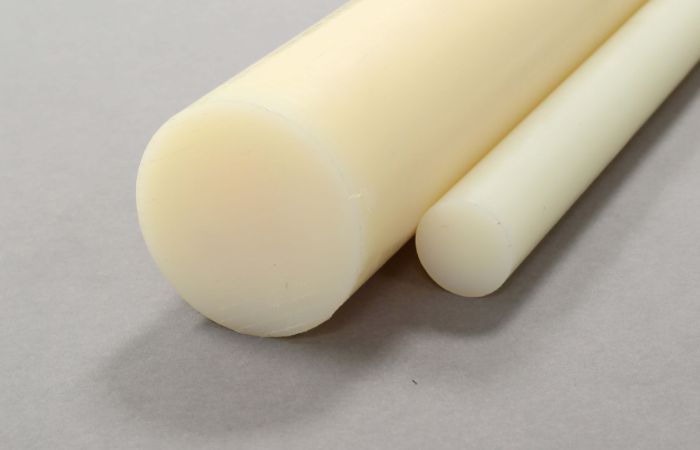
Why Are They Called Nylon 6 and Nylon 66?
Both Nylon 6 and Nylon 66 belong to the polyamide family and are commonly referred to as nylon. They are made from different polymer structures, which gives each material its own performance characteristics.
The numbers in Nylon 6 and Nylon 66 refer to the number and arrangement of carbon atoms in the monomers used to produce the polymer.
Nylon 6 is made from caprolactam, a monomer containing six carbon atoms. Nylon 66, on the other hand, is produced by polymerizing adipic acid and hexamethylenediamine, both of which contain six carbon atoms. This difference in chemical structure is what gives Nylon 6 and Nylon 66 their distinct mechanical and thermal properties.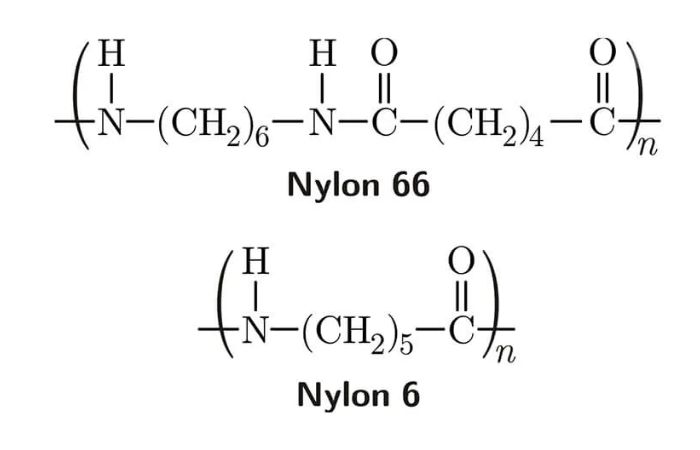
Nylon 6 vs Nylon 66:Property Comparison
| Item | Nylon 6 | Nylon 66 |
| Density | 1.13g/cm³ | 1.14g/cm³ |
| Melting Point | 220℃ | 260℃ |
| Temperature Range | 80-100℃ | 100-120℃ |
| Tensile Strength | 70-85MPa | 80-95MPa |
| Moisture Absorption | 2.5-3.5% | 2.0-2.8% |
Strength Comparioson
Nylon 66 has higher strength than Nylon 6 because it has a higher degree of crystallinity. As shown in the table above, the tensile strength of Nylon 66 is typically about 10 MPa higher than that of Nylon 6. Nylon 66 also offers greater stiffness and better creep resistance than Nylon 6.
Temperature Resistance
Nylon 66 has a higher melting point and a continuous service temperature that is about 20°C higher than that of Nylon 6. As a result, Nylon 66 is better suited for applications that require higher temperature resistance, such as automotive engine compartments and electronic equipment.
Moisture Absorption
Both Nylon 6 and Nylon 66 absorb moisture, although their moisture absorption rates are slightly different.
Nylon 6 has a slightly higher moisture absorption rate than Nylon 66, by approximately 0.6%. After absorbing moisture, the material may experience dimensional changes, which can make it more difficult to maintain machining accuracy. Its strength may also decrease.
Wear Resistance
Both materials offer excellent wear resistance. Their natural self-lubricating properties and low coefficient of friction make them popular choices for gears, wear pads, and sliding components.
It is worth noting that Nylon 66 generally provides better wear resistance under heavy-load conditions. This is mainly due to its higher stiffness, while Nylon 6 tends to be more flexible and impact resistant because of its greater toughness.
Impact Resistance
Nylon 6 offers better impact resistance than Nylon 66. Because its molecular chains are more flexible, Nylon 6 has greater toughness, which allows it to absorb impact more effectively.
Nylon 66 is stiffer and harder. Under high-impact conditions, it is more likely to crack or become brittle than Nylon 6.
Machinability
Nylon 6 generally offers better machinability than Nylon 66. Because Nylon 66 is harder, it is more prone to edge chipping during machining, which can make processing more difficult. Its higher hardness can also lead to increased tool wear.
Chemical Resistance
Nylon 6 and Nylon 66 offer very similar chemical resistance. Both materials are resistant to oils, greases, fuels, weak alkalis, and most organic solvents. However, neither material has good resistance to strong acids or strong oxidizing agents.
Dimensional Stability
Nylon 66 offers better dimensional stability than Nylon 6. Because Nylon 66 absorbs less moisture, has higher stiffness, and provides better creep resistance, its dimensions are generally less affected by changes in the operating environment.
Cost vs Performance
Nylon 66 typically costs 10% to 40% more than Nylon 6, and the higher price is reflected in its performance. Nylon 66 offers greater stiffness, better dimensional stability, higher heat resistance, and lower moisture absorption than Nylon 6.
However, many users believe that Nylon 6 can deliver 80% to 90% of the performance of Nylon 66 in many applications. As a result, Nylon 6 is often considered the more cost-effective option, while Nylon 66 is chosen when higher performance is required.
When selecting between the two materials, it is important to consider the specific requirements of your application.
Which Material Should You Choose?
Because there is a noticeable price difference between Nylon 6 and Nylon 66, choosing between the two can sometimes be challenging. If you’re not sure which material is the better fit for your application, the guidelines below can help. Based on different application requirements, I’ll explain which type of nylon is generally the better choice.
For Gears
Nylon gears are commonly used in conveyor systems, food processing equipment, packaging machinery, and other medium- to low-load applications where wear resistance and self-lubricating properties are important. Since these machines often operate continuously, minimizing gear wear can help reduce maintenance frequency and downtime.
For these applications, I would recommend Nylon 66. Although it is slightly more expensive than Nylon 6, its superior wear resistance can help extend service life and reduce the likelihood of production interruptions caused by gear replacement. Over the long term, this can make Nylon 66 a more cost-effective choice.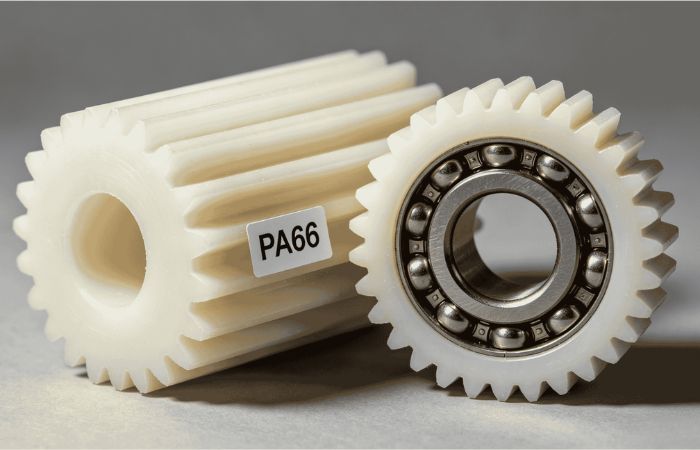
For Bearings
Nylon bearings are used in many of the same industries as nylon gears. However, they are not always intended to replace metal bearings. Instead, they are commonly used in applications that require medium to high load capacity, wear resistance, self-lubricating properties, and corrosion resistance.
Nylon 66 offers better creep resistance and lower moisture absorption than Nylon 6, resulting in improved dimensional stability over time. As with gears, reducing wear and minimizing replacement frequency can help lower maintenance costs. For this reason, Nylon 66 is often the preferred choice for bearing applications.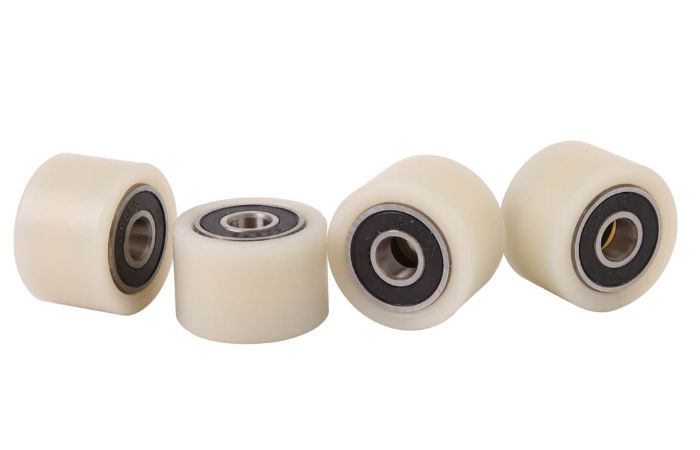
For Wear Pads and Guides
Wear pads and guide rails require a material with excellent wear resistance and impact strength. They are commonly used in industrial equipment to reduce friction and direct contact between metal components.
Nylon 6 is well suited for these applications because it combines good wear resistance with excellent toughness and natural self-lubricating properties. In addition, Nylon 6 is easier to machine than Nylon 66, which can help reduce manufacturing time and machining costs when producing wear pads and guide rails.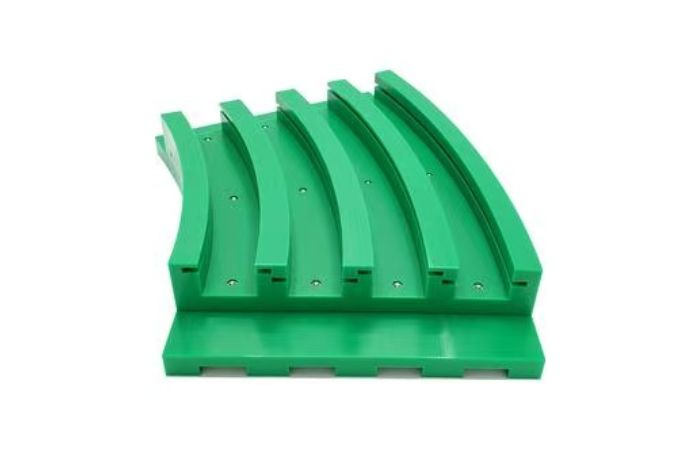
For Large Machined Parts
If you are manufacturing high-precision parts, I recommend Nylon 6. Because Nylon 6 has a lower processing temperature and lower crystallinity, it generally experiences less mold shrinkage, resulting in more accurate dimensions in the finished part.
Nylon 66 tends to have a higher mold shrinkage rate. If it is exposed to cold air during the cooling process, dimensional changes are more likely to occur, which can affect the final shape and accuracy of the part.
In addition, Nylon 6 typically has a smoother and more attractive surface finish, with a naturally glossy appearance.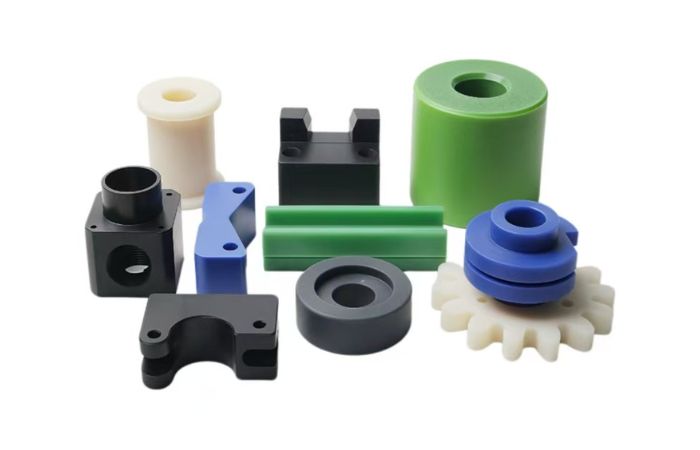
For High Temperature Applications
First, it is important to understand that all grades of nylon are not suitable for extremely high-temperature environments. The long-term service temperature of Nylon 66 is typically around 100–120°C. If your application operates within this temperature range and still requires good wear resistance and self-lubricating properties, Nylon 66 is generally the preferred choice, while Nylon 6 is not suitable.
Typical applications in these higher-temperature conditions include automotive engine compartment components such as gears, support brackets, and electrical connectors; sliding components and wear pads used in industrial drying equipment; equipment used in food processing such as baking and sterilization systems; and electrical and electronic components such as connectors and switch assemblies.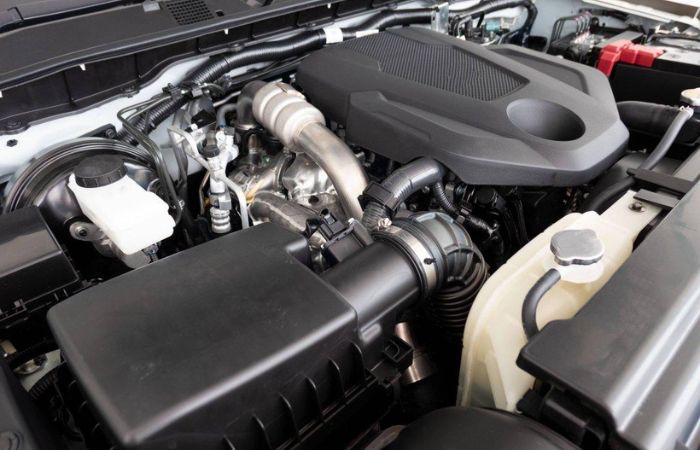
FAQs
1、Can Nylon 6 Replace Nylon 66?
This depends on the specific performance requirements of your application. If high temperature resistance and creep resistance are critical, Nylon 6 cannot fully replace Nylon 66 due to its inherent performance limitations that cannot be compensated for.
However, if your application involves only medium to low loads and operating temperatures below 100°C, Nylon 6 can be a suitable and cost-effective choice.
2、Which has higher strength, Nylon 6 or Nylon 66?
In simple terms, Nylon 6 offers better toughness and impact resistance, while Nylon 66 provides higher stiffness and better creep resistance. Nylon 66 is better suited for applications that involve long-term repeated stress or friction.
3、What is the maximum temperature for Nylon 66?
Nylon 66 has a melting point of about 500°F (260°C), and its long-term service temperature is typically around 100–120°C.
4、Which nylon is better for injection molding, PA6 or PA66?
Nylon 6 offers better processability because it has a lower melting point, around 428°F (220°C), and better melt flow, making it easier to mold and process.
Nylon 66 requires higher processing temperatures, with a melting point of about 500°F (260°C). It is more difficult to process, but the finished parts tend to have more stable performance.
5、Does Nylon 6 absorb more water than Nylon 66?
Yes, Nylon 6 has a higher moisture absorption rate than Nylon 66, but the difference is not very large. The moisture absorption rate of Nylon 6 is approximately 2.5%–3.5%, while Nylon 66 is around 2.0%–2.8%.
Final Thoughts
The main differences between Nylon 6 and Nylon 66 are impact resistance, stiffness, temperature resistance, and moisture absorption. Nylon 6 is suitable for general-purpose and cost-sensitive applications, while Nylon 66 is better suited for applications that require higher mechanical strength and long-term stability.
In summary, when making a selection, you should consider operating temperature, mechanical load, and service life requirements. If you need further technical support, feel free to contact us—we can help you with material selection recommendations.

 English
  Arabic
  Tibetan
  German
  Spanish
  French
  Hindi
Hindi  Indonesian
  Italian
  Japanese
  Korean
  Dutch
Dutch  Portuguese
  Thai
Thai  Russian
  Swedish
  Chinese