


Thanks to its outstanding properties, PTFE (Polytetrafluoroethylene) is widely used across various industries and specialized applications, including chemical processing, semiconductor, medical, food, and aerospace sectors. However, as the use of PTFE continues to expand, concerns about PTFE safety have also increased. Questions such as “Is PTFE a PFAS?”, “Is PTFE toxic?”, and “Is PTFE banned?” are frequently raised by engineers, manufacturers, and procurement professionals. This article explores these concerns, explains the relationship between PTFE and PFAS, and helps you determine whether PTFE is the right material choice for your specific application.
What is PTFE?
PTFE (Polytetrafluoroethylene) is a high-performance fluoropolymer produced through the polymerization of tetrafluoroethylene (TFE). It is known for its high molecular weight, excellent chemical stability, and outstanding resistance to chemical corrosion.
Due to its exceptional chemical resistance and wide operating temperature range, PTFE is widely used in the chemical industry for applications such as equipment seals, reactor linings, gaskets, and sliding components that require excellent wear resistance and long-term reliability.
Beyond industrial applications, PTFE is also commonly used in food-contact applications, including non-stick coatings for household cookware, heat-resistant non-stick soleplates for irons, and baking sheets. These applications take advantage of PTFE’s low friction, non-stick properties, and thermal stability.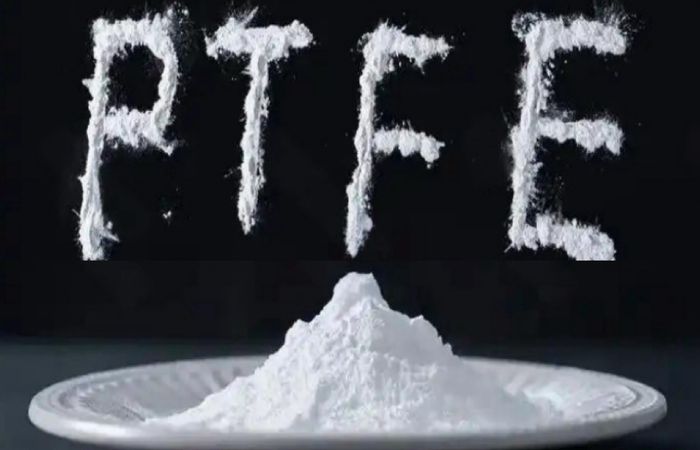
What is PFAS?
PFAS stands for per- and polyfluoroalkyl substances. It is not actually a single substance, but a collective term for fluorine-containing chemical substances.The Organisation for Economic CoCo-operation and Development (OECD) defines PFAS as follows: They are fluorinated substances containing at least one fully fluorinated methyl or methylene carbon atom (which is not bonded to any hydrogen/chlorine/bromine/iodine atoms), meaning that, with a few notable exceptions, any chemical substance containing at least one perfluoromethyl (-CF2) group is a per- and polyfluoroalkyl substance.
In simpler terms:
Perfluorinated compounds: All hydrogen atoms attached to carbon atoms are replaced by fluorine atoms, and the carbon chain ends with polar functional groups.
Polyfluoroalkyl compounds: At least one carbon chain has all hydrogen atoms replaced by fluorine atoms.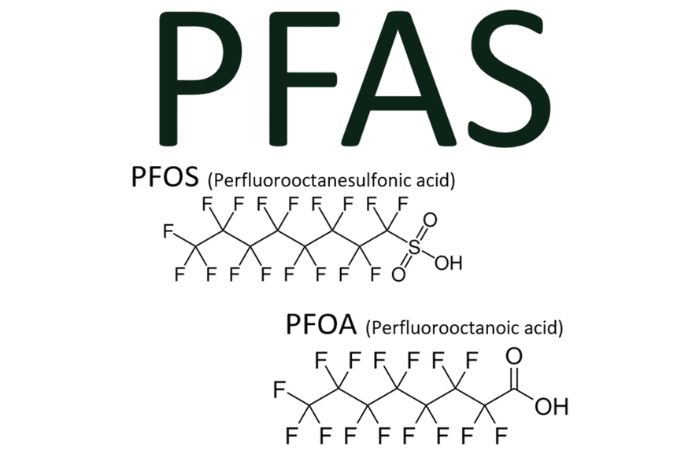
The Chemical Structure of PFAS
A simplified structure of PFAS can be represented as:
R-(CF₂)n-CF₃
Where:
- R: Functional group or carbon chain connected to the fluorinated chain
- CF₂: Repeating carbon-fluorine units
- n: Number of repeating units
- CF₃: Trifluoromethyl group containing one carbon atom bonded with three fluorine atoms
Different molecular structures lead to different properties and applications.
Is PTFE classified as a PFAS?
PTFE has the chemical structure:
-(CF₂-CF₂)n-
This means PTFE contains carbon-fluorine (C-F) bonds, which are also commonly found in PFAS chemistry.
However, PTFE is different from many PFAS substances that are widely discussed in environmental regulations.
PTFE is a high molecular weight fluoropolymer with a stable polymer chain structure. Unlike small-molecule PFAS such as PFOA and PFOS, PTFE has:
Extremely high molecular weight
Strong chemical stability
Very low mobility
Low tendency to migrate under normal application conditions
Therefore, PTFE is generally considered a fluoropolymer material, rather than a typical small-molecule PFAS compound of regulatory concern.
Why Are People Concerned About PFAS?
PFAS are sometimes called “forever chemicals” because many PFAS compounds are highly resistant to environmental degradation.
This has raised concerns about:
- Environmental persistence
- Potential accumulation
- Long-term exposure risks
However, not all fluorinated materials have the same behavior.
The properties, mobility, and potential risks of fluorinated substances depend greatly on their molecular structure.
High molecular weight fluoropolymers such as PTFE behave differently from small-molecule PFAS.
Does PTFE Contain PFOA?
One of the most common questions is:
Does PTFE contain PFOA?
Historically, PFOA was used as a processing aid during some PTFE manufacturing processes.
However, modern PTFE production has moved away from traditional PFOA-based processing methods due to regulatory changes and industry improvements.
Finished PTFE products are not intentionally manufactured with PFOA.
For applications requiring higher safety standards, PTFE materials can also be supplied with certifications and compliance documentation according to specific industry requirements.
Is PTFE Safe?
PTFE has been used worldwide for decades in demanding industries, including:
- Semiconductor manufacturing
- Chemical processing
- Medical equipment
- Livsmedelsbearbetning
- Aerospace applications
Its popularity comes from its unique properties:
- Excellent chemical inertness
- Wide operating temperature range
- Non-reactive characteristics
- Low friction performance
When used within recommended temperature and application limits, PTFE is considered a reliable engineering material.
Is PTFE Banned?
No, PTFE is not currently explicitly banned in most countries. However, the increasing focus on PFAS regulations has caused many engineers, manufacturers, and procurement professionals to question whether PTFE remains a reliable material choice for future applications.
The key concern is not whether PTFE itself is prohibited, but whether the PTFE materials selected by companies comply with evolving regulatory requirements and customer expectations.
Most existing PFAS regulations focus on specific low-molecular-weight PFAS substances, such as PFOA, PFOS, and PFHxS, rather than finished PTFE products. Therefore, companies using PTFE should pay more attention to material compliance, manufacturing processes, and supplier documentation.
European Union (EU)
The European Union has one of the strictest PFAS regulatory frameworks worldwide, mainly through REACH (Registration, Evaluation, Authorisation and Restriction of Chemicals).
Current restrictions primarily target specific PFAS substances that are persistent and potentially harmful to the environment, including PFOA, PFOS, and PFHxS.
Although PTFE itself is not currently banned in the EU, companies supplying PTFE components for European markets may need to provide documentation such as:
- REACH compliance statements
- PFAS declarations
- Information regarding restricted substances used during manufacturing
For European customers, the main consideration is whether the PTFE material meets regulatory and supply chain requirements.
United States (USA)
In the United States, PFAS regulations mainly focus on substances such as PFOA and PFOS, environmental contamination, industrial emissions, and certain consumer products.
Some states have introduced restrictions on products containing intentionally added PFAS, especially in food-contact and consumer applications. However, these measures generally do not represent a direct ban on industrial PTFE materials.
For industrial users, selecting a supplier that can provide material certifications and compliance information is becoming increasingly important.
Japan
Japan’s PFAS regulations primarily focus on specific restricted substances, including PFOS and PFOA, under chemical management regulations.
Currently, these regulations target specific PFAS chemicals rather than finished PTFE products. PTFE continues to be widely used in applications requiring:
- Kemisk beständighet
- High-temperature stability
- Elektrisk isolering
Kina
China has strengthened controls on certain persistent chemical pollutants, including specific PFAS substances regulated under international environmental agreements.
However, PTFE remains widely used in industrial applications. Due to its excellent chemical resistance, temperature performance, and long-term stability, PTFE continues to be selected for demanding applications when appropriate material standards and manufacturing controls are followed.
What Should PTFE Users Consider?
For companies evaluating PTFE for new projects, the most important factors are not simply whether PTFE is banned, but whether the material can meet current and future application requirements.
Before selecting a PTFE supplier, companies should consider:
- Whether the material complies with relevant regulations
- Whether the supplier can provide compliance documentation
- Whether the manufacturing process is controlled and traceable
- Whether the material is suitable for the specific operating environment
With proper material selection and supplier support, PTFE remains a widely used engineering material for industries such as chemical processing, semiconductor manufacturing, food processing, medical equipment, and aerospace.
Slutsats
PTFE and PFAS are closely related because they both involve carbon-fluorine chemistry. However, PTFE is a high-performance fluoropolymer with a highly stable molecular structure, making it fundamentally different from many low-molecular-weight PFAS compounds that are the primary focus of environmental regulations.
Understanding the differences between PTFE, PFAS, and PFOA can help engineers, manufacturers, and procurement professionals make more informed material decisions based on performance requirements, regulatory compliance, and long-term application reliability.
As a professional fluoropolymer manufacturer, HANSA is committed to providing high-quality PTFE materials and custom PTFE solutions for demanding industrial applications. We support our customers with strict quality control, material traceability, and comprehensive documentation, including material test reports, REACH and RoHS compliance documents, FDA-related certifications for applicable applications, and other required quality certifications.
Whether you need PTFE-skivor, rods, tubes, or custom-machined PTFE components, HANSA can provide reliable material solutions tailored to your specific application requirements. Contact us today to discuss your project needs and find the right PTFE solution for your industry.

 Swedish
  English
  Arabic
  Tibetan
  German
  Spanish
  French
  Hindi
Hindi  Indonesian
  Italian
  Japanese
  Korean
  Dutch
Dutch  Portuguese
  Thai
Thai  Russian
  Chinese