


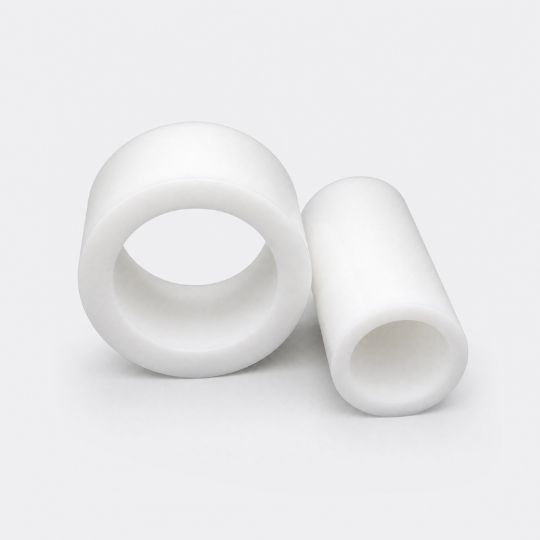
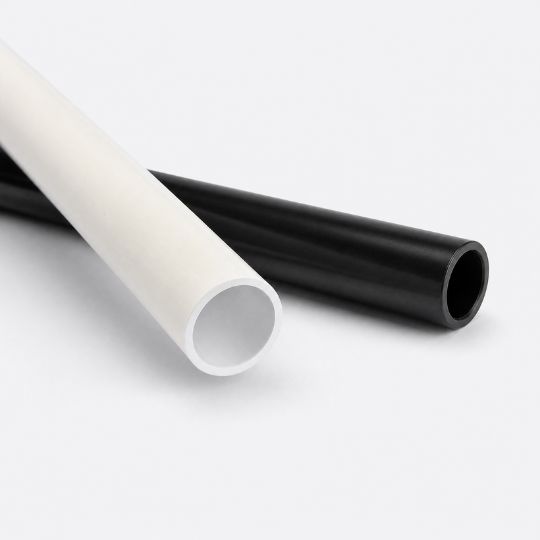
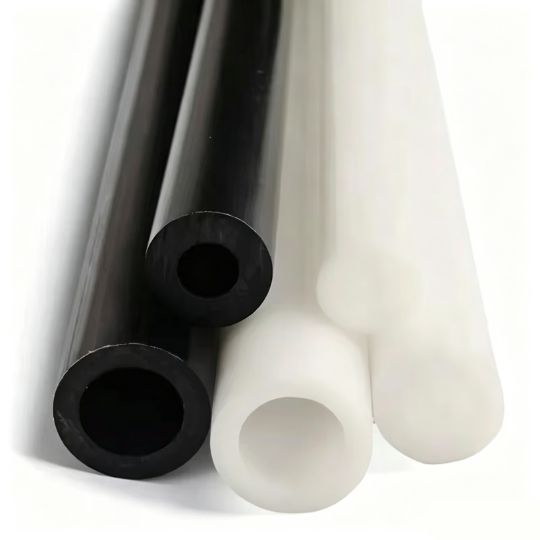
Why do Engineers Buy From HANSA
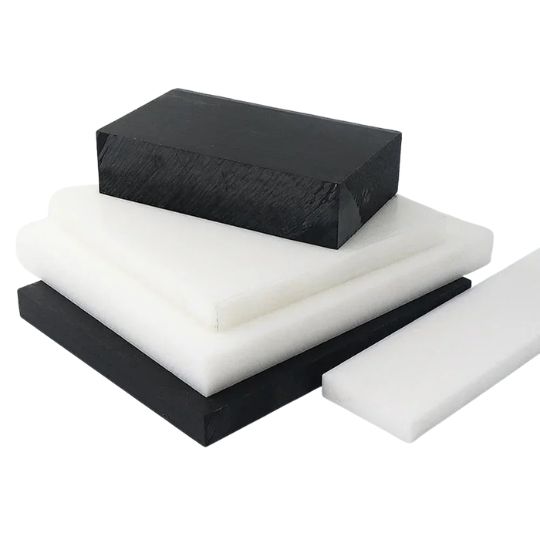
- Extensive product range, including POM sheets, POM rods, and tubes
- Custom services available, such as cutting, drilling, milling, and CNC machining
- Experienced team and state-of-the-art production equipment to provide tailored solutions for your projects
- Global supply capabilities, supported by long-term, stable partnerships with freight carriers
- POM tubes hold certifications including FDA, ISO 9001, SGS, REACH, and RoHS
What is POM Tube
POM, also known as acetal, is a collective term for two series: POM-H and POM-C. The well-known brand “Delrin” actually refers to POM-H; Delrin® is a registered trademark of Delrin USA LLC.
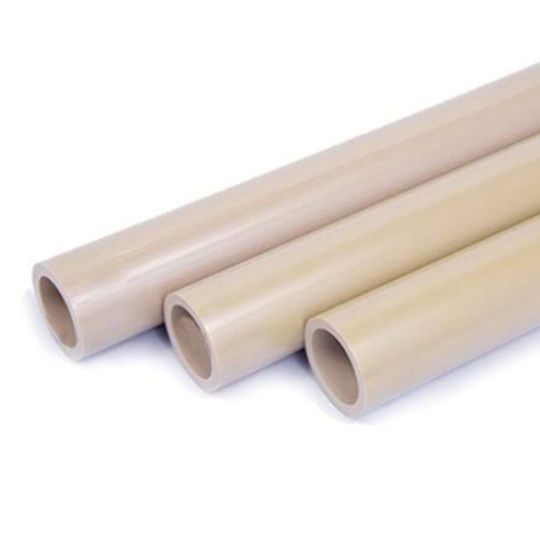
HANSA manufactures both POM-H and POM-C plastic products, including sheets, rods, tubes, and machined parts. With 20 years of manufacturing experience and 10 years of export expertise, our team possesses the deep knowledge required to provide the most suitable solutions for your projects.
Types of POM Tube
Due to its exceptional mechanical properties, POM is affectionately known as “metal-like plastic” (or “steel-substitute plastic”), as its performance rivals that of actual metal. POM is used across many sectors, from automotive and aerospace to electronics and food processing. Its largest single application is mechanical engineering.
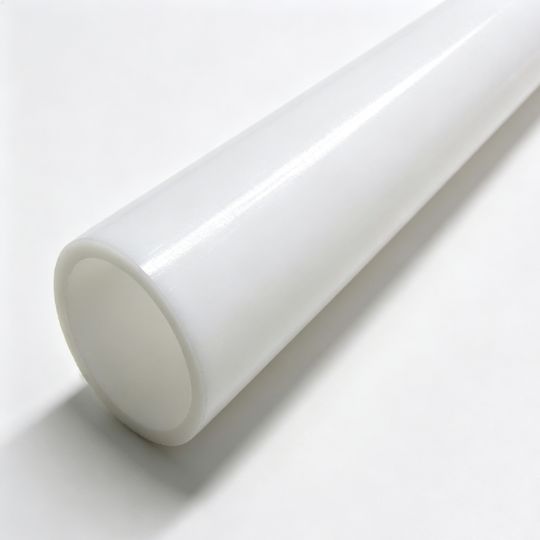
HANSA’s POM-H offers superior rigidity, hardness, and density, ensuring a longer service life.
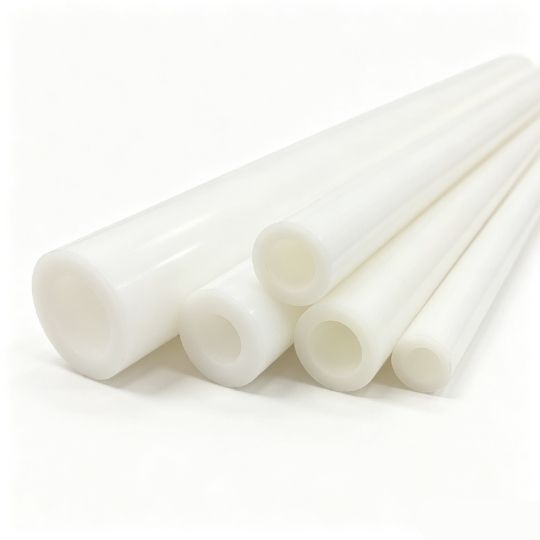
POM-C offers better chemical resistance than POM-H. If your project involves hot water, steam, or strong chlorinating agents, this is the preferred choice.
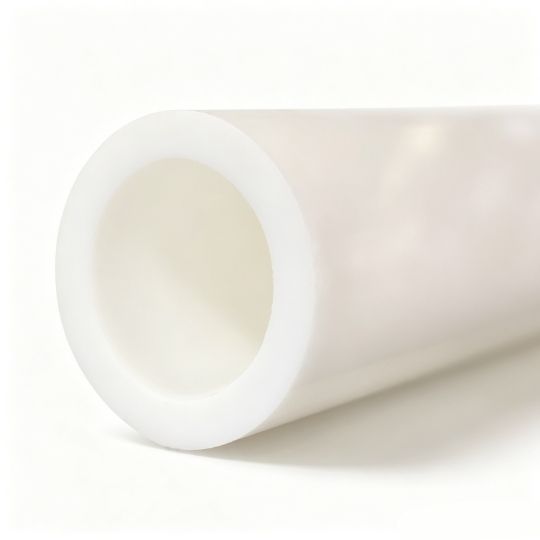
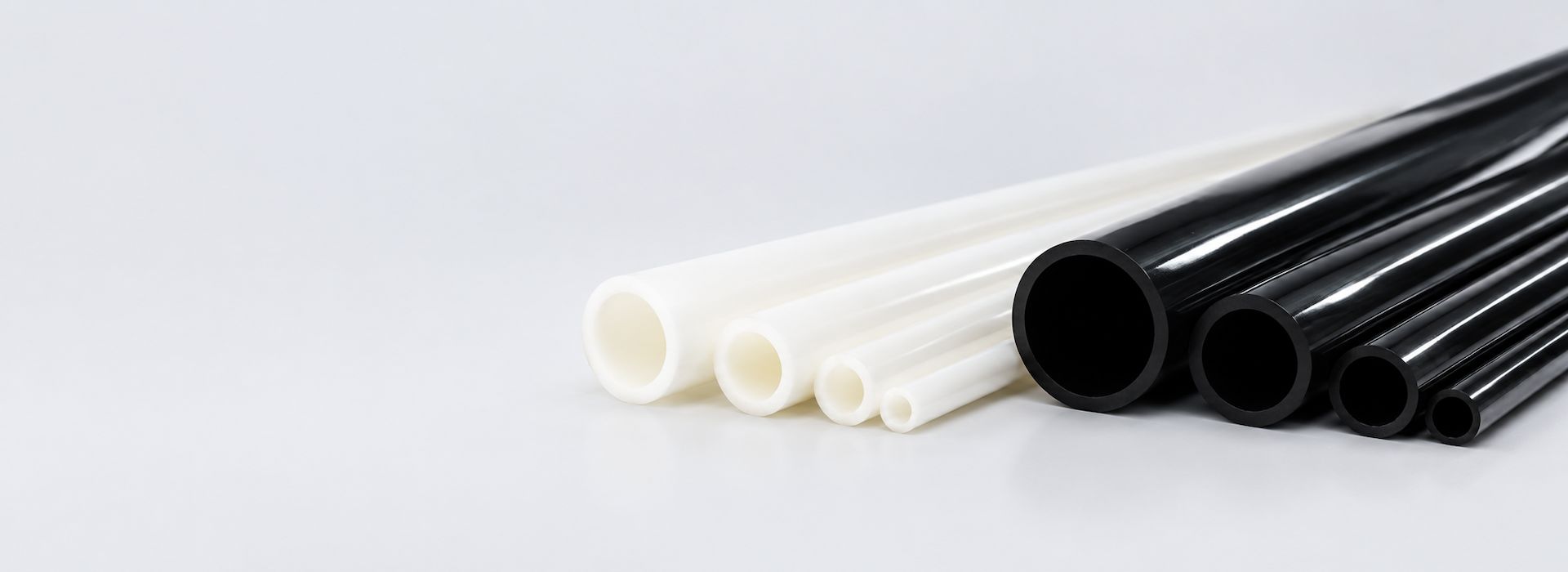
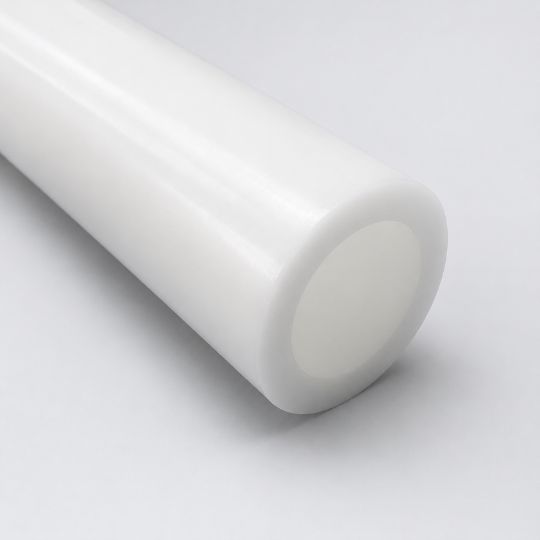
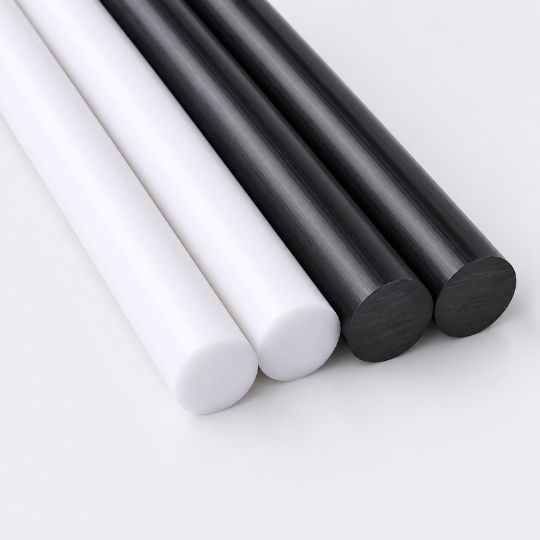
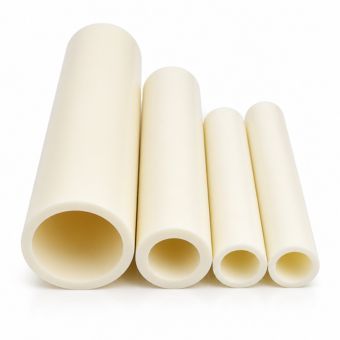
“Natural” refers to white Acetal (POM) tubes to which no color masterbatch has been added. HANSA typically maintains a stock of natural-colored POM tubes in standard specifications.
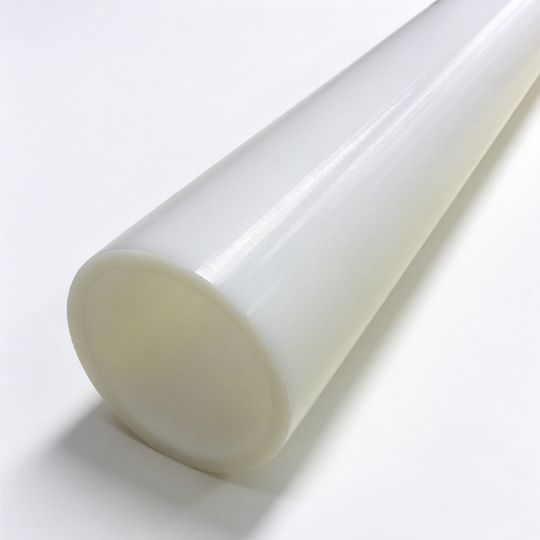
HANSA produces both POM and Delrin acetal tubing, please feel free to contact us for a quote.
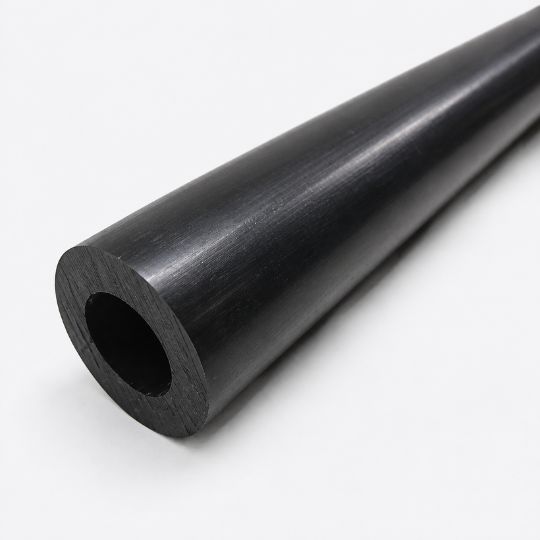
Pure POM resin raw material with added black masterbatch—only the color is altered. HANSA typically keeps this tubing in stock.
POM Tube Sizes and Properties
- Natural POM Tube
- Black POM Tube
- Typical properties
| Size (OD/ID x length, mm) | Actual OD (mm) | Actual ID (mm) | Reference weight (kg/pc) |
| 8/4×1005 | 8.2 | 3.3 | 0.055 |
| 12/8×1005 | 12.7 | 7.8 | 0.105 |
| 12/10×1005 | 12.9 | 10 | 0.070 |
| 25/12×1005 | 25.5 | 12.5 | 0.573 |
| 25/17×1005 | 25.5 | 16.8 | 0.525 |
| 28/12×1005 | 29.2 | 10.4 | 0.831 |
| 28/14×1005 | 28.2 | 13.8 | 0.695 |
| 29/22×1005 | 29.2 | 16 | 0.645 |
| 32/18×1005 | 32.7 | 17 | 0.865 |
| 32/22×1005 | 32.5 | 21.5 | 0.680 |
| 35/20×1005 | 36 | 18.5 | 1.038 |
| 35/22×1005 | 35.8 | 18.6 | 0.933 |
| 38/24×1005 | 38.4 | 23 | 1.058 |
| 39/18×1005 | 39.1 | 18.6 | 1.324 |
| 40/36×1005 | 41 | 30.4 | 0.822 |
| 42/27×1005 | 41.8 | 24.5 | 1.311 |
| 46/25×1005 | 46.7 | 25.2 | 1.760 |
| 46/38×1005 | 46.5 | 35.8 | 1.000 |
| 52/34×1005 | 52 | 34 | 1.730 |
| 53/40×1005 | 52.2 | 39.9 | 1.430 |
| 56/34×1005 | 56.3 | 34.3 | 2.198 |
| 62/38×1005 | 63 | 38.2 | 2.836 |
| 62/47×1005 | 62.8 | 48.2 | 1.822 |
| 67/38×1005 | 67.3 | 37.7 | 3.539 |
| 72/50×1005 | 72.2 | 49.7 | 3.087 |
| 72/57×1005 | 71.9 | 57.8 | 2.067 |
| 81/58×1005 | 79.7 | 57 | 3.383 |
| 91/58×1005 | 91.1 | 57.9 | 5.424 |
| 101/91×1005 | 101 | 91.4 | 2.225 |
| 103/75×1005 | 103.2 | 76.2 | 5.590 |
| 106/81×1005 | 106.8 | 81.1 | 5.576 |
| 106/98×1005 | 106.8 | 97.3 | 2.226 |
| 114/96×1005 | 114.38 | 95.22 | 4.205 |
| 121/96×1005 | 122.8 | 94 | 7.120 |
| 122/86×1005 | 122.5 | 85.5 | 8.630 |
| 122/99×1005 | 122.1 | 99.4 | 5.298 |
| 123/100×1005 | 123.4 | 99.4 | 5.895 |
| 130/95×1005 | 129.6 | 95.9 | 8.600 |
| 385/330×1005 | 385 | 330 | 48.905 |
| Size (OD/ID x length, mm) | Actual OD (mm) | Actual ID (mm) | Reference weight (kg/pc) |
| 12/8×1005 | 12.7 | 8 | 0.105 |
| 12/10×1005 | 12.7 | 10 | 0.065 |
| 42/27×1005 | 42.3 | 25.2 | 1.311 |
| 52/34×1005 | 52.4 | 34.3 | 1.761 |
| 52/39×1005 | 51.8 | 38.9 | 1.305 |
| 56/34×1005 | 56.1 | 34.4 | 2.227 |
| 62/39×1005 | 62.3 | 38.5 | 2.743 |
| 72/57×1005 | 71.9 | 57.8 | 2.067 |
| 72/30×1005 | 71.9 | 30.9 | 4.76 |
| 78/58×1005 | 80.5 | 57.3 | 2.895 |
| 78/58×1220 | 80.5 | 57.3 | 3.64 |
| 81/58×1005 | 81.5 | 58 | 3.56 |
| 91/58×1005 | 90.86 | 57.65 | 5.8 |
| 102/91×1005 | 101.5 | 91 | 2.27 |
| 106/81×1005 | 106.8 | 80 | 5.616 |
| 121/85×1005 | 121.13 | 84.35 | 8.522 |
| 130/95×1005 | 129.54 | 95 | 8.6 |
| 385/330×1005 | 385 | 330 | 48.905 |
| Eigendom | POM-H (homopolymer) | POM-C (copolymer) |
| Dikte | 1.41-1.43 g/cm³ | 1.38-1.41 g/cm³ |
| Water absorption, 24 h | 0.2-0.4 % | 0.2-0.4 % |
| Treksterkte | 60-70 MPa | 50-62 MPa |
| Rek bij breuk | 20-30 % | 25-40 % |
| Notched impact | 6-10 kJ/m² | 7-12 kJ/m² |
| Smeltpunt | 165-175 °C (329-347 °F) | 165-175 °C (329-347 °F) |
| Continuous service temperature | -40 to 100 °C (-40 to 212 °F) | -40 to 100 °C (-40 to 212 °F) |
| Diëlektrische sterkte | 18-20 kV/mm | 18-20 kV/mm |
POM, Acetal, and Delrin all belong to the same family of plastics, representing different grades within that family. POM (polyoxymethylene) and Acetal (polyacetal) are general terms, encompassing two specific grades: POM-H and POM-C. Delrin refers specifically to POM-H and is a trademark of DuPont.
“POM Tube” and “POM Tubing” refer to the same thing—hollow, rigid tubular products—and the terms are often used interchangeably. There is no difference in the material itself; rather, the distinction arises from varying interpretations within the industry. Generally, “tube” refers to rigid, thick-walled piping, while “tubing” typically refers to rigid piping that is flexible enough to be coiled.
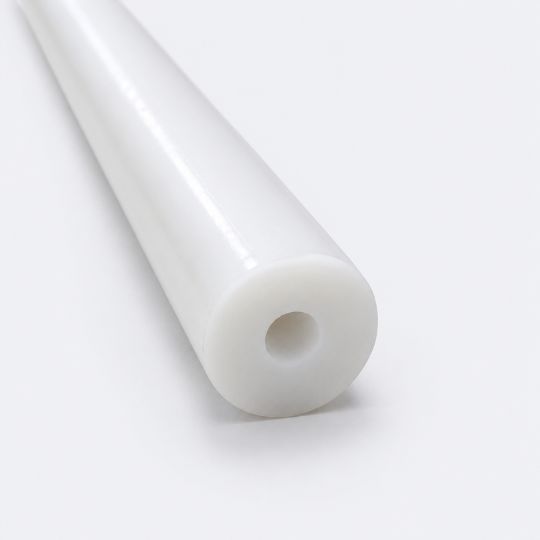
At HANSA, POM tubes are available from stock in 1005 mm lengths. If you require a shorter length, we can cut the tube to your specified size, provided it does not exceed this 1005 mm length. For lengths greater than 1005 mm, the items will need to be manufactured.
This list contains the POM tube specifications currently in stock at HANSA. Please let us know your requirements—such as specific dimensions, performance criteria, or operating conditions—and we will recommend the most suitable POM tube for your needs.
The figure is agreed rather than printed as one number for the whole list, because the number that matters is the bore on your drawing. The size table publishes what the held stock measures, so you can see the starting point before you ask. Send the finished bore, the wall and the method you will measure with, and HANSA confirms whether held stock reaches it or the size should be quoted as a run.
They are completely different; POM tubes and PU tubes are made from two distinct materials. While both are widely used in industrial and mechanical sectors, they differ fundamentally in terms of their properties and applications. POM tubes are rigid—offering high strength and excellent wear resistance—and are often used as substitutes for metal components; hence, the material is colloquially known as “synthetic steel” (or “plastic steel”). PU tubes, by contrast, are flexible and elastic; they cannot withstand sustained pressure and are not suitable for use as structural components.
HANSA’s POM tubes meet FDA standards and comply with food safety requirements. If your application is in the food industry, you need not worry about any toxicity issues with these POM tubes. We maintain a fully compliant process—from production through to inspection—supported by relevant official certifications.
What Is POM Tube—The Ultimate Guide
POM tube, also known as acetal tube—these terms refer to the same type of plastic. “POM” stands for polyoxymethylene, which is the chemical and technical designation for this plastic; “acetal” is the common commercial name, derived from the acetal linkages present in its molecular structure.
What Is Acetal Plastic?
“Acetal” is a general term for acetal-based plastics and also serves as the common commercial name for POM—a high-performance thermoplastic engineering plastic that encompasses both copolymers and homopolymers. These materials differ in their properties, intended applications, and operating conditions.
What Are The Main Types of Acetal?
Acetal is divided into two main categories: copolymers and homopolymers. As the name suggests, a copolymer is a chemical substance formed by the polymerization of acetal with other comonomers, whereas a homopolymer is formed by the polymerization of a single type of monomer.
- Acetal copolymer (POM-C)
- Acetal homopolymer (POM-H)—also known as Delrin—is a material where “Delrin®” is a registered trademark of Delrin USA LLC.
Which Industries Use Acetal Tubes?
Acetal tubing offers high mechanical strength, excellent wear resistance, low water absorption, superior dimensional stability, and good chemical resistance, making it highly versatile across a wide range of industries.
Farmaceutische industrie
FDA-compliant acetal tubing, with its chemical resistance and low water absorption, is used for the transport of medical fluids. It remains unaffected by cleaning agents and chemical substances and is resistant to bacterial growth. Its dimensional stability and ease of machining allow for the production of precision components, such as parts for endoscopes and handles for medical instruments.
Food Processing Industry
Food-grade acetal tubing is essential to ensure safety and hygiene. It is used for components in dairy processing equipment, beverage filling machines, and fluid transport lines. Due to its low coefficient of friction and wear resistance, POM (polyoxymethylene) is also utilized for conveyor rollers.
Automotive Industry
POM is used for various automotive components—such as fuel system lines, bushings for window regulators, and sleeves for seatbelt retractors—thanks to its outstanding chemical resistance and excellent wear resistance.
Industrial Machinery
POM tubing is commonly used for fluid transport or machined into structural components, including those for high-pressure fluid conveyance, pneumatic and hydraulic systems, internal pump components, valve bushings, and mechanical bearings.
Electronics and Electrical Industry
With its excellent electrical insulation properties combined with high mechanical strength, acetal is ideal for applications such as insulating bushings and cable conduits. Furthermore, its superior dimensional stability and ease of machining make it suitable for internal connecting tubes in precision electronic instruments, as well as components for semiconductor wafer processing equipment.
Lucht- en ruimtevaartindustrie
Acetal tubing is used for fluid system conduits within aircraft cabins, providing corrosion resistance, electrical insulation, and wear resistance, thereby enhancing flight safety.
Marine Engineering
It is used for wear-resistant components in underwater marine equipment, as well as for air supply and drainage piping in submersibles.
What Are The Applications of Acetal Tubes?
Acetal tubes can be machined into a wide variety of precision components. Thanks to their excellent dimensional stability, they are highly suitable for machining and maintaining precise dimensional tolerances. Common industrial POM (acetal) parts include:
- Bearings and bushings
- Gears and sprockets
- Rollen
- Wear strips and guide rails
- Valve and pump components
- Electrical insulation parts
- Components for food processing equipment
What Is The Difference Between Homopolymer and Copolymer Acetal?
Homopolymer(POM-H)
POM-H, also known as Delrin, is produced through the direct polymerization of formaldehyde. It possesses higher density, hardness, and strength. Its continuous operating temperature range is -50 to 90°C.
Copolymer(POM-C)
POM-C is produced through the copolymerization of formaldehyde with other comonomers, typically ethylene oxide or dioxolane. It offers superior chemical resistance compared to POM-H, making it the preferred choice for environments where strong chlorinated cleaning agents are present. The continuous operating temperature range for POM-C is -40°C to 100°C.
What Is The Difference between Delrin® and Generic Acetal?
Delrin® is a registered trademark of Delrin USA LLC and refers to POM-H. The term “generic acetal” encompasses two categories: POM-H and POM-C.
HANSA manufactures POM tubes in both of these categories. They are available in stock in white and black—the latter achieved solely through the addition of pigments.
How Does Acetal Compare to UHMW or nylon?
All three are used where metal would once have been, and none of them substitutes for the other two.
A nylon tube is tougher, and some grades take heat better, but nylon absorbs several times more moisture than acetal and grows as it takes that moisture up. On a POM tube bore that has to stay on size, that is usually the deciding difference.
UHMW has the lowest friction of the three and outstanding abrasion resistance at low load. It is also soft and far less stiff, so it creeps under load and will not hold a machined tolerance the way acetal does, and it is stubborn to machine cleanly.
A POM tube sits between them: more friction than UHMW, less moisture movement than nylon, and the stiffness and machinability that let a part be made once and stay made. When a bore has to stay round or a thread has to stay tight, acetal is the answer; when the duty is pure sliding wear at low load, UHMW wins; when the temperature or the impact is beyond acetal, nylon is worth a look.
Can Acetal be Machined or Fabricated Easily?
Yes. Acetal turns and mills with sharp tools and positive rake, needs no coolant, and clears its chip with an air blast, so tolerances that would take a second operation in a softer plastic come off in one pass.
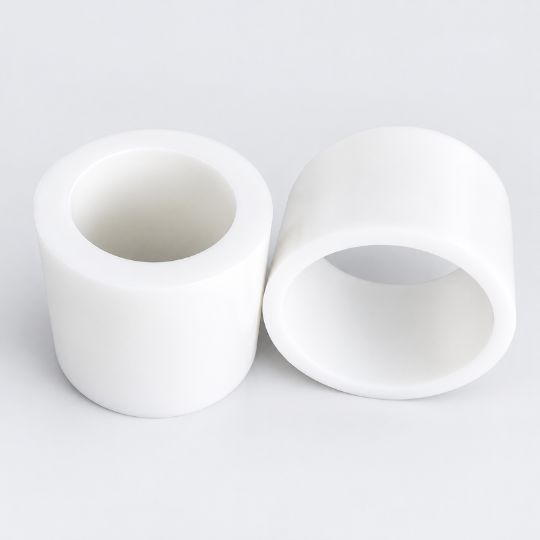
HANSA machines tube to drawing as well as holding it as stock, so the same POM tube order covers your blank and your finished part.

 Dutch
 English
 Arabic
 Tibetan
 German
 Spanish
 French
 Hindi
 Indonesian
 Italian
 Japanese
 Korean
 Portuguese
 Thai
 Russian
 Swedish
 Chinese