


As electric vehicles become more widely adopted, the demand for lightweight components that can replace metal parts continues to grow. As a result, nylon has quickly gained market share.When manufacturing precision nylon components, one key consideration is the production process: should the material be melt-extruded and then machined, or should it be directly injection molded?
If you are a manufacturer or processor, understanding nylon’s melting point is essential.In this article, you’ll learn everything you need to know about nylon melting points and the key considerations for processing nylon materials.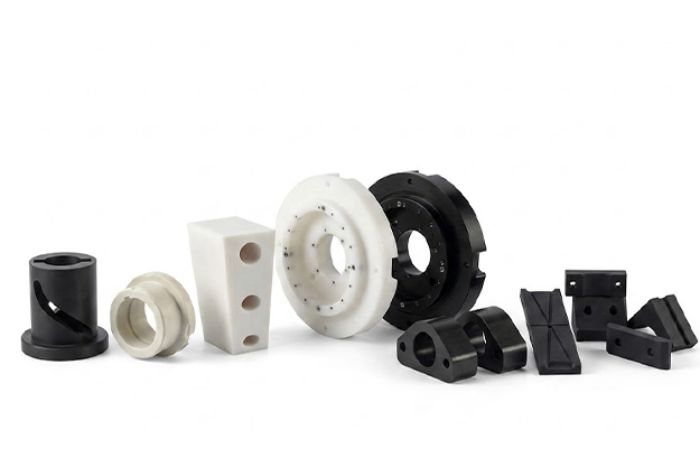
The Melting Point of Nylon 6 and Nylon 66
Nylon 6 (PA6): Melting point: 220°C (428°F)
Nylon 66 (PA66): Melting point: 260°C (500°F)
What is Melting Point?
Melting point is the equilibrium temperature at which a material transitions from a solid to a liquid under standard atmospheric pressure, with the solid and liquid phases coexisting.
In this context, melting refers to the process in which the crystalline regions within the material begin to transform into a disordered liquid structure.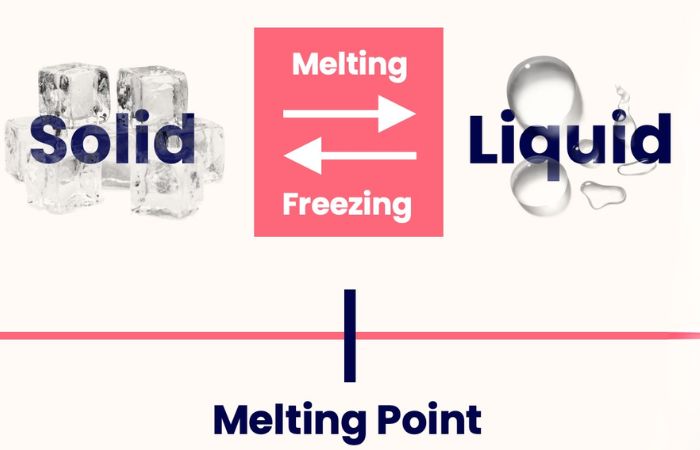
Factors Affecting Nylon Melting Point
Molecular Structure
Molecular structure is the key factor that determines the melting point of nylon. Different types of nylon are made from different monomers, resulting in variations in molecular chain structure and chain arrangement.
In general, the more regular and symmetrical the molecular chains are, the stronger the intermolecular forces become, leading to a higher melting point.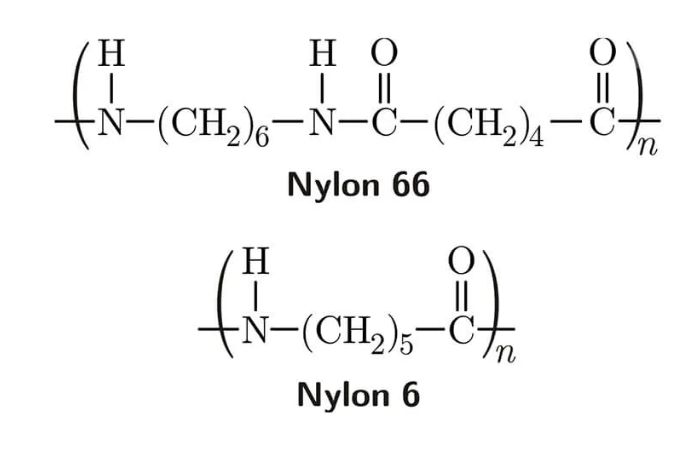
Amide Group Density
Nylon molecular chains contain amide groups (-CONH-), which can form hydrogen bonds. These hydrogen bonds strengthen the attraction between molecular chains and promote a more compact molecular arrangement.
The higher the density of amide groups, the stronger the hydrogen bonding and the tighter the molecular chains are held together. As a result, nylon exhibits better heat resistance. More energy is required to break these intermolecular interactions during melting, which leads to a higher melting point.
Molecular Weight
As molecular weight increases, entanglement between molecular chains becomes greater, resulting in a more stable crystalline structure and improved overall polymer stability. Consequently, the melting point tends to increase.
However, once the molecular weight reaches a certain level, further increases have only a limited effect on the melting point.
Moisture Content
Because nylon is hygroscopic, moisture content is an important consideration during processing and manufacturing.
Absorbed moisture can lower the melting point of nylon. Excessive moisture may also trigger hydrolysis during processing, leading to defects such as bubbles and voids and ultimately reducing the material’s mechanical properties.
Modification
In general, adding fillers such as glass fibers or carbon fibers does not significantly change the melting point of the base nylon resin. However, copolymerization can affect it.
Copolymerization is the process of chemically combining two or more different monomers into the same polymer chain to create a copolymer. In contrast, conventional Nylon 6 is a homopolymer produced from a single monomer, caprolactam.
Copolymerization typically lowers the melting point because the incorporation of different monomers disrupts the regular arrangement of the molecular chains and weakens intermolecular hydrogen bonding. This makes it more difficult for the material to form a complete and highly ordered crystalline structure.
Generally, the less regular the crystalline structure, the lower the melting point.
Difference Between Melting Point and Glass Transition Temperature
Nylon reaches its glass transition temperature before it reaches its melting point, meaning it softens before it melts. The following sections describe the different stages of nylon as it is heated.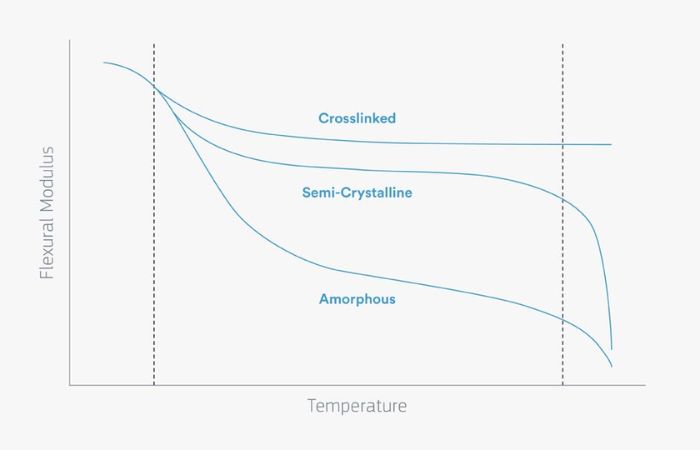
Below the Glass Transition Temperature
When the temperature is below 50°C (122°F) for PA6 and below 60°C (140°F) for PA66, the material remains in a hard, glassy state. The temperature is not yet high enough to soften the material, and the molecular chains of nylon cannot move.
At this stage, nylon maintains good dimensional stability, high hardness, and its full mechanical strength. This temperature range is generally suitable for the long-term service use of nylon.
Above the Glass Transition Temperature but Below the Melting Point
At this stage, the temperature ranges from 50°C to 220°C (122°F to 428°F) for PA6 and from 60°C to 260°C (140°F to 500°F) for PA66.
Nylon transitions from a glassy state to a rubbery state, and the molecular chains in the amorphous regions begin to move.
As a result, nylon’s mechanical properties begin to decline. Its tensile modulus and wear resistance decrease, while dimensional changes become more pronounced. The material becomes softer and is more susceptible to deformation under load.
At the Melting Point
When PA6 reaches 220°C (428°F) and PA66 reaches 260°C (500°F), nylon enters the melting stage.
At this point, the crystalline regions begin to melt, causing nylon to transition from a solid to a molten state. The material loses its fixed shape and begins to flow.
As nylon melts, it loses its rigidity, and its mechanical properties decrease significantly.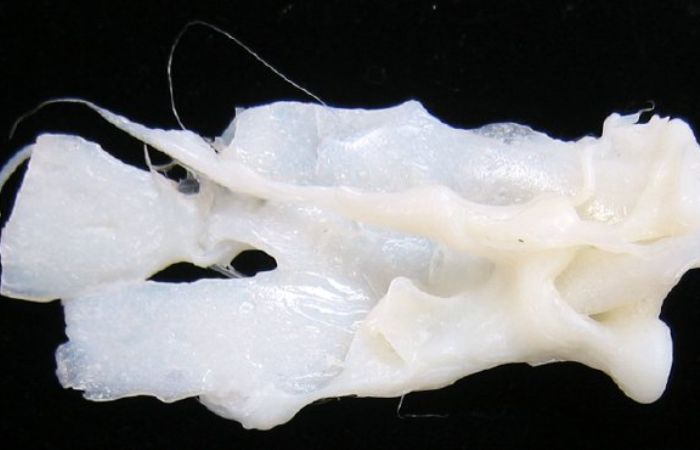
Above the Melting Point
If the temperature continues to rise beyond the melting point, nylon will eventually enter the thermal decomposition stage.
For PA6, decomposition typically begins around 300°C (572°F), while PA66 begins to decompose at approximately 320°C (608°F).
At these temperatures, the polymer chains start to break down, releasing irritating odors. The molten material may also begin to turn yellow or brown.
How Does the Nylon 6 Melting Point Affect Processing Temperature
The melting point is a key parameter for determining the processing temperature, but it is not the same as the processing temperature. In general, the processing temperature should be 10–60°C (50–140°F) higher than the melting point.
When the material is processed at a temperature slightly above its melting point, it melts more completely, resulting in lower melt viscosity and improved flowability. This allows the mold to fill more effectively and helps reduce weld lines and internal stress.
At this stage, nylon can be processed through injection molding or extrusion to produce nylon sheets, nylon rods, nylon tubes, and injection-molded components.
If the Temperature Is Below or Just at the Melting Point
At this stage, the crystalline regions have only begun to melt, and the nylon melt still has relatively high viscosity and poor flowability.
Processing the material immediately can lead to incomplete mold filling and high internal stress. The finished products may have rough surfaces and reduced mechanical properties.
Recommended Processing Temperatures for PA6
Injection molding: 230–280°C (446–536°F)
Extrusion: 220–260°C (428–500°F)
Blow molding: 220–250°C (428–482°F)
Applications Where Nylon’s Melting Point is Critical
Automotive Industry
Nylon is primarily used for components around the engine compartment and is processed through injection molding or extrusion into precision parts such as gears and bearings. These structural components often operate in high-temperature environments, making material safety a critical consideration.
If the operating temperature approaches nylon’s glass transition temperature, its mechanical properties and creep resistance will begin to decline. If the temperature approaches the melting point, the material’s structure can fail completely. Therefore, it is essential to carefully evaluate the safety of nylon components used in high-temperature applications.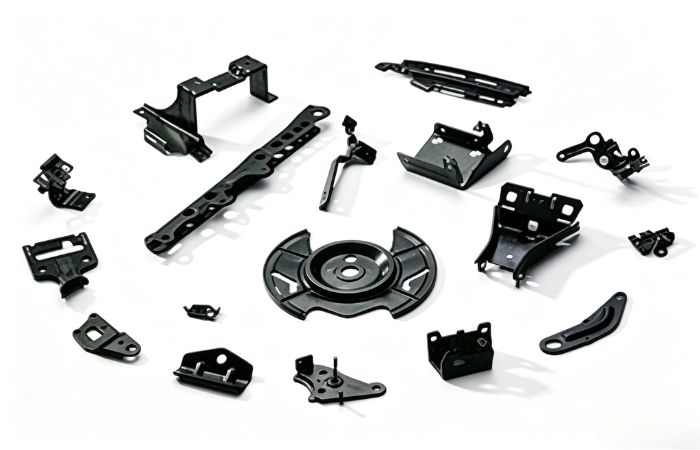
Industrial Applications
Nylon is commonly used in heavy-duty equipment for components such as bushings, rollers, and conveyor guide rails that require high wear resistance and low friction.
In applications involving high-speed friction and localized heating, the surface temperature of the component may become significantly higher than the ambient temperature. It is important to ensure that these localized temperatures do not approach the material’s melting point. In addition, prolonged friction can lead to heat buildup over time, which may cause the material to soften or adhere to mating surfaces once the temperature nears the melting point.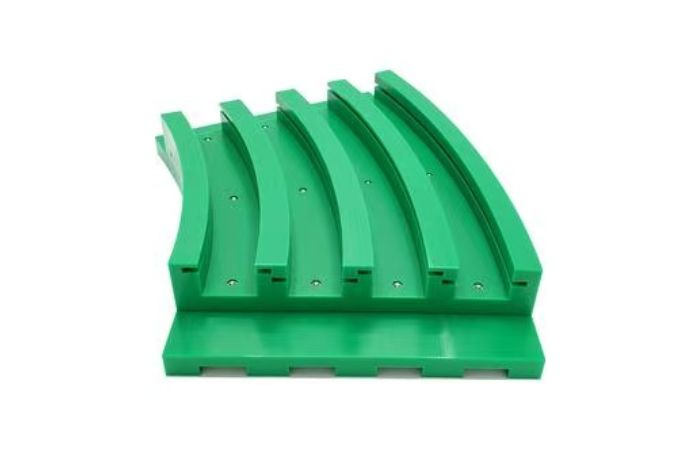
Welding Processes
In welding and thermal joining applications, the melting point is a critical process parameter.
The joining surfaces must be heated above the material’s melting point, but the temperature must be carefully controlled. Excessive temperatures can cause thermal degradation and material failure, while insufficient temperatures can result in incomplete melting and reduced bond strength.
FAQs
1. What Is the Difference Between Melting Point and Service Temperature?
The melting point determines the temperature at which a material melts, while the service temperature refers to the temperature range within which the material can be used continuously over an extended period.
A material cannot be used long-term at temperatures that reach or approach its melting point.
For example, Nylon 6 (PA6) has a melting point of 220–225°C (428–437°F), while its recommended continuous service temperature is 80–120°C (176–248°F).
2. What Is the Thermal Conductivity of Nylon 6?
Nylon 6 has relatively low thermal conductivity and is considered an electrical insulating material.
It is commonly used in applications such as cookware handles, thermal insulation pads, and electrical components.
3. What Is the Coefficient of Thermal Expansion of Nylon 6?
The coefficient of thermal expansion (CTE) of Nylon 6 is approximately 80–100 × 10⁻⁶/°C.
This property is used to evaluate a material’s dimensional stability at elevated temperatures. Nylon 6 has a moderate thermal expansion rate compared with other engineering plastics.
4. What Is the Heat Deflection Temperature of Nylon 66?
The heat deflection temperature (HDT) of PA66 is typically 100–150°C (212–302°F).
HDT refers to the temperature at which a material begins to deform under a specified load.
5. What Is the Decomposition Temperature of Nylon 6?
The decomposition temperature of Nylon 6 (PA6) is approximately 300°C (572°F).
At this temperature, nylon begins to discolor and lose its mechanical properties. As the temperature continues to rise, the polymer chains start to break down, leading to irreversible degradation of the material structure.
결론
A clear understanding of the melting point of Nylon 6 (PA6) is essential for using the material safely and effectively in your application.
While the melting point does not directly determine overall performance, it can significantly influence processing methods, part quality, and material selection.
If, after reading this article, you are still unsure whether Nylon 6 is suitable for your application or whether your equipment is capable of processing it, please 문의하기. Our technical team will be happy to provide professional guidance and support.

 Korean
  English
  Arabic
  Tibetan
  German
  Spanish
  French
  Hindi
Hindi  Indonesian
  Italian
  Japanese
  Dutch
Dutch  Portuguese
  Thai
Thai  Russian
  Swedish
  Chinese