


Gland packing, also called braided packing, is made by braiding a specific material into a dense yet somewhat flexible rope. Its main job is sealing — typically in pumps and valves — to keep liquid from leaking out. Different industries need to seal different media, so the packing has to perform differently in each case, which is why there are so many types. This article covers how many types of packing there are and how to choose the right one for your equipment. 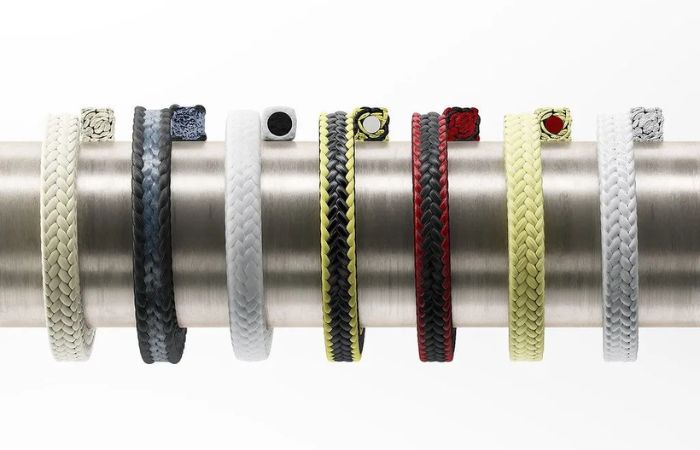
What is Gland Packing and where it used?
Gland packing is a sealing material used in pumps and valves. It is braided from fiber and comes in both rope and ring form, wrapped around the pump shaft or valve stem. The spot where it sits has a technical name: the stuffing box — a ring-shaped cavity located where the shaft or stem passes through the casing. A gland or retaining nut is provided on the outside to ensure a snug fit against the shaft and housing.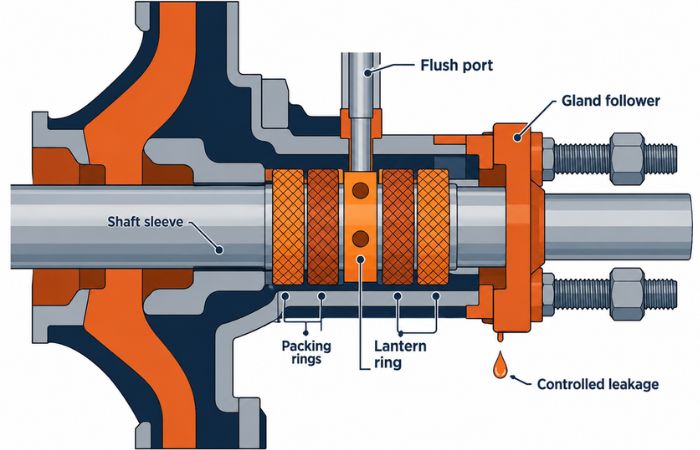
Types of Gland Packing
1.PTFE(Teflon) Gland Packing
PTFE packing comes in two types: oiled and dry (oil-free). The inert oil is added for flexibility, so that during the break-in period the packing settles into steady service sooner without damaging the shaft sleeve or valve stem.
PTFE is chemically inert. It stands up to strong acids, strong bases, and organic solvents, and it reacts with almost nothing. With PTFE gland packing, then, you don’t have to worry about the packing reacting with the medium you’re sealing — which is why it is widely used in corrosive chemical plants and acid-handling equipment.
PTFE fiber also doesn’t shed, so there are no loose fibers breaking off to contaminate the medium — a good fit for clean, contamination-free service such as food or pharmaceutical processing.
PTFE gland packing does have its drawbacks, though. It doesn’t dissipate heat well, and its mechanical strength is lower than aramid or graphite. PTFE’s maximum continuous service temperature is 260 °C (500 °F); above that limit it creeps and loses mechanical strength, and the seal fails.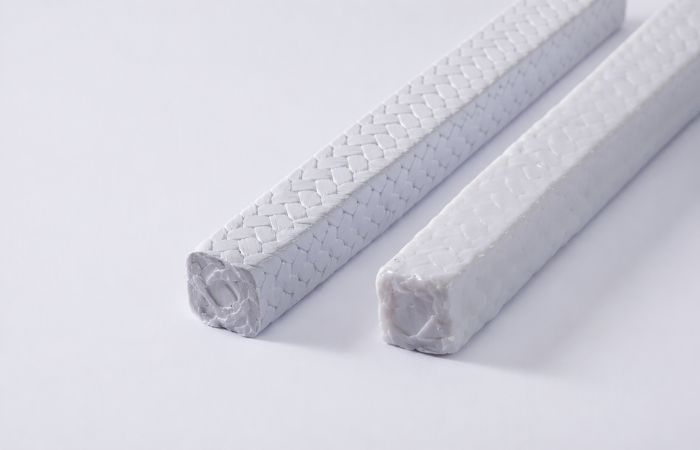
2.Graphite Gland Packing
There are two kinds: packing braided from pure graphite yarn, and flexible graphite packing made through special processing. They perform much the same; the difference is mainly in flexibility.
Pure graphite conducts heat, has low friction, and resists chemicals. Graphite packing’s long-term service temperature range is -200 °C to 450 °C, and as high as 600 °C in a vacuum. Worth noting: in steam or water, graphite tops out at 250–280 °C. Its low friction reduces wear on the shaft sleeve, and it needs no added lubricant, which saves cost.
Flexible graphite packing, also called expanded graphite packing, is made by compressing graphite into flexible foil or yarn. The resulting packing conforms very well, seals efficiently, reduces wear on the shaft sleeve or valve stem, and cuts the energy the equipment uses.
If your project involves high-temperature steam or hydrocarbons — or your equipment is a hot-process pump, a boiler feed pump, a steam valve, or furnace equipment — graphite packing is a perfect match for those conditions.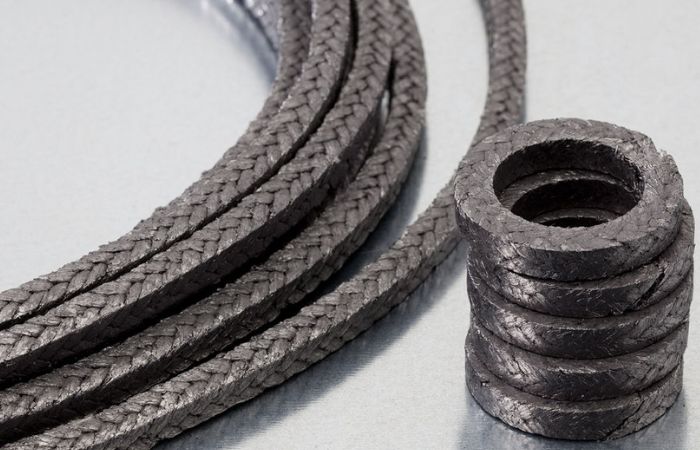
3.Carbon Fiber Gland Packing
Carbon fiber packing is braided from carbonized synthetic fiber and is usually impregnated with graphite and a lubricant. Its main advantages are high mechanical strength and good thermal conductivity — it handles high temperatures up to 400 °C, even 600 °C. It is a strong fit for high-speed rotating pump equipment such as centrifugal pumps, agitators, and heavy refinery equipment.
Carbon fiber has good chemical resistance, generally holding up across a pH range of 2 to 12. That makes carbon fiber packing suitable for services with neither extreme heat nor strongly corrosive chemicals.
Carbon fiber is less brittle than graphite, so carbon fiber packing actually wears the shaft sleeve or valve stem less.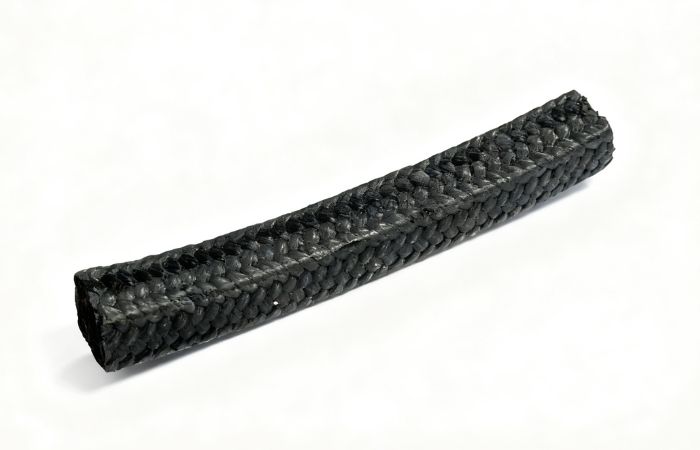
4、Aramid(Kevlar) Gland Packing
Aramid is also called Kevlar — a trademark name owned by DuPont. Both refer to the same material. Aramid packing is usually impregnated with PTFE or a lubricant, because the fiber itself is hard and needs reduced friction. Aramid has extremely high tensile strength, outstanding abrasion resistance, and high resilience, so it can take solid impact — which is why many engineers use aramid in place of asbestos packing.
But high hardness cuts both ways. Tighten the packing too much, or run it with too little lubricant, and it can chew up the shaft sleeve. That’s why you add lubricant — or switch to a hardened shaft sleeve.
Aramid is typically used in heavy-duty, high-pressure service, and in abrasive slurries where good wear resistance is needed — slurry and ash-handling pumps, for example.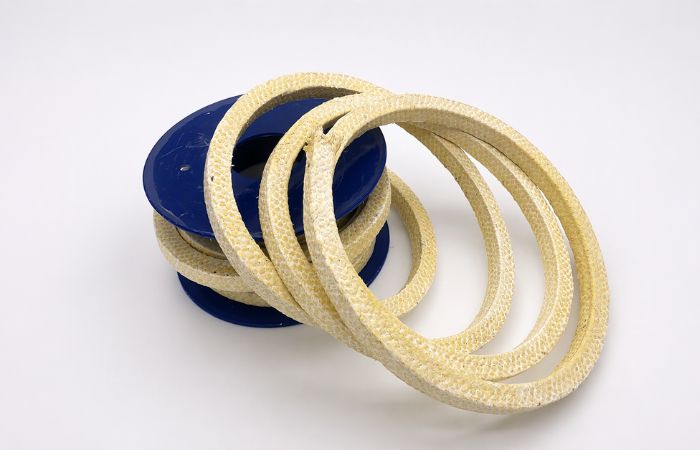
5、Acrylic Gland Packing with PTFE Coating
Acrylic fiber is very hard and resists extrusion well, but it can wear the shaft sleeve too. So acrylic packing is pretreated with PTFE before braiding: the fiber is soaked in a PTFE emulsion, then dried and cured into yarn. It is braided diagonally, and during braiding the yarn gets a second impregnation of PTFE emulsion — which leaves acrylic packing more lubricious and more resistant to chemical attack.
Acrylic packing delivers both environmental and economic benefits. It contains no asbestos and no heavy metals, and unlike graphite it doesn’t shed and contaminate the medium. That’s why acrylic PTFE packing is common in paper mills and pulp mills: it keeps the pulp from darkening, and it costs less than PTFE packing and aramid packing.
Even with the PTFE impregnation, acrylic PTFE packing is still not suitable for strong acids, strong bases, or strong oxidizers — its working pH range is 2 to 12. It is suited to long-term service at moderate temperature, high pressure, and high speed.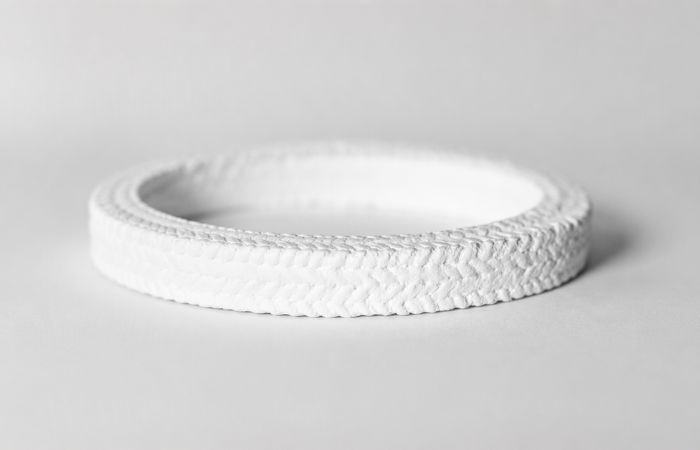
6.Cotton Gland Packing
Cotton is a natural fiber, and packing braided from it is flexible and springy. It is usually impregnated with a lubricant such as grease or tallow, and its maximum service temperature is 120 °C. Cotton fiber packing has poor wear resistance, so it suits low-pressure, low-speed service.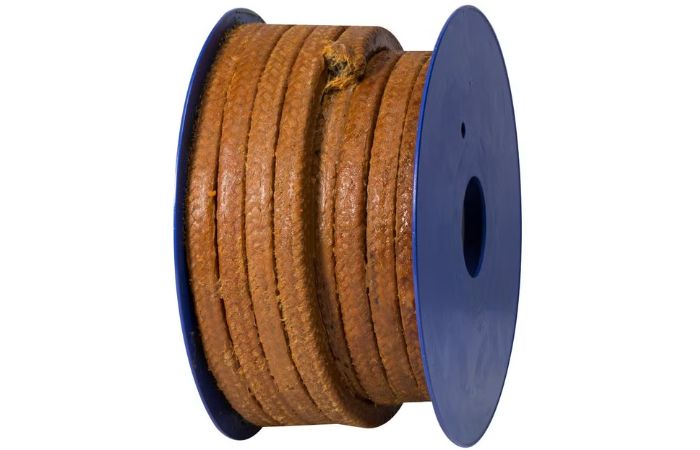
7.Flax Fiber Gland Packing
Flax is a plant fiber, and the packing braided from it has high tensile strength, resists breaking, and is very durable. It is usually impregnated with a lubricating and blocking agent, because flax takes up moisture and swells — yet it is also water-resistant, so in wet service, once it has absorbed enough moisture, the seal actually gets tighter.
Flax gland packing’s long-term service temperature is -40 to 120 °C, and its working pH range is 5 to 9. It is mostly used in marine and offshore engineering — for stern tube, rudder stock, and seawater pump seals, among others.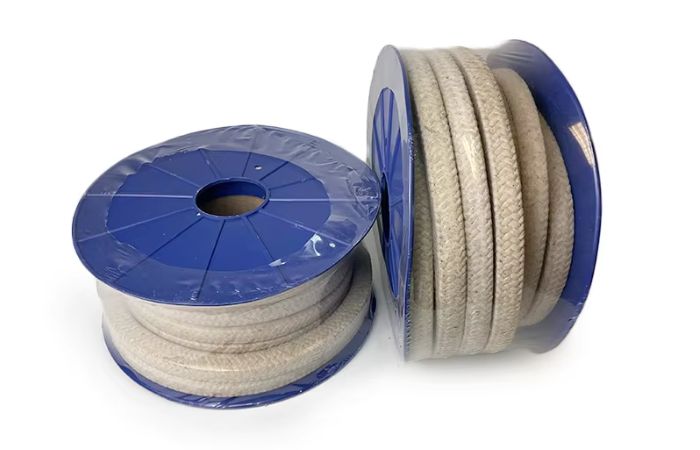
8.Jute Gland Packing
Jute packing is similar to flax packing. The two perform about the same and cost about the same, but there are small differences.
Jute packing fiber is a little stiffer than flax fiber and not as soft, and its wear resistance is somewhat lower too. At the same time, jute packing costs less than flax packing.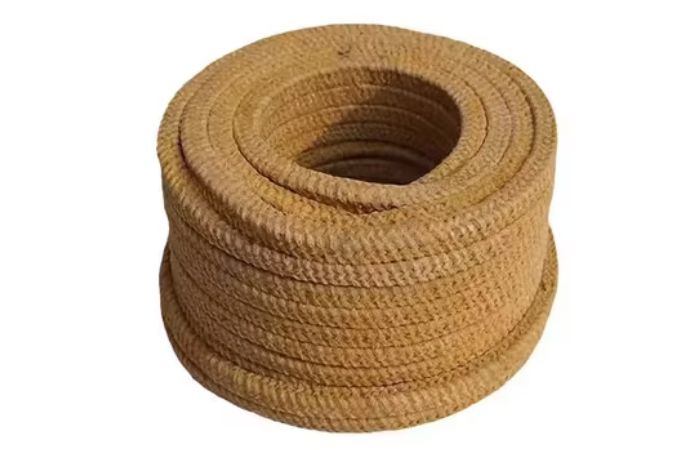
9.Ramie Fiber Packing
In the trade, ramie fiber packing is understood by default to be “packing for water service,” because in a water medium the ramie fiber swells and softens; the packing’s structural strength goes up instead of down, so it wears better and stands up to solids in the medium scouring past it. Ramie packing’s long-term working temperature is -50 to 140 °C, and its pH range is 2 to 12.
Ramie packing is often used for ship seals, and also at food and beverage plants, wineries, and paper mills; some filtration equipment uses it as well.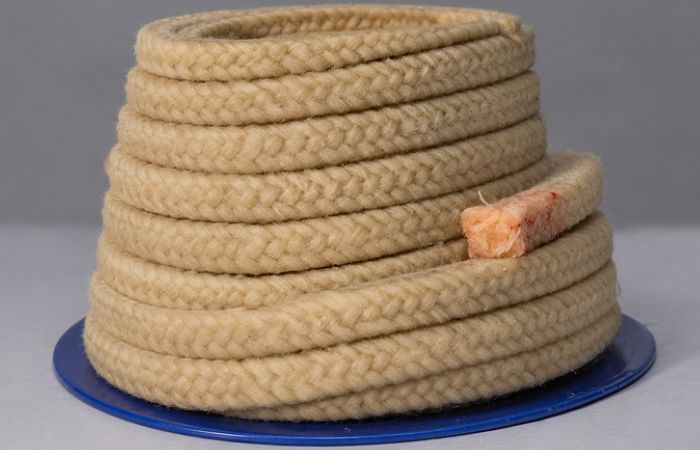
10.Fiberglass Packing
Fiberglass packing has high mechanical strength and extremely high temperature resistance — typically up to 550 °C. But fiberglass is brittle, with poor wear resistance and poor flex resistance, so it is only suitable for static seals or low-speed dynamic seals.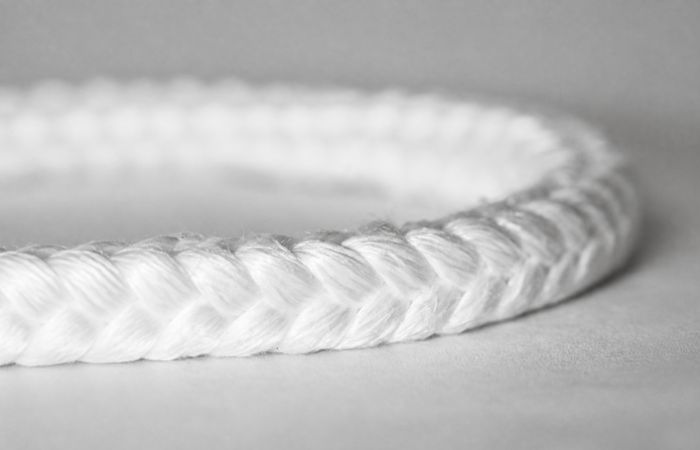
11.Ceramic Fiber Packing
Ceramic fiber packing holds up to heat even better than fiberglass packing — its maximum working temperature is 1000 to 1050 °C. But both fibers are brittle, so ceramic fiber packing usually has fiberglass or alloy wire worked into it to raise its tensile strength. It has good chemical resistance, standing up to most acids, oils, water, steam, and hydrocarbons. It is typically used in ultra-high-temperature applications: boiler doors, high-temperature furnace doors, kiln gaps, oven insulation, and the like.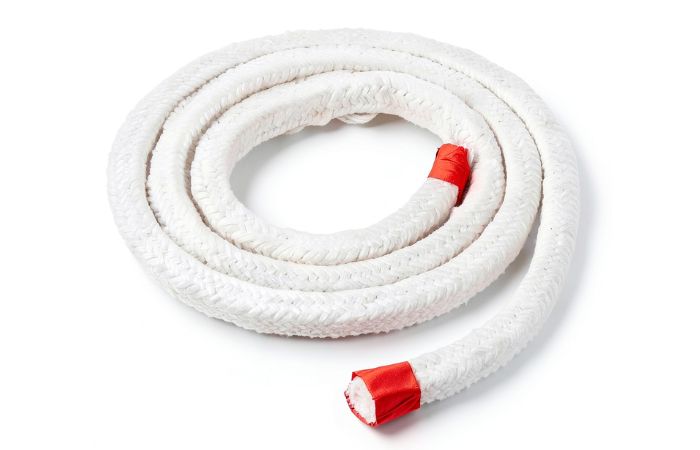
12.Composite Packing
Graphite PTFE Gland Packing(GFO Packing)
GFO packing comes in two forms. One is packing braided from PTFE yarn and coated evenly with graphite particles; the other is packing cross-braided from two yarns, PTFE fiber and graphite fiber. Both are GFO packing: they combine the chemical inertness of PTFE with the heat conduction and lubrication of graphite, and they hold up to 280 to 300 °C.
Because GFO packing makes up for plain PTFE’s weak mechanical strength, it is widely used in refineries, chemical plants, and other industrial settings that need chemical resistance, low friction, and good sealing all at once.
Aramid PTFE/Graphite Gland Packing
To strike a performance balance and offset the low hardness of PTFE and graphite, manufacturers developed packing with aramid fiber at the corners and PTFE or graphite in the body — built to meet the specific demands of different applications.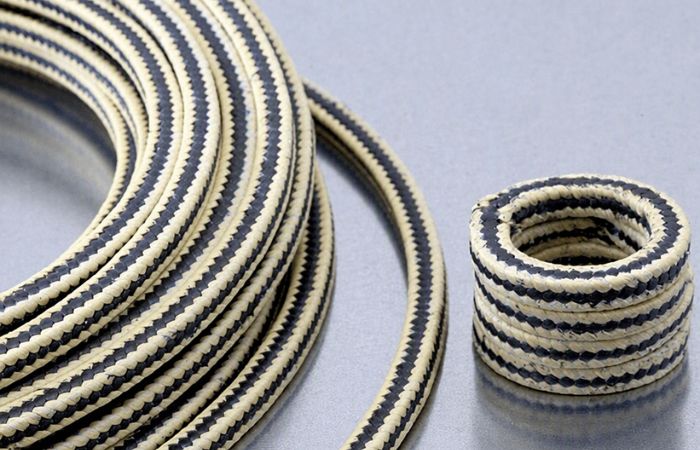
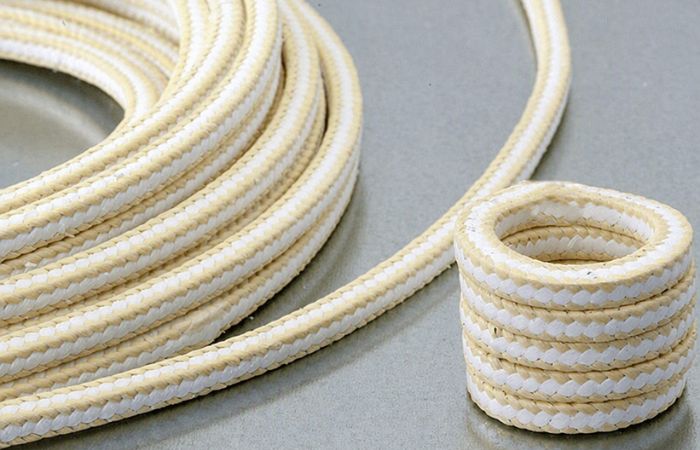
PTFE Carbon Fiber Gland Packing
It combines carbon fiber’s strength with PTFE’s corrosion resistance and low friction, overcoming the weaknesses of plain PTFE packing, which cold-flows and wears poorly, and of pure carbon fiber packing, which tends to wear the shaft journal.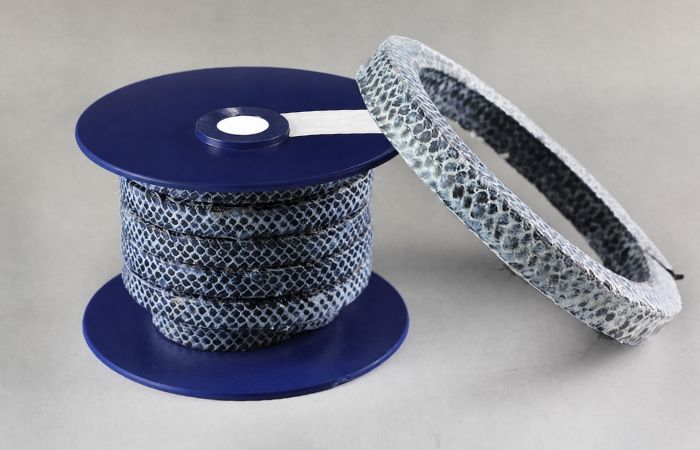
Graphite and Carbon Fiber Packing
Combining the wear resistance, high strength, and heat resistance of graphite and carbon fiber, it has a long-term working temperature range of -250 to 650 °C and holds its performance steady across a wide pH range. It is typically used in pumps, valves, reactors, and reciprocating compressors that handle high-temperature, high-pressure fluids containing fine particles, in the petrochemical, power generation, metallurgy, and paper industries.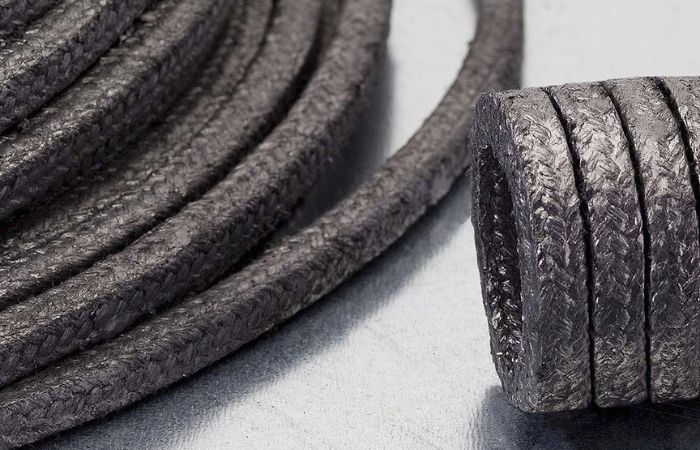
How to Select the Material for Gland Packing
You should pick the packing material from the service conditions: the fluid being sealed, the temperature, the pressure, and the shaft speed.
- High-temperature steam or oils: graphite or carbon fiber. These are the heat-resistant options.
- Corrosive chemicals, or food-grade service: PTFE. Nothing else is as chemically inert.
- Abrasive slurries or sandy water: aramid. It is the one built for wear.
- Then factor in the equipment itself. A valve sits still; the packing only has to hold pressure. A pump runs continuously, so wear resistance becomes the deciding property.
Two combinations to avoid: plain PTFE in a high-speed pump, where it overheats and deforms; and aramid on a brass shaft, where it scores and wears the shaft surface.
Final Thought
That covers just about every packing material on the market, and each one is aimed at a different set of service conditions. If you have read this far and still aren’t sure which packing suits your equipment best, get in touch with us. HANSA is a professional packing manufacturer and can provide a solution built around your application.

 Tibetan
 English
 Arabic
 German
 Spanish
 French
 Hindi
 Indonesian
 Italian
 Japanese
 Korean
 Dutch
 Portuguese
 Thai
 Russian
 Swedish
 Chinese