


Both Polyimide and Polyamide are polymer materials and contain amide-related chemical structures. However, despite the similar names, their performance is very different.
This raises an important question: Which material is right for your project—PI or PA?In this article, you’ll learn the key differences between Polyimide and Polyamide, and how to choose the right material based on your application requirements.
What is Polyimide?
Polyimide (PI) is an advanced engineering plastic known for its outstanding performance in demanding environments. It offers excellent thermal stability, chemical resistance, mechanical strength, and electrical insulation properties. As a result, it is widely used in applications exposed to extreme heat, radiation, and corrosive chemicals.
However, these exceptional properties also make PI more difficult to process. Traditional thermoset polyimide is neither water-soluble nor melt-processable, which means it cannot be manufactured using conventional plastic processing methods. Instead, specialized production techniques are required, significantly increasing its manufacturing cost.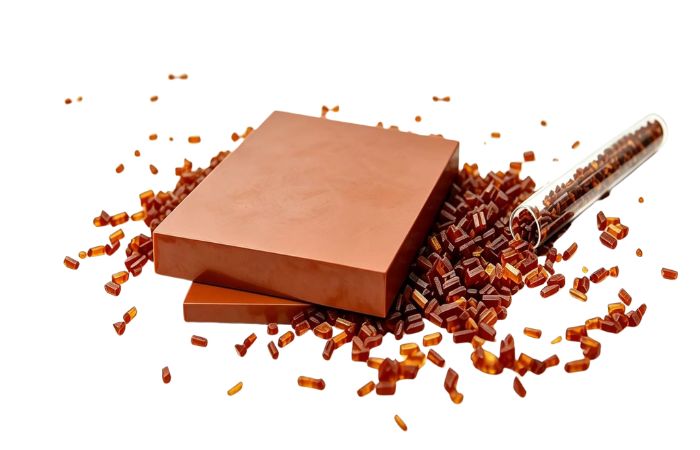
What is Polyamide?
Polyamide (PA), commonly known as nylon, is a semi-crystalline thermoplastic. It was first developed in the 1930s by chemist Wallace Hume Carothers. The first commercial grade was Nylon 6,6.
PA is known for its toughness, flexibility, and cost-effectiveness. Today, it is widely used in two major industries. One is the textile industry, where nylon fibers are used to make fabrics and clothing. The other is the industrial sector, where PA is manufactured into engineering plastic parts and components.
Compared with Polyimide, Polyamide offers a much lower material cost while still providing good heat resistance, wear resistance, and electrical insulation properties. For many general engineering applications, PA can deliver reliable performance at a more economical price.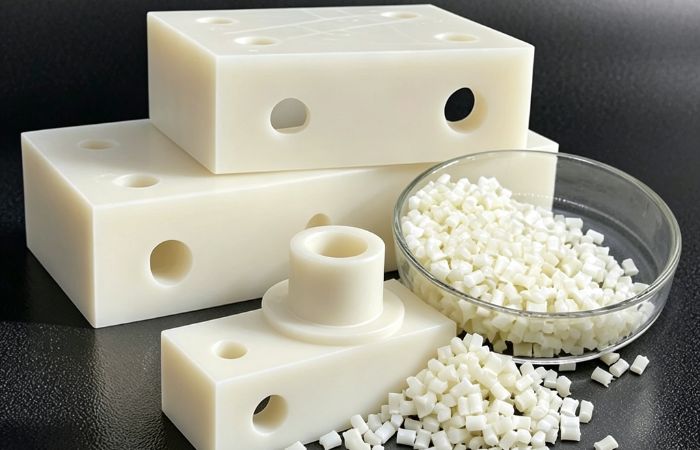
The table below allows you to quickly understand the performance differences between Polyimide and Polyamide.
| ملكيات | وحدة | Polyimide(PI) | Polyimide(PA) |
| Indentity | g/cm³ | 1.43 | 1.14 |
| قوة الشد | ميجا باسكال | 86.2 | 85 |
| الاستطالة عند الكسر | % | 7.5 | 70 |
| Heat Deflection Temperature | درجة مئوية | 360 | 75 |
| Water Absorption(23℃,24hr) | % | 0.24 | 0.3 |
| Flame Retardancy | UL94 | HB | V0 |
The Key Differences between Polyimide and Polyamide
As shown in the table above, the biggest differences between PI and PA are elongation at break and glass transition temperature. In practical applications, this means the key differences are their mechanical performance and temperature resistance.
Polyimide has a continuous service temperature range of -269°C to 300°C (-452.2°F to 572°F), with short-term exposure temperatures exceeding 400°C (752°F). In comparison, Polyamide typically has a continuous service temperature range of -40°C to 120°C (-40°F to 248°F).
As a result, PI is the better choice for extreme high-temperature environments. However, if your application does not require such demanding temperature resistance and cost is a major concern, Polyamide is often the more practical and economical option.
Generation of PI and PA
Polyimide(PI)
The production of Polyimide can generally be divided into two steps.
In the first step, a dianhydride reacts with a diamine through a polycondensation reaction to form polyamic acid (PAA). This intermediate material can be processed into various forms, such as PI films and PI coatings. These products offer low outgassing properties, making them suitable for aerospace, space, and vacuum applications.
In the second step, the polyamic acid undergoes an imidization reaction. During this process, the acid groups combine to form imide bonds, resulting in a highly stable polyimide structure with excellent thermal and chemical resistance.
Traditional thermosetting polyimides cannot be melt-extruded; they can only be manufactured and molded through specialized processes, such as high-temperature curing, which renders them expensive. However, certain soluble thermoplastic polyimides are capable of being processed in this manner.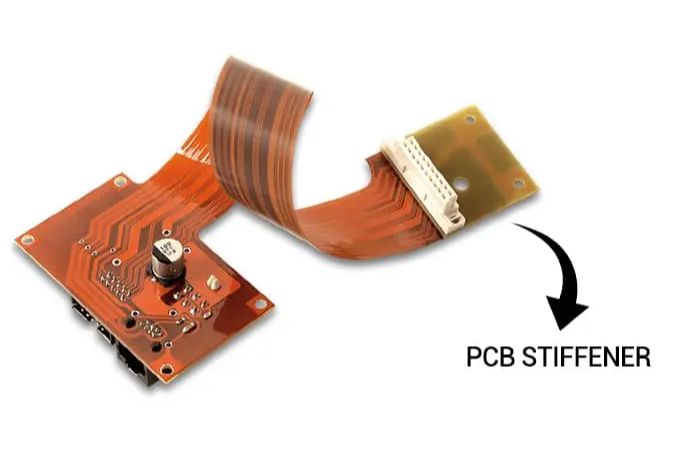
Polyamide(PA)
Polyamide (PA) is produced through a polymerization reaction between a diamine and a dicarboxylic acid. It can be processed using a variety of manufacturing methods, including melt extrusion, injection molding, blow molding, and fiber spinning.
Thanks to its excellent processability, PA is widely used to manufacture components and parts for the automotive, electrical, industrial, and consumer goods industries.
Performance Comparison of Polyimide and Polyamide
Thermal Stability:
Polyimide offers significantly better thermal stability than Polyamide. It can operate continuously in extreme high-temperature environments while maintaining excellent dimensional stability. However, PI is generally more brittle than PA and has lower elongation at break.
Polyamide also provides good heat resistance, but it is best suited for moderate-temperature applications. Prolonged exposure to excessive heat may cause deformation and reduce its mechanical performance over time.
Mechanical Strength:
In most cases, Polyimide provides higher mechanical strength than Polyamide. It offers excellent creep resistance, compressive strength, and dimensional stability, while maintaining its mechanical properties even at elevated temperatures. However, PI is generally less tough than PA and may be more prone to brittle fracture under impact or sudden loading conditions.
Because of its durability and long-term stability, Polyimide is often used in high-performance structural applications where strength and reliability are critical.
Polyamide, on the other hand, offers excellent toughness and impact resistance. However, it tends to absorb moisture, which can reduce its strength and affect dimensional stability. In addition, its mechanical properties decline more rapidly at elevated temperatures, making it better suited for general-purpose engineering applications rather than extreme operating environments.
Electrical Insulation:
Both Polyimide and Polyamide offer excellent electrical insulation properties. However, their performance can differ significantly under certain operating conditions.
Polyimide has an extremely high volume resistivity and can maintain outstanding electrical insulation even at elevated temperatures. Because of this, it is widely used in aerospace, semiconductor, and electronics applications where reliable insulation is critical.
Polyamide also provides excellent electrical insulation and is suitable for most industrial and electrical applications. However, its insulating performance can be affected by environmental conditions. Since PA readily absorbs moisture, its electrical insulation properties may decrease after water absorption, making it less suitable for humid or moisture-prone environments.
Different Applications for Polyimide and Polyamide
Polyimide(PI)
Polyimide offers excellent electrical insulation properties and is widely used in flexible printed circuit boards (PCBs), wire insulation, and protective coatings for electronic components.
Due to its outstanding thermal stability, it is also used as an insulating and heat-resistant material in spacecraft and aircraft components, as well as in protective coatings for automotive engine parts and sensors.
In addition, because of its excellent chemical inertness, high temperature resistance, dimensional stability, and high cleanliness, Polyimide is widely applied in the semiconductor industry.
Polyamide(PA)
Although Polyamide has slightly lower overall performance compared to Polyimide, it still offers several important advantages.
PA provides high toughness, good wear resistance, impact resistance, excellent electrical insulation properties, as well as resistance to oils and fuels. It is well-suited for general engineering applications under moderate temperature conditions, and its lower cost allows it to meet the needs of most industrial applications.
Polyamide also has good processability, relatively high mechanical strength, and decent heat resistance. It is commonly used in automotive components such as engine parts, gears, and bearings. Due to its excellent electrical insulation properties, PA is also widely used in the electrical industry for cables, connectors, and electrical housings.
When to Use Polyimide Instead of Polyamide?
Polyimide is a high-cost material, so it is important to ensure that it is used in the right applications. Selecting the right material is critical.
When choosing materials for your project, several factors should be considered, including operating temperature, mechanical requirements, electrical performance, chemical resistance, and budget. A balanced evaluation of these factors will help you select the most suitable material for your application.
High Temperature Resistance
If the application is not exposed to extreme high temperatures, Polyamide is usually sufficient. PA has a continuous service temperature range of -40°C to 120°C, which is suitable for most general engineering conditions.
However, when the long-term operating temperature exceeds 150°C, or even reaches 200°C, Polyamide—regardless of reinforcement or filled modification—will no longer meet the performance requirements. In these cases, Polyimide is necessary due to its superior high-temperature stability.
القوة الميكانيكية
Polyimide is better suited for high-load applications where long-term creep resistance is critical. It is less likely to deform under sustained stress, making it ideal for demanding structural conditions.
Although Polyamide also offers good mechanical strength, it is more prone to deformation under excessive or continuous loading. In such cases, components may require more frequent replacement, which can increase overall maintenance and material costs over time.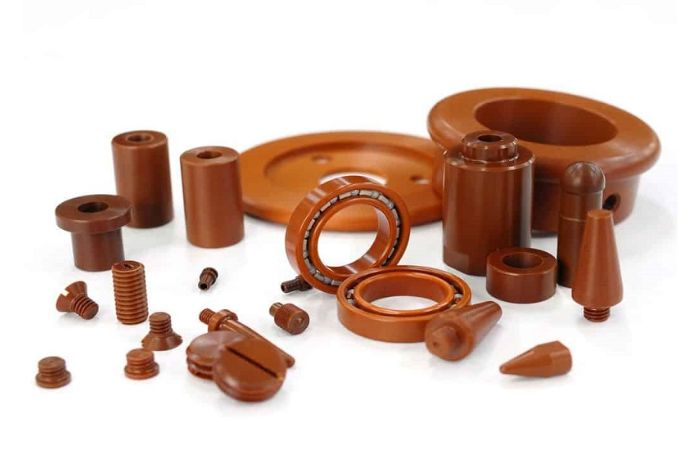
العزل الكهربائي
If your application requires high electrical insulation and operates under high-temperature conditions, Polyimide is a better choice than Polyamide.
PA is only suitable for environments where temperature requirements are relatively low and operating conditions are not extreme.
المقاومة الكيميائية
Polyimide has excellent chemical inertness, along with strong oxidation resistance and long-term durability. It performs very well in harsh chemical environments.
Polyamide also offers good chemical resistance, but it is more sensitive to strong acids, strong alkalis, and certain solvents. In addition, PA absorbs moisture, which can lead to changes in its properties, including a reduction in its glass transition temperature and dimensional stability.
Is Polyimide Worth the Higher Cost Compared to Polyamide?
يكلف
The material and processing costs of Polyimide are significantly higher than those of Polyamide. For standard operating conditions, Polyamide is generally the most cost-effective choice.
Service Life
Under harsh operating conditions, the performance differences between Polyimide and Polyamide become much more significant. Polyamide may experience creep, softening, and loss of dimensional accuracy, which can lead to the need for frequent replacement.
In these cases, Polyimide is the better choice due to its superior stability and long-term reliability in demanding environments.
Failure Risk
Because of its performance limitations, Polyamide may lead to risks such as cracking, deformation, or premature wear. These issues can result in equipment downtime, part replacement, product scrap, maintenance costs, and production losses.
In many cases, the additional costs caused by these failures can be higher than the initial savings from choosing a lower-cost material. Therefore, in critical applications, selecting Polyimide from the beginning is often the more reliable and cost-effective solution.
FAQs
Is Polyamide Suitable for High-Temperature Applications?
Polyamide can be used continuously at moderate temperatures between 80°C and 120°C (176°F–248°F). For higher temperatures between 120°C and 200°C (248°F–392°F), additives such as glass fibers can be incorporated to create reinforced Nylon, which can maintain long-term performance within this range.
However, once the temperature exceeds 200°C (392°F), no Polyamide grade can retain its stability.
What are the disadvantages of polyamide?
In addition to its limited high-temperature resistance, Polyamide has several other drawbacks. It tends to absorb moisture, which can cause swelling and loss of dimensional accuracy in humid environments. It is also sensitive to strong acids, strong alkalis, and certain solvents.
Furthermore, its flame retardancy is moderate and usually requires the addition of flame-retardant additives for applications where fire resistance is needed.
What is the closest material to polyamide?
The materials most commonly discussed as alternatives to PA are PET, POM, and PI. POM has performance closest to PA, with similar rigidity and processability. PI has a chemical structure most similar to PA. It is best to select based on the working environment of your project. PET and POM have low moisture absorption and are suitable for humid environments. PI is heat-resistant and suitable for extreme high-temperature conditions.
What is polyimide used for?
PI offers excellent thermal stability, chemical resistance, extremely low creep, inherent flame resistance, dimensional stability, and high radiation resistance. It is used in extreme environments where traditional engineering plastics fail and is widely applied in the aerospace, electronics, automotive, and semiconductor industries.
What are the different types of polyimide?
Based on material structure, Polyimide can be divided into thermosetting PI and thermoplastic PI. Thermosetting PI cannot be melt-processed, while thermoplastic PI can be extruded or injection molded.
Based on filler type, PI can be categorized as unfilled PI, glass fiber-filled PI, carbon fiber-filled PI, graphite-filled PI, and PTFE-filled PI.
خاتمة
Polyamide is one of the engineering plastics that can meet most industrial requirements, offering a good balance between performance and cost. However, in harsh operating environments, Polyimide generally performs better when factors such as operating temperature, mechanical load, environmental exposure, and long-term performance requirements are considered.
If cost is your primary concern and the operating conditions are relatively mild, Polyamide is a suitable choice.
If the application involves severe conditions, harsh environments, or the risk of significant failure costs, Polyimide is the more reliable option.

 Arabic
  English
  Tibetan
  German
  Spanish
  French
  Hindi
Hindi  Indonesian
  Italian
  Japanese
  Korean
  Dutch
Dutch  Portuguese
  Thai
Thai  Russian
  Swedish
  Chinese