


Polyamide, also known as Nylon, is widely used in automotive manufacturing, industrial equipment, food processing, and many other industries due to its excellent mechanical strength and wear resistance. However, Polyamide is not exactly the same as Nylon in every case. In this article, we will explain what Polyamide really is, where it is used, and whether it is the right material choice for your project.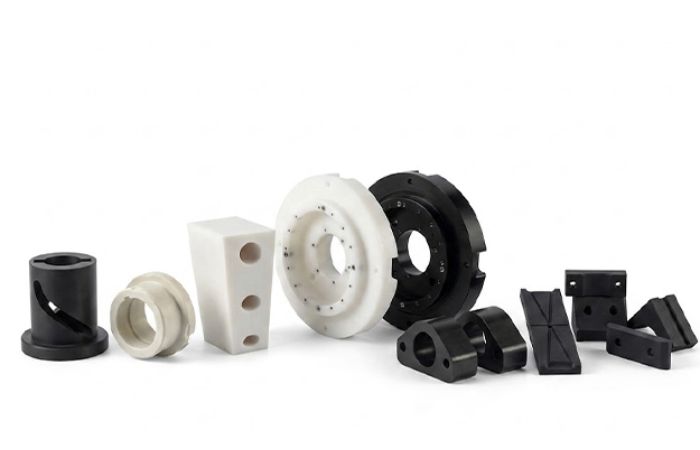
What is Polyamide (PA)?
Polyamide is essentially a class of polymers containing repeating amide bonds (-CONH-) in their molecular chains. In industrial applications, the most common forms of Polyamide are Nylon materials.
In its natural state, Polyamide typically appears in colors such as yellow, light brown, or off-white. It can also be customized with different colors, such as blue, green, or red, by adding color masterbatch during processing.
How Is Polyamide Made?
Polyamide is a class of polymers containing repeating amide bonds in its molecular chains. It is mainly produced through two types of polymerization processes:
Ring-opening polymerization
The raw material used for producing PA6 is Caprolactam (C₆H₁₁NO), which is a cyclic molecule. Under the catalytic effects of water and heat, the ring structure opens and the molecules connect end-to-end, forming long Nylon polymer chains..jpg)
High-temperature polymerization
The raw materials used to produce PA66 are Hexamethylenediamine and Adipic acid. Through high-temperature condensation polymerization, they first react to form Nylon salt while releasing water (H₂O). During polymerization, the two monomers are arranged alternately and connected through amide bonds, forming long PA66 polymer chains.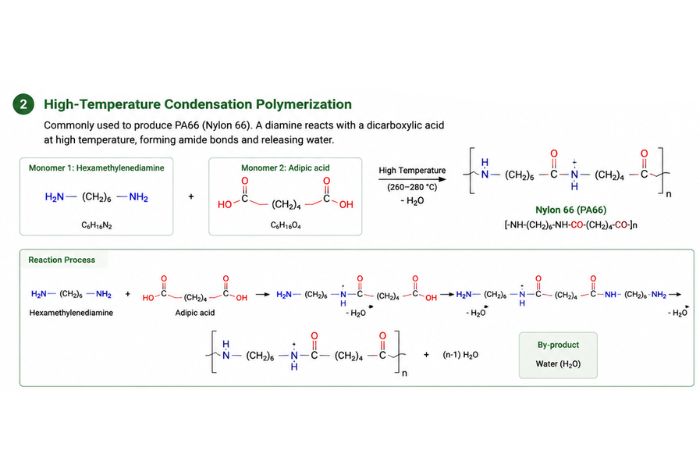
Types of Polyamide
Polyamide can be divided into three main categories based on whether its molecular chain contains aromatic rings:
Fully Aromatic Polyamide
As the name suggests, the molecular chain of fully aromatic polyamide consists primarily of aromatic rings and amide bonds. These polyamides offer extremely high mechanical strength, flexural modulus, heat resistance, and chemical resistance.
A typical example is aramid, which is commonly available in fiber or fabric form. It is widely used in air filtration systems, helmets, fiber-optic cables, engine components, reinforced pipes, and other demanding applications.
Semi-Aromatic Polyamide
Semi-aromatic polyamide contains both aliphatic structures and aromatic rings in its molecular chain. Compared with conventional polyamides, these materials offer higher heat resistance, lower water absorption, better dimensional stability, and higher mechanical strength.
Polyphthalamide (PPA) is a typical example of semi-aromatic polyamide. It combines flexibility with impact resistance and is commonly used in air coolers, motor insulation components, electrical connectors, jet engine components, bearing pads, and other industrial applications.
Aliphatic Polyamide
Aliphatic polyamide is the most important category of engineering thermoplastics. Its molecular chains are mainly composed of methylene groups (-CH₂-) and amide bonds (-CONH-). These materials offer good toughness, easy processability, excellent wear resistance, and relatively low cost.
Typical materials include PA6, PA66, PA11, and PA12. The numbers in the designations are related to the number of carbon atoms in the monomers used to produce the polyamide. For polyamides made from diamines and dicarboxylic acids, the first number represents the number of carbon atoms in the diamine, while the second represents the number of carbon atoms in the dicarboxylic acid.
Properties of Polyamide
机械强度
Polyamide offers high mechanical strength, rigidity, and excellent wear resistance. By combining high strength, toughness, and lightweight properties, it is often used as an alternative to metal components.
For example, Polyamide is widely used in mechanical equipment for parts such as gears and bushings, as well as wear-resistant and self-lubricating components, including guide rails, wear plates, and other sliding parts.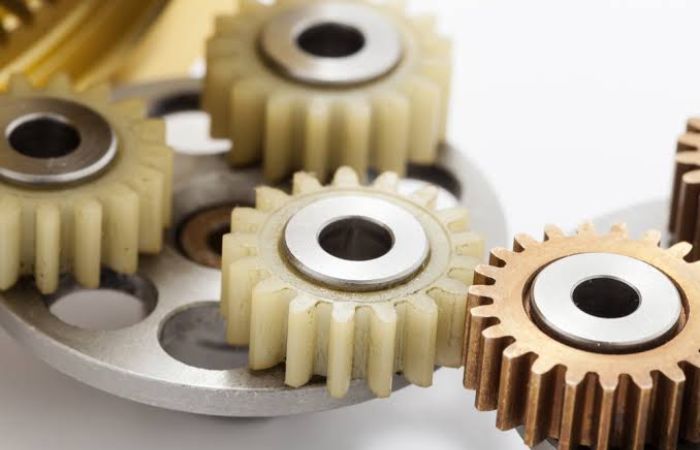
Thermal Property
Polyamide can maintain good dimensional stability even under high-temperature conditions. However, its temperature resistance varies depending on the specific grade and formulation. The typical temperature performance of common engineering polyamides is as follows:
PA6: Continuous service temperature range: -40 to 100°C; melting point: approximately 220–230°C
PA66: Continuous service temperature range: -40 to 120°C; melting point: approximately 255–265°C
PA12: Continuous service temperature range: -50 to 100°C; melting point: approximately 175–180°C
PPA: Continuous service temperature range: -40 to 150°C; melting point: typically above 300°C
Chemical Resistant
Polyamide offers good chemical resistance, especially against oils, lubricants, fuels, and other hydrocarbon-based substances. However, because Polyamide molecular chains contain amide bonds, this structure has a certain degree of polarity and can easily interact with water molecules through hydrogen bonding. As a result, Polyamide has limited resistance to strong acids, strong alkalis, and water.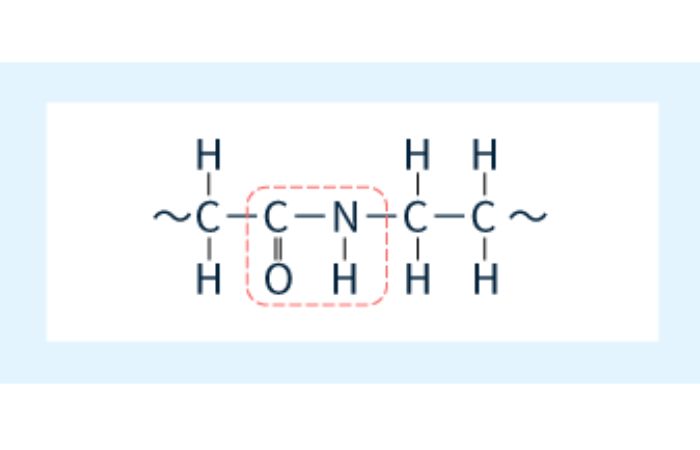
Physical property
Polyamide has a relatively low density, which provides significant lightweight advantages. The density of PA6 is approximately 1.13 g/cm³, while PA66 is around 1.14 g/cm³. In comparison, some metals have much higher densities, such as aluminum at approximately 2.7 g/cm³ and steel at around 7.8 g/cm³.
When Polyamide can meet the performance requirements of an application, it can replace metal materials in certain cases. This helps reduce equipment weight, lower energy consumption, and ultimately save costs.
The low density of Polyamide also provides another advantage: excellent machinability. Polyamide can be easily processed through various methods, including CNC machining, cutting, turning, and milling, allowing it to be manufactured into different shapes and precision components.
Advantages and Limitations of Polyamide
优势
- Excellent Mechanical Properties
Polyamide offers excellent mechanical properties, including high stiffness, outstanding wear resistance, good flexibility, and impact resistance. These balanced properties make it suitable for applications that require long-term mechanical performance and durability.
Typical applications include gears, bushings, bearings, wear strips, and other mechanical components used in industrial equipment.
- Lightweight Advantage
One of the most outstanding features of Polyamide is its low density, which makes it a common alternative to metal materials. When used as mechanical components, Polyamide can help reduce equipment weight, lower energy consumption, decrease manufacturing costs, and improve overall operating efficiency.
- Easy Machining
Polyamide can be processed through various methods, including CNC machining, turning, milling, cutting, and injection molding. Due to its lower density and softer nature compared with metals, Polyamide causes significantly less tool wear during machining and can be manufactured into various complex mechanical components.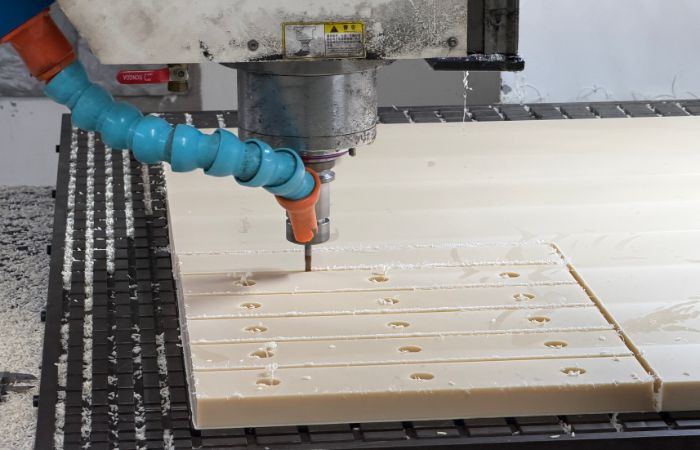
限制
- Moisture Absorption
Moisture absorption is one of the most significant limitations of Polyamide. Due to the strong polarity of the amide bonds in the PA molecular chains, Polyamide can interact with water molecules in the environment and form hydrogen bonds. This moisture absorption can cause dimensional changes and reduce mechanical properties. Therefore, Polyamide is not recommended for long-term use in high-humidity environments.However, modified grades such as moisture-resistant PA12 can provide improved dimensional stability.
- Limited High-Temperature Performance
Except for fully aromatic polyamides and certain high-performance grades such as PPA, the temperature resistance of other polyamide categories is considered moderate. In particular, aliphatic polyamides, including engineering Nylon materials such as PA6, PA66, and PA12, typically have a maximum continuous service temperature of around 100–150°C.
If your application requires continuous operation at 150°C or higher, other high-performance polymers may be more suitable, such as 窥视, PPSU, and Polyimide (PI).
- Environmental Impact on Dimensional Stability
The dimensions of Polyamide components can be affected by various environmental factors, including humidity, pressure, and temperature. Therefore, when selecting Polyamide for a specific project, it is important to consider whether the material can meet the required performance and dimensional requirements.
This is especially important for components that require tight tolerances and high precision.
- Limited UV Resistance
Polyamide has relatively limited resistance to ultraviolet (UV) exposure. If Polyamide is used outdoors or in environments with strong UV radiation for extended periods, adding UV stabilizers to the material is recommended to improve its weather resistance.
How Are Polyamide Products Manufactured?
Polyamide is first synthesized through polymerization reactions, where monomers form different types of Polyamide polymers in a molten state. After adding various additives, the molten Polyamide is extruded into long, thin strands, which are then cooled and solidified through a water bath process. The solidified strands are cut into small pellets, typically around 3–4 mm in size, to produce Polyamide resin pellets.
These resin pellets are then transported to processing facilities, where they are melted again and manufactured into final Polyamide products through different production methods.
- Injection Molding
Polyamide pellets are heated until melted and then injected into customized molds, where they cool and solidify into the desired shape. This manufacturing method is suitable for mass production and complex components. However, the cost of customized molds is relatively high.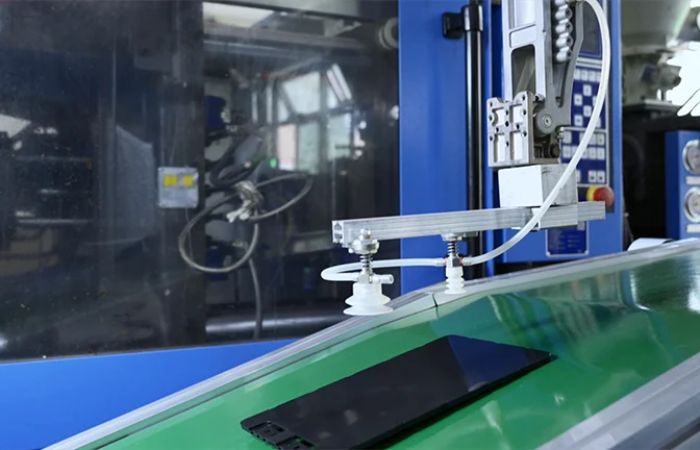
- Extrusion
Extrusion is one of the most widely used manufacturing methods for Polyamide products. During this process, Polyamide resin is heated and plasticized, then pushed forward by a screw through a die to form continuous profiles.
Extrusion allows continuous production without length limitations and offers relatively low production costs. It is commonly used for manufacturing Polyamide rods, tubes, sheets, and profiles.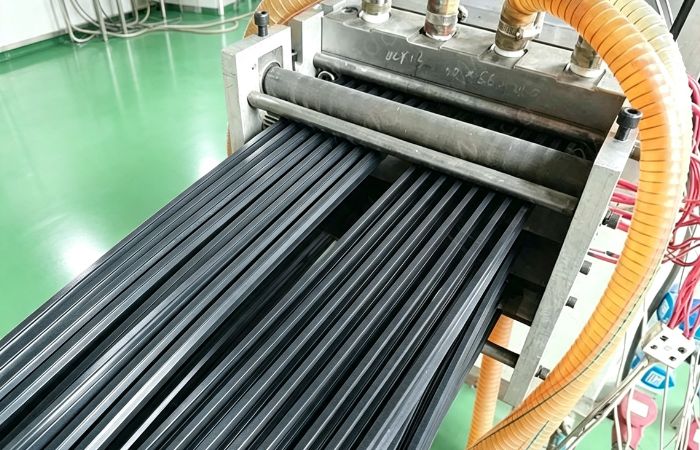
- Casting
In industrial applications, Cast PA6 technology is a well-established manufacturing process. Polyamide products produced through this method are also known as Cast Nylon or Cast PA6.
The process is different from conventional processing methods. Liquid Caprolactam, the raw material of PA6, is mixed with catalysts and directly polymerized inside a mold to form PA6 cast products.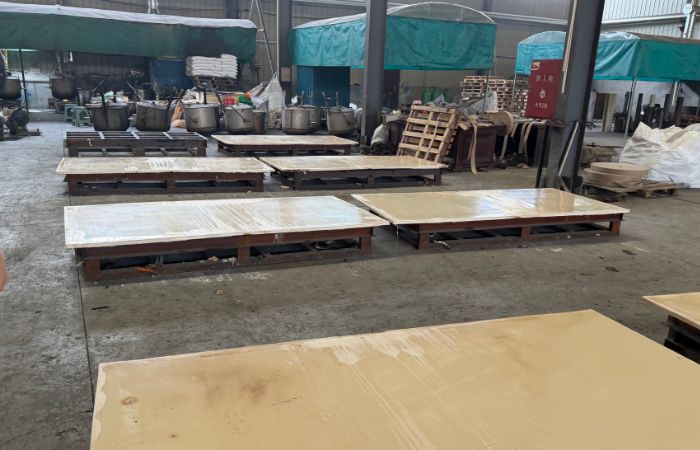
- 压缩成型
Compression molding involves placing Polyamide resin pellets into a mold, then applying heat and pressure to form the final product after cooling.
This process can produce large-size and thick Polyamide components. However, it has relatively lower production efficiency and is more suitable for small-batch manufacturing.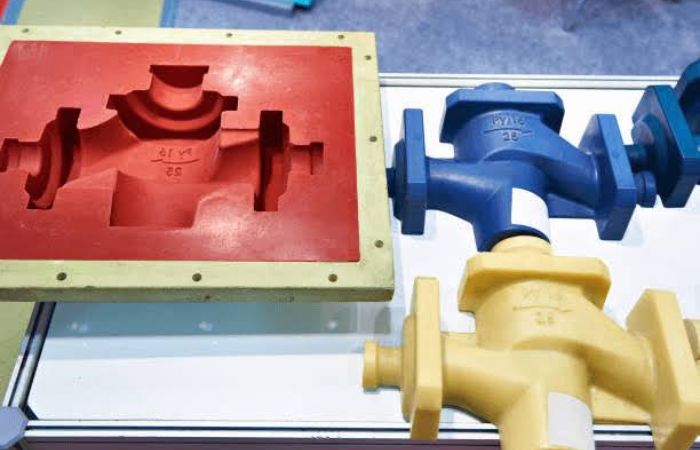
Polyamide Processing Methods and Products
Semi-finished Polyamide products, such as Nylon sheets, Nylon rods, and Nylon tubes, produced from Polyamide resin pellets usually cannot be used directly. They often require secondary machining processes to be converted into final components.
These products can be precision machined through various methods, including cutting, turning, milling, drilling, and CNC machining, to achieve the required shapes, dimensions, and tolerances.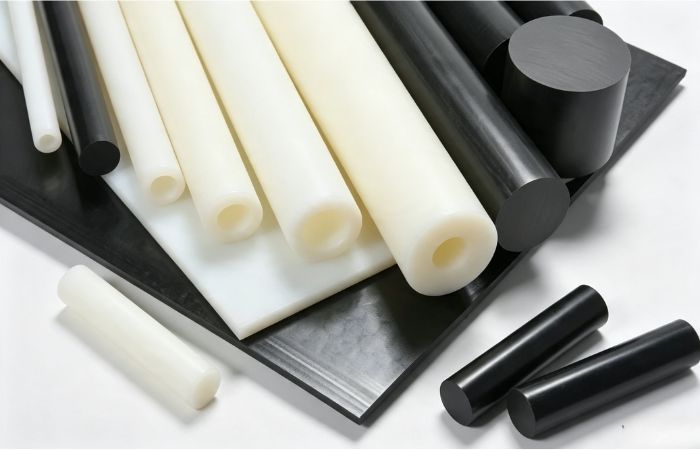
Modified Polyamide Materials
Pure Polyamide products often have certain limitations. For example, high moisture absorption is one of the common issues of Nylon. To overcome these limitations, modified Polyamides have been developed by adding fillers and additives to enhance performance and reduce moisture absorption.
- Glass Fiber Reinforced Nylon
By adding glass fibers into Polyamide, the mechanical properties of PA can be significantly improved. Glass fiber reinforcement provides better dimensional stability, higher stiffness, greater tensile strength, and improved heat resistance.
The most common formulation is Polyamide reinforced with 30% glass fiber content.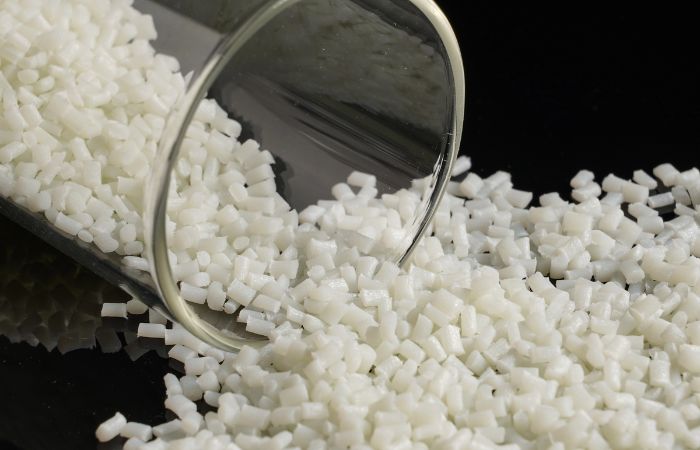
- Carbon Fiber Reinforced Nylon
Carbon fiber itself offers excellent strength and electrical conductivity. When added to Polyamide, it provides these enhanced properties while maintaining the original advantages of PA, such as good machinability and wear resistance.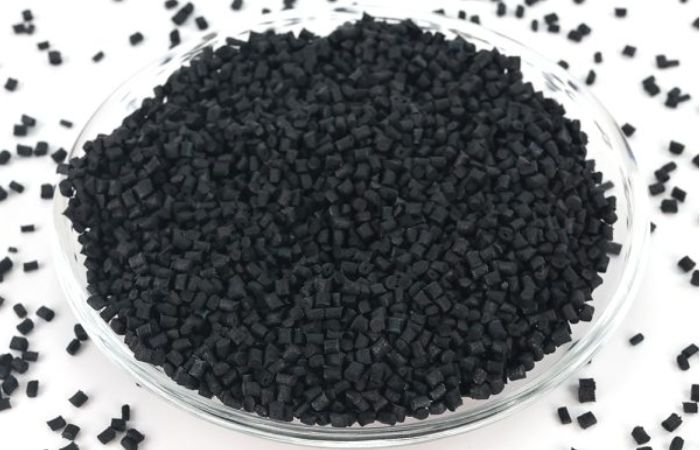
- Lubricated Nylon
Lubricated Nylon is typically produced by adding materials such as graphite, molybdenum disulfide (MoS₂), and PTFE. These additives have self-lubricating properties, significantly improving the friction performance and wear resistance of Polyamide.
- Low Moisture Absorption Nylon
Improving the moisture resistance of Polyamide requires a more fundamental approach by modifying its molecular structure. Since amide bonds have strong polarity and are prone to absorbing moisture, manufacturers usually reduce water absorption by altering the molecular structure of PA or selecting special Polyamide grades.
Polyamide vs Other Engineering Plastics
PA vs POM
Polyamide offers higher mechanical strength, better toughness, and improved impact resistance at a lower cost. It is suitable for applications such as guide rails, wear strips, and other wear-resistant components.
POM provides better dimensional stability and higher rigidity. It also has a lower friction coefficient, lower moisture absorption, and better chemical resistance. It is commonly used for precision components, electrical parts, and other applications requiring high dimensional accuracy.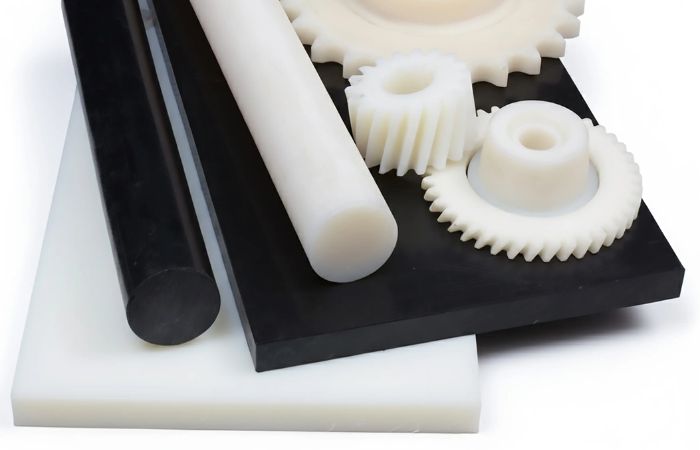
PA vs PEEK
Polyamide has a maximum continuous service temperature of approximately 100–150°C and a melting point of around 175–265°C. Its main advantage is its much lower cost compared with PEEK. It is widely used for general industrial components and applications in moderate to medium-high temperature environments.
PEEK has a maximum continuous service temperature of approximately 250°C and a melting point of around 343°C. Its mechanical strength, chemical resistance, and dimensional stability are significantly superior to Polyamide. However, these outstanding properties also come with a much higher material cost.
PEEK is typically used in demanding industries and high-performance applications, such as semiconductor equipment, aerospace, medical implants, and chemical processing equipment.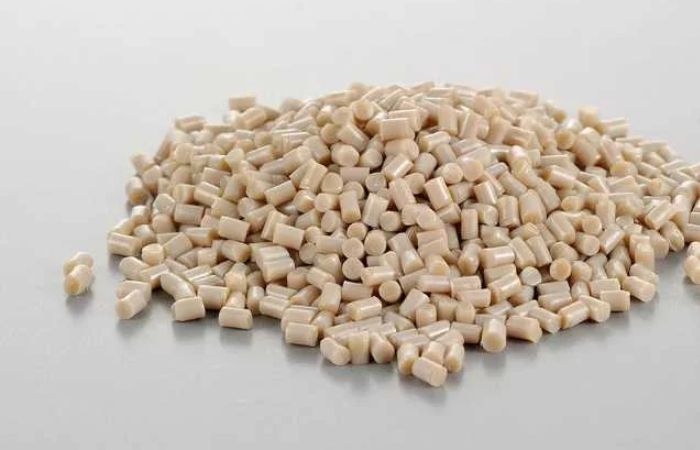
PA vs UHMW-PE
Polyamide offers higher temperature resistance, excellent mechanical strength, and outstanding machinability. It is suitable for high-load mechanical components and applications operating in moderate to high-temperature environments.
UHMW-PE provides better wear resistance, impact resistance, and chemical resistance than Polyamide. It also has a lower friction coefficient and almost zero moisture absorption. It is widely used for conveyor wear strips, hopper liners, sliding rails, and food processing equipment.
For food-related applications, food-grade plastics must be used, and the materials must comply with relevant FDA regulations.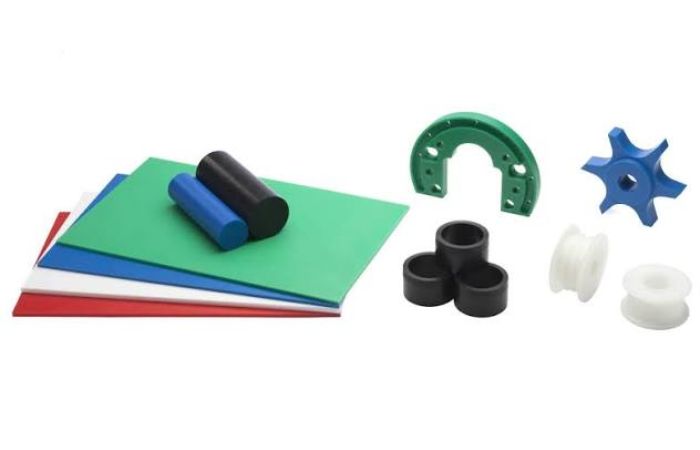
Applications of Polyamide
PA Gears
Polyamide gears are widely used in automation equipment, packaging machinery, textile machinery, and small transmission systems. They can replace traditional metal gears in many applications, offering advantages such as lightweight design and reduced need for frequent lubrication.
Polyamide provides excellent mechanical properties, sufficient load-bearing capacity, and a relatively low friction coefficient, which helps reduce operating noise during gear movement.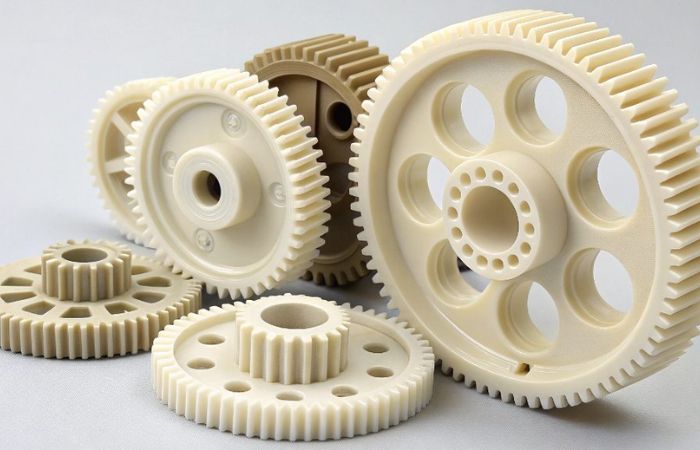
PA Bushings and Bearings
PA bearings and bushings can effectively reduce friction between metal components. They offer excellent wear resistance, allowing for long-term operation with reduced maintenance requirements. In addition, they are corrosion-resistant and will not rust like metal parts.
They are commonly used in industrial machinery, conveyor systems, agricultural equipment, automation equipment, and other applications requiring low friction and wear resistance.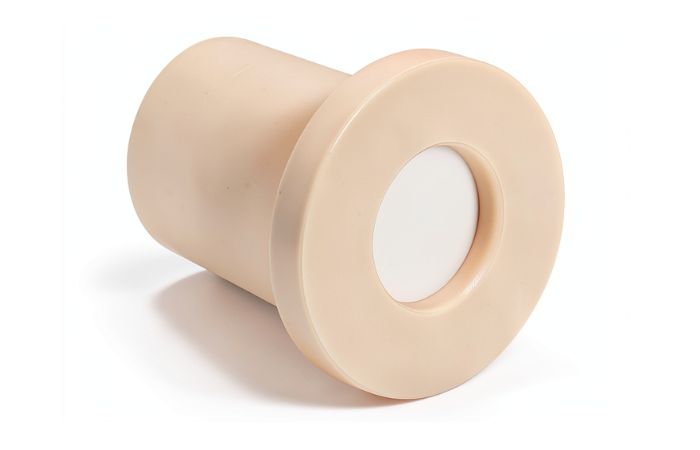
PA Wear Strips and Guide Rails
This is one of the most common applications of PA sheets and PA rods, especially in conveyor systems and food processing equipment.
Taking advantage of PA’s excellent wear resistance and low friction properties, PA wear strips and guide rails can reduce operating resistance and improve equipment efficiency.
Since PA is easy to machine, it can be customized into guide rails with complex shapes and structures according to different track designs and application requirements.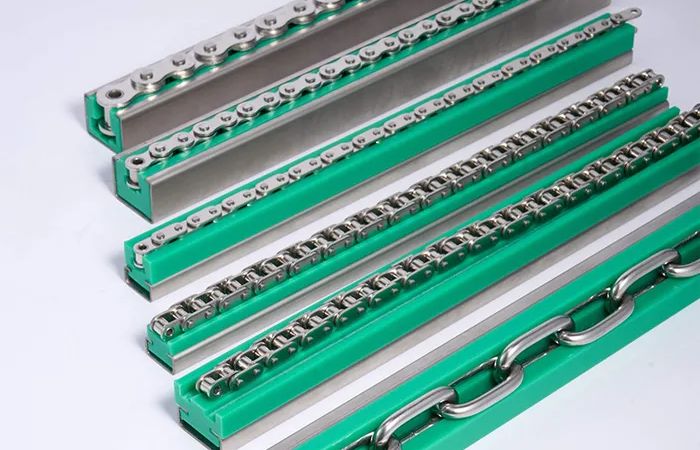
PA Rollers
PA rollers, guide wheels, and pulleys are widely used in mechanical equipment and conveyor systems. They help reduce operating noise and provide excellent wear resistance for long-term use, helping lower maintenance costs and overall operating expenses.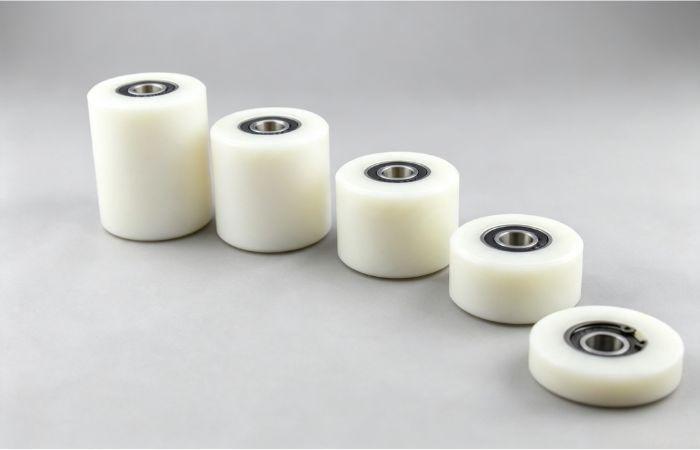
PA Electrical Connectors
Polyamide offers good electrical insulation properties and heat resistance. It can also achieve flame-retardant performance by adding flame-retardant additives, making it highly suitable for electrical and electronic applications.
Due to its excellent processing performance, Polyamide can be injection molded into components with complex shapes. Many PA components, such as connector housings, terminal blocks, and coil bobbins, can be produced through one-piece injection molding, providing efficient and cost-effective manufacturing solutions.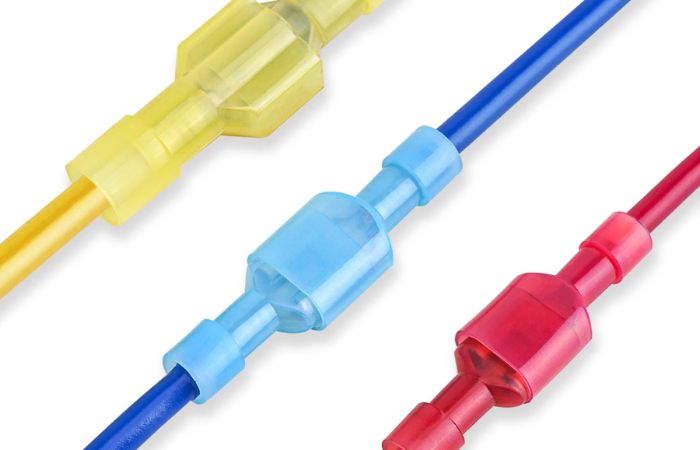
结论
Polyamide (PA), also known as Nylon, is one of the most widely used engineering plastics. With its excellent mechanical strength, wear resistance, lightweight properties, and good machinability, it is widely used in industrial applications such as gears, bushings, wear strips, rollers, and electrical components.
As a professional engineering plastics manufacturer, HANSA provides Polyamide sheets, rods, tubes, and custom machined parts in various grades and specifications to meet different industrial application requirements.
Contact us today to get professional material recommendations and customized Polyamide solutions for your application.

 Chinese
  English
  Arabic
  Tibetan
  German
  Spanish
  French
  Hindi
Hindi  Indonesian
  Italian
  Japanese
  Korean
  Dutch
Dutch  Portuguese
  Thai
Thai  Russian
  Swedish