


PCTFE is a high-performance engineering plastic known for its excellent mechanical strength, dimensional stability, low-temperature resistance, and exceptionally low gas permeability and moisture absorption. It is widely used in cryogenic valves, semiconductor manufacturing, aerospace, and other fields that demand reliable sealing, strict dimensional accuracy, and dependable performance in ultra-low-temperature environments. The article below gives you a complete overview of PCTFE — what it is, where it is used, and where it falls short — and helps you decide whether PCTFE is the right material for your application.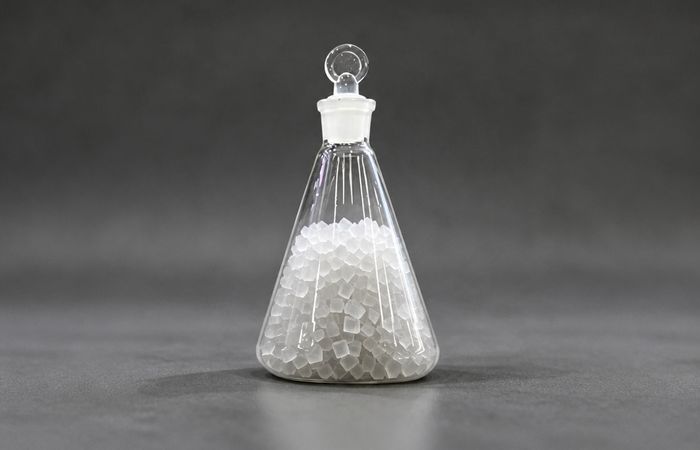
What is PCTFE?
PCTFE stands for polychlorotrifluoroethylene, and its chemical structure is [−CF(Cl)−CF₂−]ₙ. It is essentially พอลิเตตระฟลูออโรเอทิลีน (PTFE, [−CF₂−CF₂−]ₙ) with one fluorine atom on the polymer chain replaced by a chlorine atom.
The fluorine atoms give the material its chemical inertness, temperature resistance, resistance to water absorption, and very low gas permeability. The chlorine atom has a larger atomic radius than fluorine, which introduces irregularity into the molecular chain, lowering both crystallinity and melting point while giving the material better melt flow during processing. PCTFE combines the two, which is what gives it a more balanced overall property profile.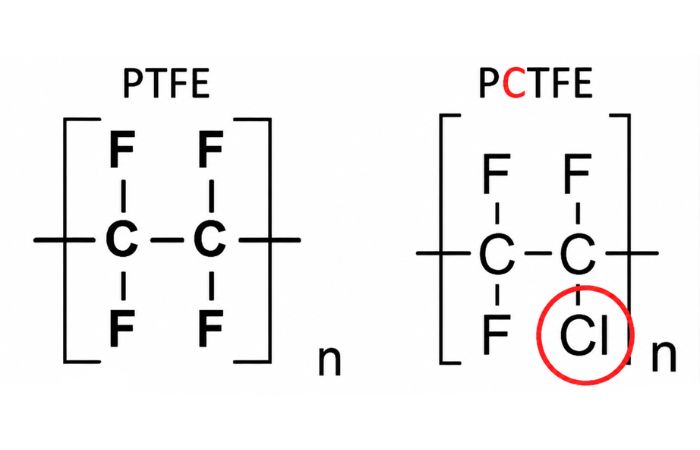
Properties of PCTFE
Excellent Strength and Rigidity
PCTFE delivers excellent mechanical properties: high strength, high stiffness, and strong resistance to deformation, along with relatively stable performance. That makes it a good fit for structural components, especially in high-pressure and ultra-low-temperature service.
Dimensional Stability
PCTFE has excellent resistance to cold flow — that is, to creep. It also absorbs no water, so it keeps its dimensional stability even in humid environments. Of all unfilled fluoropolymers, PCTFE has the lowest coefficient of thermal expansion. And its compressive strength is excellent, so it deforms very little under load.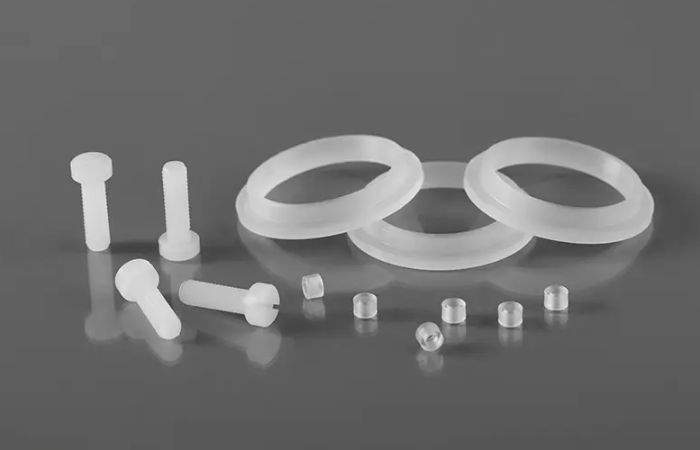
Extremely Low Gas Permeability
Because a bulky chlorine atom replaces one of the fluorine atoms in the PCTFE chain, the intermolecular forces are stronger, so the molecules pack more tightly and the structure ends up denser. PCTFE also crystallizes readily. Water vapor and gases cannot get into the crystalline regions — they have to work their way through the winding amorphous regions instead, which lengthens the permeation path, slows the gas down, and gives PCTFE its excellent barrier performance.
Resistant to Ultra-Low Temperatures
The long-term service temperature range of PCTFE is −240 to 150 °C (−400 to 302 °F). There are two reasons for this. One is that PCTFE inherits the core strength of fluoropolymers: carbon and fluorine atoms are tightly bonded with very high bond energy, so a sharp drop in temperature will not break those bonds. The other is that its dimensional stability backs this up — the structure is tightly packed, water absorption is extremely low, and even at cryogenic temperatures the change in dimensions is minimal.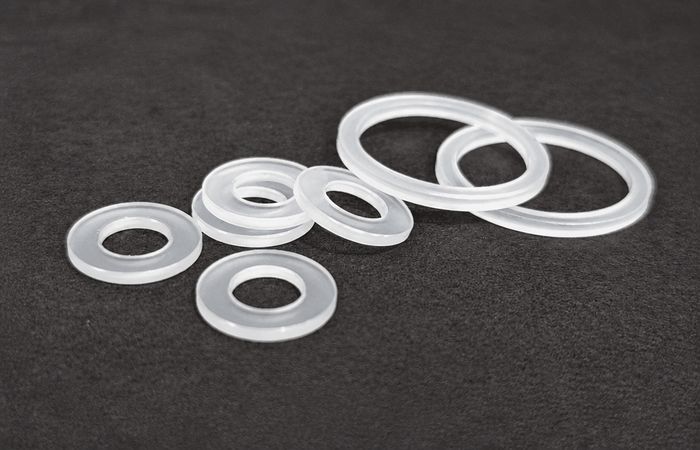
Chemical Corrosion Resistance
PCTFE can be thought of as an evolution of PTFE, and it naturally inherits PTFE’s chemical inertness — just not to the same degree. PCTFE resists the vast majority of inorganic acids, alkalis, salt solutions, and a wide range of chemical oxidizers, and it performs especially well against halogens, acids, and oxidizing agents.
Radiation Resistance
PCTFE has outstanding radiation resistance — far greater than PTFE, by a factor of several. When exposed to high-energy radiation such as gamma rays and X-rays, it still keeps its chemical stability and mechanical strength. Beyond ionizing radiation, PCTFE also resists ultraviolet (UV) aging well.
Electrical Insulation Properties
PCTFE has very high volume resistivity and dielectric strength, which effectively prevents current leakage. And because its water absorption is extremely low, it keeps excellent electrical insulation even when immersed in water or in damp conditions.
Where is PCTFE Used for?
Cryogenic Engineering
PCTFE’s tolerance for ultra-low temperatures, high strength, and high stiffness make it a common choice for cryogenic seals and cryogenic valve equipment. Many components used in liquefied gas equipment are also made from PCTFE — valve seats, seals, and gaskets, for example.
Semiconductor Manufacturing
ใน semiconductor manufacturing, where precision requirements are now measured in nanometers, PCTFE’s dimensional stability allows tight tolerance control during machining and safeguards the precision of the finished part.
✔ Fluid handling Thanks to its very high purity and good chemical inertness, PCTFE is commonly used to transport strongly corrosive etchants, ultrapure cleaning solutions, and process chemicals.
✔ Gas sealing PCTFE’s extremely low gas permeability effectively prevents trace gas leakage and keeps outside contaminants from getting in.
✔ Precision structural parts PCTFE’s excellent stiffness and strength, together with its dimensional stability, allow tight tolerance control during machining. Its good melt flow also makes it suitable for one-piece injection molding of precision components.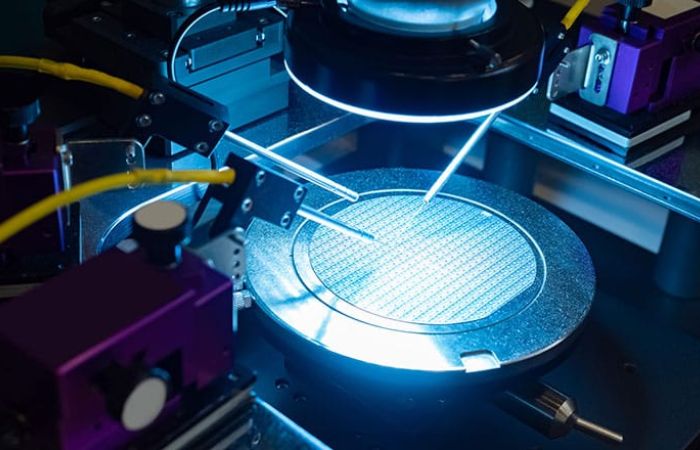
Aerospace Engineering
PCTFE is widely used in aerospace engineering thanks to its excellent corrosion resistance, low gas permeability, tolerance for ultra-low temperatures, radiation resistance, high flame retardancy, and electrical insulation.
✔ Cryogenic media sealing For the storage and transport of extremely low-temperature gaseous media such as liquid oxygen, liquid hydrogen, and liquid nitrogen; sealing rings, gaskets, and valve seats used in cryogenic service. PCTFE holds its sealing performance over the long term, keeps some elasticity, and does not turn brittle and fail.
✔ Fluid and line valves PCTFE is often used for valve seats, bearings, and precision machined parts in hydraulic systems. Its extremely low gas permeability effectively prevents volatile gas leakage and also blocks outside moisture from getting into critical lines.
✔ Flame-retardant and electrically insulating parts PCTFE has inherent flame retardancy and excellent electrical insulation, so it is used for electrical insulation components, electronic component encapsulation, and isolation pads where high reliability is required.
✔ Radiation- and chemical-resistant parts In satellites and spacecraft, many components are exposed to space radiation and cosmic radiation over the long term while structural parts sit in corrosive chemical solvents, so PCTFE is typically used to make their protective bushings.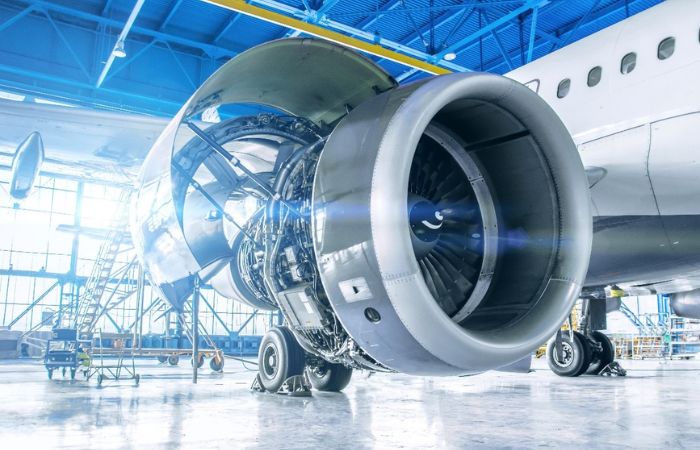
Chemical Processing
PCTFE is widely used in the chemical industry for its excellent chemical resistance, low gas permeability, good mechanical strength, and melt processability.
✔ Corrosion-resistant pumps and valves Centrifugal and hydraulic pumps made from PCTFE have corrosion-resistant bodies and impellers, so they can handle strong acids, strong alkalis, and strong oxidizers at various concentrations. Valve seats and sealing rings in some valve equipment are also made of PCTFE to withstand aggressive chemicals.
✔ High-vacuum and fluid sealing PCTFE’s extremely low gas permeability effectively blocks gas and moisture leakage, and its good mechanical strength keeps the seal reliable over the long term.
✔ Reaction components for chemical laboratories Some lab components call for excellent chemical resistance, so PCTFE is commonly used for lab instrument parts, vessels, tubing, and level gauges.
PCTFE is also transparent, which lets lab staff watch what is happening inside a vessel — color changes, liquid level, and any impurities.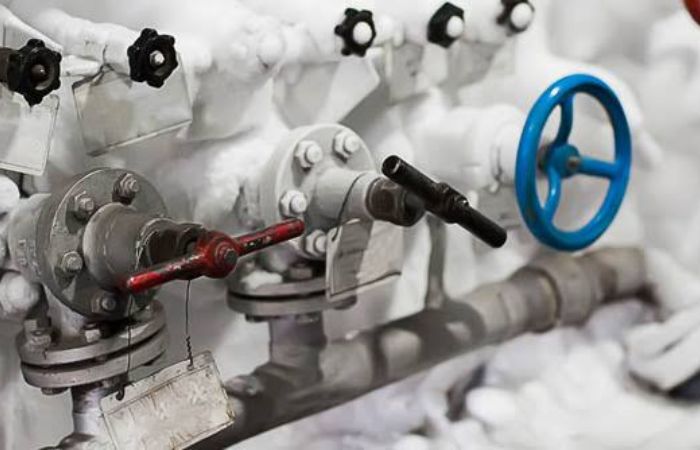
Nuclear Industry
PCTFE’s excellent radiation resistance makes it a common choice in radiation environments — nuclear engineering and nuclear power plants, uranium enrichment equipment, and other applications that involve harsh conditions such as severe corrosion and high radiation.
Electronics and Electrical Industry
PCTFE’s extremely low water absorption, high volume resistivity, and high dielectric strength make it a standard material for connectors, insulators, high-frequency insulation parts, and various circuit components. Even underwater, it prevents shorts and leakage caused by moisture uptake.
Advantages of PCTFE
PCTFE offers a number of significant advantages — in many cases, ones that no other material can match.
- Extremely low gas permeability
- Excellent low-temperature toughness
- Greater mechanical strength and creep resistance
- Excellent chemical inertness
- High purity and high transparency
Limitations of PCTFE
High material costs
PCTFE costs three to five times as much as PTFE, and sometimes more than that — high-purity grades can run as much as ten times the price of PTFE. So before you choose PCTFE, the first question is whether your project truly requires it and whether another material can do the job instead.
ขีดจำกัดอุณหภูมิ
PCTFE’s temperature range isn’t as balanced as PTFE’s. It handles cryogenic temperatures down to −240 °C, but its maximum service temperature is around 150 °C, whereas PTFE reaches 260 °C. If your project involves continuous high heat, it’s worth re-evaluating whether PCTFE will work.
Extremely difficult to process
PCTFE’s melt viscosity is lower than PTFE’s, but next to other plastics its melt still flows poorly. Its melting point is also relatively low, so it degrades easily if the temperature isn’t controlled carefully during heating. That makes both injection molding and extrusion a real challenge.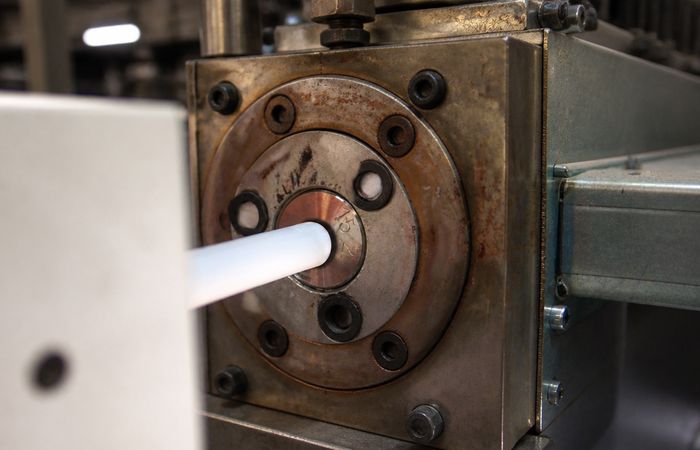
Limited wear resistance
PCTFE’s coefficient of friction isn’t as low as PTFE’s. Its stiffness and hardness are better than PTFE’s, but under a sustained high load it will still deform. That makes PCTFE a poor choice for continuously sliding parts or friction components.
Where Must PCTFE Be Used?
PCTFE is expensive, but in certain demanding service conditions where only PCTFE’s particular properties deliver a real advantage, the value it brings far outweighs its purchase price. Below are some applications where PCTFE should be the first choice — we hope this helps with your decision.
Dimensional and Seal Retention at Cryogenic Temperature
In cryogenic service, a sealing material has to resist cold flow while staying in tight contact with the surrounding metal parts — no gap is allowed to open up. PCTFE does both. Its excellent creep resistance lets it hold its dimensions under bolt load. And its coefficient of thermal expansion is lower than PTFE’s and close to the shrinkage rate of stainless steel and aluminum parts, so when the surrounding metal contracts in the cold, PCTFE shrinks at a comparable rate.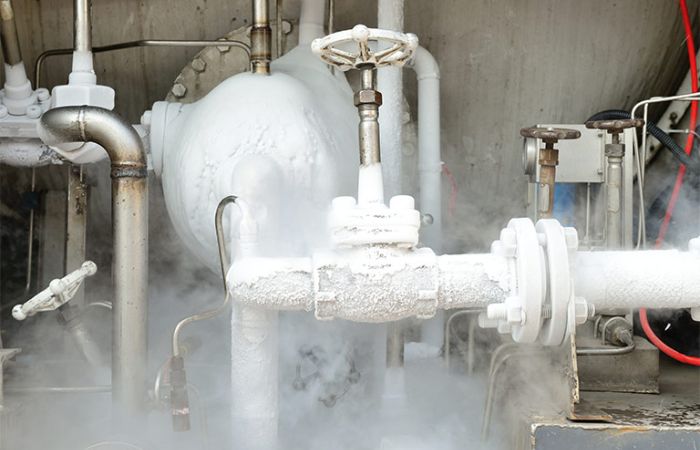
Moisture and Gas Barrier
Of all unfilled fluoropolymers, PCTFE has the lowest permeability to water vapor and gases. It effectively separates dry areas from humid ones. That is why many electronic instrument housings, along with vacuum components that cannot tolerate any external leakage, are often made of PCTFE.
Flame Resistance and Oxygen Compatibility
PCTFE is inherently flame retardant, and it does not readily ignite on its own even in oxygen-enriched conditions. Its molecular chain contains no hydrogen but a high proportion of fluorine and chlorine — elements that suppress combustion themselves — so it self-extinguishes once the flame is removed in air, and it is not easily fueled in pure oxygen. PCTFE also contains no plasticizers or lubricants, which keeps parts clean enough for oxygen service.
What Should You Consider When Making a Choice?
Whether PCTFE is right for your application comes down to which material properties your particular application cares about most. PCTFE’s main strengths are extremely low gas permeability, excellent dimensional stability and mechanical strength, and tolerance for ultra-low temperatures.
Forms of PCTFE
PCTFE can be produced in a wide range of shapes. The common semi-finished forms are PCTFE sheet, PCTFE rod, and PCTFE tube. These stock shapes are usually further processed — machined on CNC equipment into precision parts. Many importers also buy them in bulk and resell them in their own markets.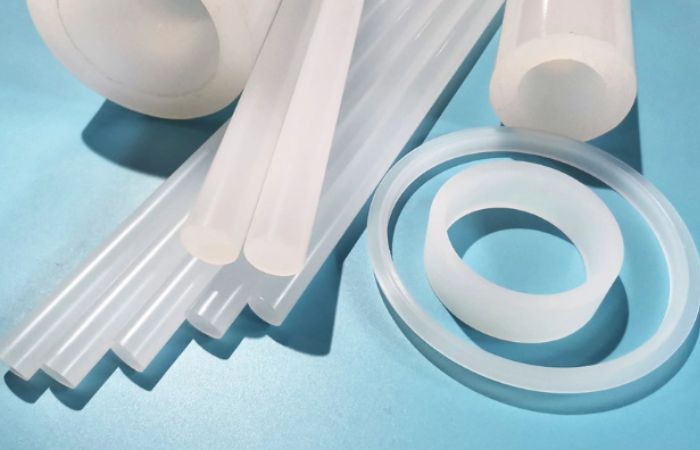
Final Thought
Thanks to its excellent dimensional stability, cryogenic performance, and outstanding gas tightness, PCTFE material is widely used in aerospace, semiconductor vacuum, medical, and chemical processing. If you are still unsure after reading this article, get in touch with us. HANSA has worked in the fluoropolymer industry for thirty years, with deep expertise and hands-on experience. HANSA can provide you with a one-stop plastics material solution.

 Thai
 English
 Arabic
 Tibetan
 German
 Spanish
 French
 Hindi
 Indonesian
 Italian
 Japanese
 Korean
 Dutch
 Portuguese
 Russian
 Swedish
 Chinese