


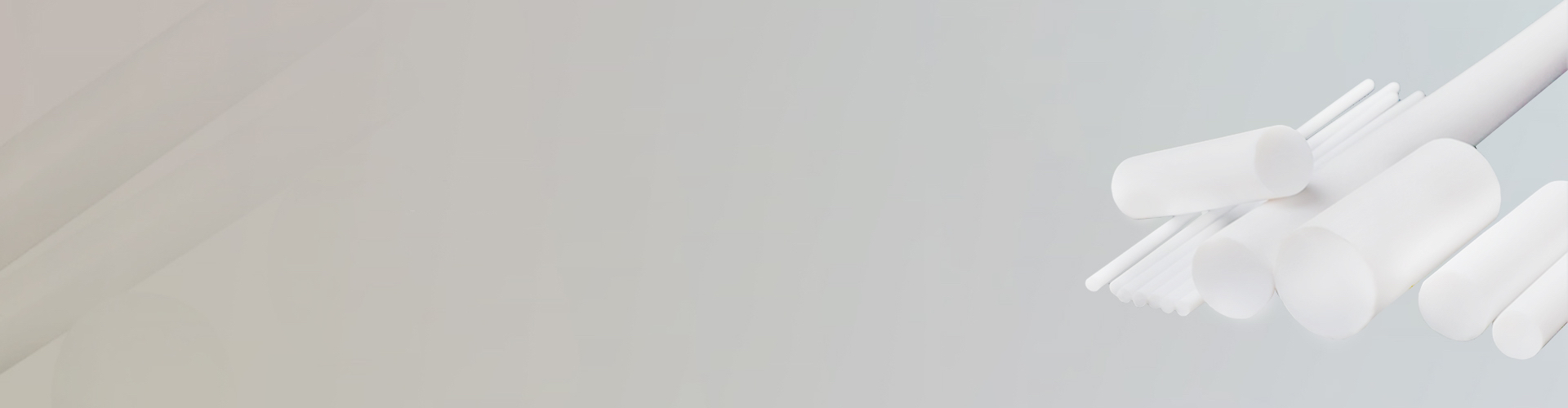
HANSA PTFE Stång
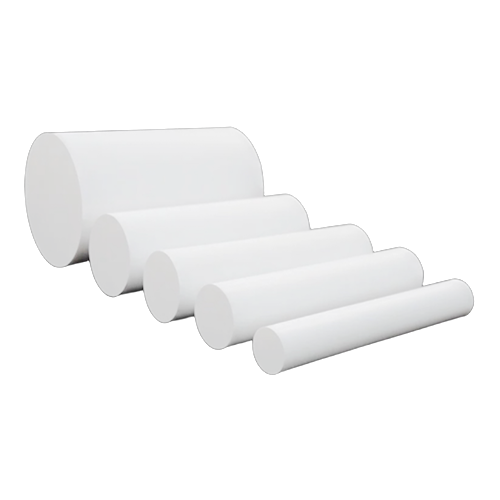
Mestadels tillgängliga i distinkta vita färger, PTFE-stavar finns i många tvärsnittsareor och diametrar. PTFE-stavarna finns även i andra färger som röd, blå, grön eller gul, beroende på kundens önskemål.
Oavsett om du vill ha en 2 mm PTFE-stav, kapad i storlek eller anpassade teflonstavar, finns det många alternativ för dina specifika applikationer. De finns i olika tvärsnittsområden inklusive runda PTFE-stavar eller PTFE-sexstavar, enligt specifika krav.
I allmänhet kan du få extruderade PTFE-stavar eller PTFE-gjutna stavar. De två Teflonstavar har exceptionella prestandaegenskaper på grund av deras överlägsna fysikaliska och kemiska egenskaper.
Tillgänglig materialkvalitet för PTFE-stänger
Med dynamiska behov i användningen av teflonspö finns det olika PTFE materialkvaliteter tillgänglig. Valet av speciella stavar kommer att bero på specifika applikationskrav.
Tillgängliga materialalternativ inkluderar:
Virgin PTFE stavar – dessa är gjorda av 100% polytetrafluoretenmaterial.
Modifierade PTFE-stavar – involverar att ändra egenskaperna hos PTFE för att få överlägsna prestandakrav.
PTFE-stänger av mekanisk kvalitet – dessa PTFE-stavar är gjorda av återvunnet polytetrafluoretenmaterial.
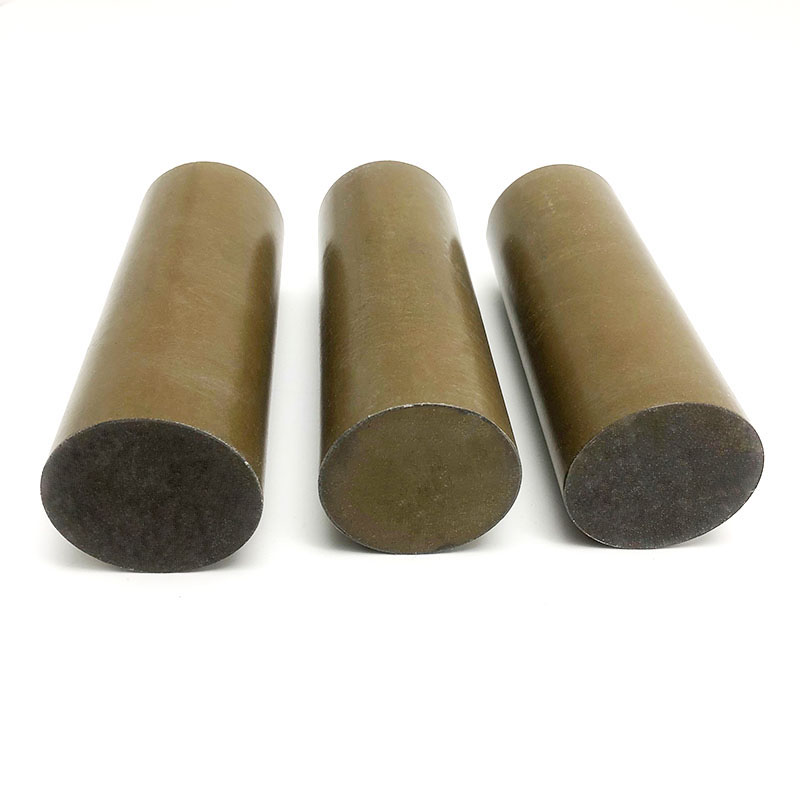
Fyllda PTFE-stavar – du kan lägga till många fyllnadsmaterial till PTFE för att få bättre prestandaegenskaper. Vanligtvis kommer namnet på teflonstaven att bero på typ av PTFE-fyllnadsmaterial. Några vanliga betyg inkluderar:
- Kolfyllda PTFE-stavar– om du vill att dina PTFE-stavar ska ha bättre tryckhållfasthet och hög belastningsmotståndsegenskaper, lägg till kol efter vikt 10% till 35%. Dessutom kommer kol också att ändra sin ledningsförmåga samtidigt som det förbättrar den kemiska resistensen.
- Glasfyllda PTFE-stavar– genom att tillsätta glas i mängden 5% och 40% blir dina PTFE-stavar styvare, förbättrad tryckhållfasthet, uppvisar hög styvhet och har bättre kemiska motståndsegenskaper.
- Grafitfyllda PTFE-stavar– om du vill ha teflonstavar med extremt låg friktionskoefficient, lägg till grafit på ca 5% till 15%. Dessutom kommer grafit att minska det initiala slitaget avsevärt
- Molybdendisulfidfyllda PTFE-stavar– om du vill förbättra slitstyrkan, hårdheten och styvheten hos teflonstavar utan att kompromissa med elektriska och kemiska egenskaper, då MoS2 erbjuder perfekta alternativ.
- Metallfyllda PTFE-stavar– du kan lägga till rostfritt stål eller brons. Dessa metaller förbättrade deformationen och värmeledningsförmågan hos PTFE-stavar.
- Mineralfyllda PTFE-stavar– Glimmerfyllda PTFE-stavar rekommenderas starkt för tillämpningar som uppfyller FDA. Vanligtvis kan du lägga till mellan 5% och 10%.
Att diskutera dina användningsområden för teflonspö med din tillverkare kommer att hjälpa dem att optimera produkten till dina unika specifikationer. Tillverkaren av PTFE-stavar hjälper dig att välja det perfekta fyllmaterialet för din applikation.



Egenskaper hos PTFE-stavar
På senare tid är PTFE-stavar populära på grund av överlägsna egenskaper som:
-
- Lämplig för brett temperaturområde– PFTE-stavar kommer att tjäna dig väl i temperaturer mellan -240 och 260°C.
- Överlägsna elektriska och termiska egenskaper– en anledning till att PTFE-stavarna är vanliga elektriska isolatorer. Tillsats av fyllmedel kan dock förbättra de elektriska och termiska egenskaperna.
- Låg friktionskoefficient– den förklarar non-stick-egenskaperna och lämpligheten i friktionskänsliga applikationer.
- Hög kemikalieresistens– fluorkolväten är kända för sina överlägsna kemiska beständighetsegenskaper. Detta gör att PTFE-stavar är mycket kemikaliebeständiga.
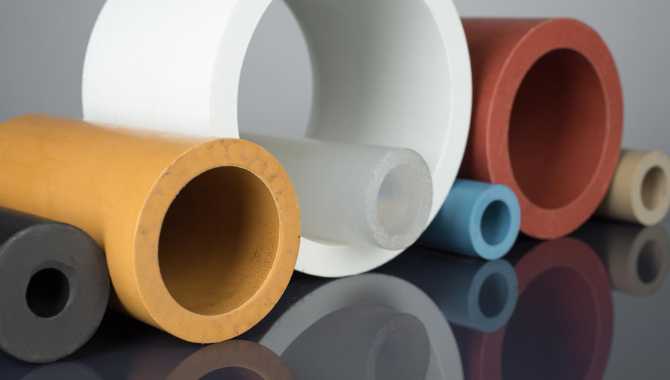

PTFE-stavar Tillämpningar
De olika storlekarna av teflonstavar kan användas i många industrier. För närvarande inkluderar några vanliga användningar av teflonstavar produktion, el, hushållsapparater och kemisk industri.
Du kan bearbeta PTFE-stänger vidare för att tillverka komponenter som tätningar, maskindelar, kåpor, instrumentkomponenter, lager, rullar, etc.
PTFE is a high-grade engineering plastic, and a PTFE rod is a cylindrical rod made of this plastic. PTFE has excellent chemical inertness and high-temperature resistance, and an extremely low coefficient of friction with a non-adhesive surface, making it a high-performance engineering plastic. Therefore, it is commonly used in the chemical industry to manufacture machined parts such as seals, bearings, and insulators, serving functions such as sealing, insulation, and lubrication.
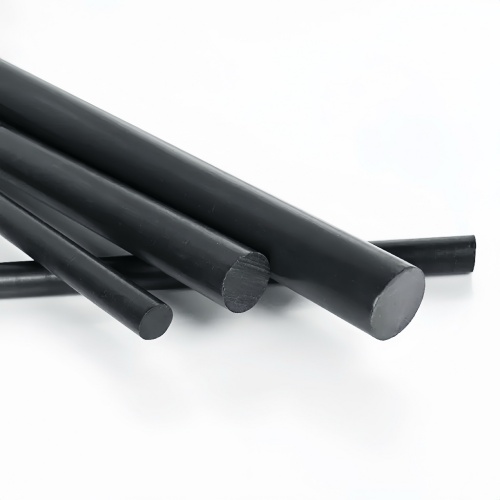
Black PTFE rods are filled and modified PTFE rods. PTFE itself is white; the black color comes from the addition of other black substances, typically carbon fiber, graphite, or carbon powder. Different fillers enhance different properties. Carbon fiber increases the hardness of the PTFE rod, making it more resistant to creep and suitable for high-pressure operation; graphite enhances its lubricity, reducing friction between the PTFE rod and machinery, making it suitable for high-speed operation; and carbon powder provides conductivity and prevents static electricity.
PTFE rods have five main application areas: chemical, mechanical, electronic, semiconductor, and construction. In the chemical industry, PTFE rods primarily function as corrosion protectants and sealants. They are resistant to almost all highly corrosive liquids, including strong acids and alkalis, and are chemically stable, not easily reacting with other chemicals. In the mechanical industry, their main function is to reduce friction and protect equipment. Due to PTFE’s excellent self-lubricating properties, it can replace lubricating oil in mechanical parts such as bearings, bushings, gears, sliders, and piston rings. In the electronic industry, PTFE rods are often used to make high-frequency cables, insulated wires, printed circuit boards, transformers, and high-voltage insulation materials for motors due to their excellent electrical insulation properties. In semiconductor manufacturing, PTFE rods are widely used in wet process systems and chemical transportation, ensuring ultra-pure environments. In the construction industry, PTFE rods are commonly used to make wear-resistant sliding plates and sealing strips.
The disadvantages of PTFE rods can be broadly categorized into five points. Two of the more significant are their relatively low mechanical strength, making them prone to deformation under prolonged high loads, and their large coefficient of thermal expansion, meaning their dimensions change considerably with temperature variations. Three other points are the high cost of PTFE, the difficulty in processing it, and the fact that it cannot be directly adhered to surfaces without sodium curing. However, we offer processing and sodium curing services. If you purchase our PTFE rods, we can solve all your problems in one go.
PTFE rods cannot be directly glued. Because of PTFE’s chemical inertness, it hardly reacts with any physicochemical substances, so ordinary glues will not work. However, it can be glued using other methods. These include special surface activation treatments such as sodium treatment, plasma treatment, and chemical etching. Alternatively, specialized adhesives, such as epoxy structural adhesives, polyurethane adhesives, or special fluoroplastic adhesives, can be applied to the surface of the PTFE rod, making it bondable.
Of course! HANSA’s PTFE rods are FDA-certified and we possess the relevant safety certificates. Furthermore, they can be used in the food industry for the following reasons: PTFE has a non-stick surface, preventing it from absorbing food residue or beverage liquids; it is chemically inert, reacting almost entirely with no chemicals. PTFE rods are commonly used to make seals, bearings, rollers, cutters, and other components. When purchasing, be sure to choose food-grade PTFE rods and ensure the operating temperature does not exceed 260 degrees Celsius.
Yes, PTFE rods are also called Teflon rods. PTFE and Teflon are essentially the same thing, both referring to polytetrafluoroethylene (PTFE). The difference is that Teflon is a registered trademark, a brand name. Teflon was launched by DuPont and later transferred to Chemours. The word Teflon has brand recognition, and it’s the most familiar name to the public. However, the quality of a material depends on its performance, and material performance depends on the grade of its raw materials and processing technology, not its name.
Depending on the manufacturing process, different sizes are available. Extruded PTFE rods have diameters of 4-200mm and lengths of 1/2/3m; molded PTFE rods have diameters of 20-1000mm and lengths of 100-1000mm, with larger diameters having lengths of 300-500mm. If PTFE rods contain filler materials, such as glass fiber, carbon fiber, bronze, carbon powder, or graphite, their diameter is typically less than 300mm.
cutting,thermoplastic welding,drilling,bending,thermo forming,polishing,gluing,Injection Molding and CNC Milling。
Of course! We have complete processing equipment and mature processing technology, such as saw cutting, laser cutting, CNC cutting, thermoplastic welding, drilling, bending, thermo forming, polishing, gluing, injection molding, and CNC milling.
Industry standards mainly include ASTM (USA), ISO (international), SAE/AMS (aerospace), FDA food-grade standards, and RoHS/REACH environmental compliance standards. ASTM further includes D1710 (Extruded and Molded PTFE Rods, Dimensional Tolerances, Physical Properties, and Grading), D4894 (Raw Material Standard), and D4895 (Dispersion Resin Standard). ISO includes ISO 13000 and ISO 12086.We have all the industry standard certificates and can provide them to you.
Excellent chemical corrosion resistance, extremely low coefficient of friction of 0.04, non-adhesive surface, and extremely wide temperature range (-292℉~500℉) are all qualities that other materials cannot possess simultaneously.
In terms of color, pure PTFE is milky white or ivory white. Recycled or counterfeit materials may appear blackish, dull, or yellowish. It has no smell; if it has a plastic smell or a pungent odor when burned, it is of inferior quality. It feels like oil or wax with low resistance; if it feels rough to the touch, it may be fake PTFE. Pure PTFE will not change color or expand when placed in strong acids or alkalis.We use 100% virgin PTFE resin, no regrind or recycled material.



 Swedish
  English
  Arabic
  Tibetan
  German
  Spanish
  French
  Hindi
Hindi  Indonesian
  Italian
  Japanese
  Korean
  Dutch
Dutch  Portuguese
  Thai
Thai  Russian
  Chinese