



Why Choose HANSA
- Thirty Years in Fluoropolymers: HANSA has worked with PFA since 1995.
- A Matched Connection System: PFA fittings are chosen against the tubing you already run.
- Molded or Machined: standard bodies come off molds, specials are cut to your drawing.
- Records That Travel: a lot number follows the carton, so a joint can be traced.
- A Date, Not a Window: your delivery date is confirmed with the quotation.
What is PFA Fitting
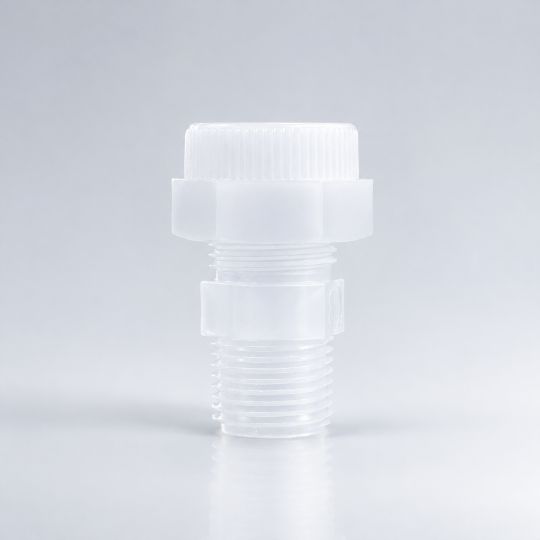
PFA fittings carry your flow path through a wall of one material: perfluoroalkoxy resin is inert across acids, bases and oxidisers, holds continuous service to 260 °C (500 °F), and releases very little into the medium. They are used from semiconductor wet benches and ultrapure water loops to chemical dosing skids and laboratory manifolds.
If your project calls for a joint as clean as the tubing it connects, HANSA can provide you with a one-stop solution.
Types of PFA Fittings
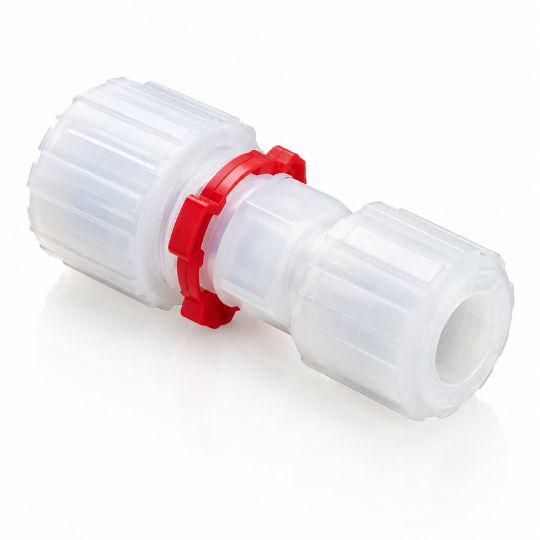
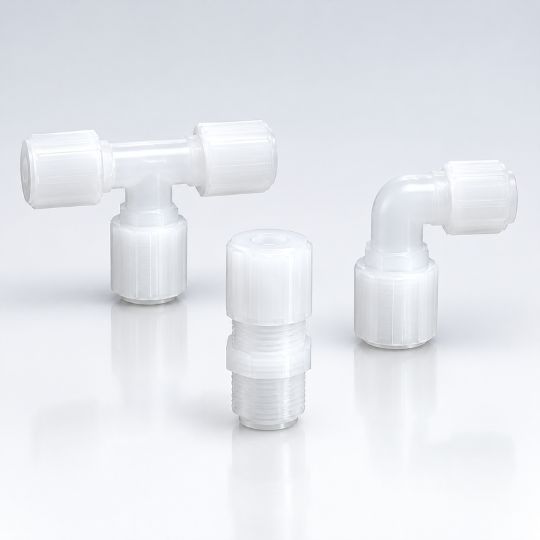
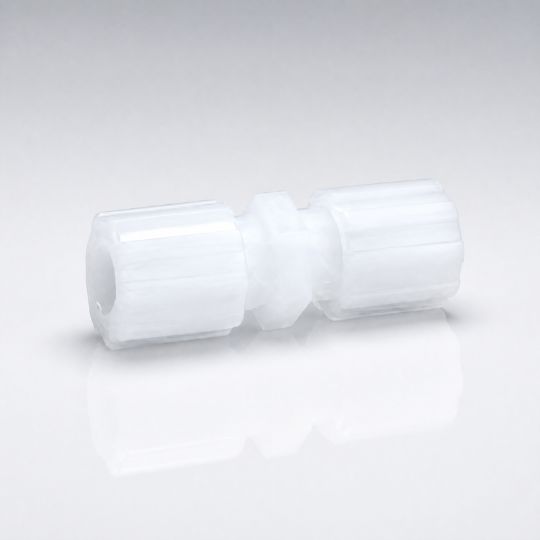
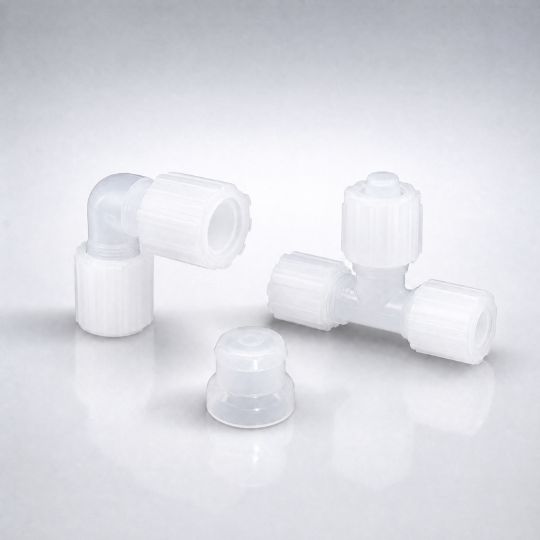
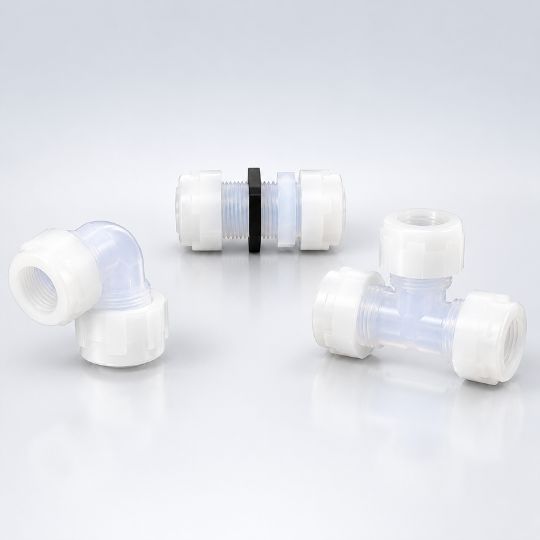
A set of PFA tube fittings covers a run end to end: straight unions, union elbows, union tees and reducers. HANSA molds standard bodies and machines specials to your drawing.
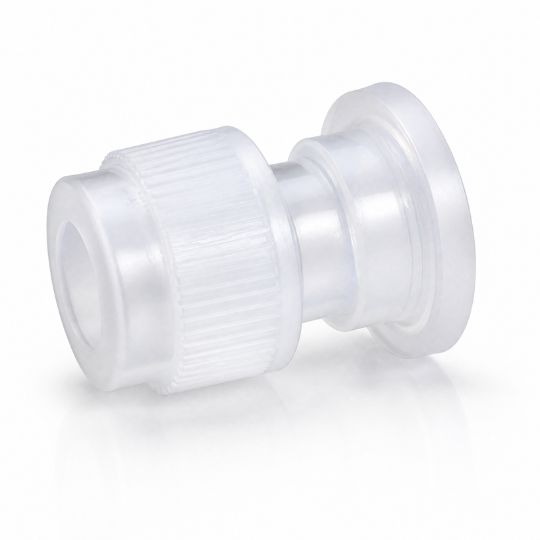
Couplings, flange adapters, end caps and bushings for a welded or socket-joined run. HANSA cuts these PFA pipe fittings so the bore stays continuous, with no metal in the line.
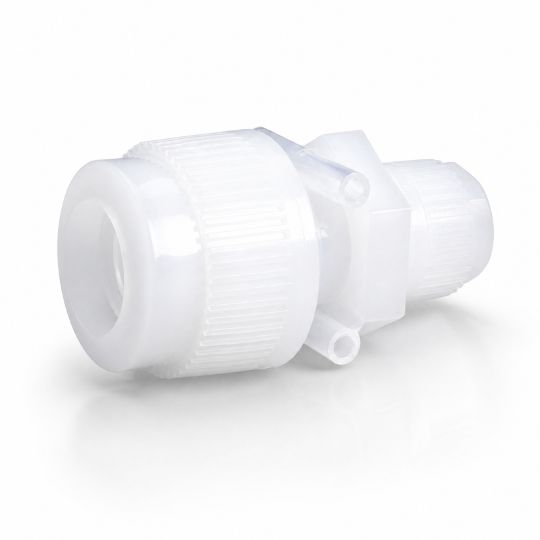
A flare leaks where the cone sits off-centre, not where the nut is loose. HANSA machines its PFA flare fittings to a true seat, so the load lands evenly.
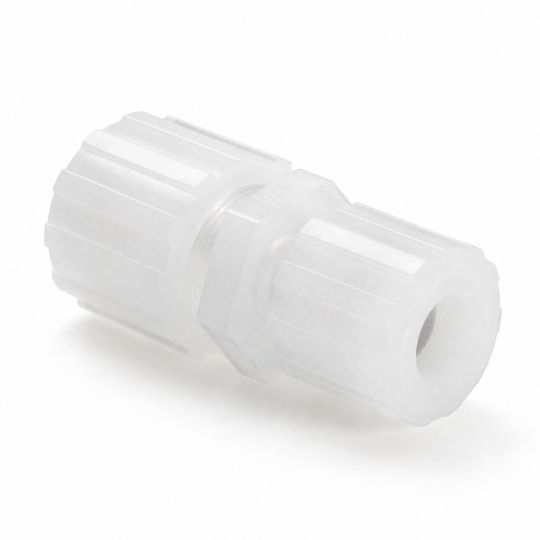
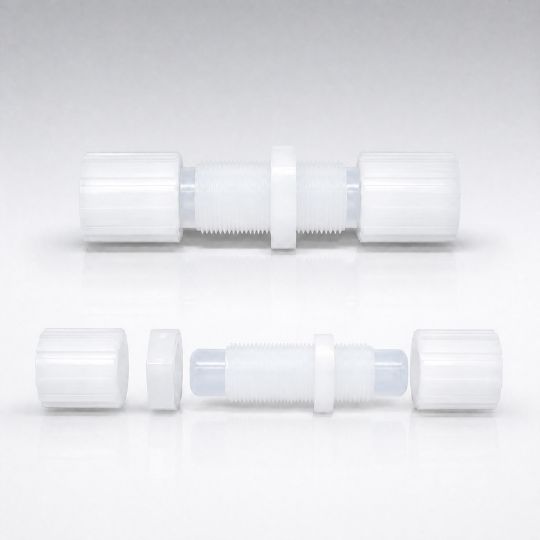
Ferrule-based joints grip the tube outside, so nothing is flared on site. HANSA ships PFA compression fittings as a body, a ferrule and a nut cut for your tubing.
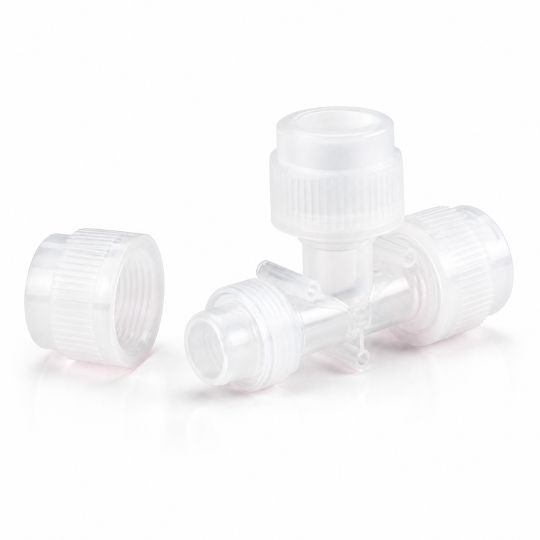
Tube connectors, not electrical ones: HANSA threads PFA connectors onto a port, a flange or another tube size, to your thread standard.
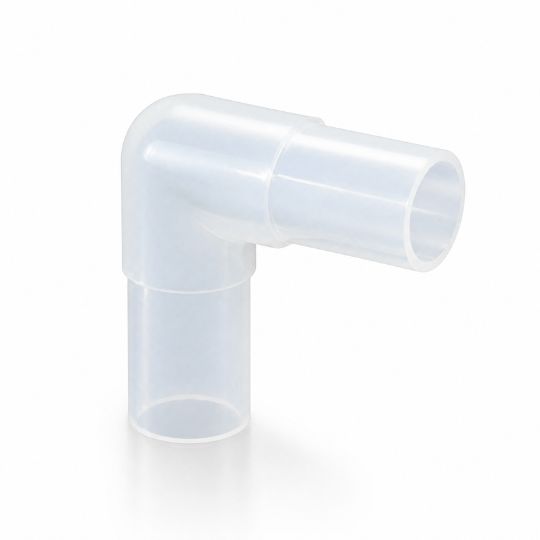
For pipe runs joined by fusion welding, the fitting has to be the same PFA as the pipe. HANSA supplies PFA weld fittings with ends sized to your welding procedure.
What a PFA Fitting Has to Hold
A line changes direction, size or material somewhere, and that point is where PFA fittings earn their place. What each one has to hold is three things at once: the medium inside it, the pressure across its wall, and the cleanliness of the surface the medium touches. A metal fitting does the first two and can lose the third; a cheap plastic fitting does the third and loses the second. PFA fittings are specified where all three matter together.
The failures are equally specific. A joint leaks at the seat, not in the middle of the body. A bore machined with a torn surface holds particles that leave with the flow later. A nut tightened once and left under load relaxes as the polymer creeps, and the leak appears a month after start-up. Each is a decision taken when the part was designed or installed, which is why a PFA fittings order is really an order for seat geometry, surface finish and thread as much as for resin.
The Four Connection Systems and Where Each One Belongs
Four systems carry PFA fittings into a line, and each one fails somewhere different.
Flare. The tube is flared over a cone and a nut loads the flare against a matching seat. It comes apart and goes back together without a new ferrule, which is why flare PFA fittings dominate high-purity work on lines that get opened. The cone is the weak point: cut off-centre, or loaded unevenly by the nut, and the seal becomes a line contact instead of a face.
Compression. A ferrule grips the outside of the tube and the nut drives it into the body, so nothing is flared and a technician needs two wrenches and no heat. The trade-off arrives at re-make, because the ferrule has already been crimped onto the tube. Compression PFA fittings suit field work and mixed crews, less so a line that is opened every month.
Fusion weld. The fitting and the pipe become one wall: no elastomer, no crevice, no thread in the flow path. It is the cleanest arrangement available and the least reversible, which is why welded PFA fittings suit permanent pipe runs and anything where a leak path of any kind is unacceptable.
Thread. A male or female thread mates PFA fittings to a port, a flange or another material. It is the most convenient and the weakest of the four — a polymer thread carries less load than a metal one, and an over-tightened thread strips before it seals. Thread is a transition, not a joint to build a line on.
Choose by what happens after installation: opened often, flare; assembled in the field, compression; never opened, weld; landing on equipment, thread. Most systems use two of the four, and the transition between them is where the PFA fittings list earns its keep.
How PFA Compares with PTFE and PVDF Fittings
The three fluoropolymers are not interchangeable, and the difference shows at the joint rather than in the datasheet. PTFE has the broadest chemical resistance and the lowest friction, but it does not melt and flow, so a PTFE fitting cannot be fusion welded and has to be machined or compression moulded. PFA was developed to be melt-processable: it welds, it can be injection moulded, and it keeps a translucent body. PVDF is stiffer and cheaper and machines into a tougher body, but it gives up temperature and chemical breadth against the fully fluorinated two.
| At the joint | ПФА | ПТФЭ | ПВДФ |
| Fusion weldable | Yes | Нет | Yes, with its own procedure |
| Translucent body | Yes | No, opaque | No, opaque |
| Fully fluorinated | Yes | Yes | Нет |
| Stiffness of the body | Moderate | Low | Highest of the three |
| Continuous service | 260 °C (500 °F) | Comparable to PFA | Lower than the fully fluorinated two |
| Best fit | High-purity lines, welded or flared | Machined parts, linings, seats | Structural parts, moderate temperature |
The rule is short: aggressive medium and a line that must stay clean, PFA or PTFE; load to carry or a moderate temperature, PVDF does the job for less. Flare and compression PFA fittings exist in PVDF equivalents, so the connection system is not the deciding variable — the medium and the temperature are, and nothing else in the PFA fittings decision moves the answer. More depth is on PFA vs PTFE.
What the Temperature and Pressure Figures Actually Rate
The 260 °C (500 °F) on a PFA fittings datasheet describes the polymer. It is the temperature the resin tolerates in continuous service, and it is the number to compare when you choose between materials. It is not the temperature at which a particular fitting is rated, because a hot joint is a joint under differential expansion: the PFA body grows, the insert or the mating part grows less, and the clamp load that sealed the joint cold is no longer the load you set.
Pressure behaves the same way. The pressure published for a length of tubing is a property of that tube wall and says nothing about the joint at its end — a flare, a ferrule and a thread each fail at their own limit. A rating for PFA fittings has to be stated for a size, a connection system and a temperature, and where a supplier prints one number for a whole family, that number is the lowest case in the family.
Give HANSA the medium, the working temperature and the pressure, and the connection is confirmed against the size you need rather than a headline figure. If the duty sits near the ceiling, the honest answer may be a larger size, a different connection system, or a metal body with a PFA liner — none of which is a sales answer, and all of which are cheaper than a leak.
Purity: What a High-Purity Line Asks of a Fitting
In a high-purity line PFA fittings are asked two questions a datasheet cannot answer: what its surface releases into the medium, and what it traps. Extractables come from the resin and from the way the surface was finished; particles come from a torn or smeared bore, from a thread cut without chip clearance, and from packing that lets dust settle inside a bag.
That is why high-purity buyers of PFA fittings ask for a roughness figure and an extractables report rather than a resin grade. SEMI F57 is the standard most of them work to, and it sets recommended values for surface roughness and for ionic and metallic extractables on wetted parts. Holding to it is a document question rather than a brochure question: ask for measured values beside the recommended ones, for the cleaning and packing routine, and for the lot number that ties the report to the parts in the carton.
The test on arrival is simpler than any report. Hold a translucent PFA fitting against the light and look down the bore: a machined surface that catches the light in facets will hold particles, a bore that reads clear and even will not. HANSA ships natural, unfilled bodies for that reason, because a pigment hides the surface a purity specification is about.
Where These Fittings Go, and What Each Plant Asks For
A PFA line is rarely specified by one person, and the criterion that decides it changes with the plant. What stays constant is the trade PFA fittings have to make: purity against mechanical strength, and installation speed against how often the joint will be opened.
Semiconductor and flat panel. Ultrapure water, wet chemical delivery and bench manifolds put the fitting under a purity argument rather than a pressure argument. What buyers of PFA fittings ask for is a measured surface roughness, an extractables report and a lot number that ties both to the carton. Two failures dominate: a machined bore whose surface holds particles, and a cone angle that does not match the flare tooling already on the line.
Chemical processing and dosing skids. Acids, bases and oxidisers, often at a temperature where a metal body is the part that fails first. What decides the order is chemical compatibility first, then how often the joint gets opened during maintenance. The failure worth designing out is a thread re-tightened until it strips.
Pharmaceutical and biotech. Buffer preparation, cleaning lines and process transfer. The questions are cleanability and documentation: can the line be cleaned without a crevice, can an operator see the flow through the body, and can the material paperwork be produced with the batch. A translucent, unfilled body does more work here than a datasheet does.
Laboratory and analytical. Instrument connections and small manifolds, bought in tens. Dead volume matters more than pressure rating, and a manifold is reconfigured often, so a joint that comes apart without a new ferrule is worth more than one with a higher number on it.
Photovoltaic and new energy. Bath lines and rinse stations, where the chemistry is aggressive but the plant buys by the thousand. Cost per joint and repeatability between lots decide the order, and molded standard bodies usually beat machined specials on both.
The pattern holds across all five: the industry tells you which criterion dominates — purity, chemical duty, cleanability, dead volume or cost per joint — and that is what decides which PFA fittings you order.
Molded, Machined, or Both
Molded PFA fittings are the same body every time, which is what a production line needs: the seat geometry validated in the first article is the geometry in the ten-thousandth. The cost of that consistency is the mold, so a shape that departs from the mold set either pays for tooling or gets machined.
A machined body is the opposite trade. No tooling to amortise, any geometry a drawing can describe, and a run of forty pieces. What it gives up is certainty of repetition: a machined seat is only as consistent as the setup, and a shop that does not hold its setup hands you a second lot that seals differently from the first.
Both routes run on one floor at HANSA, so a project can take molded standard bodies for the run and machined specials for the transitions — provided the seal faces are specified against one drawing convention. Machined and molded PFA fittings mixed without that discipline is how a manifold ends up with two parts that were each in tolerance and still do not seal against each other.
Where a PFA Fitting Is the Wrong Answer
PFA is not the default; it is the answer to a particular set of conditions. Where the pressure is high and the line is large, the wall that PFA fittings need becomes impractical and a metal body with a PFA liner is better engineering — and there the liner, not the fitting, is the part to specify carefully. Where the joint carries structural load, or the line runs unsupported over a long span, polymer threads and bodies deflect, and a support or a metal transition is the cheaper fix.
Temperature has a ceiling and so does the thread. A PFA thread is softer than a metal one, so a port that gets opened often is better served by a flange or a weld. Where a fire rating or a conductive path is required, a fluoropolymer is the wrong material whatever its chemical resistance.
Written as a rule: PFA fittings are right where the medium is aggressive, the purity requirement is high, the temperature is inside the material’s continuous range, and the joint is supported and not structural. Outside that, the honest answer is a different material or a different joint, and it is cheaper to hear it before the order than after the leak.
What to Send with an Enquiry
Six inputs turn an enquiry into a quotation: the tube outside diameter or the pipe size, the connection system you are joining to, the medium, the working temperature and pressure, the quantity, and the drawing if the shape is not standard. Send those and the reply for PFA fittings carries a price, a size confirmation and a delivery date instead of a request for more information.

 Russian
 English
 Arabic
 Tibetan
 German
 Spanish
 French
 Hindi
 Indonesian
 Italian
 Japanese
 Korean
 Dutch
 Portuguese
 Thai
 Swedish
 Chinese