


Although polyimide is a specialty engineering plastic widely used in sectors such as semiconductors and aerospace, it is not as inaccessible as one might imagine. We actually come into contact with it every day; for instance, polyimide film is found in the circuit boards of mobile phones, computers, and LCD televisions. The following article provides a comprehensive overview of polyimide as a material.
What is Polyimide (PI)
Polyimide is a high-performance engineering plastic characterized by excellent temperature resistance, mechanical strength, chemical resistance, and dielectric properties, as well as a low coefficient of thermal expansion; it is widely used in fields such as semiconductor manufacturing, electronic insulation, aerospace components, and automotive parts.
Chemical Structure
Synthesis method
Polyimide is produced through a two-step process involving polycondensation followed by high-temperature or chemical dehydration. First, a polyamic acid solution is formed via the polycondensation reaction of a dianhydride and a diamine at temperatures of 0°C or lower. Subsequently, the polyamic acid undergoes imidization—triggered by the addition of a chemical dehydrating agent or by heating at high temperatures—to yield the final polyimide polymer.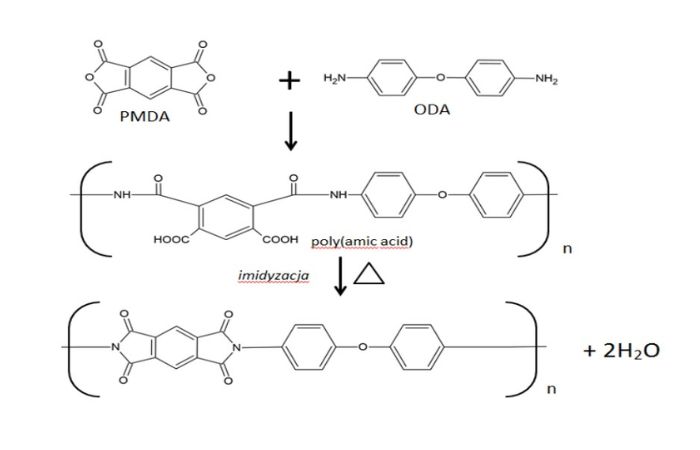
Types of Polyimide
Polyimides can be classified into different types based on the monomers used in their synthesis.
- Aromatic Polyimides
Synthesized from aromatic dianhydrides and aromatic diamines, these are the most common high-performance polyimides. They offer superior mechanical properties and the highest heat resistance but are difficult to process.
- Semi-aromatic Polyimides
These are produced using one aromatic monomer and one aliphatic monomer. PEI is the most typical example; it addresses the processing difficulties associated with polyimides by incorporating flexible structures while retaining some degree of heat resistance.
- Aliphatic Polyimides
Synthesized from both aliphatic dianhydrides and aliphatic diamines, the resulting products are more flexible, highly transparent, and easier to process. However, this comes at the cost of heat resistance and stability, resulting in performance levels far below those of aromatic polyimides.
Advantages of Polyimide
Estabilidade térmica
Polyimide ranks at the top of the engineering plastics temperature-resistant pyramid. It can withstand 400℃ (752℉) in the short term and the long-term use temperature range is -269℃ to 300℃ (-452℉ to 572℉). Within this temperature range, dimensional stability and chemical stability can be maintained for a long time.
Currently, there are Polyimides on the market that can withstand temperatures of 400°C for a long time, including HANSA’s Ultra high-temperature PI, CEPLA SA101/201, and SCM8000.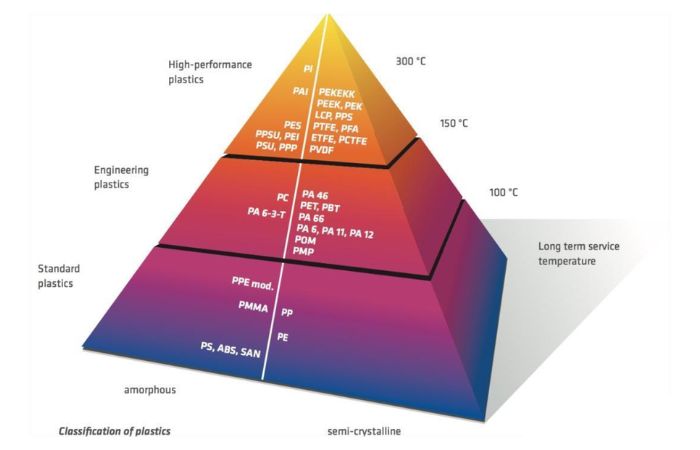
Resistência mecânica
Polyimide exhibits excellent mechanical strength due to the presence of numerous aromatic and imide rings within its molecular chains; these structures promote orderly molecular alignment and strengthen intermolecular interactions, restricting random chain movement and thereby maintaining high strength and rigidity.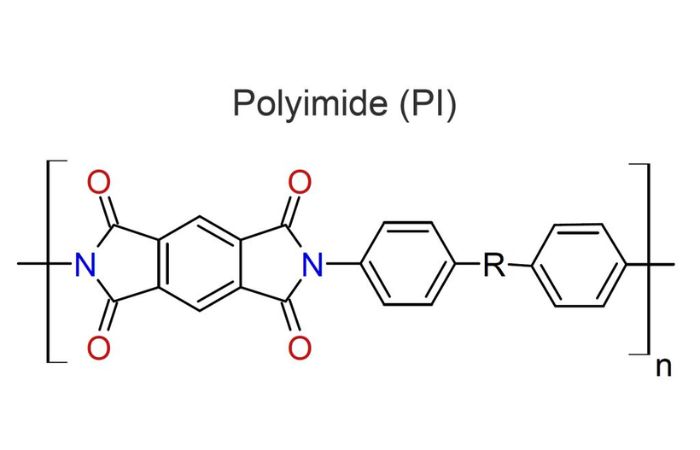
Isolamento elétrico
Polyimide possesses high dielectric strength, and its insulating properties remain virtually unchanged across a wide temperature range, from cryogenic to high temperatures. While the electrical insulation performance of ordinary plastics tends to degrade after prolonged exposure to high temperatures, polyimide maintains excellent dielectric properties due to its stable molecular chains, which restrict electron mobility.
Resistência química
The imide ring is chemically inert and resistant to organic solvents, oils, and fuels, while the stable aromatic ring structure provides resistance to UV radiation. The combination of these two features endows polyimide with excellent chemical resistance.
Resistência ao desgaste
Polyimide possesses high hardness, is resistant to surface wear, and has a low coefficient of friction. It is commonly used to manufacture wear-resistant components and sliding parts, such as bearings, bushings, and seal rings.
Radiation resistance
Due to its excellent radiation resistance—capable of withstanding UV, high-energy radiation, and solar radiation—polyimide is widely used in aerospace applications and nuclear-related equipment.
Obtain detailed performance data for polyimide: HANSA Polyimide product data sheet.
Limitations of Polyimide
High Material Cost
On one hand, the high-performance monomers—dianhydrides and diamines—used to synthesize polyimide are costly; on the other, the material’s exceptional heat resistance makes production challenging, placing rigorous demands on manufacturing processes and equipment. Consequently, polyimide—whether in powder, semi-finished, or machined part form—is expensive. Therefore, you should carefully consider whether polyimide is truly essential for your project or if other materials could meet your operating requirements, thereby avoiding the waste associated with “over-specifying” material performance.
Difficult Processing
The production and processing of polyimide require specific techniques, typically involving compression molding, sintering, or CNC machining. Because polyimide has a very high melting point, the material undergoes thermal decomposition before reaching that temperature, making melt processing impossible. Furthermore, due to the structural stability of the aromatic and imide rings, even if the material were to melt, the melt flow characteristics would not meet the requirements for injection molding.
Limited Resistance to Strong Alkali
Despite its chemical resistance, polyimide does have certain limitations. It cannot withstand attack by strong alkalis—which can cause molecular chain scission, particularly in environments combining high temperatures and strong alkalis. Consequently, it is necessary to modify the polyimide by incorporating other materials to specifically enhance certain performance characteristics. This is a key area of focus for HANSA and a primary direction for its future development.
Various forms of polyimide
Polyimide comes in various forms; specific PI products can be manufactured based on different production processes and application scenarios.
- Polyimide Film
PI film is processed from polyamic acid, the intermediate product formed during the initial stage of PI synthesis. Produced via the casting process, it fully retains the inherent properties of polyimide. Due to its excellent electrical insulation and thin profile, it is widely used in electronic components such as flexible printed circuit boards (FPCBs) and insulation films.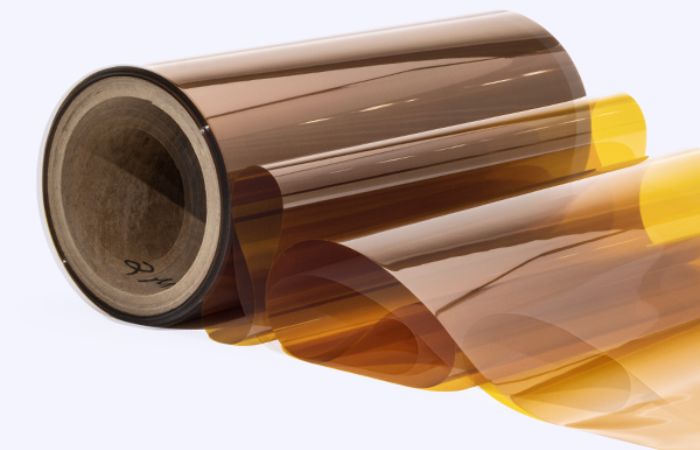
- Polyimide Sheet
These are semi-finished PI products typically purchased for further processing by the end-user. Usually produced via compression molding or sintering, they are available in thicknesses ranging from 1 mm to 50 mm. They serve industries such as semiconductors, aerospace, and automotive manufacturing.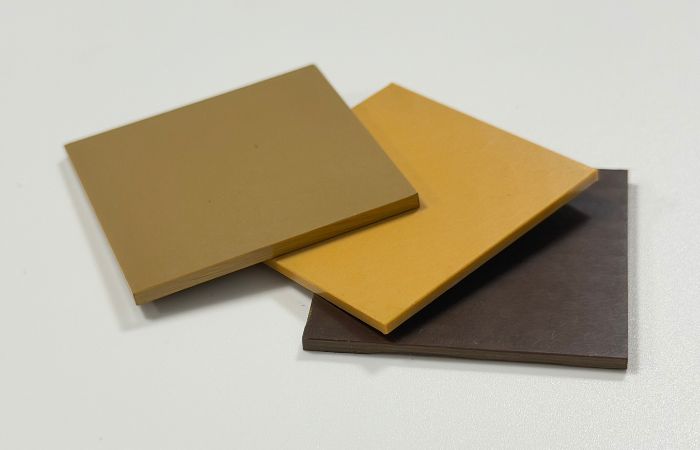
- Polyimide Rod
Available in long, cylindrical forms of varying diameters, these are generally used for machining into structural or insulating components.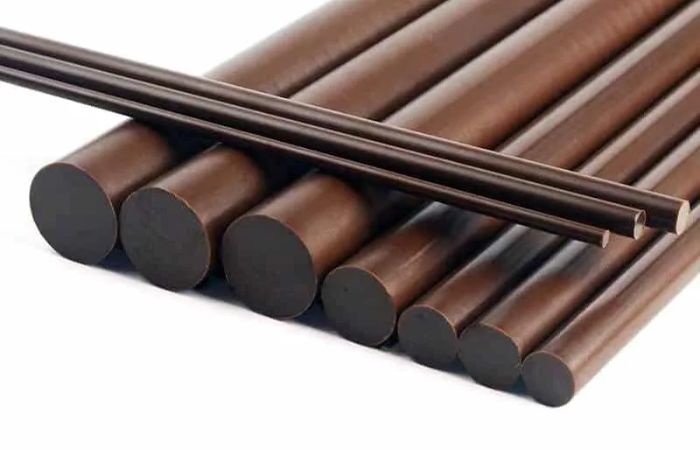
- Polyimide Tube
Thin-walled PI tubes have a wide range of applications, typically serving as insulation, high-temperature protection, or precision guides in sectors such as semiconductors, electronics, and medical technology.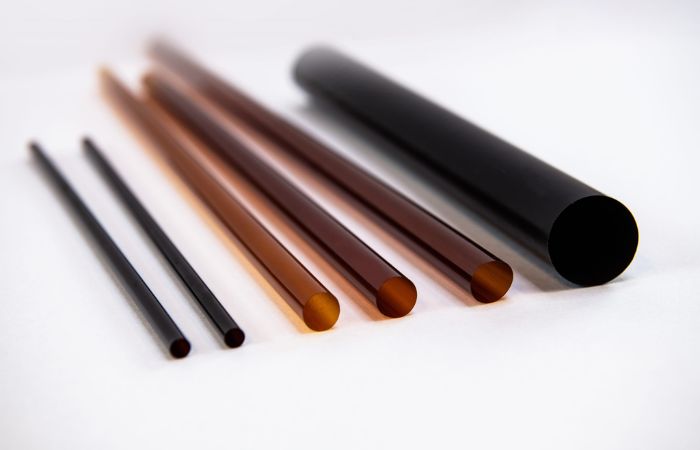
- Polyimide Powder
While PI powder serves as the raw material for the aforementioned semi-finished products, it also functions as a coating or composite material additive. For instance, adding polyimide to PTFE can compensate for PTFE’s inherent lack of rigidity.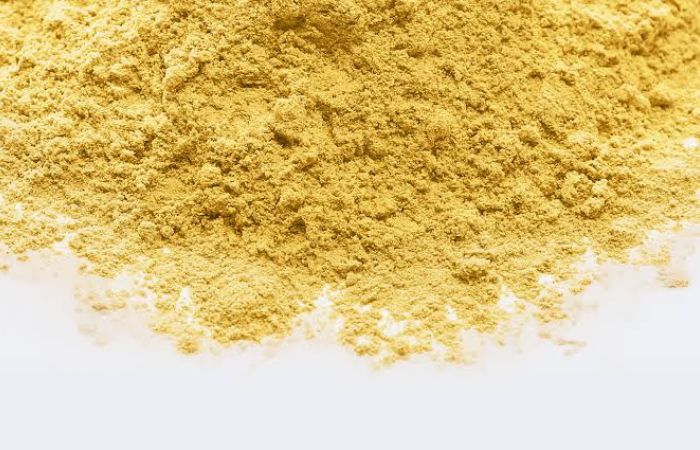
- Polyimide Resin
PI resin is generally used for coating and impregnation, or for the production of PI film. Applications include substrates and protective films for flexible copper-clad laminates (FCCL), cable wrapping materials, motor slot insulation, and buffer films for semiconductor chips.
- Polyimide Coating
Applied to material surfaces, this coating enhances wear resistance, temperature resistance, and electrical insulation. Like PI film, it leverages the material’s excellent inherent properties.
- Polyimide Foam
It is now widely used in sectors such as aircraft, ships, trains, and automobiles, serving as a functional material for thermal insulation, sound insulation, and frost prevention.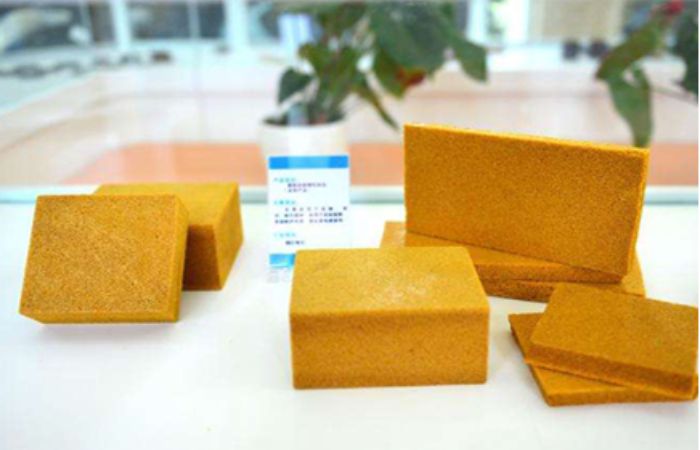
With its excellent rigidity, hardness, and dimensional stability, PI is ideal for machining precision mechanical components to tight tolerances. Examples include aircraft engine components (such as gears, bearings, bushings, and seal rings) and semiconductor equipment parts (such as wafer-contacting jigs, brackets, and test sockets).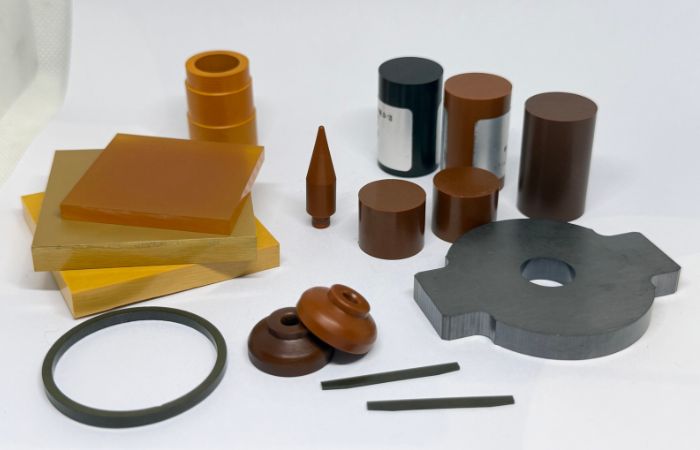
Applications of Polyimide in Various Industries
Semiconductor Industry
Polyimide exhibits low outgassing, excellent dimensional stability, high-temperature resistance, and resistance to plasma corrosion—properties that align perfectly with the material requirements of semiconductor environments.
- Wafer Handling Components: Wafer holders、Wafer carriers、Wafer guides
- Semiconductor Fixtures: Test sockets、Inspection fixtures、Positioning parts
- Plasma Etching Components: Insulation rings、Chamber components
Aerospace Industry
It is commonly used for aircraft engine structural components, gaskets, and seals, as it withstands the high-temperature environment surrounding the engine while meeting lightweighting requirements. Polyimide can be machined into parts such as gears and bushings; it offers low-friction, self-lubricating properties and can be used in oil-free environments.
Electronics Industry
Flexible Printed Circuit Boards (FPC)
Polyimide film or polyimide coating is commonly used, representing one of the most widespread applications of PI. Its thermal stability and electrical insulation properties make it suitable for use in circuit boards for smartphones, computers, cameras, and LCD televisions.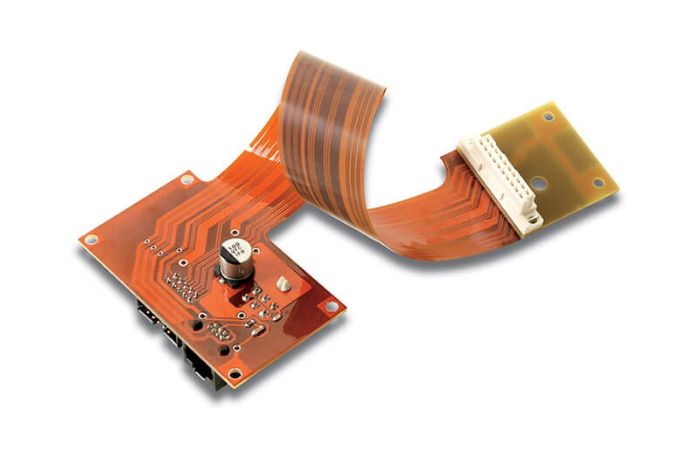
Insulation Materials
Polyimide is used for insulating varnishes, motor coils, and wire insulation coatings; it maintains stable insulating properties even in high-temperature environments.
Display technology
In liquid crystal displays, polyimide controls the alignment of liquid crystal molecules, helping to improve display uniformity and pixel quality; it can also serve as a pixel isolation layer in organic EL displays.
Automotive Industry
With the development of new energy vehicles, the demand for electronic components has surged. Due to its high heat resistance and insulating properties, polyimide is used for insulation components and gears located near electric motors. Its low-friction and wear-resistant characteristics make it suitable for transmission components, helping to reduce maintenance frequency and extend service life.
Indústria química
Polyimide is widely used in industrial environments with demanding material requirements—most notably in the glass industry, a sector where we have extensive experience. The process of manufacturing glass containers is complex and necessitates the use of suitable materials, particularly for components involved in container transport; the right materials help minimize cracks in fragile glass containers and ensure the production of high-quality, defect-free containers with consistent quality.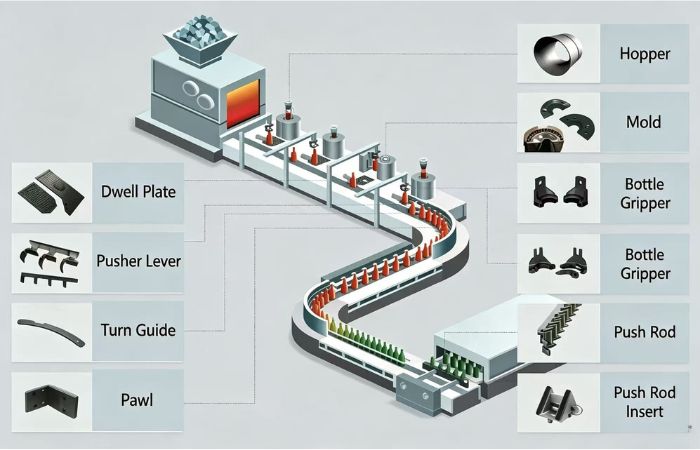
Reinforced Polyimide
Although pure polyimide possesses excellent properties, it still has certain limitations. To address these shortcomings, various other materials can be added to modify and enhance it.
Graphite Filled Polyimide
Adding graphite enhances wear resistance, self-lubricating properties, and thermal conductivity. Because graphite has a layered structure with low inter-layer friction, it helps reduce frictional resistance.
PTFE Filled Polyimide
PTFE is most notable for its chemical inertness and extremely low coefficient of friction; the combination of these properties enables it to simultaneously offer high-temperature resistance, high strength, chemical resistance, and wear resistance.
Carbon Fiber Reinforced PI
Adding carbon fiber can improve the rigidity of Polyimide, reducing deformation under long-term load conditions and making it durable for a long time.
Glass Fiber Reinforced PI
Glass fiber enhances mechanical strength and dimensional stability, making polyimide more stable during processing and allowing for greater precision in component fabrication.
Conductive PI
The addition of carbon black, carbon fiber, and graphite imparts a degree of electrical conductivity to the otherwise insulating polyimide, preventing electrostatic attraction.
Anti-static PI
The primary goal of anti-static measures is to dissipate static electricity; this differs from electrical conduction, which aims to reduce electrical resistance.
Conclusão
Polyimide is a high-performance polymer with exceptional overall properties; its unique chemical structure imparts outstanding heat resistance, mechanical strength, and the ability to withstand extreme environments.
HANSA is dedicated to providing high-performance polyimide material solutions, including PI sheets, rods, and tubes, as well as custom CNC-machined PI components. We offer a wide range of modified PI materials—such as wear-resistant, graphite-filled, PTFE-filled, and anti-static grades—to meet the demanding requirements of industries including semiconductors, aerospace, vacuum equipment, and precision machinery.
Whether you require standard PI materials or custom-engineered polyimide components, HANSA provides professional material support and machining solutions tailored to your specific application needs.
Contact us now to get the latest quote!

 Portuguese
  English
  Arabic
  Tibetan
  German
  Spanish
  French
  Hindi
Hindi  Indonesian
  Italian
  Japanese
  Korean
  Dutch
Dutch  Thai
Thai  Russian
  Swedish
  Chinese