


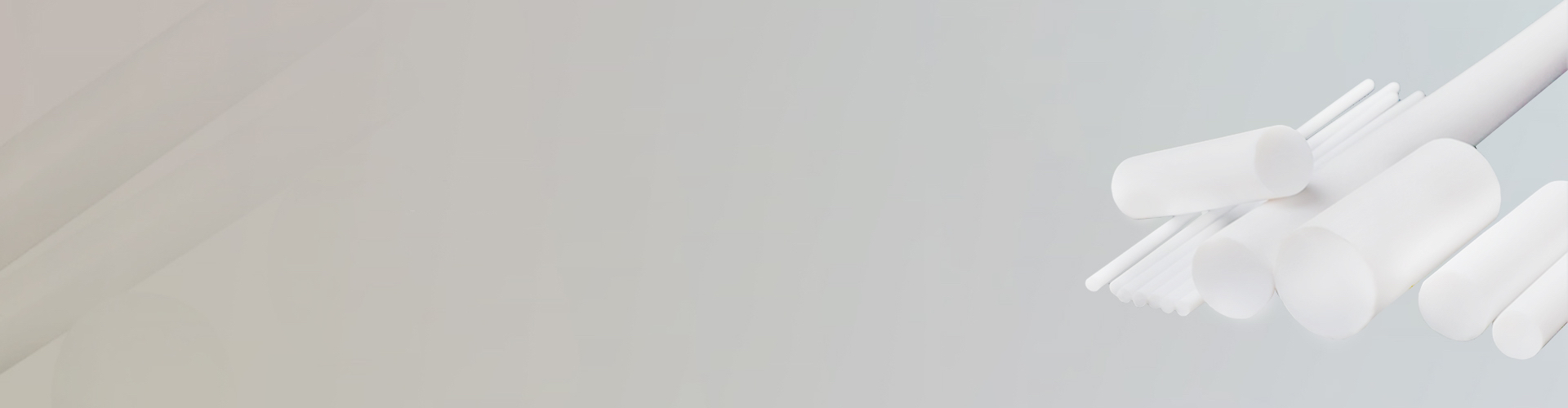
한사 PTFE 막대
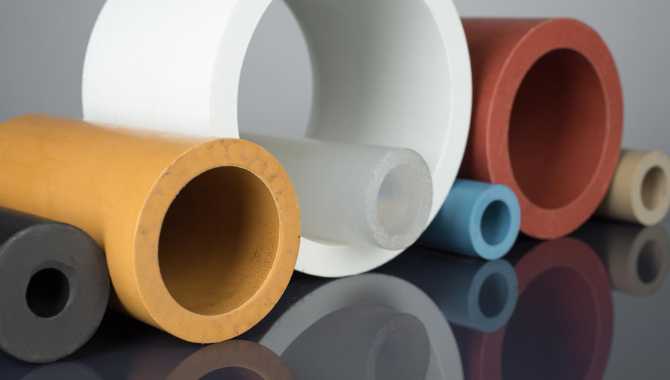
PTFE 막대는 대부분 뚜렷한 흰색으로 제공되며, 다양한 단면적과 직경으로 제공됩니다. 고객 요구 사항에 따라 빨간색, 파란색, 녹색 또는 노란색 등 다른 색상으로도 제공됩니다.
2mm PTFE 막대, 맞춤형 크기 절단 막대, 또는 맞춤형 테프론 막대 등 특정 용도에 맞는 다양한 옵션이 있습니다. 특정 요구 사항에 따라 원형 PTFE 막대 또는 육각형 PTFE 막대 등 다양한 단면적을 제공합니다.
일반적으로 압출 PTFE 막대 또는 PTFE 성형 막대를 구입할 수 있습니다. 두 가지 테프론 막대 우수한 물리적, 화학적 특성으로 인해 탁월한 성능 특성을 가지고 있습니다.
PTFE 막대에 사용 가능한 재료 등급
테프론 막대 사용에는 다양한 요구 사항이 있습니다. PTFE 소재 등급 사용 가능합니다. 특정 막대의 선택은 특정 적용 요건에 따라 달라집니다.
사용 가능한 소재 옵션은 다음과 같습니다.
버진 PTFE 막대 – 이것은 100%로 만들어졌습니다. 폴리테트라플루오로에틸렌 소재.
변형 PTFE 막대 – 우수한 성능 요구 사항을 충족하기 위해 PTFE의 특성을 변경하는 과정이 포함됩니다.
기계 등급 PTFE 막대 – 이 PTFE 막대는 재활용 폴리테트라플루오로에틸렌 소재로 만들어졌습니다.
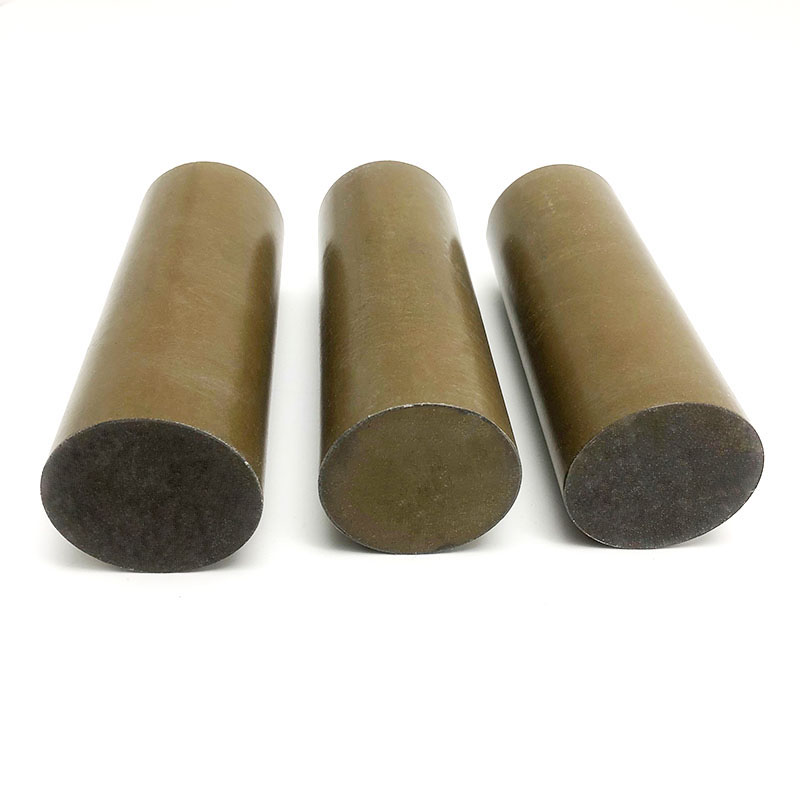
채워진 PTFE 막대 – PTFE에 다양한 필러 재료를 추가하여 더 나은 성능을 얻을 수 있습니다. 일반적으로 테프론 막대의 이름은 PTFE 필러 재료의 종류. 일반적인 등급은 다음과 같습니다.
- 탄소 충전 PTFE 막대– PTFE 막대의 압축 강도와 높은 하중 저항성을 높이려면 10%부터 35%까지 탄소를 중량 기준으로 첨가하십시오. 또한, 탄소는 전도성을 변화시키는 동시에 내화학성을 향상시킵니다.
- 유리 충전 PTFE 막대– 5%와 40%의 유리를 첨가하면 PTFE 막대가 더 단단해지고, 압축 강도가 향상되며, 높은 강성을 보이고, 더 나은 내화학성 특성을 갖게 됩니다.
- 흑연이 채워진 PTFE 막대– 마찰 계수가 매우 낮은 테플론 막대를 원하시면 약 5%에서 15% 정도의 흑연을 첨가하십시오. 또한 흑연은 초기 마모를 크게 줄여줍니다.
- 이황화몰리브덴이 채워진 PTFE 막대– 전기적 및 화학적 특성을 손상시키지 않고 테프론 막대의 내마모성, 경도 및 강성을 향상시키고 싶은 경우 MoS2 완벽한 옵션을 제공합니다.
- 금속이 채워진 PTFE 막대– 스테인리스 스틸이나 청동을 추가할 수 있습니다. 이러한 금속은 PTFE 막대의 변형률과 열전도도를 향상시킵니다.
- 미네랄이 채워진 PTFE 막대– 마이카 충전 PTFE 막대는 FDA 규정 준수 용도에 적극 권장됩니다. 일반적으로 5%에서 10% 사이의 PTFE 막대를 추가할 수 있습니다.
테프론 막대 사용에 대해 제조업체와 논의하면 귀사의 고유한 사양에 맞춰 제품을 최적화하는 데 도움이 됩니다. PTFE 막대 제조업체는 귀사의 용도에 맞는 최적의 필러 소재를 선택하도록 도와드립니다.



PTFE 막대의 특성
최근 PTFE 막대는 다음과 같은 뛰어난 특성으로 인해 인기를 얻고 있습니다.
-
- 넓은 온도 범위에 적합– PFTE 막대는 -240~260°C 사이의 온도에서 잘 작동합니다.
- 뛰어난 전기적, 열적 특성– PTFE 막대가 일반적인 전기 절연체인 이유입니다. 그러나 필러를 추가하면 전기적 및 열적 특성이 향상될 수 있습니다.
- 낮은 마찰 계수– 이는 비점착성 특성과 마찰에 민감한 응용 분야에 대한 적합성을 설명합니다.
- 높은 내화학성– 불소탄소는 뛰어난 내화학성으로 잘 알려져 있습니다. 이로 인해 PTFE 막대는 내화학성이 매우 뛰어납니다.

PTFE 막대 응용 분야
다양한 크기의 테플론 봉은 여러 산업 분야에서 사용됩니다. 현재 테플론 봉은 생산, 전기, 가전, 화학 산업 등 다양한 분야에서 널리 사용됩니다.
PTFE 막대를 가공하여 씰, 기계 부품, 캡, 계기 부품, 베어링, 롤러 등의 구성품을 만들 수 있습니다.
PTFE is a high-grade engineering plastic, and a PTFE rod is a cylindrical rod made of this plastic. PTFE has excellent chemical inertness and high-temperature resistance, and an extremely low coefficient of friction with a non-adhesive surface, making it a high-performance engineering plastic. Therefore, it is commonly used in the chemical industry to manufacture machined parts such as seals, bearings, and insulators, serving functions such as sealing, insulation, and lubrication.
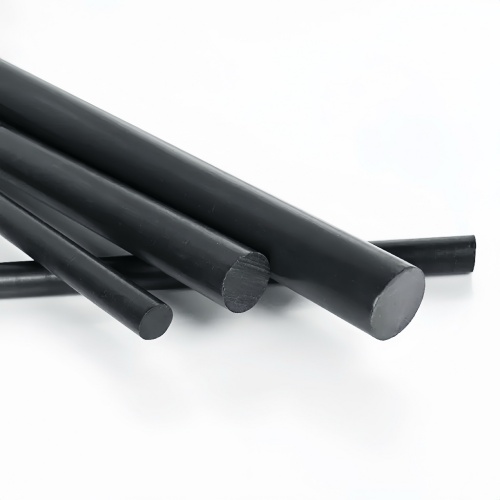
Black PTFE rods are filled and modified PTFE rods. PTFE itself is white; the black color comes from the addition of other black substances, typically carbon fiber, graphite, or carbon powder. Different fillers enhance different properties. Carbon fiber increases the hardness of the PTFE rod, making it more resistant to creep and suitable for high-pressure operation; graphite enhances its lubricity, reducing friction between the PTFE rod and machinery, making it suitable for high-speed operation; and carbon powder provides conductivity and prevents static electricity.
PTFE rods have five main application areas: chemical, mechanical, electronic, semiconductor, and construction. In the chemical industry, PTFE rods primarily function as corrosion protectants and sealants. They are resistant to almost all highly corrosive liquids, including strong acids and alkalis, and are chemically stable, not easily reacting with other chemicals. In the mechanical industry, their main function is to reduce friction and protect equipment. Due to PTFE’s excellent self-lubricating properties, it can replace lubricating oil in mechanical parts such as bearings, bushings, gears, sliders, and piston rings. In the electronic industry, PTFE rods are often used to make high-frequency cables, insulated wires, printed circuit boards, transformers, and high-voltage insulation materials for motors due to their excellent electrical insulation properties. In semiconductor manufacturing, PTFE rods are widely used in wet process systems and chemical transportation, ensuring ultra-pure environments. In the construction industry, PTFE rods are commonly used to make wear-resistant sliding plates and sealing strips.
The disadvantages of PTFE rods can be broadly categorized into five points. Two of the more significant are their relatively low mechanical strength, making them prone to deformation under prolonged high loads, and their large coefficient of thermal expansion, meaning their dimensions change considerably with temperature variations. Three other points are the high cost of PTFE, the difficulty in processing it, and the fact that it cannot be directly adhered to surfaces without sodium curing. However, we offer processing and sodium curing services. If you purchase our PTFE rods, we can solve all your problems in one go.
PTFE rods cannot be directly glued. Because of PTFE’s chemical inertness, it hardly reacts with any physicochemical substances, so ordinary glues will not work. However, it can be glued using other methods. These include special surface activation treatments such as sodium treatment, plasma treatment, and chemical etching. Alternatively, specialized adhesives, such as epoxy structural adhesives, polyurethane adhesives, or special fluoroplastic adhesives, can be applied to the surface of the PTFE rod, making it bondable.
Of course! HANSA’s PTFE rods are FDA-certified and we possess the relevant safety certificates. Furthermore, they can be used in the food industry for the following reasons: PTFE has a non-stick surface, preventing it from absorbing food residue or beverage liquids; it is chemically inert, reacting almost entirely with no chemicals. PTFE rods are commonly used to make seals, bearings, rollers, cutters, and other components. When purchasing, be sure to choose food-grade PTFE rods and ensure the operating temperature does not exceed 260 degrees Celsius.
Yes, PTFE rods are also called Teflon rods. PTFE and Teflon are essentially the same thing, both referring to polytetrafluoroethylene (PTFE). The difference is that Teflon is a registered trademark, a brand name. Teflon was launched by DuPont and later transferred to Chemours. The word Teflon has brand recognition, and it’s the most familiar name to the public. However, the quality of a material depends on its performance, and material performance depends on the grade of its raw materials and processing technology, not its name.
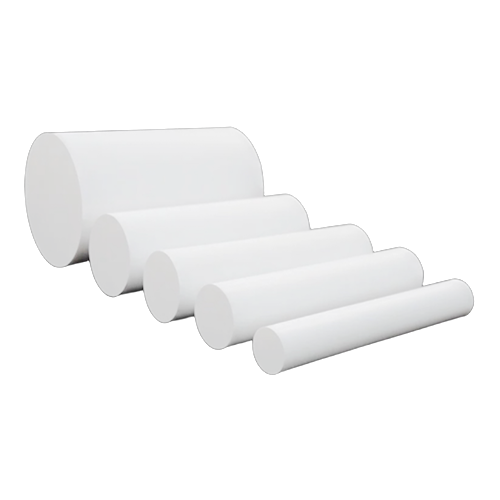
Depending on the manufacturing process, different sizes are available. Extruded PTFE rods have diameters of 4-200mm and lengths of 1/2/3m; molded PTFE rods have diameters of 20-1000mm and lengths of 100-1000mm, with larger diameters having lengths of 300-500mm. If PTFE rods contain filler materials, such as glass fiber, carbon fiber, bronze, carbon powder, or graphite, their diameter is typically less than 300mm.
cutting,thermoplastic welding,drilling,bending,thermo forming,polishing,gluing,Injection Molding and CNC Milling。
Of course! We have complete processing equipment and mature processing technology, such as saw cutting, laser cutting, CNC cutting, thermoplastic welding, drilling, bending, thermo forming, polishing, gluing, injection molding, and CNC milling.
Industry standards mainly include ASTM (USA), ISO (international), SAE/AMS (aerospace), FDA food-grade standards, and RoHS/REACH environmental compliance standards. ASTM further includes D1710 (Extruded and Molded PTFE Rods, Dimensional Tolerances, Physical Properties, and Grading), D4894 (Raw Material Standard), and D4895 (Dispersion Resin Standard). ISO includes ISO 13000 and ISO 12086.We have all the industry standard certificates and can provide them to you.
Excellent chemical corrosion resistance, extremely low coefficient of friction of 0.04, non-adhesive surface, and extremely wide temperature range (-292℉~500℉) are all qualities that other materials cannot possess simultaneously.
In terms of color, pure PTFE is milky white or ivory white. Recycled or counterfeit materials may appear blackish, dull, or yellowish. It has no smell; if it has a plastic smell or a pungent odor when burned, it is of inferior quality. It feels like oil or wax with low resistance; if it feels rough to the touch, it may be fake PTFE. Pure PTFE will not change color or expand when placed in strong acids or alkalis.We use 100% virgin PTFE resin, no regrind or recycled material.



 Korean
  English
  Arabic
  Tibetan
  German
  Spanish
  French
  Hindi
Hindi  Indonesian
  Italian
  Japanese
  Dutch
Dutch  Portuguese
  Thai
Thai  Russian
  Swedish
  Chinese