


HANSA PTFEロッド
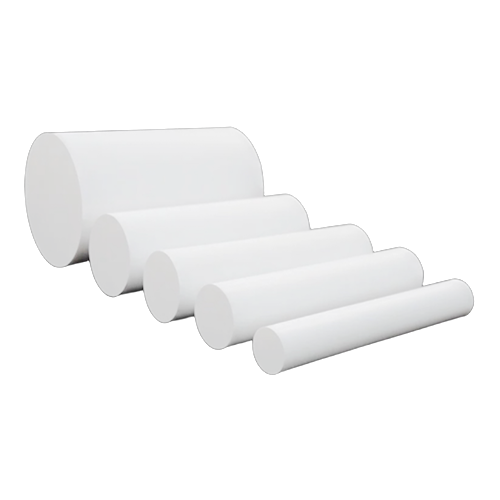
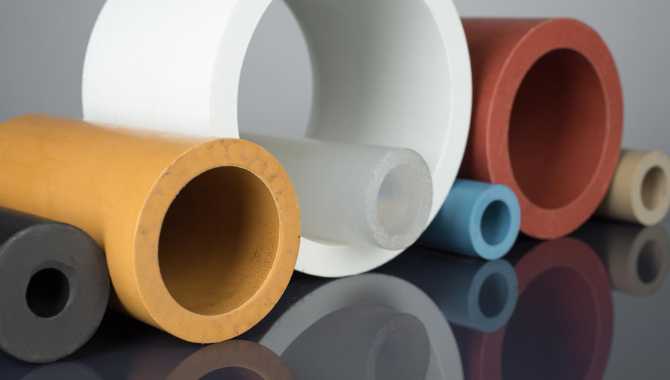
PTFEロッドは、主に白色で販売されていますが、様々な断面積と直径の製品を取り揃えています。また、お客様のご要望に応じて、赤、青、緑、黄色などの色もご用意しております。
2mm径PTFEロッド、サイズカット、カスタムテフロンロッドなど、お客様の用途に合わせて豊富なオプションをご用意しています。丸型PTFEロッドやPTFE六角ロッドなど、様々な断面積のロッドをご用意しており、お客様のご要望に合わせてお選びいただけます。
一般的に、押し出しPTFEロッドまたはPTFE成形ロッドが入手可能です。 テフロン棒 優れた物理的・化学的特性により、優れた性能特性を備えています。
PTFEロッドに使用可能な材料グレード
テフロンロッドの用途にはダイナミックなニーズがあり、 PTFE材料グレード 利用可能なロッドの種類は、具体的な用途要件に応じて異なります。
利用可能な材料オプションは次のとおりです:
バージンPTFEロッド – これらは100%で作られています ポリテトラフルオロエチレン素材.
改質PTFEロッド – 優れた性能要件を満たすために PTFE の特性を変更します。
機械グレードPTFEロッド – これらの PTFE ロッドはリサイクルされたポリテトラフルオロエチレン素材から作られています。
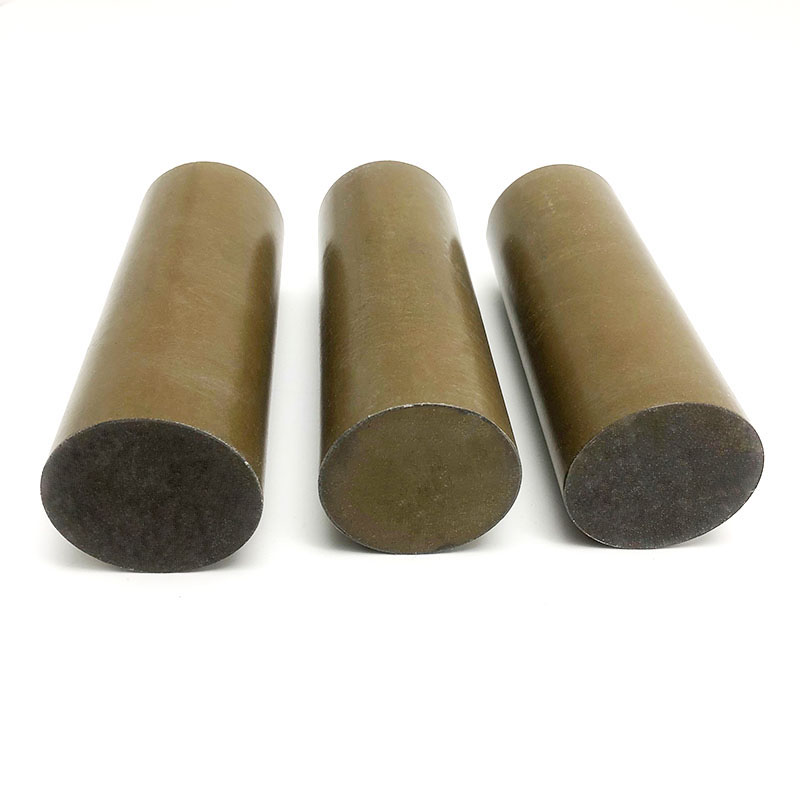
充填PTFEロッド – PTFEに様々な充填材を加えることで、より優れた性能特性を得ることができます。通常、テフロンロッドの名称は、 PTFE充填材の種類一般的なグレードには以下のものがあります:
- 炭素充填PTFEロッド– PTFEロッドの圧縮強度と耐荷重性を向上させたい場合は、重量比で10%~35%のカーボンを添加してください。さらに、カーボンは導電性を変化させ、耐薬品性も向上させます。
- ガラス充填PTFEロッド– 5% および 40% の量のガラスを追加することで、PTFE ロッドはより硬くなり、圧縮強度が向上し、高い剛性を示し、耐薬品性も向上します。
- グラファイト充填PTFEロッド– 摩擦係数を極めて低く抑えたテフロンロッドをお求めの場合は、5%~15%程度のグラファイトを添加すると効果的です。グラファイトは初期の摩耗を大幅に低減します。
- 二硫化モリブデン充填PTFEロッド– テフロンロッドの電気的および化学的特性を損なうことなく、耐摩耗性、硬度、剛性を向上させたい場合は、MoS2 完璧なオプションを提供します。
- 金属充填PTFEロッド– ステンレス鋼または青銅を追加できます。これらの金属はPTFEロッドの変形と熱伝導性を向上させます。
- ミネラル充填PTFEロッド– FDA準拠アプリケーションには、マイカ充填PTFEロッドが強く推奨されます。通常、5%から10%までの範囲で使用できます。
テフロンロッドの用途についてメーカーとご相談いただくことで、お客様独自の仕様に合わせて製品を最適化し、PTFEロッドメーカーがお客様の用途に最適な充填材の選定をお手伝いいたします。



PTFEロッドの特性
近年、PTFE ロッドは次のような優れた特性により人気を博しています。
-
- 広い温度範囲に適しています– PFTE ロッドは -240 ~ 260°C の温度範囲で適切に機能します。
- 優れた電気的特性と熱的特性PTFEロッドが一般的な電気絶縁体である理由はここにあります。しかし、充填剤を添加することで、電気的特性と熱的特性が向上する可能性があります。
- 低い摩擦係数– 非粘着特性と摩擦に敏感な用途への適合性について説明します。
- 高い耐薬品性– フルオロカーボンは優れた耐薬品性で知られています。そのため、PTFEロッドは高い耐薬品性を備えています。

PTFEロッドの用途
様々なサイズのテフロンロッドは、多くの業界で使用されています。現在、テフロンロッドの一般的な用途としては、製造業、電気産業、家電産業、化学産業などが挙げられます。
PTFE ロッドをさらに加工して、シール、機械部品、キャップ、計器部品、ベアリング、ローラーなどのコンポーネントを製造できます。
PTFE is a high-grade engineering plastic, and a PTFE rod is a cylindrical rod made of this plastic. PTFE has excellent chemical inertness and high-temperature resistance, and an extremely low coefficient of friction with a non-adhesive surface, making it a high-performance engineering plastic. Therefore, it is commonly used in the chemical industry to manufacture machined parts such as seals, bearings, and insulators, serving functions such as sealing, insulation, and lubrication.
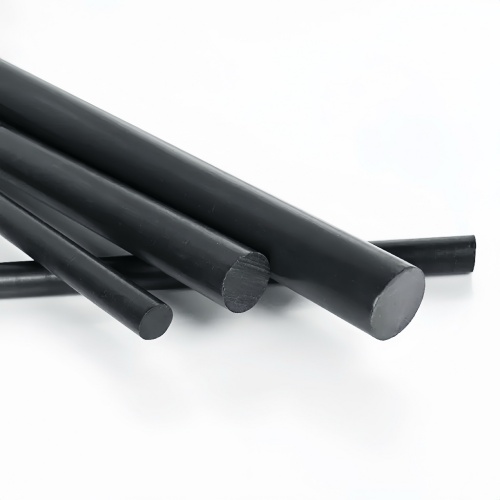
Black PTFE rods are filled and modified PTFE rods. PTFE itself is white; the black color comes from the addition of other black substances, typically carbon fiber, graphite, or carbon powder. Different fillers enhance different properties. Carbon fiber increases the hardness of the PTFE rod, making it more resistant to creep and suitable for high-pressure operation; graphite enhances its lubricity, reducing friction between the PTFE rod and machinery, making it suitable for high-speed operation; and carbon powder provides conductivity and prevents static electricity.
PTFE rods have five main application areas: chemical, mechanical, electronic, semiconductor, and construction. In the chemical industry, PTFE rods primarily function as corrosion protectants and sealants. They are resistant to almost all highly corrosive liquids, including strong acids and alkalis, and are chemically stable, not easily reacting with other chemicals. In the mechanical industry, their main function is to reduce friction and protect equipment. Due to PTFE’s excellent self-lubricating properties, it can replace lubricating oil in mechanical parts such as bearings, bushings, gears, sliders, and piston rings. In the electronic industry, PTFE rods are often used to make high-frequency cables, insulated wires, printed circuit boards, transformers, and high-voltage insulation materials for motors due to their excellent electrical insulation properties. In semiconductor manufacturing, PTFE rods are widely used in wet process systems and chemical transportation, ensuring ultra-pure environments. In the construction industry, PTFE rods are commonly used to make wear-resistant sliding plates and sealing strips.
The disadvantages of PTFE rods can be broadly categorized into five points. Two of the more significant are their relatively low mechanical strength, making them prone to deformation under prolonged high loads, and their large coefficient of thermal expansion, meaning their dimensions change considerably with temperature variations. Three other points are the high cost of PTFE, the difficulty in processing it, and the fact that it cannot be directly adhered to surfaces without sodium curing. However, we offer processing and sodium curing services. If you purchase our PTFE rods, we can solve all your problems in one go.
PTFE rods cannot be directly glued. Because of PTFE’s chemical inertness, it hardly reacts with any physicochemical substances, so ordinary glues will not work. However, it can be glued using other methods. These include special surface activation treatments such as sodium treatment, plasma treatment, and chemical etching. Alternatively, specialized adhesives, such as epoxy structural adhesives, polyurethane adhesives, or special fluoroplastic adhesives, can be applied to the surface of the PTFE rod, making it bondable.
Of course! HANSA’s PTFE rods are FDA-certified and we possess the relevant safety certificates. Furthermore, they can be used in the food industry for the following reasons: PTFE has a non-stick surface, preventing it from absorbing food residue or beverage liquids; it is chemically inert, reacting almost entirely with no chemicals. PTFE rods are commonly used to make seals, bearings, rollers, cutters, and other components. When purchasing, be sure to choose food-grade PTFE rods and ensure the operating temperature does not exceed 260 degrees Celsius.
Yes, PTFE rods are also called Teflon rods. PTFE and Teflon are essentially the same thing, both referring to polytetrafluoroethylene (PTFE). The difference is that Teflon is a registered trademark, a brand name. Teflon was launched by DuPont and later transferred to Chemours. The word Teflon has brand recognition, and it’s the most familiar name to the public. However, the quality of a material depends on its performance, and material performance depends on the grade of its raw materials and processing technology, not its name.
Depending on the manufacturing process, different sizes are available. Extruded PTFE rods have diameters of 4-200mm and lengths of 1/2/3m; molded PTFE rods have diameters of 20-1000mm and lengths of 100-1000mm, with larger diameters having lengths of 300-500mm. If PTFE rods contain filler materials, such as glass fiber, carbon fiber, bronze, carbon powder, or graphite, their diameter is typically less than 300mm.
cutting,thermoplastic welding,drilling,bending,thermo forming,polishing,gluing,Injection Molding and CNC Milling。
Of course! We have complete processing equipment and mature processing technology, such as saw cutting, laser cutting, CNC cutting, thermoplastic welding, drilling, bending, thermo forming, polishing, gluing, injection molding, and CNC milling.
Industry standards mainly include ASTM (USA), ISO (international), SAE/AMS (aerospace), FDA food-grade standards, and RoHS/REACH environmental compliance standards. ASTM further includes D1710 (Extruded and Molded PTFE Rods, Dimensional Tolerances, Physical Properties, and Grading), D4894 (Raw Material Standard), and D4895 (Dispersion Resin Standard). ISO includes ISO 13000 and ISO 12086.We have all the industry standard certificates and can provide them to you.
Excellent chemical corrosion resistance, extremely low coefficient of friction of 0.04, non-adhesive surface, and extremely wide temperature range (-292℉~500℉) are all qualities that other materials cannot possess simultaneously.
In terms of color, pure PTFE is milky white or ivory white. Recycled or counterfeit materials may appear blackish, dull, or yellowish. It has no smell; if it has a plastic smell or a pungent odor when burned, it is of inferior quality. It feels like oil or wax with low resistance; if it feels rough to the touch, it may be fake PTFE. Pure PTFE will not change color or expand when placed in strong acids or alkalis.We use 100% virgin PTFE resin, no regrind or recycled material.



 Japanese
  English
  Arabic
  Tibetan
  German
  Spanish
  French
  Hindi
Hindi  Indonesian
  Italian
  Korean
  Dutch
Dutch  Portuguese
  Thai
Thai  Russian
  Swedish
  Chinese