


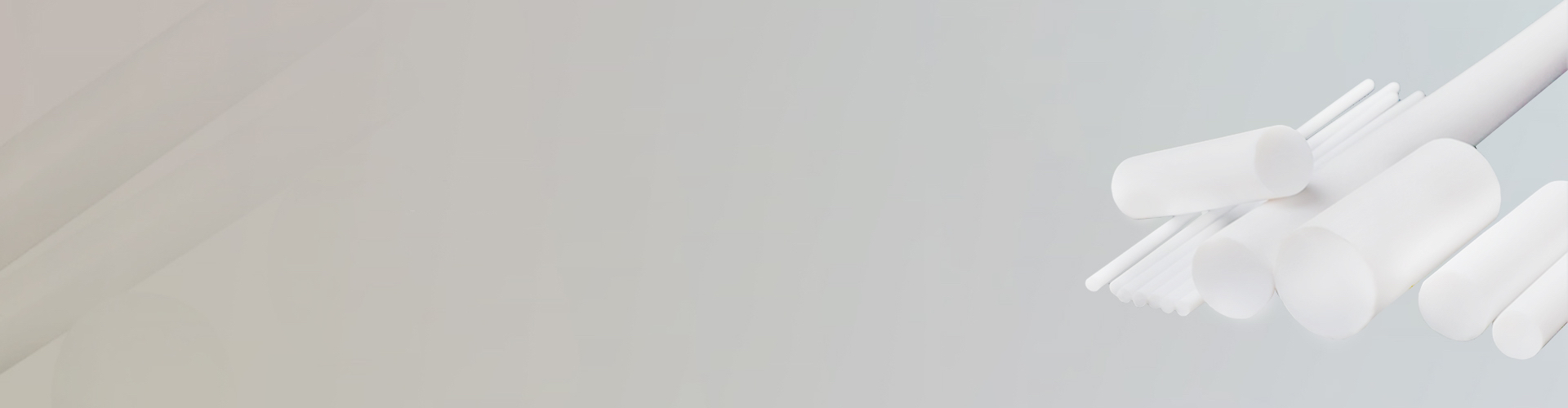
Asta HANSA PTFE
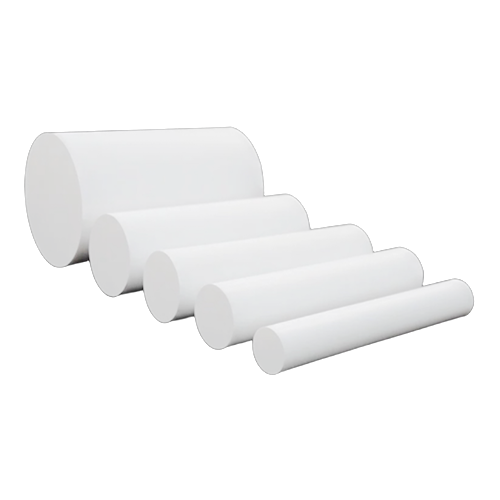
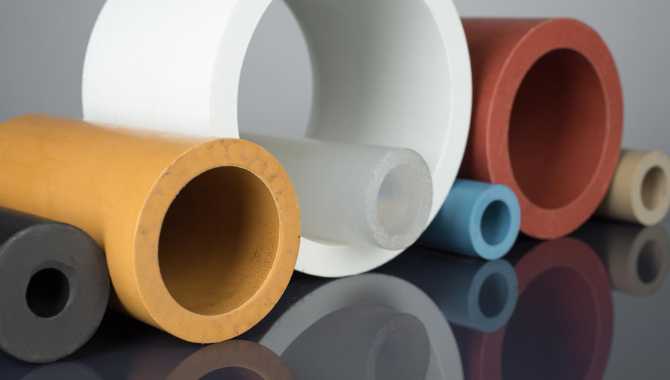
Disponibili principalmente in un caratteristico colore bianco, le barre in PTFE sono disponibili in diverse sezioni trasversali e diametri. Sono disponibili anche in altri colori come rosso, blu, verde o giallo, a seconda delle esigenze del cliente.
Che si tratti di barre in PTFE da 2 mm, tagliate a misura, o barre in Teflon personalizzate, sono disponibili numerose opzioni per le vostre applicazioni specifiche. Sono disponibili in diverse sezioni trasversali, tra cui barre tonde in PTFE o barre esagonali in PTFE, a seconda dei requisiti specifici.
Generalmente, è possibile ottenere barre di PTFE estruse o barre stampate in PTFE. Le due barre di teflon presentano caratteristiche prestazionali eccezionali grazie alle loro superiori proprietà fisiche e chimiche.
Grado di materiale disponibile per barre in PTFE
Con esigenze dinamiche negli usi delle barre di Teflon, ci sono diverse Gradi di materiale PTFE disponibili. La scelta delle aste specifiche dipenderà dai requisiti specifici dell'applicazione.
Le opzioni di materiali disponibili includono:
Barre di PTFE vergine – questi sono realizzati in 100% materiale in politetrafluoroetilene.
Barre in PTFE modificate –comporta la modifica delle proprietà del PTFE per ottenere requisiti di prestazioni superiori.
Barre in PTFE di grado meccanico – queste barre in PTFE sono realizzate in materiale politetrafluoroetilene riciclato.
Barre di PTFE riempite – è possibile aggiungere molti materiali di riempimento al PTFE per ottenere migliori proprietà prestazionali. Di solito, il nome della barra di Teflon dipenderà dal tipo di materiale di riempimento PTFEAlcuni gradi comuni includono:
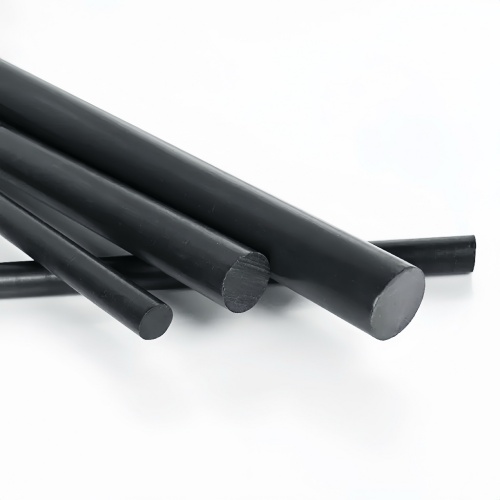
- Barre in PTFE caricate con carbonio– Se si desidera che le barre in PTFE abbiano una migliore resistenza alla compressione e un'elevata resistenza ai carichi, aggiungere carbonio in peso da 10% a 35%. Inoltre, il carbonio ne modificherà anche la conduttività, migliorando al contempo la resistenza chimica.
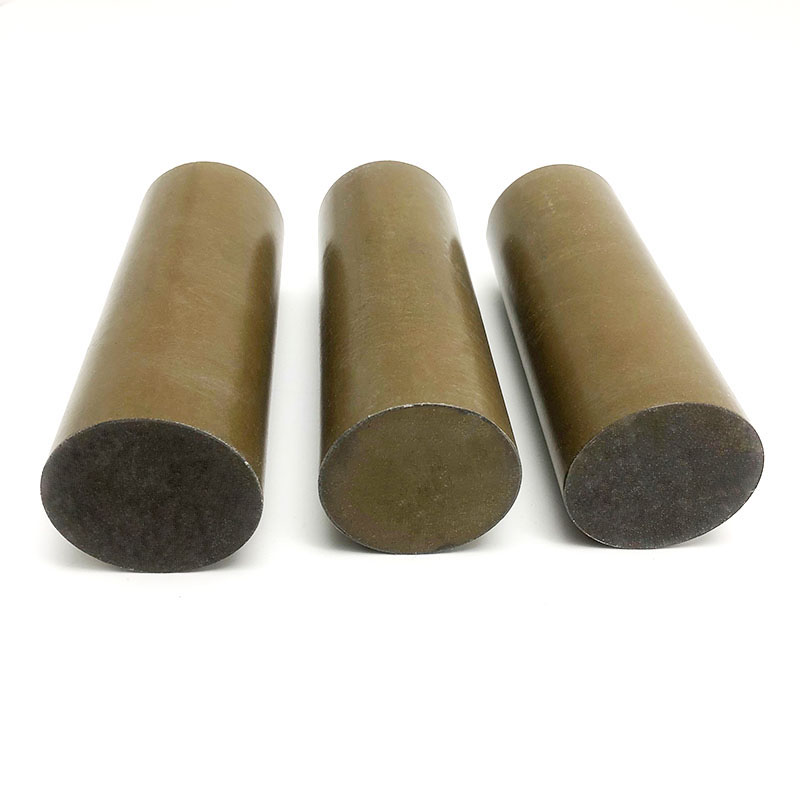
- Barre di PTFE caricate con vetro– aggiungendo vetro nelle quantità 5% e 40%, le barre in PTFE saranno più rigide, avranno una migliore resistenza alla compressione, mostreranno un'elevata rigidità e possederanno migliori proprietà di resistenza chimica.
- Barre di PTFE riempite di grafite– se si desiderano barre in Teflon con un coefficiente di attrito estremamente basso, aggiungere grafite da circa 5% a 15%. Inoltre, la grafite ridurrà significativamente l'usura iniziale.
- Barre di PTFE riempite di bisolfuro di molibdeno– nel caso in cui si voglia migliorare la resistenza all’usura, la durezza e la rigidità delle barre in Teflon senza compromettere le proprietà elettriche e chimiche, allora MoS2 offre opzioni perfette.
- Barre di PTFE caricate con metallo– è possibile aggiungere acciaio inossidabile o bronzo. Questi metalli hanno migliorato la deformazione e la conduttività termica delle barre in PTFE.
- Barre in PTFE caricate con minerali– Le barre in PTFE caricato con mica sono altamente raccomandate per applicazioni conformi alla FDA. Solitamente, è possibile aggiungere tra 5% e 10%.
Discutere l'utilizzo delle barre in Teflon con il produttore aiuterà il produttore a ottimizzare il prodotto in base alle vostre specifiche esigenze. Il produttore delle barre in PTFE vi aiuterà a scegliere il materiale di riempimento perfetto per la vostra applicazione.



Proprietà delle barre in PTFE
Nel recente passato, le barre in PTFE sono diventate popolari grazie alle loro proprietà superiori, quali:
-
- Adatto ad un ampio intervallo di temperatura– Le barre in PTFE sono adatte a temperature comprese tra -240 e 260 °C.
- Proprietà elettriche e termiche superiori– un motivo per cui le barre in PTFE sono comunemente utilizzate come isolanti elettrici. Tuttavia, l'aggiunta di riempitivi può migliorarne le proprietà elettriche e termiche.
- Basso coefficiente di attrito– spiega le proprietà antiaderenti e l'idoneità in applicazioni sensibili all'attrito.
- Elevata resistenza chimica– I fluorocarburi sono noti per le loro eccellenti proprietà di resistenza chimica. Questo rende le barre in PTFE altamente resistenti agli agenti chimici.

Applicazioni delle barre in PTFE
Le barre di Teflon di varie dimensioni trovano impiego in molti settori. Attualmente, alcuni degli impieghi più comuni includono l'industria manifatturiera, elettrica, degli elettrodomestici e chimica.
È possibile lavorare ulteriormente le barre in PTFE per realizzare componenti quali guarnizioni, parti di macchine, tappi, componenti di strumenti, cuscinetti, rulli, ecc.
PTFE is a high-grade engineering plastic, and a PTFE rod is a cylindrical rod made of this plastic. PTFE has excellent chemical inertness and high-temperature resistance, and an extremely low coefficient of friction with a non-adhesive surface, making it a high-performance engineering plastic. Therefore, it is commonly used in the chemical industry to manufacture machined parts such as seals, bearings, and insulators, serving functions such as sealing, insulation, and lubrication.
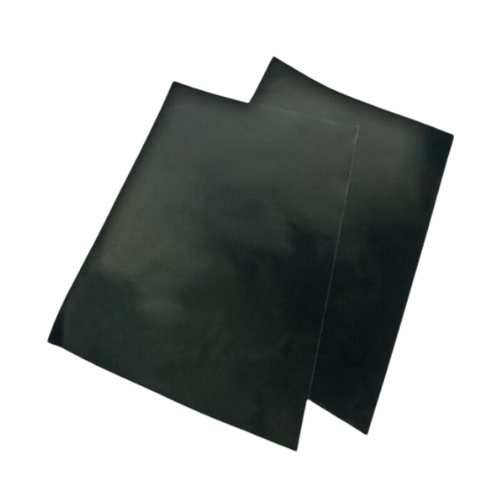
Black PTFE rods are filled and modified PTFE rods. PTFE itself is white; the black color comes from the addition of other black substances, typically carbon fiber, graphite, or carbon powder. Different fillers enhance different properties. Carbon fiber increases the hardness of the PTFE rod, making it more resistant to creep and suitable for high-pressure operation; graphite enhances its lubricity, reducing friction between the PTFE rod and machinery, making it suitable for high-speed operation; and carbon powder provides conductivity and prevents static electricity.
PTFE rods have five main application areas: chemical, mechanical, electronic, semiconductor, and construction. In the chemical industry, PTFE rods primarily function as corrosion protectants and sealants. They are resistant to almost all highly corrosive liquids, including strong acids and alkalis, and are chemically stable, not easily reacting with other chemicals. In the mechanical industry, their main function is to reduce friction and protect equipment. Due to PTFE’s excellent self-lubricating properties, it can replace lubricating oil in mechanical parts such as bearings, bushings, gears, sliders, and piston rings. In the electronic industry, PTFE rods are often used to make high-frequency cables, insulated wires, printed circuit boards, transformers, and high-voltage insulation materials for motors due to their excellent electrical insulation properties. In semiconductor manufacturing, PTFE rods are widely used in wet process systems and chemical transportation, ensuring ultra-pure environments. In the construction industry, PTFE rods are commonly used to make wear-resistant sliding plates and sealing strips.
The disadvantages of PTFE rods can be broadly categorized into five points. Two of the more significant are their relatively low mechanical strength, making them prone to deformation under prolonged high loads, and their large coefficient of thermal expansion, meaning their dimensions change considerably with temperature variations. Three other points are the high cost of PTFE, the difficulty in processing it, and the fact that it cannot be directly adhered to surfaces without sodium curing. However, we offer processing and sodium curing services. If you purchase our PTFE rods, we can solve all your problems in one go.
PTFE rods cannot be directly glued. Because of PTFE’s chemical inertness, it hardly reacts with any physicochemical substances, so ordinary glues will not work. However, it can be glued using other methods. These include special surface activation treatments such as sodium treatment, plasma treatment, and chemical etching. Alternatively, specialized adhesives, such as epoxy structural adhesives, polyurethane adhesives, or special fluoroplastic adhesives, can be applied to the surface of the PTFE rod, making it bondable.
Of course! HANSA’s PTFE rods are FDA-certified and we possess the relevant safety certificates. Furthermore, they can be used in the food industry for the following reasons: PTFE has a non-stick surface, preventing it from absorbing food residue or beverage liquids; it is chemically inert, reacting almost entirely with no chemicals. PTFE rods are commonly used to make seals, bearings, rollers, cutters, and other components. When purchasing, be sure to choose food-grade PTFE rods and ensure the operating temperature does not exceed 260 degrees Celsius.
Yes, PTFE rods are also called Teflon rods. PTFE and Teflon are essentially the same thing, both referring to polytetrafluoroethylene (PTFE). The difference is that Teflon is a registered trademark, a brand name. Teflon was launched by DuPont and later transferred to Chemours. The word Teflon has brand recognition, and it’s the most familiar name to the public. However, the quality of a material depends on its performance, and material performance depends on the grade of its raw materials and processing technology, not its name.
Depending on the manufacturing process, different sizes are available. Extruded PTFE rods have diameters of 4-200mm and lengths of 1/2/3m; molded PTFE rods have diameters of 20-1000mm and lengths of 100-1000mm, with larger diameters having lengths of 300-500mm. If PTFE rods contain filler materials, such as glass fiber, carbon fiber, bronze, carbon powder, or graphite, their diameter is typically less than 300mm.
cutting,thermoplastic welding,drilling,bending,thermo forming,polishing,gluing,Injection Molding and CNC Milling。
Of course! We have complete processing equipment and mature processing technology, such as saw cutting, laser cutting, CNC cutting, thermoplastic welding, drilling, bending, thermo forming, polishing, gluing, injection molding, and CNC milling.
Industry standards mainly include ASTM (USA), ISO (international), SAE/AMS (aerospace), FDA food-grade standards, and RoHS/REACH environmental compliance standards. ASTM further includes D1710 (Extruded and Molded PTFE Rods, Dimensional Tolerances, Physical Properties, and Grading), D4894 (Raw Material Standard), and D4895 (Dispersion Resin Standard). ISO includes ISO 13000 and ISO 12086.We have all the industry standard certificates and can provide them to you.
Excellent chemical corrosion resistance, extremely low coefficient of friction of 0.04, non-adhesive surface, and extremely wide temperature range (-292℉~500℉) are all qualities that other materials cannot possess simultaneously.
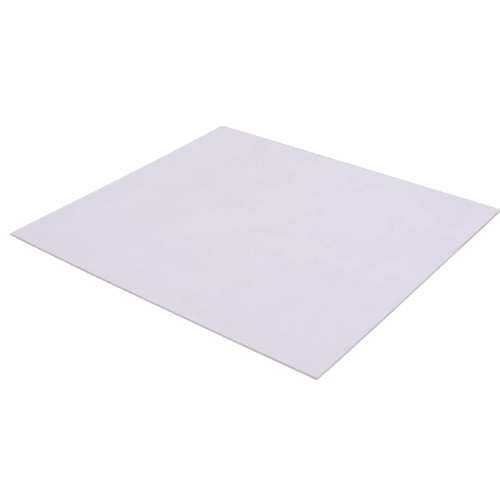
In terms of color, pure PTFE is milky white or ivory white. Recycled or counterfeit materials may appear blackish, dull, or yellowish. It has no smell; if it has a plastic smell or a pungent odor when burned, it is of inferior quality. It feels like oil or wax with low resistance; if it feels rough to the touch, it may be fake PTFE. Pure PTFE will not change color or expand when placed in strong acids or alkalis.We use 100% virgin PTFE resin, no regrind or recycled material.



 Italian
  English
  Arabic
  Tibetan
  German
  Spanish
  French
  Hindi
Hindi  Indonesian
  Japanese
  Korean
  Dutch
Dutch  Portuguese
  Thai
Thai  Russian
  Swedish
  Chinese