


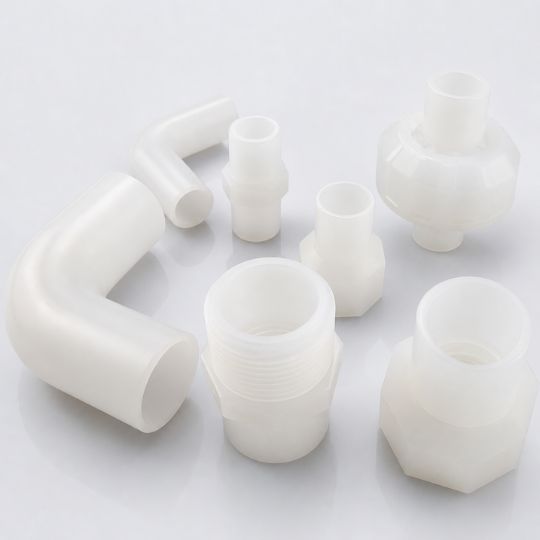
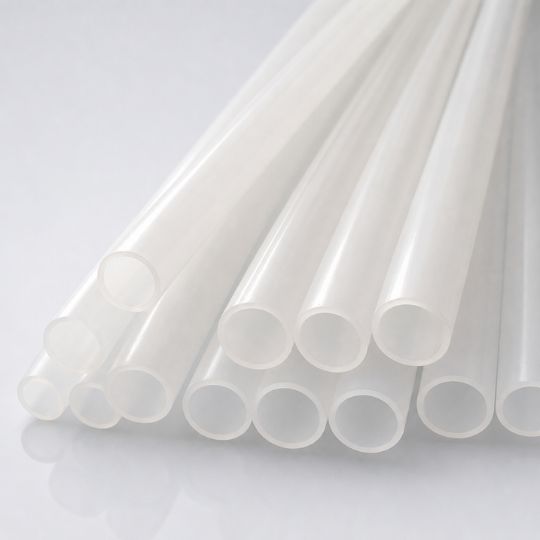
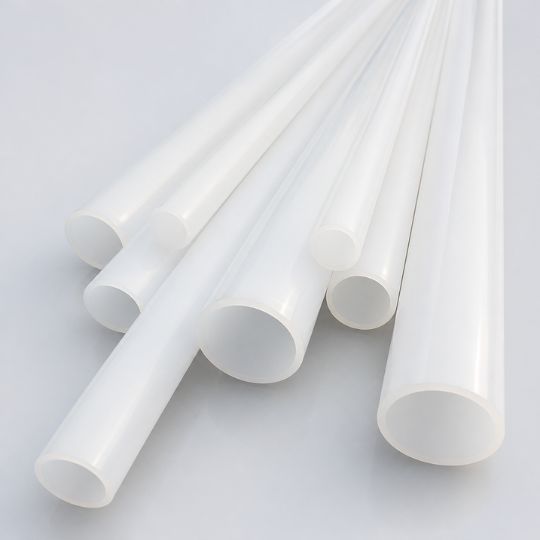
Why Engineers Choose HANSA PVDF Tube
- HANSA holds the PVDF tube range as standing stock.
- You name the duty; the wall class follows.
- Your cut list drives the run, not a catalogue length.
- HANSA logs every bore measurement before the tube ships.
- The inspection record ships with your order.
- HANSA agrees the tolerance against your drawing.
About HANSA PVDF Tube
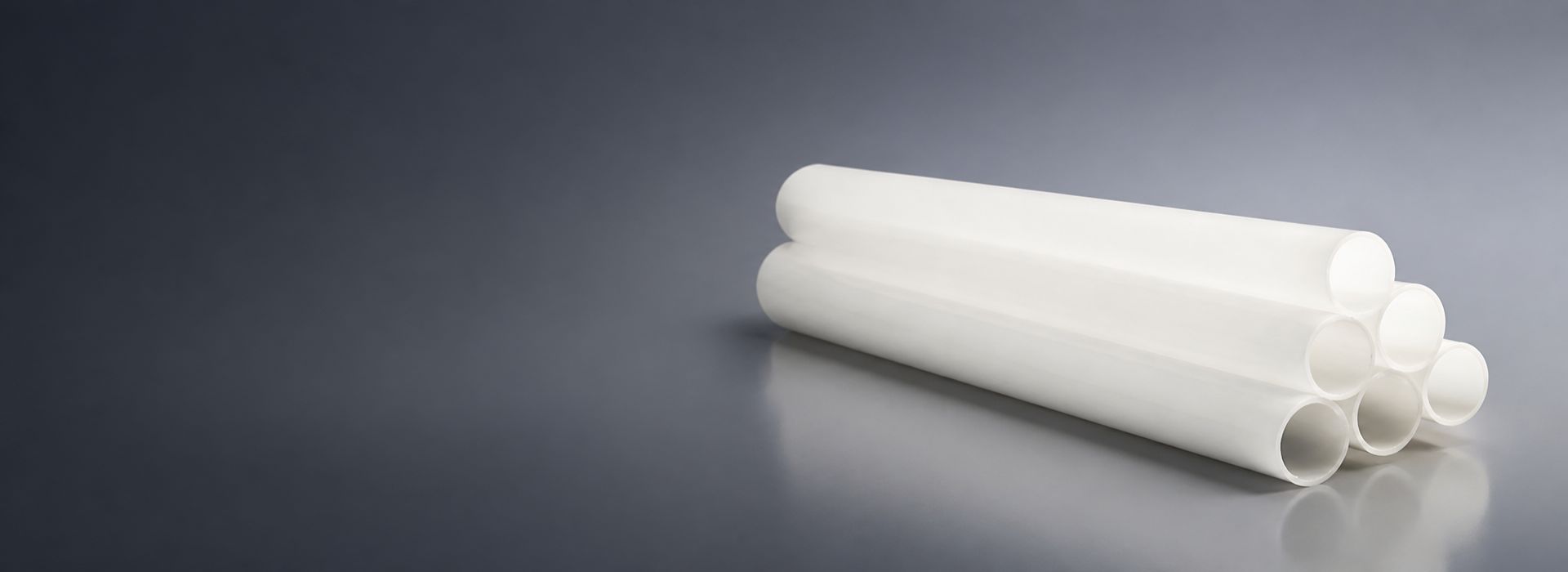
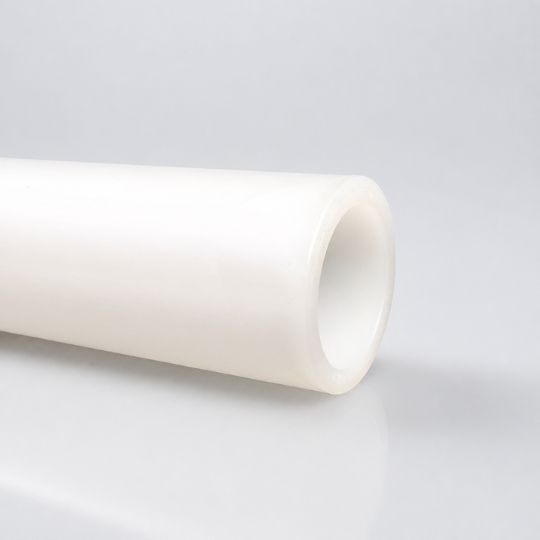
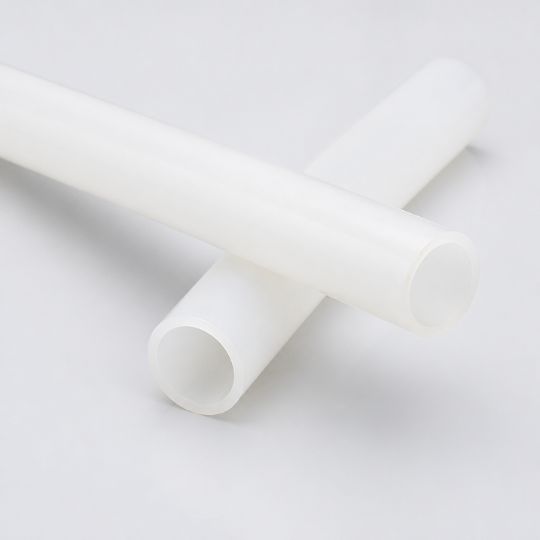
A PVDF tube is a semi-finished hollow section of polyvinylidene fluoride — a semi-crystalline fluoropolymer that Arkema sells under the Kynar name. HANSA supplies it unfilled, in a natural translucent white, as stock that is machined into parts rather than moulded to shape.
Tube is one of three shapes HANSA runs in this unfilled grade: bar where the part is solid, sheet where it is flat, and tube where the bore is part of the design. Those other two live on the PVDF rod Dan PVDF sheet pages.
PVDF Tube Stock We Hold
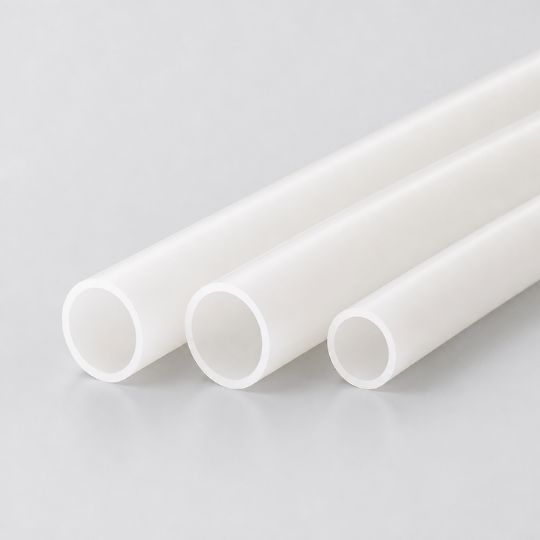
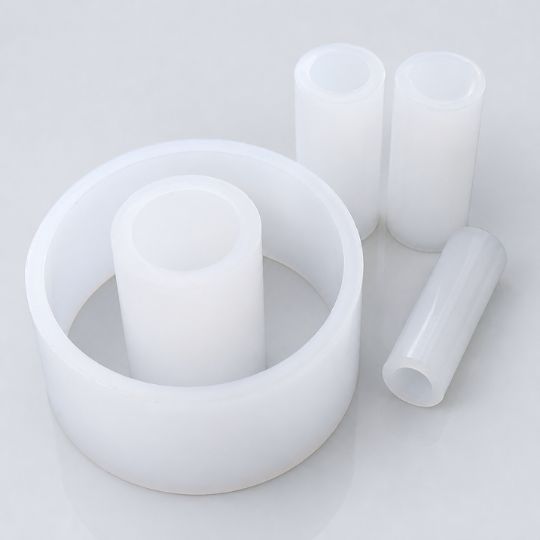
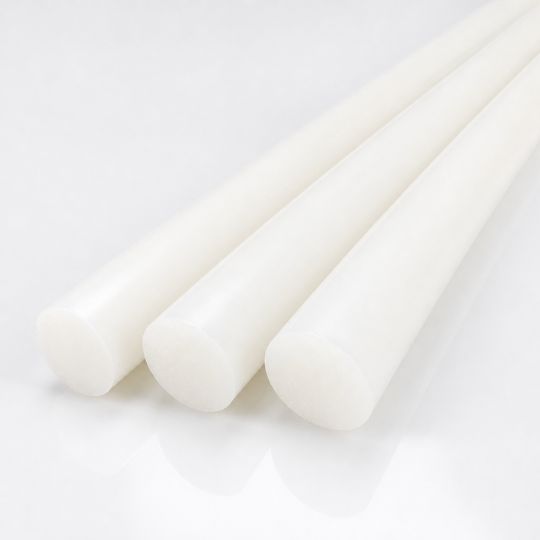
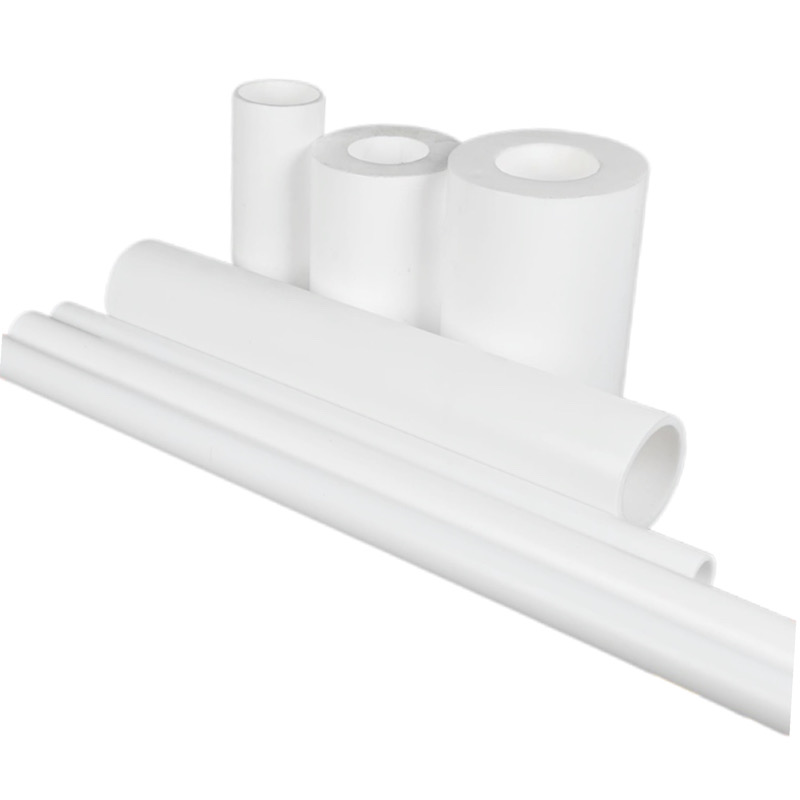
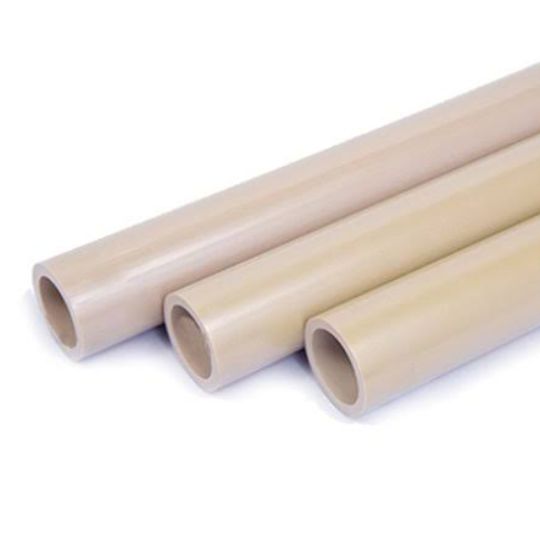
A PVDF tube from HANSA is a hollow section of unfilled polyvinylidene fluoride, natural translucent white, machined from stock into the bushings, liners and sleeves you draw.
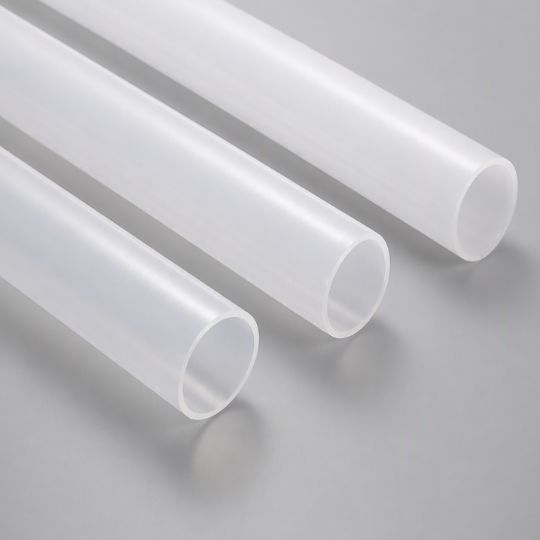
A drawing that calls for Kynar tube is asking for the same unfilled material you get from HANSA under the PVDF name; Arkema markets the polymer as Kynar.
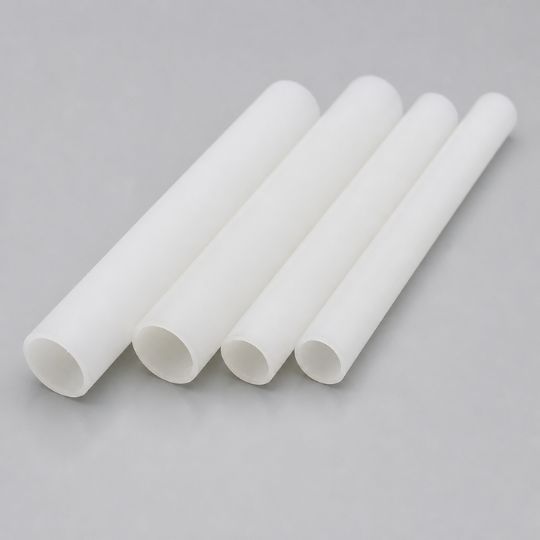
PVDF chemical resistance covers most inorganic acids, bases and oxidisers, including hypochlorite — which is why HANSA supplies this tube for chlor-alkali and water treatment duty.
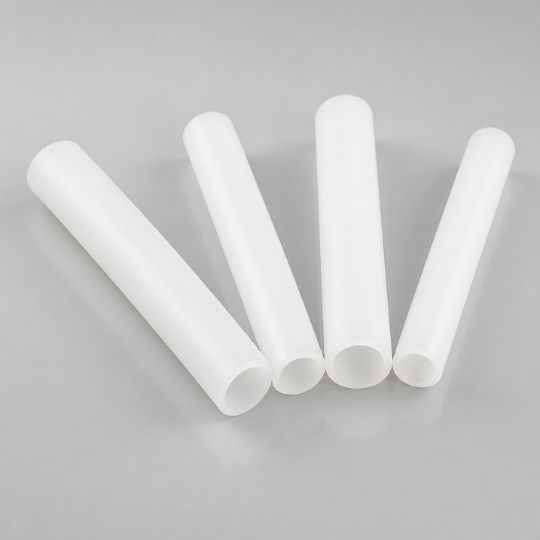
A PVDF melting temperature of 175 °C (347 °F) lets HANSA supply this tube smooth and weldable; continuous service runs to 150 °C (302 °F) for your parts.
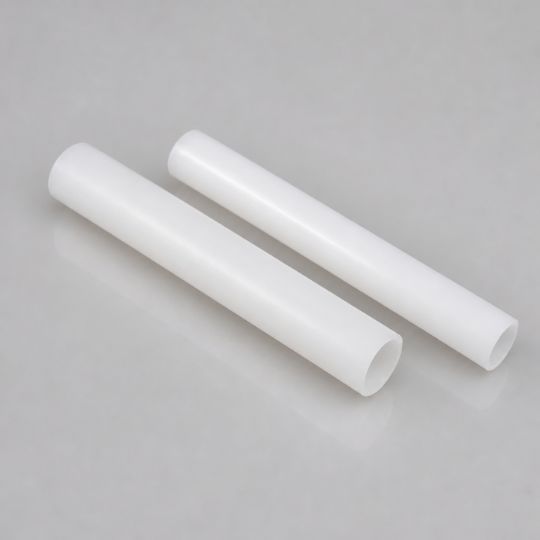
Where aerospace Kynar is specified, the tube is bought against a drawing and a material callout rather than a size. HANSA machines it to the one you supply.
PVDF Tube Sizes and Wall Thickness Classes
- Spesifikasi
| Outside diameter (mm) | Inch | Class | Wall (mm) | Bore (mm) | Nominal weight (kg/m) |
| 20 | 1/2″ | SDR 21 PN16 | 1.90 | 16.20 | 0.21 |
| 25 | 3/4″ | SDR 21 PN16 | 1.90 | 21.20 | 0.27 |
| 32 | 1″ | SDR 21 PN16 | 2.40 | 27.20 | 0.44 |
| 40 | 1-1/4″ | SDR 21 PN16 | 2.40 | 35.20 | 0.55 |
| 50 | 1-1/2″ | SDR 21 PN16 | 3.00 | 44.00 | 0.85 |
| 63 | 2″ | SDR 33 PN10 | 2.50 | 58.00 | 0.93 |
| 63 | 2″ | SDR 21 PN16 | 3.00 | 57.00 | 1.09 |
| 75 | 2-1/2″ | SDR 33 PN10 | 2.50 | 70.00 | 1.11 |
| 75 | 2-1/2″ | SDR 21 PN16 | 3.60 | 67.80 | 1.55 |
| 90 | 3″ | SDR 33 PN10 | 2.80 | 84.40 | 1.48 |
| 90 | 3″ | SDR 21 PN16 | 4.30 | 81.40 | 2.22 |
| 110 | 4″ | Duct | 3.00 | 104.00 | 1.94 |
| 110 | 4″ | SDR 33 PN10 | 3.40 | 103.20 | 2.20 |
| 110 | 4″ | SDR 21 PN16 | 5.30 | 99.40 | 3.32 |
| 125 | — | SDR 33 PN10 | 3.90 | 117.20 | 2.84 |
| 125 | — | SDR 21 PN16 | 6.00 | 113.00 | 4.24 |
| 140 | 5″ | Duct | 3.00 | 134.00 | 2.49 |
| 140 | 5″ | SDR 33 PN10 | 4.30 | 131.40 | 3.52 |
| 140 | 5″ | SDR 21 PN16 | 6.70 | 126.60 | 5.31 |
| 160 | 6″ | Duct | 3.00 | 154.00 | 2.85 |
| 160 | 6″ | SDR 33 PN10 | 4.90 | 150.20 | 4.54 |
| 160 | 6″ | SDR 21 PN16 | 7.70 | 144.60 | 6.96 |
| 180 | — | SDR 33 PN10 | 5.50 | 169.00 | 5.74 |
| 180 | — | SDR 21 PN16 | 8.60 | 162.80 | 8.74 |
| 200 | — | Duct | 3.00 | 194.00 | 3.58 |
| 200 | — | SDR 33 PN10 | 6.20 | 187.60 | 7.19 |
| 200 | — | SDR 21 PN16 | 9.60 | 180.80 | 10.74 |
| 225 | — | SDR 33 PN10 | 6.90 | 211.20 | 8.95 |
| 225 | — | SDR 21 PN16 | 10.80 | 203.40 | 13.67 |
| 250 | — | Duct | 3.00 | 244.00 | 4.48 |
| 250 | — | SDR 33 PN10 | 7.70 | 234.60 | 11.09 |
| 250 | — | SDR 21 PN16 | 11.90 | 226.20 | 16.73 |
| 280 | — | SDR 33 PN10 | 8.60 | 262.80 | 13.86 |
| 280 | — | SDR 21 PN16 | 13.40 | 253.20 | 21.11 |
| 315 | 12″ | Duct | 4.00 | 307.00 | 7.47 |
| 315 | 12″ | SDR 33 PN10 | 9.70 | 295.60 | 17.55 |
| 355 | — | Duct | 4.00 | 347.00 | 8.43 |
| 355 | — | SDR 33 PN10 | 10.90 | 333.20 | 22.00 |
| 400 | — | Duct | 5.00 | 390.00 | 11.81 |
| 400 | — | SDR 33 PN10 | 12.30 | 375.40 | 28.00 |
20 standard outside diameters from 20 to 400 mm (0.79 to 15.75 in), grouped into three wall-thickness classes — 40 combinations in total, listed in the size table above. Stock sizes of PVDF tube need no tooling; anything outside the table is quoted as a machined tube to your finished size.
Separate purchases rather than two names for one thing. HANSA supplies PVDF tube, pipe, fittings and welding rod; this page is the tube — stock you machine into parts. A pipe is bought into a system: it is specified by size alongside its fittings, and its joints are made on site. If your enquiry is about a system rather than a machined part, say so at enquiry and it will be quoted on that basis.
From the order, not from a list. Diameter and wall class set how much polymer sits in each metre; cut length and quantity set how the run is planned; and the tolerance you need decides whether there is a finishing operation at all. Give us those four and one figure comes back.
No published minimum, but the run has to be worth setting up — one short cut of small tube and a batch of heavy wall at 400 mm are not the same job. Send the list and the quantity comes back with the price.
It depends where the work ends. Stock cut to length moves on one timescale; a finished machined part moves on another, and it is usually the finishing slot that decides the date. We commit to a date with the quote so you can plan against it.
Yes, and it is usually the cheaper way to buy. Send the list rather than one figure — outside diameter, wall class, length and quantity on each line — and remember to add the facing allowance to the ordered length if the ends will be machined after they arrive.
Both. The stock and the finished part come out of the same plant, so the tolerance on the finished part is agreed by the people who made the tube.

What a PVDF Tube Is
A PVDF tube arrives with the bore already in it. That sounds trivial and it is the whole point: the hole is a feature of the material you bought, not an operation you have to pay for. A hollow section also gives you two surfaces doing two jobs — an outside diameter that carries the fit, an inside diameter that carries the medium — and on a part like a liner, a sleeve or a dip tube, that is the reason the shape was chosen.
If your part is annular, this is the shape for it. If it is solid, PVDF rod is the same polymer in bar form and the bar is usually cheaper, because every millimetre of bore you do not need is a millimetre you will turn into chips. If your part is flat, PVDF sheet is the same material again. Wall thickness is what decides whether a tube is still a tube: past a certain ratio of wall to bore the shape behaves like a bar with a hole in it and you should be buying bar.
Two products get confused with a PVDF tube and neither substitutes for it. PVDF pipe is the same polymer sold into a different job — it is bought into a system with its fittings and joined on site. Welding rod is a thin filler strip fed into a weld rather than stock you machine. HANSA supplies all of it, which is exactly why the distinction is worth making: these are three purchases, not three sizes of one thing.
Reading the Wall Thickness Classes in the Size Table
The size table on this page splits the PVDF tube range into three wall-thickness classes, and the class column is HANSA’s own catalogue classification rather than a computed field. Read the wall figure off the row you need instead of working it out from the class name, because at the small end the wall is set by a minimum that overrides the class ratio.
Three things follow, and all three change what you should order from HANSA. The classes do not cover the same diameters, so a size that appears twice is offering you a choice of wall, not a choice of material. Choosing the thicker wall costs you bore and adds weight you will freight, so pick from the duty rather than from habit. And the weight column is nominal — quoted per metre for pricing and freight, not a figure worked back from material density, so it will not reconcile against a material take-off for a PVDF tube. The same plant runs PEEK tube Dan nylon tube if your duty sits outside this material’s band, and the plastic tube hub lists every material we run.
Where PVDF Stands Up to Chemicals, and Where It Stops
A PVDF tube meets chemistry differently from a solid one, and this is where most substitutions go wrong. Both faces are wetted. The outside sees the plant atmosphere and whatever is splashed on it; the inside sees the full concentration of the process stream, at whatever temperature that stream is running. A wall that was chosen to survive the outside can be wrong for the inside.
For a PVDF tube in acid or oxidiser service, the material is sound across most of the inorganic family. Mineral acids, oxidisers and the hypochlorite solutions that break down a lot of other plastics leave unfilled PVDF alone, which is why it appears in chlor-alkali service and in water treatment. Alcohols and hydrocarbons are generally fine.
The limits deserve more of your attention than the strengths. Hot, concentrated caustic is where it gives way first, ketones, esters and other polar solvents will attack it, and aromatics are a poor fit. Worst of all is a part that is hot, strongly basic and under load at the same time, because the chemistry and the stress make each other worse. In a tube the stress is often comes from how you hold it: a clamped section is under load while it is wet, and that combination is the one to test.
Test the finished PVDF tube, in the real medium, at the real temperature. HANSA will machine a sample to your drawing so the test can be run before the order is placed.
Temperature: Two Numbers Explain the Behaviour
A PVDF tube is a heat exchanger, and that is the useful way to think about its temperature behaviour. A thin wall reaches the temperature of whatever is flowing through it far faster than a thick one, so the same polymer can be comfortable in a thin wall and marginal in a thick wall on the same duty. When you quote a duty, quote the wall with it.
The two fixed points explain the rest. The glass transition sits at -35 °C (-31 °F), below the service floor of -40 °C (-40 °F), so nothing across the working band puts it into its brittle range and a cold store will not turn your part fragile. The melting point sits at 175 °C (347 °F), only just above the continuous ceiling of 150 °C (302 °F). That narrow gap is what makes the polymer melt-processable — how it is extruded smooth in the first place, and why it welds — and it also means the ceiling is genuinely a ceiling, not a label with margin built in.
Both figures describe an unfilled material under no load — which is what a PVDF tube is when it leaves HANSA. Duty, medium, wall thickness and whatever the part is bolted to all move the practical limit, so confirm the governing number against your duty rather than reading a table value as a rating.
Ultraviolet, Weathering and Outdoor Service
Among the melt-processable fluoropolymers, a PVDF tube weathers best. Unstabilised polyolefins chalk and embrittle in sunlight; PVDF does not, which is why it turns up on outdoor and architectural parts rather than being kept indoors.
Two caveats that matter for a PVDF tube specifically. The wall you chose for pressure or for stiffness is the wall that will be exposed, and a thin wall has less material to lose to surface degradation, so if the part is both outdoors and thin, say so at enquiry. And the resistance is a property of the polymer, not of a coating — nothing is applied to the surface of the tube HANSA ships.
Machining, Welding and Bonding a PVDF Tube
A PVDF tube is easier to machine than a solid one in every respect except one: it moves when you hold it. Chuck a tube on its outside diameter and you will oval the bore; hold it by the bore and you will mark the surface the medium sees. Soft jaws, a close-fitting mandrel or a collet sized to the actual outside diameter solve all three, and on a long thin wall the answer is usually to support the bore through the cut rather than to clamp harder.
With the part held properly, the material is friendly. It turns, mills and drills with sharp positive-rake tooling and generous clearance, it takes a thread that holds — unusual in this family — and it does not need coolant beyond what keeps the chip clear. Cut to length first, then face the ends: a saw will not leave an end square enough to seat against a gasket, and the allowance for that facing is easier to add to the ordered length than to find in the finished part.
Joining is where a PVDF tube works for you. A tube end is a natural socket, which is why butt and socket fusion both suit it, and why you find this material in welded assemblies such as tank linings, fume ducting and wet-bench frames. The wall class sets the weld: a heavier wall takes more heat and needs a longer fusion cycle than a thin one, so do not carry a welding procedure across from a different wall without re-qualifying it. Adhesives are viable if the surface is prepared: abrade it, degrease it, and pick a grade the adhesive supplier lists for low-surface-energy polymers. Solvent cement is not an option on this polymer and no amount of preparation changes that.
Tolerance is a separate question from machinability. A PVDF tube can absolutely be held to a manufacturing tolerance — HANSA agrees one with you on every order. What that means is that the figure holds for a stated condition, so HANSA agrees dimensions and tolerances against the condition the tube is supplied in and the process you intend to run.
PVDF Tube vs PTFE, PVC and PFA
Neither material wins outright and the table is more useful read by duty than by column.
| PVDF | PTFE | PVC | PFA | |
| Ketahanan kimia | Very good across acids, bases and oxidisers | The broadest of the four | Good, but solvents attack it | Very good, close to PTFE |
| Rigidity and creep | High – holds a thread and a tolerance | Low – cold-flows under sustained load | High | Moderate |
| Continuous service temperature | Higher than PVC, lower than PTFE and PFA | The highest of the four | The lowest of the four | High |
| UV and weathering | The best of the four | Poor outdoors | Bagus | Bagus |
| Weldable and bondable | Yes | Difficult in practice | Yes | Yes |
| Melt-processable | Yes | TIDAK | Yes | Yes |
| Relative cost | Mid | High | Low | High |
The short version. Aggressive medium, high temperature, no structural load — PTFE is usually right, and HANSA will say so rather than take the order; that route starts at Tabung PTFE. A thread that has to hold, a bore that has to stay round, or a welded joint — the rigidity of a PVDF tube is what you are buying, and the table above is where to start. Between PVC and this material the deciding factor is usually the solvent list and the temperature together; between PFA and this material it is whether the part is a machined structural component or one that flexes in service. The longer comparison sits on PVDF vs PTFE.
How to Order, and What We Send Back
Four details and HANSA can quote a PVDF tube properly: the outside diameter, the wall class, the cut length, and the duty. If you have a finished drawing, the drawing carries the first three and the fourth is the one we will ask about — medium, temperature, and whether the load on the part is structural. Add the quantity and the delivery date, and say what the part will be joined to, because the joint is where the wall class usually gets decided.
What comes back is a single reply: price, the tolerance the part will be held to, and a committed date. Where a figure has to be confirmed on the material rather than on your drawing, HANSA will name that figure before the order is placed. A PVDF tube is supplied by the metre and cut to your list, so a cut list is a better starting point than a single length — and if the ends will be faced after arrival, put that allowance in the ordered length instead of taking it out of the part. The quality and test documentation that travels with an order is described on its own page.
Request our latest price or send the drawing.

 Indonesian
  English
  Arabic
  Tibetan
  German
  Spanish
  French
  Hindi
Hindi  Italian
  Japanese
  Korean
  Dutch
Dutch  Portuguese
  Thai
Thai  Russian
  Swedish
  Chinese