


HDPE and PVC are engineering plastics that share many similar properties and applications. Do you find yourself torn between the two when selecting materials for a project? The following article explains the key differences between HDPE and PVC, covering material properties, common uses, and cost variations.
Key performance differences between HDPE and PVC
Strength and impact resistance
The most notable advantage of HDPE is its high toughness; upon impact, it flexes to absorb and disperse the energy, making it resistant to cracking.
PVC is more rigid and harder in composition; when subjected to strong impact, cracks may appear on its surface.
Tahan Suhu
HDPE has a long-term service temperature range of -50°C to 80°C; it offers superior low-temperature performance and is resistant to brittle fracture in cold environments, making it suitable for most outdoor applications.
PVC has an operating temperature range of 0°C to 60°C; its low-temperature performance is not as good as that of HDPE, and it carries a higher risk of brittle fracture.
Friction and wear resistance
HDPE has a lower friction coefficient than PVC and is self-lubricating. On conveyor equipment, guide rail strips and wear-resistant strips are usually made of HDPE or UHMW-PE, which can reduce friction and extend the service life of the equipment.
PVC is not as wear-resistant as HDPE, but due to its stronger rigidity, it is more suitable for fixed structures, pipes, shells, etc.
UV weather resistance
HDPE has poor UV resistance; although it performs well at low temperatures, UV stabilizers must be added if it is to be used outdoors for extended periods.
As PVC is an amorphous material, its production often requires the addition of various additives—such as plasticizers, stabilizers, lubricants, and fillers. PVC formulations containing stabilizers exhibit better UV resistance.
Dimensional stability
Although HDPE has an extremely low water absorption rate (<0.01%), its dimensional stability is inferior to that of PVC. Due to its high coefficient of linear expansion—approximately 100–200 × 10⁻⁶/°C—HDPE undergoes significant dimensional changes in response to temperature fluctuations.
In contrast, while PVC has a water absorption rate of approximately 0.1–0.5%, it possesses a high modulus and strong rigidity, exhibiting minimal deformation under long-term loads. With a lower coefficient of linear expansion—approximately 50–80 × 10⁻⁶/°C—PVC offers superior dimensional stability.
Different Applications of HDPE and PVC
Depending on their respective performance characteristics, HDPE and PVC are suited to different applications. The following examples illustrate typical use cases to help you gain a comprehensive understanding and make the best material choice for your project.
Pipe Applications
HDPE and PVC are both common materials for piping; factors such as the operating environment, installation method, and procurement cost must be considered when making a choice. Additionally, piping applications are a frequently discussed topic.
Water supply pipeline
HDPE offers high flexibility and a smaller bending radius, making it particularly suitable for complex areas requiring curved or arched layouts. It also holds distinct advantages for long-distance water transmission; it can be joined via heat fusion to form a seamless, airtight, and leak-resistant unit.
In contrast, PVC piping relies on socket-and-spigot joints secured with gaskets and solvent-based adhesives—methods that carry a higher risk of leakage.It is more suitable for building water supply or other general water supply systems.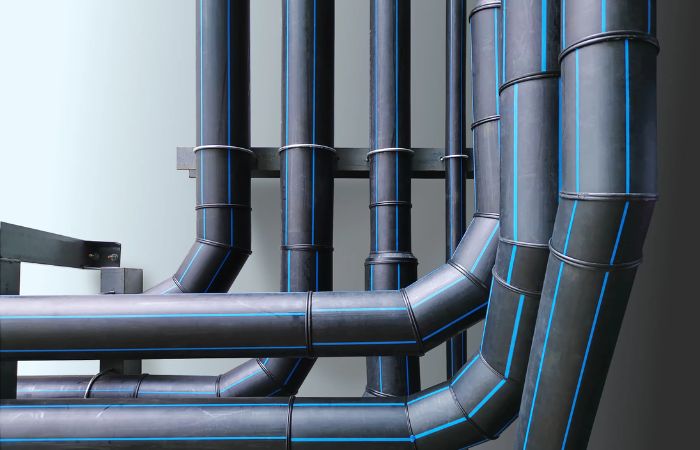
Sewage and drainage pipelines
HDPE piping offers superior impact resistance; given that sewage may contain particulate impurities that strike the pipe walls under high-velocity flow, the HDPE material withstands such impacts more effectively, ensuring a long service life.
While PVC piping has only moderate impact resistance, its low cost makes it an advantageous choice for cost-sensitive piping projects.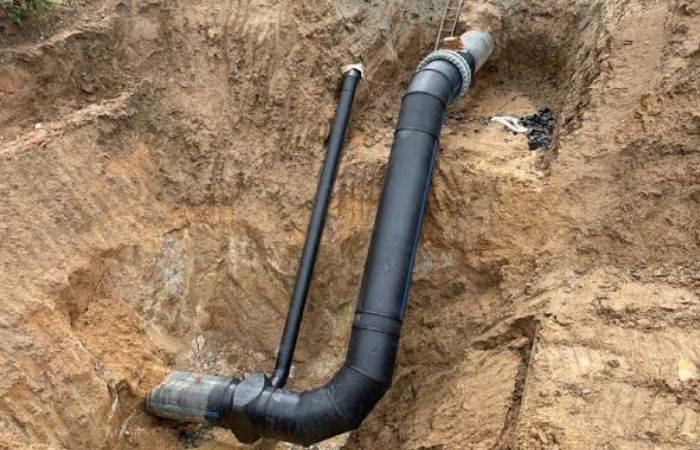
Chemical transfer pipelines
Both HDPE and PVC exhibit excellent chemical corrosion resistance; in the chemical industry, they can be used for pipelines transporting corrosive liquids or discharging industrial wastewater. Material selection is based on the operating environment, installation method, and cost considerations.
Industrial Components Applications
Wear-resistant parts
Due to its low coefficient of friction and self-lubricating properties, HDPE is commonly used in industry to manufacture components such as guide rails and wear strips. Materials such as HDPE or UHMW-PE are frequently selected for items like wear-resistant liners, conveyor guide rails, sliding tracks, and backing plates. Additionally, HDPE’s excellent impact resistance makes it suitable for applications such as linings and impact-resistant components.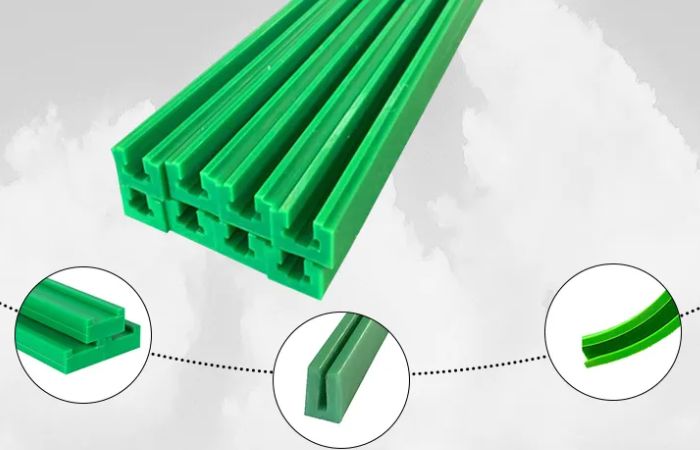
Machined equipment parts
HDPE lacks the dimensional stability of PVC—a characteristic linked to its higher flexibility—making it unsuitable for applications requiring strict dimensional precision; however, it is well-suited for components such as sliding parts and wear-resistant liners.
PVC is highly processable and rigid; it is easy to cut and drill, making it ideal for structural components in chemical processing equipment. Its smooth surface also makes it suitable for use as equipment guards, machinery housings, and protective partitions.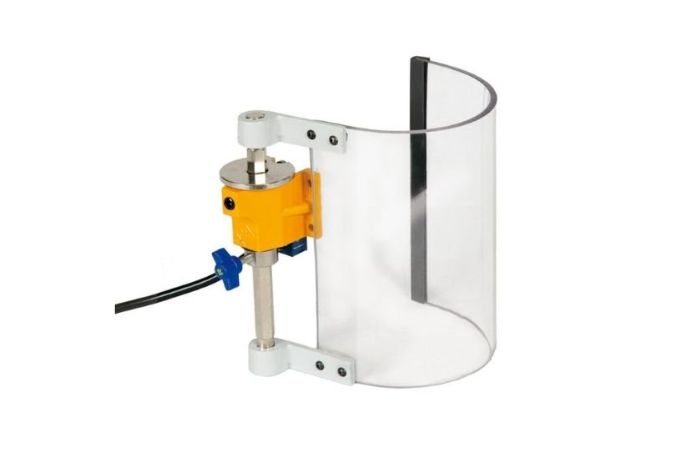
Chemical Equipment Applications
Both HDPE and PVC are excellent materials for chemical storage tanks, offering a balance of corrosion resistance and cost-effectiveness. Applications also include PVC electroplating tanks, pickling tanks, and anti-corrosion linings. PVC, in particular, benefits from superior processing characteristics, making it easy to weld and bond. Furthermore, both materials—especially HDPE—offer a long service life.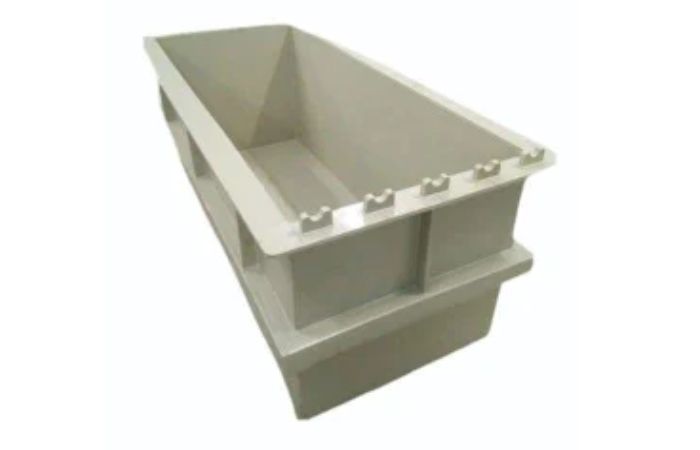
Electrical Insulation Applications
Although HDPE possesses electrical insulation properties, PVC is more widely used. PVC offers superior electrical insulation and dielectric strength compared to HDPE, as well as excellent flame retardancy. It is widely used for wire conduits, cable casings, cable trunking, and electronic insulation components.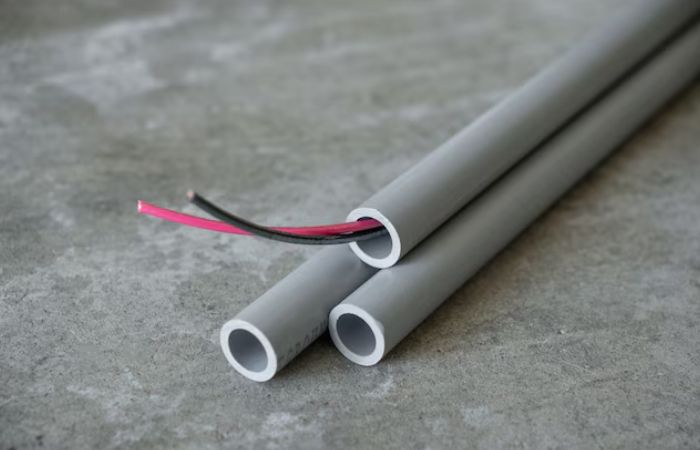
Food Processing Applications
Plastic products used in the food industry must comply with relevant FDA regulations, only food-grade plastics—which pose no harm to human health—are safe for use, and meeting this standard is a fundamental requirement for market entry. HDPE is more easily certified as food-safe than PVC, as the latter often requires additives—such as stabilizers and plasticizers—to facilitate the molding process.
Food-grade HDPE is frequently used in food processing equipment, such as guide rails for conveyors and food storage containers. In fact, many kitchen cutting boards used in the home are also made of HDPE.
Construction and Renovation Applications
HDPE is largely used as an “invisible material”—out of sight—whereas PVC is a visible material used in interior finishing. Why is that? Can you see geomembranes? Can you see drainage boards? Exactly—these are the HDPE products that remain hidden from view.
PVC, on the other hand, is far more common; the vast majority of items such as door and window profiles, wall panels, flooring, and other decorative materials in the home are made of PVC.
Why HDPE Is Often the Preferred Choice for Modern Water Supply and Wastewater Treatment Systems
High flexibility
Compared to PVC, HDPE offers superior flexibility—with a bending radius of 25 times its outer diameter—resulting in fewer installation constraints imposed by the environment. HDPE pipe is suitable for complex terrain and narrow access routes, and allows for changes in direction without the need for additional fittings, making it applicable to a wider range of scenarios than PVC pipe.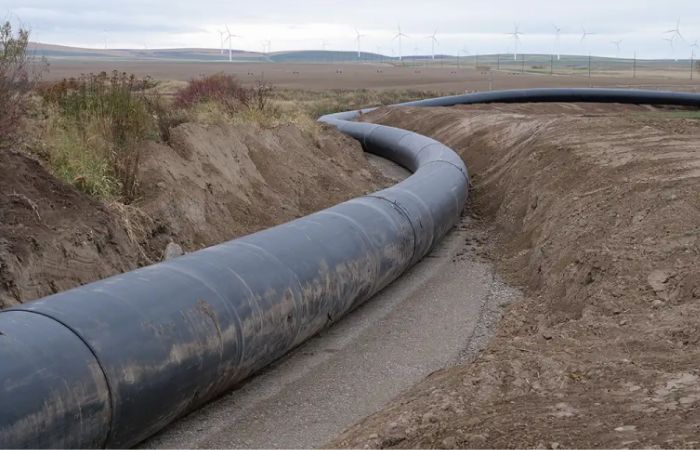
Sturdier
HDPE exhibits viscoelastic properties that allow it to withstand the impact forces associated with vibration and cyclic loading; it is particularly resistant to cracking caused by fatigue and the water hammer effect—a phenomenon involving a sudden pressure surge when water flow is abruptly stopped or redirected. Consequently, HDPE is capable of handling high-volume water distribution and sewage transport, whereas PVC piping might suffer from fatigue-induced cracking due to excessive pressure.
Impermeable
When a long pipeline is required, using HDPE pipe offers greater safety for the connections. This is because HDPE utilizes heat-fusion welding, whereas PVC relies on fittings for socket-style connections. Consequently, an HDPE pipeline forms a seamless, integrated system where the joints are fused together, eliminating the risk of leakage.
In contrast, PVC pipe joints rely on sealing gaskets and solvent-based adhesives; this creates a risk of leakage due to factors such as high pressure, soil shifting, over-insertion, or misalignment.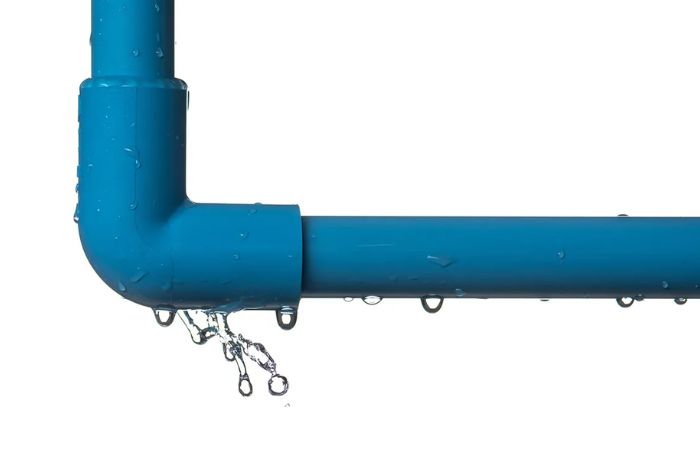
Economic benefits
It is well known that HDPE is more expensive than PVC, so the choice of material requires weighing performance against service life. If your primary concern is the initial purchase cost, PVC is the right choice. However, when considering long-term costs—including installation and transport, ongoing maintenance, and the number of fittings required—HDPE proves to be more economical.
Kesimpulan
There is no absolute answer as to whether HDPE or PVC is “better,” as their respective properties suit different applications.
HDPE is characterized by high toughness, impact resistance, chemical resistance, and low water absorption, making it ideal for underground piping, chemical transport, and wear-resistant components. PVC offers superior rigidity, dimensional stability, and electrical insulation at a more economical cost, making it suitable for drainage systems, construction materials, and electrical protection applications.
If you are still unsure about choosing between HDPE and PVC, or would like a recommendation for the best solution, please Hubungi kami.
HANSA is a professional supplier of engineering plastic products, offering a wide range of items including plastic sheets, plastic rods, plastic tubes, and machined parts.

 Indonesian
  English
  Arabic
  Tibetan
  German
  Spanish
  French
  Hindi
Hindi  Italian
  Japanese
  Korean
  Dutch
Dutch  Portuguese
  Thai
Thai  Russian
  Swedish
  Chinese