


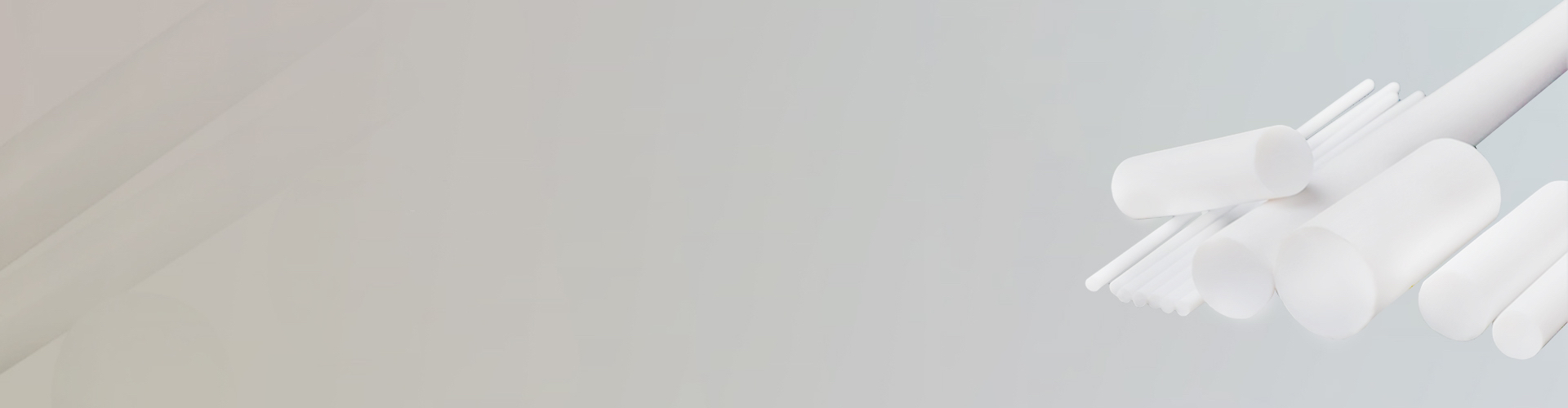
Batang PTFE HANSA
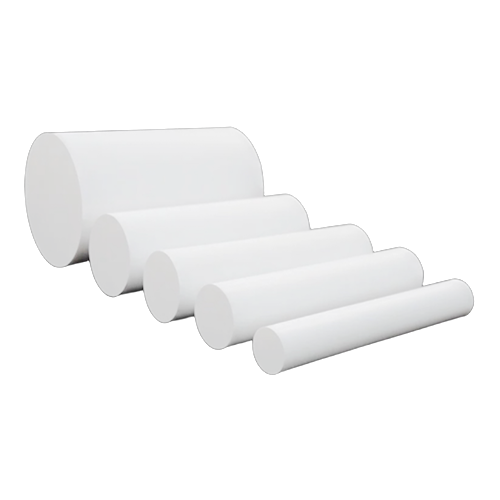
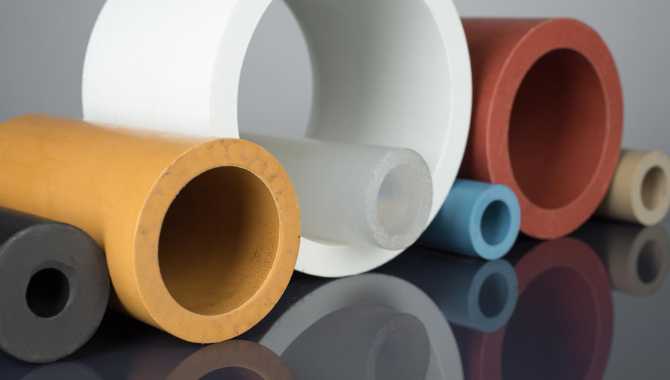
Batang PTFE tersedia dalam berbagai warna putih, dan tersedia dalam berbagai luas penampang dan diameter. Batang PTFE juga tersedia dalam warna lain seperti merah, biru, hijau, atau kuning, tergantung pada kebutuhan pelanggan.
Baik Anda menginginkan batang PTFE 2 mm, batang Teflon yang dipotong sesuai ukuran, atau batang Teflon khusus, ada banyak pilihan untuk aplikasi spesifik Anda. Batang-batang ini tersedia dalam berbagai area penampang, termasuk batang PTFE bulat atau batang PTFE segi enam, sesuai dengan kebutuhan spesifik.
Umumnya, Anda bisa mendapatkan batang PTFE yang diekstrusi atau batang PTFE yang dicetak. Batang teflon memiliki karakteristik kinerja yang luar biasa karena sifat fisik dan kimianya yang unggul.
Kelas Material yang Tersedia untuk Batang PTFE
Dengan kebutuhan dinamis dalam penggunaan batang Teflon, ada berbagai macam Kelas material PTFE tersedia. Pilihan batang tertentu akan bergantung pada persyaratan aplikasi tertentu.
Pilihan material yang tersedia meliputi:
Batang PTFE murni – ini terbuat dari 100% bahan politetrafluoroetilen.
Batang PTFE yang dimodifikasi –melibatkan perubahan sifat PTFE untuk mendapatkan persyaratan kinerja yang unggul.
Batang PTFE kelas mekanis – batang PTFE ini dibuat dari bahan politetrafluoroetilen daur ulang.
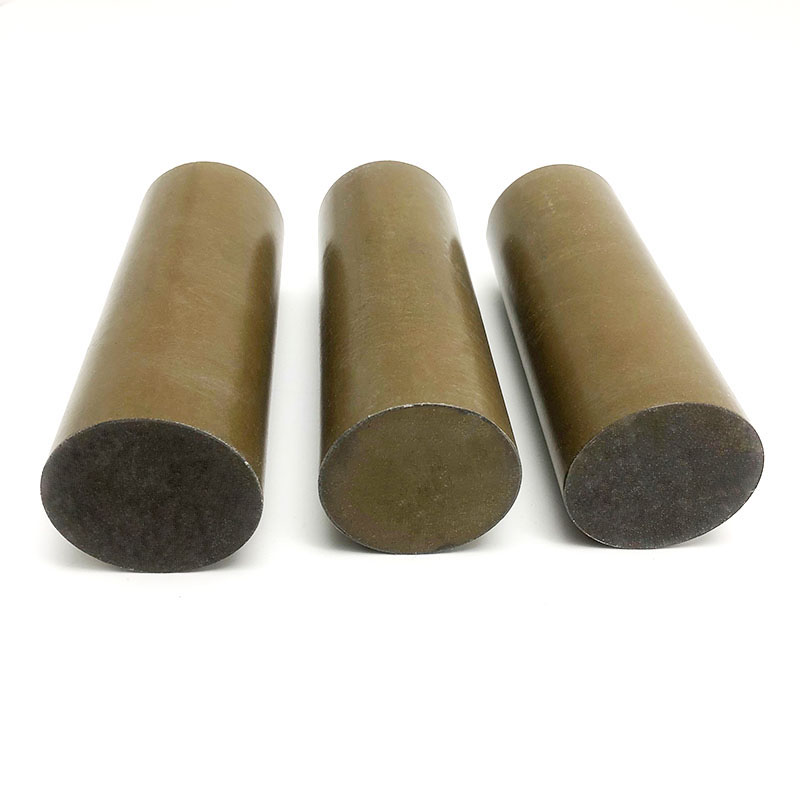
Batang PTFE yang diisi – Anda dapat menambahkan banyak bahan pengisi ke PTFE untuk mendapatkan sifat kinerja yang lebih baik. Biasanya, nama batang Teflon akan bergantung pada jenis bahan pengisi PTFEBeberapa nilai umum meliputi:
- Batang PTFE berisi karbon– jika Anda ingin batang PTFE Anda memiliki kekuatan tekan yang lebih baik dan sifat ketahanan beban yang tinggi, tambahkan karbon dengan berat 10% hingga 35%. Selain itu, karbon juga akan mengubah konduktivitasnya sekaligus meningkatkan ketahanan kimia.
- Batang PTFE berisi kaca– dengan menambahkan kaca dalam jumlah 5% dan 40%, batang PTFE Anda akan lebih kaku, meningkatkan kekuatan tekan, menunjukkan kekakuan tinggi, dan memiliki sifat ketahanan kimia yang lebih baik.
- Batang PTFE berisi grafit– jika Anda menginginkan batang Teflon dengan koefisien gesekan yang sangat rendah, maka tambahkan grafit sekitar 5% hingga 15%. Selain itu, grafit akan mengurangi keausan awal secara signifikan
- Batang PTFE berisi molibdenum disulfida– jika Anda ingin meningkatkan ketahanan aus, kekerasan, dan kekakuan batang Teflon tanpa mengorbankan sifat listrik dan kimia, maka MoS2 menawarkan pilihan yang sempurna.
- Batang PTFE berisi logam– Anda dapat menambahkan baja tahan karat atau perunggu. Logam-logam ini meningkatkan deformasi dan konduktivitas termal batang PTFE.
- Batang PTFE berisi mineral– Batang PTFE yang diisi mika sangat direkomendasikan untuk aplikasi yang mematuhi FDA. Biasanya, Anda dapat menambahkan antara 5% dan 10%.
Membahas penggunaan batang Teflon dengan produsen akan membantu mereka mengoptimalkan produk sesuai spesifikasi unik Anda. Produsen batang PTFE akan membantu Anda memilih bahan pengisi yang tepat untuk aplikasi Anda.



Sifat-sifat Batang PTFE
Dalam beberapa waktu terakhir, batang PTFE populer karena memiliki sifat-sifat unggul seperti:
-
- Cocok untuk rentang suhu yang luas– Batang PFTE akan berfungsi dengan baik pada suhu antara -240 dan 260°C.
- Sifat listrik dan termal yang unggul– alasan mengapa batang PTFE merupakan isolator listrik yang umum. Namun, penambahan bahan pengisi dapat meningkatkan sifat listrik dan termal.
- Koefisien gesekan rendah– menjelaskan sifat antilengket dan kesesuaiannya dalam aplikasi yang sensitif terhadap gesekan.
- Ketahanan kimia yang tinggi– fluorokarbon dikenal karena sifat ketahanan kimianya yang unggul. Hal ini membuat batang PTFE sangat tahan terhadap bahan kimia.

Aplikasi Batang PTFE
Berbagai ukuran batang Teflon digunakan dalam banyak industri. Saat ini, beberapa penggunaan batang Teflon yang umum meliputi industri produksi, listrik, peralatan rumah tangga, dan kimia.
Anda dapat mengolah batang PTFE lebih lanjut untuk membuat komponen seperti segel, komponen mesin, tutup, komponen instrumen, bantalan, rol, dll.
PTFE is a high-grade engineering plastic, and a PTFE rod is a cylindrical rod made of this plastic. PTFE has excellent chemical inertness and high-temperature resistance, and an extremely low coefficient of friction with a non-adhesive surface, making it a high-performance engineering plastic. Therefore, it is commonly used in the chemical industry to manufacture machined parts such as seals, bearings, and insulators, serving functions such as sealing, insulation, and lubrication.
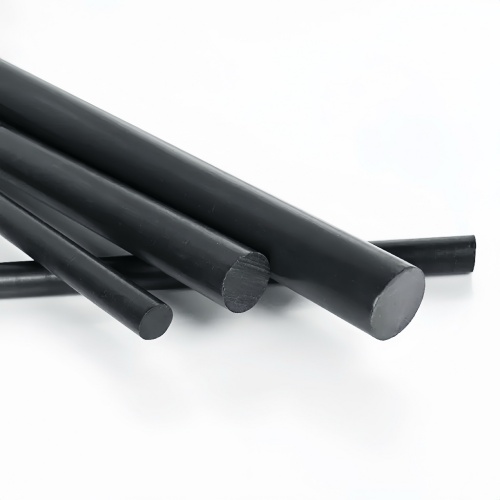
Black PTFE rods are filled and modified PTFE rods. PTFE itself is white; the black color comes from the addition of other black substances, typically carbon fiber, graphite, or carbon powder. Different fillers enhance different properties. Carbon fiber increases the hardness of the PTFE rod, making it more resistant to creep and suitable for high-pressure operation; graphite enhances its lubricity, reducing friction between the PTFE rod and machinery, making it suitable for high-speed operation; and carbon powder provides conductivity and prevents static electricity.
PTFE rods have five main application areas: chemical, mechanical, electronic, semiconductor, and construction. In the chemical industry, PTFE rods primarily function as corrosion protectants and sealants. They are resistant to almost all highly corrosive liquids, including strong acids and alkalis, and are chemically stable, not easily reacting with other chemicals. In the mechanical industry, their main function is to reduce friction and protect equipment. Due to PTFE’s excellent self-lubricating properties, it can replace lubricating oil in mechanical parts such as bearings, bushings, gears, sliders, and piston rings. In the electronic industry, PTFE rods are often used to make high-frequency cables, insulated wires, printed circuit boards, transformers, and high-voltage insulation materials for motors due to their excellent electrical insulation properties. In semiconductor manufacturing, PTFE rods are widely used in wet process systems and chemical transportation, ensuring ultra-pure environments. In the construction industry, PTFE rods are commonly used to make wear-resistant sliding plates and sealing strips.
The disadvantages of PTFE rods can be broadly categorized into five points. Two of the more significant are their relatively low mechanical strength, making them prone to deformation under prolonged high loads, and their large coefficient of thermal expansion, meaning their dimensions change considerably with temperature variations. Three other points are the high cost of PTFE, the difficulty in processing it, and the fact that it cannot be directly adhered to surfaces without sodium curing. However, we offer processing and sodium curing services. If you purchase our PTFE rods, we can solve all your problems in one go.
PTFE rods cannot be directly glued. Because of PTFE’s chemical inertness, it hardly reacts with any physicochemical substances, so ordinary glues will not work. However, it can be glued using other methods. These include special surface activation treatments such as sodium treatment, plasma treatment, and chemical etching. Alternatively, specialized adhesives, such as epoxy structural adhesives, polyurethane adhesives, or special fluoroplastic adhesives, can be applied to the surface of the PTFE rod, making it bondable.
Of course! HANSA’s PTFE rods are FDA-certified and we possess the relevant safety certificates. Furthermore, they can be used in the food industry for the following reasons: PTFE has a non-stick surface, preventing it from absorbing food residue or beverage liquids; it is chemically inert, reacting almost entirely with no chemicals. PTFE rods are commonly used to make seals, bearings, rollers, cutters, and other components. When purchasing, be sure to choose food-grade PTFE rods and ensure the operating temperature does not exceed 260 degrees Celsius.
Yes, PTFE rods are also called Teflon rods. PTFE and Teflon are essentially the same thing, both referring to polytetrafluoroethylene (PTFE). The difference is that Teflon is a registered trademark, a brand name. Teflon was launched by DuPont and later transferred to Chemours. The word Teflon has brand recognition, and it’s the most familiar name to the public. However, the quality of a material depends on its performance, and material performance depends on the grade of its raw materials and processing technology, not its name.
Depending on the manufacturing process, different sizes are available. Extruded PTFE rods have diameters of 4-200mm and lengths of 1/2/3m; molded PTFE rods have diameters of 20-1000mm and lengths of 100-1000mm, with larger diameters having lengths of 300-500mm. If PTFE rods contain filler materials, such as glass fiber, carbon fiber, bronze, carbon powder, or graphite, their diameter is typically less than 300mm.
cutting,thermoplastic welding,drilling,bending,thermo forming,polishing,gluing,Injection Molding and CNC Milling。
Of course! We have complete processing equipment and mature processing technology, such as saw cutting, laser cutting, CNC cutting, thermoplastic welding, drilling, bending, thermo forming, polishing, gluing, injection molding, and CNC milling.
Industry standards mainly include ASTM (USA), ISO (international), SAE/AMS (aerospace), FDA food-grade standards, and RoHS/REACH environmental compliance standards. ASTM further includes D1710 (Extruded and Molded PTFE Rods, Dimensional Tolerances, Physical Properties, and Grading), D4894 (Raw Material Standard), and D4895 (Dispersion Resin Standard). ISO includes ISO 13000 and ISO 12086.We have all the industry standard certificates and can provide them to you.
Excellent chemical corrosion resistance, extremely low coefficient of friction of 0.04, non-adhesive surface, and extremely wide temperature range (-292℉~500℉) are all qualities that other materials cannot possess simultaneously.
In terms of color, pure PTFE is milky white or ivory white. Recycled or counterfeit materials may appear blackish, dull, or yellowish. It has no smell; if it has a plastic smell or a pungent odor when burned, it is of inferior quality. It feels like oil or wax with low resistance; if it feels rough to the touch, it may be fake PTFE. Pure PTFE will not change color or expand when placed in strong acids or alkalis.We use 100% virgin PTFE resin, no regrind or recycled material.



 Indonesian
  English
  Arabic
  Tibetan
  German
  Spanish
  French
  Hindi
Hindi  Italian
  Japanese
  Korean
  Dutch
Dutch  Portuguese
  Thai
Thai  Russian
  Swedish
  Chinese