


The long-term operating temperature range of polyimide (PI) is typically -269°C to 300°C (-452.2°F to 572°F), while short-term exposure can exceed 400°C (752°F). Different grades of PI offer different levels of heat resistance. If you’re planning to use PI in your project but aren’t sure which grade is the right fit—or whether PI is even the right material for your application—this article will help answer those questions.
|
Propertiy |
Temperature Range |
| Continuous Service Temperature | 260–300°C(500–572°F) |
| Short-Term Temperature Resistance | Up to ~400°C(752℉) |
| Low Temperature Resistance | Around -269°C(-452.2°F) |
| तापीय स्थिरता | उत्कृष्ट |
| Dimensional Stability | Very High |
Temperature Ranges Vary by PI Grade
PI-260
PI-260 is a thermoplastic polyimide designed for long-term use at temperatures up to 260°C (500°F). It has an amber appearance and offers more than just heat resistance. It also provides high strength, wear resistance, self-lubrication, chemical resistance, radiation resistance, and excellent electrical insulation.
It is widely used in the medical industry to manufacture precision high-temperature components and insulation parts for high-frequency medical equipment, such as insulation gaskets and sleeves used in electrosurgical devices and radiofrequency ablation equipment.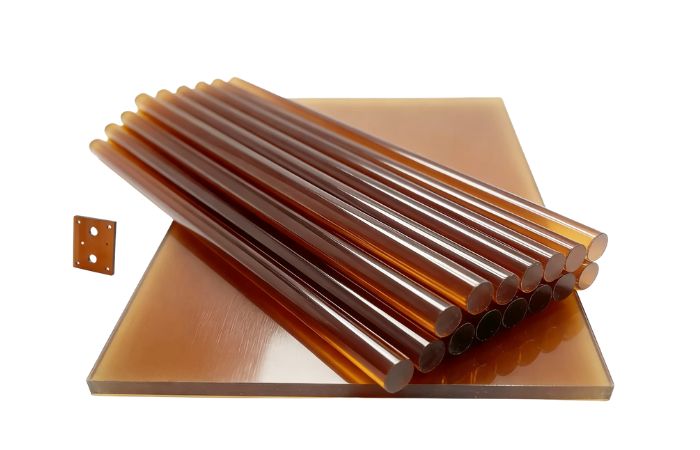
PI-280
PI-280 is a high-performance polyimide with a long-term operating temperature of 280°C (536°F). It has a light yellow appearance and is produced through a complex pellet extrusion process.
It can serve as an alternative to PAI 4203, offering high strength, high modulus, excellent creep resistance, and fatigue resistance, making it well suited for semiconductor applications.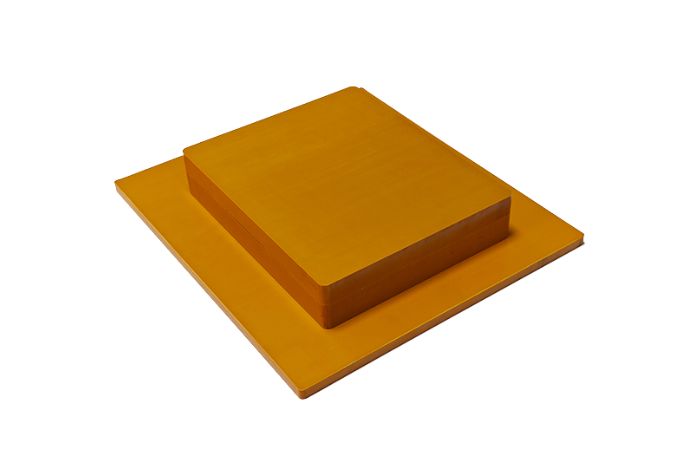
PI-330
PI-330 is a high-performance polyimide with a long-term operating temperature of 330°C (626°F). It offers excellent heat resistance, electrical insulation, low friction, chemical resistance, radiation resistance, and thermal deformation resistance.
Thanks to its excellent machinability, PI-330 is commonly used to manufacture semiconductor components such as chip test sockets and pogo pins.
Beyond semiconductors, PI-330 is also widely used in aerospace, automotive systems, and hot runner applications.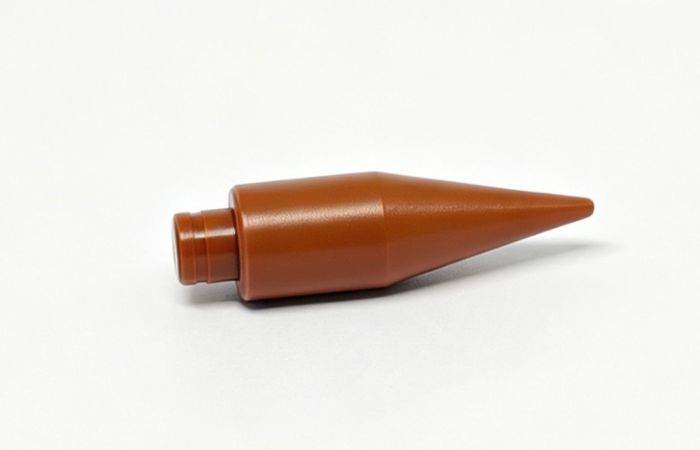
PI-350
PI-350 has a long-term operating temperature of 350°C (662°F) and features excellent electrical insulation, self-lubrication, a low friction coefficient, high mechanical strength, and good machinability. One of its biggest advantages is its excellent toughness.
This material is especially popular in the glass manufacturing industry, where it is used as an insulation cap placed over bottle openings during glass bottle production. If your project involves beverage bottle manufacturing, PI-350 is often the preferred choice, and we have extensive experience supporting these applications.
However, PI-350 is not suitable for plasma cutting or UV exposure environments, as it may degrade under these conditions. In these cases, PI-330 or PI-380 may be better alternatives, although both are more brittle.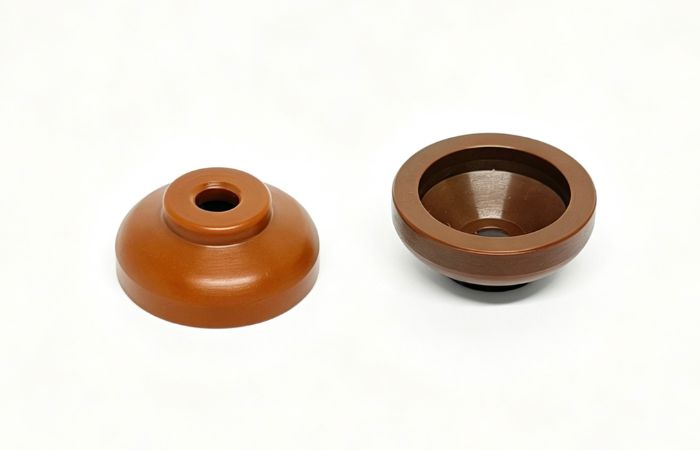
PI-380
PI-380 offers a long-term operating temperature of 380°C (716°F) but has lower toughness and tends to be more brittle. Its overall performance is similar to PI-330.
It is commonly used in aerospace, semiconductor manufacturing, automotive systems, and hot runner applications, especially where higher temperature resistance is required.
PI-5000
PI-5000 is a premium-grade polyimide with a long-term operating temperature of 370°C (698°F). Its key advantage is not only heat resistance, but also its exceptionally high flexural modulus, which exceeds 5000 MPa, providing outstanding rigidity.
It is commonly used to manufacture high-temperature seals, wear parts, transmission components, insulation parts, and chip testing fixtures, making it ideal for precision applications in aerospace, semiconductors, oil & gas, automotive, and specialty industries.
PI-480
PI-480 is an ultra-high-temperature polyimide designed for long-term operation at temperatures above 400°C (752°F). It offers excellent plasma resistance, low moisture absorption, low outgassing, and good machinability.
It is widely used in LCD and semiconductor manufacturing equipment, precision-machined parts, and instrumentation components.
Polyimide vs PEEK vs PAI: Temperature Comparison
| सामग्री | Continuous Temp | Short-Term Temp | Notes |
| PI | ~300℃ | ~400℃ | Highest heat resistance |
| तिरछी | ~250℃ | ~300℃ | Easier machining |
| PAI | ~260℃ | ~275℃ | High wear resistance |
| पीटीएफई | ~260℃ | ~300℃ | कम घर्षण |
How to Choose the Right PI Grade for Your Application
When choosing the right PI material for your application, the most important question is whether it can reliably perform under your real operating conditions. A successful material choice should consider several factors, including working environment, mechanical requirements, machining needs, cost, and long-term reliability.
Operating Environment
Heat resistance is often the first thing people consider when selecting PI materials—but don’t focus only on the maximum temperature limit. What matters more is the continuous operating temperature, since choosing the wrong grade can lead to premature wear, unexpected failures, and higher replacement costs.
You should also evaluate the actual working conditions. Will the material come into contact with chemicals? If so, choose a PI grade with stronger chemical resistance. Will it be used in a vacuum environment? Or exposed to moisture, oxidation, radiation, or other harsh conditions? These factors can directly affect the material’s long-term performance.
Mechanical Requirements
Different PI grades vary not only in temperature resistance, but also in mechanical strength, wear resistance, and durability. Consider whether your application involves pressure, friction, repeated motion, or mechanical loads.
For wear components such as bearings, bushings, and seals, insufficient mechanical strength may lead to creep, deformation, or premature failure over time. That’s why it’s important to evaluate both the strength and wear resistance of the material before making a selection.
Machining Requirements
If you need to machine PI into precision components with tight tolerances and high dimensional accuracy, machinability becomes a key factor.
In these cases, choose a PI grade with good dimensional stability and machining performance to help ensure consistent quality and reduce manufacturing challenges.
Long-Term Reliability
The right PI grade also depends on your operating environment and performance expectations. In many cases, standard-grade PI can handle around 80% of common industrial applications.
However, if your parts will operate in extreme temperatures, aggressive environments, or demanding duty cycles, choosing a higher-performance PI grade may be the better investment. While the upfront cost may be slightly higher, it can help reduce maintenance costs, minimize downtime, and improve long-term reliability.
FAQs
1.Can You Machine Custom Polyimide Parts?
Yes. We provide Polyimide sheets、rods、tubes、custom machined parts and CNC machining.Precision components—such as brake wear sensors, wafer transport balls, chip test sockets, and glass grippers—are products we meticulously manufacture and supply to our customers.
2.What is the maximum temperature for polyimide?
The highest-performance polyimide withstands extreme temperatures exceeding 400°C and is typically utilized in specialized industrial sectors.
3.Can polyimide withstand 400°C?
Yes, it can withstand high temperatures—even for short durations—exceeding 400°C. That is our PI-480.
4.What is the continuous operating temperature of PI?
Simply put, the long-term operating temperature range of PI is typically -269°C to 300°C, which is also the temperature range of most PI materials available on the market. However, through continuous technological improvements, HANSA has expanded the long-term operating temperature of its PI materials to 380°C and above.
5.Is polyimide better than PEEK for high temperatures?
It depends on the application. In extreme high-temperature environments, PI can be a better choice than PEEK. If your application operates at very high temperatures and requires excellent dimensional stability, PI is often the preferred option. However, if your project demands stronger chemical resistance or higher impact strength, PEEK may be the better choice.
6.Does polyimide become brittle at high temperatures?
PI will not become brittle when used within its recommended operating temperature range. However, if it exceeds its maximum temperature limit—or is exposed to additional stresses such as heavy loads, prolonged exposure, or contact with chemicals—brittleness or material degradation may occur.
7.Can polyimide be machined into custom parts?
Yes, PI can be machined into high-precision components for a wide range of applications. Common examples include bushings and bearings, seals and wear parts, insulation components for electronics and semiconductor equipment, precision parts for medical and aerospace applications, as well as custom washers, rings, and structural components.
Concusion
Standard-grade polyimide typically offers a long-term operating temperature range of -269°C to 300°C, while higher-performance PI grades can withstand ultra-high temperatures exceeding 400°C (752°F). When selecting a PI material, it’s important to choose based on your application requirements and operating conditions. Factors such as the working environment, mechanical demands, and long-term reliability should all be considered. If you’re unsure which grade is right for your project, feel free to हमसे संपर्क करें for professional material selection guidance.

 Hindi
Hindi  English
  Arabic
  Tibetan
  German
  Spanish
  French
  Indonesian
  Italian
  Japanese
  Korean
  Dutch
Dutch  Portuguese
  Thai
Thai  Russian
  Swedish
  Chinese