


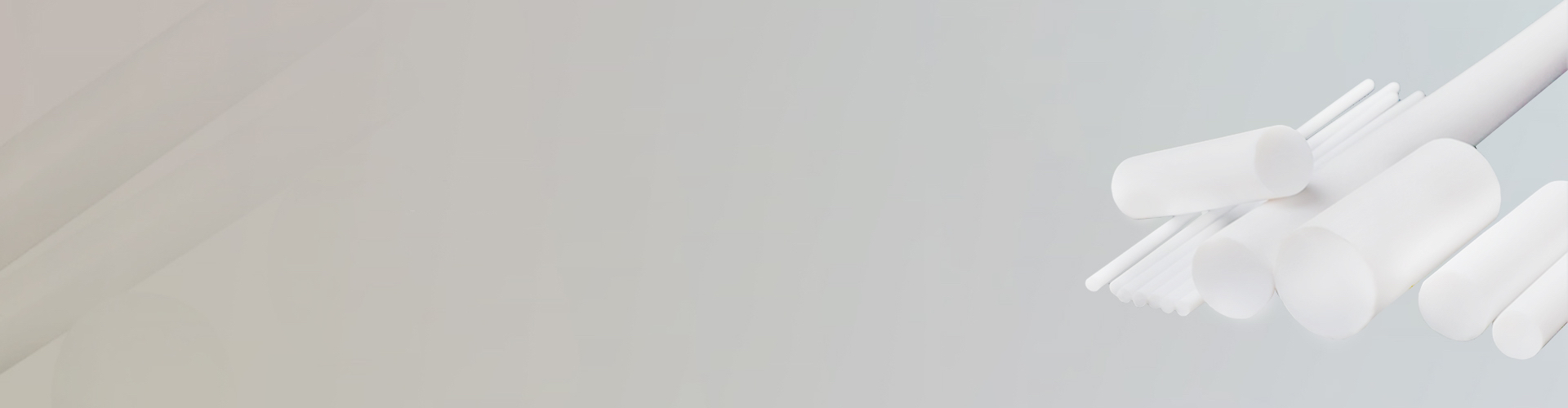
Tige PTFE HANSA
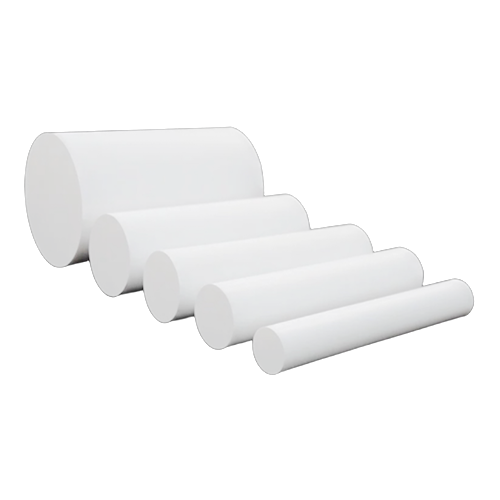
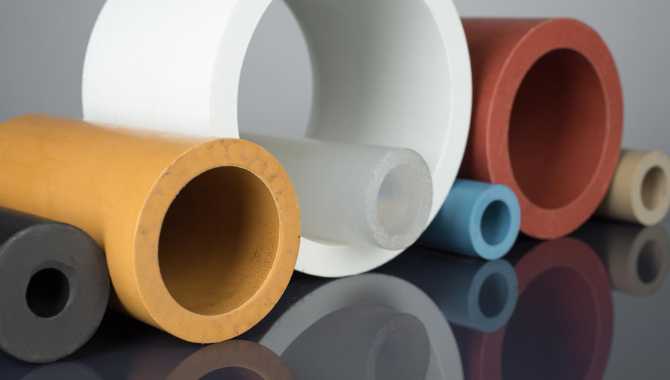
Généralement disponibles en blanc, les tiges en PTFE sont disponibles dans de nombreuses sections et diamètres. Elles sont également disponibles dans d'autres couleurs, comme le rouge, le bleu, le vert ou le jaune, selon les besoins du client.
Que vous souhaitiez une tige en PTFE de 2 mm, découpée sur mesure ou personnalisée, de nombreuses options s'offrent à vous pour vos applications spécifiques. Elles sont disponibles en différentes sections, notamment rondes ou hexagonales, selon vos besoins.
En général, on trouve des tiges en PTFE extrudées ou moulées. tiges en téflon présentent des caractéristiques de performance exceptionnelles en raison de leurs propriétés physiques et chimiques supérieures.
Qualité de matériau disponible pour les tiges en PTFE
Avec des besoins dynamiques dans les utilisations des tiges en Téflon, il existe différentes Qualités de matériaux PTFE disponible. Le choix de tiges particulières dépendra des exigences spécifiques de l'application.
Les options de matériaux disponibles incluent :
Tiges en PTFE vierge – ceux-ci sont fabriqués à partir de 100% matériau en polytétrafluoroéthylène.
Tiges en PTFE modifiées –implique de modifier les propriétés du PTFE pour obtenir des exigences de performance supérieures.
Tiges en PTFE de qualité mécanique – ces tiges en PTFE sont fabriquées à partir de polytétrafluoroéthylène recyclé.
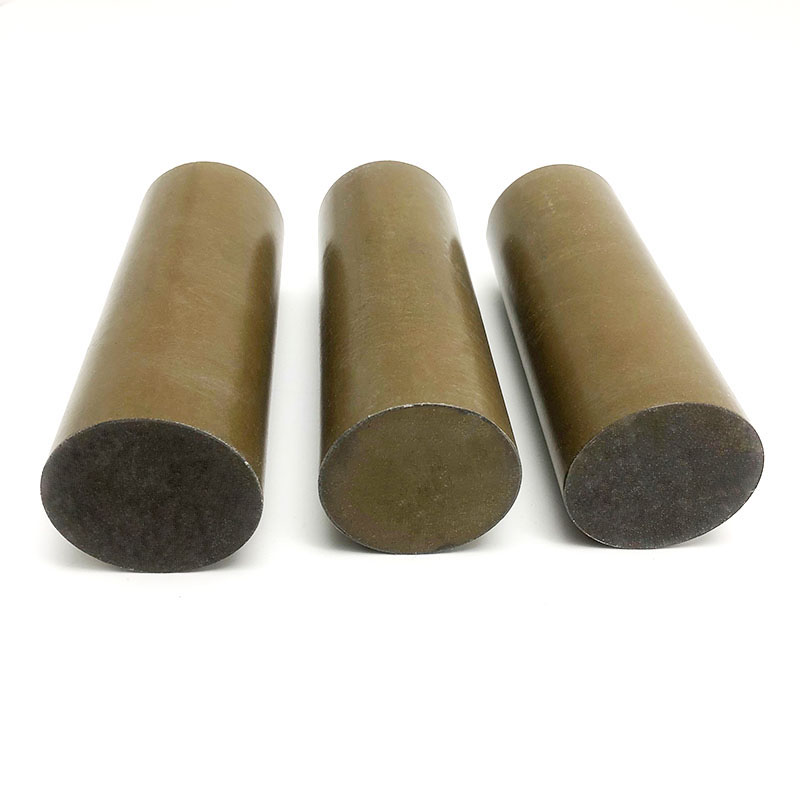
Tiges en PTFE chargées – De nombreux matériaux de remplissage peuvent être ajoutés au PTFE pour améliorer ses performances. En général, le nom de la tige en Téflon dépend de son type. type de matériau de remplissage en PTFE. Certaines notes courantes comprennent :
- Tiges en PTFE chargées de carbone– Si vous souhaitez que vos tiges en PTFE présentent une meilleure résistance à la compression et une résistance aux charges élevées, ajoutez du carbone (10% à 35%) en poids. De plus, le carbone modifiera également sa conductivité tout en améliorant sa résistance chimique.
- Tiges en PTFE chargées de verre– en ajoutant du verre en quantité de 5% et 40%, vos tiges en PTFE seront plus rigides, auront une résistance à la compression améliorée, présenteront une rigidité élevée et posséderont de meilleures propriétés de résistance chimique.
- Tiges en PTFE chargées de graphite– Si vous souhaitez des tiges en Téflon à coefficient de frottement extrêmement faible, ajoutez du graphite d'environ 5% à 15%. De plus, le graphite réduira considérablement l'usure initiale.
- Tiges en PTFE chargées de bisulfure de molybdène– si vous souhaitez améliorer la résistance à l’usure, la dureté et la rigidité des tiges en Téflon sans compromettre les propriétés électriques et chimiques, alors MoS2 offre des options parfaites.
- Tiges en PTFE chargées de métal– vous pouvez ajouter de l'acier inoxydable ou du bronze. Ces métaux améliorent la déformation et la conductivité thermique des tiges en PTFE.
- Tiges en PTFE chargées de minéraux– Les tiges en PTFE chargées de mica sont fortement recommandées pour les applications conformes à la FDA. Vous pouvez généralement ajouter entre 5% et 10%.
Discuter de l'utilisation de vos tiges en Téflon avec votre fabricant l'aidera à optimiser le produit selon vos spécifications spécifiques. Le fabricant de tiges en PTFE vous aidera à choisir le matériau de remplissage idéal pour votre application.



Propriétés des tiges en PTFE
Ces dernières années, les tiges en PTFE sont devenues populaires en raison de leurs propriétés supérieures telles que :
-
- Convient à une large plage de températures– Les tiges PFTE vous serviront bien à des températures comprises entre -240 et 260°C.
- Propriétés électriques et thermiques supérieures– c'est l'une des raisons pour lesquelles les tiges de PTFE sont des isolants électriques courants. Cependant, l'ajout de charges peut améliorer leurs propriétés électriques et thermiques.
- Faible coefficient de frottement– il explique les propriétés antiadhésives et l’adéquation aux applications sensibles au frottement.
- Haute résistance chimiqueLes fluorocarbures sont reconnus pour leur excellente résistance chimique. Les tiges en PTFE sont donc très résistantes aux produits chimiques.

Applications des tiges en PTFE
Les différentes tailles de tiges en Téflon sont utilisées dans de nombreux secteurs. Actuellement, elles sont couramment utilisées dans les secteurs de la production, de l'électricité, de l'électroménager et de la chimie.
Vous pouvez usiner davantage les tiges en PTFE pour fabriquer des composants tels que des joints, des pièces de machine, des capuchons, des composants d'instruments, des roulements, des rouleaux, etc.
PTFE is a high-grade engineering plastic, and a PTFE rod is a cylindrical rod made of this plastic. PTFE has excellent chemical inertness and high-temperature resistance, and an extremely low coefficient of friction with a non-adhesive surface, making it a high-performance engineering plastic. Therefore, it is commonly used in the chemical industry to manufacture machined parts such as seals, bearings, and insulators, serving functions such as sealing, insulation, and lubrication.
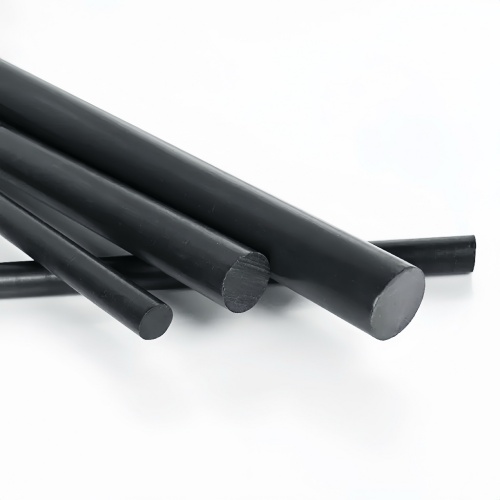
Black PTFE rods are filled and modified PTFE rods. PTFE itself is white; the black color comes from the addition of other black substances, typically carbon fiber, graphite, or carbon powder. Different fillers enhance different properties. Carbon fiber increases the hardness of the PTFE rod, making it more resistant to creep and suitable for high-pressure operation; graphite enhances its lubricity, reducing friction between the PTFE rod and machinery, making it suitable for high-speed operation; and carbon powder provides conductivity and prevents static electricity.
PTFE rods have five main application areas: chemical, mechanical, electronic, semiconductor, and construction. In the chemical industry, PTFE rods primarily function as corrosion protectants and sealants. They are resistant to almost all highly corrosive liquids, including strong acids and alkalis, and are chemically stable, not easily reacting with other chemicals. In the mechanical industry, their main function is to reduce friction and protect equipment. Due to PTFE’s excellent self-lubricating properties, it can replace lubricating oil in mechanical parts such as bearings, bushings, gears, sliders, and piston rings. In the electronic industry, PTFE rods are often used to make high-frequency cables, insulated wires, printed circuit boards, transformers, and high-voltage insulation materials for motors due to their excellent electrical insulation properties. In semiconductor manufacturing, PTFE rods are widely used in wet process systems and chemical transportation, ensuring ultra-pure environments. In the construction industry, PTFE rods are commonly used to make wear-resistant sliding plates and sealing strips.
The disadvantages of PTFE rods can be broadly categorized into five points. Two of the more significant are their relatively low mechanical strength, making them prone to deformation under prolonged high loads, and their large coefficient of thermal expansion, meaning their dimensions change considerably with temperature variations. Three other points are the high cost of PTFE, the difficulty in processing it, and the fact that it cannot be directly adhered to surfaces without sodium curing. However, we offer processing and sodium curing services. If you purchase our PTFE rods, we can solve all your problems in one go.
PTFE rods cannot be directly glued. Because of PTFE’s chemical inertness, it hardly reacts with any physicochemical substances, so ordinary glues will not work. However, it can be glued using other methods. These include special surface activation treatments such as sodium treatment, plasma treatment, and chemical etching. Alternatively, specialized adhesives, such as epoxy structural adhesives, polyurethane adhesives, or special fluoroplastic adhesives, can be applied to the surface of the PTFE rod, making it bondable.
Of course! HANSA’s PTFE rods are FDA-certified and we possess the relevant safety certificates. Furthermore, they can be used in the food industry for the following reasons: PTFE has a non-stick surface, preventing it from absorbing food residue or beverage liquids; it is chemically inert, reacting almost entirely with no chemicals. PTFE rods are commonly used to make seals, bearings, rollers, cutters, and other components. When purchasing, be sure to choose food-grade PTFE rods and ensure the operating temperature does not exceed 260 degrees Celsius.
Yes, PTFE rods are also called Teflon rods. PTFE and Teflon are essentially the same thing, both referring to polytetrafluoroethylene (PTFE). The difference is that Teflon is a registered trademark, a brand name. Teflon was launched by DuPont and later transferred to Chemours. The word Teflon has brand recognition, and it’s the most familiar name to the public. However, the quality of a material depends on its performance, and material performance depends on the grade of its raw materials and processing technology, not its name.
Depending on the manufacturing process, different sizes are available. Extruded PTFE rods have diameters of 4-200mm and lengths of 1/2/3m; molded PTFE rods have diameters of 20-1000mm and lengths of 100-1000mm, with larger diameters having lengths of 300-500mm. If PTFE rods contain filler materials, such as glass fiber, carbon fiber, bronze, carbon powder, or graphite, their diameter is typically less than 300mm.
cutting,thermoplastic welding,drilling,bending,thermo forming,polishing,gluing,Injection Molding and CNC Milling。
Of course! We have complete processing equipment and mature processing technology, such as saw cutting, laser cutting, CNC cutting, thermoplastic welding, drilling, bending, thermo forming, polishing, gluing, injection molding, and CNC milling.
Industry standards mainly include ASTM (USA), ISO (international), SAE/AMS (aerospace), FDA food-grade standards, and RoHS/REACH environmental compliance standards. ASTM further includes D1710 (Extruded and Molded PTFE Rods, Dimensional Tolerances, Physical Properties, and Grading), D4894 (Raw Material Standard), and D4895 (Dispersion Resin Standard). ISO includes ISO 13000 and ISO 12086.We have all the industry standard certificates and can provide them to you.
Excellent chemical corrosion resistance, extremely low coefficient of friction of 0.04, non-adhesive surface, and extremely wide temperature range (-292℉~500℉) are all qualities that other materials cannot possess simultaneously.
In terms of color, pure PTFE is milky white or ivory white. Recycled or counterfeit materials may appear blackish, dull, or yellowish. It has no smell; if it has a plastic smell or a pungent odor when burned, it is of inferior quality. It feels like oil or wax with low resistance; if it feels rough to the touch, it may be fake PTFE. Pure PTFE will not change color or expand when placed in strong acids or alkalis.We use 100% virgin PTFE resin, no regrind or recycled material.



 French
  English
  Arabic
  Tibetan
  German
  Spanish
  Hindi
Hindi  Indonesian
  Italian
  Japanese
  Korean
  Dutch
Dutch  Portuguese
  Thai
Thai  Russian
  Swedish
  Chinese