


Plastic is far more ubiquitous than we often realize, appearing everywhere from our daily lives to industrial manufacturing. When selecting materials, it is crucial to choose food-grade plastics that are also suitable for your specific operating environment. This is particularly important in the food processing industry, where the wrong choice of material can lead to a host of problems. After reading this article, you will know how to select the right materials yourself and avoid common pitfalls.
What is Food Grade Plastic?
“Food-grade plastic” does not refer to a specific type of plastic; rather, it denotes plastic materials that meet safety requirements for food contact and are suitable for direct or indirect contact with food.
What is Food Safe Plastic?
Food-safe plastics are plastics that, when used for their intended purpose, avoid safety hazards. This is because even materials classified as food-grade can pose safety risks if used improperly or beyond their specified limits.
What’s the Difference Between Food-Grade and Food-Safe?
“Food-grade” plastic is not necessarily “food-safe” plastic. You can think of it this way: food-grade plastic falls under the category of food-safe plastic. This is because “food-grade” refers to the plastic material itself meeting requirements for food contact, whereas “food-safe” implies that the plastic poses no risk to the food in a specific application.
What standards must food-grade plastics meet?
Food-grade plastics must comply with relevant FDA regulations. The FDA (U.S. Food and Drug Administration) has established specific rules regarding plastic products that come into contact with food.
Specifically, FDA 21 CFR Part 177 outlines which polymers are permitted for food contact and specifies the additives allowed for use. Additives are chemical substances incorporated during the production and preparation of polymers to facilitate molding or to modify physical and chemical properties—such as stabilizers, antioxidants, and lubricants
Why is it necessary to control additives?
Not all additives are permitted for use in food-contact materials, as the issue of chemical migration is involved. Certain additives may migrate into food during use, potentially increasing food safety risks.
Therefore, the FDA regulates the use of additives and mandates that the amount migrating into food remains below established regulatory limits, thereby safeguarding consumer safety.
What are the different types and applications of food-grade plastics?
UHMW-PE
UHMW-PE stands for Ultra-High Molecular Weight Polyethylene and is most commonly used in food processing equipment. Its key characteristics include wear resistance, impact resistance, and self-lubricating properties; with a friction coefficient of 0.05–0.15, it requires no additional lubricant when operating as a gear or guide rail. It is often used as a substitute for metal to reduce equipment wear and noise.
UHMW-PE has a long-term service temperature range of -200°C to 80°C, making it suitable for low-temperature, high-impact operating conditions. Its short-term service temperature is 90–100°C; it is not suitable for use at high temperatures.
Thanks to its excellent mechanical properties—particularly wear resistance and low friction—as well as its compliance with FDA regulations, UHMW-PE is widely used in the food processing industry for applications such as conveyor guide rails, chain guides, and beverage transport piping.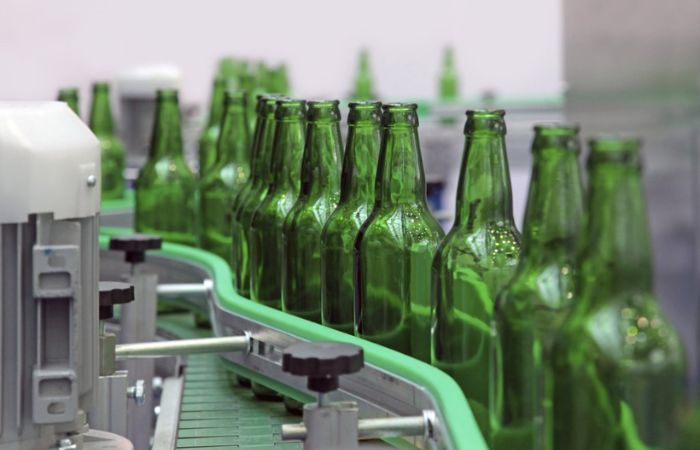
HDPE
HDPE stands for High-Density Polyethylene. Like UHMW-PE, it is a type of polyethylene (PE), but it differs in molecular weight, which results in different performance characteristics. HDPE offers greater rigidity than UHMW-PE, is easier to process, and is more cost-effective. However, its long-term operating temperature range is limited to -50°C to 80°C; it is suitable only for standard temperature environments, as its heat resistance is moderate.
HDPE is actually most widely used in household settings rather than industrial applications. For instance, most cutting boards—aside from wooden ones—are made of HDPE. It does not harbor bacteria, does not easily dull knives, and complies with FDA regulations, making it safe for contact with food and the human body.
Beyond cutting boards, HDPE is used for long-term food storage, such as in milk jugs, squeeze bottles for chocolate or butter spreads, and shopping bags. Bottles marked with the number “2” are recyclable, though reuse requires FDA compliance testing.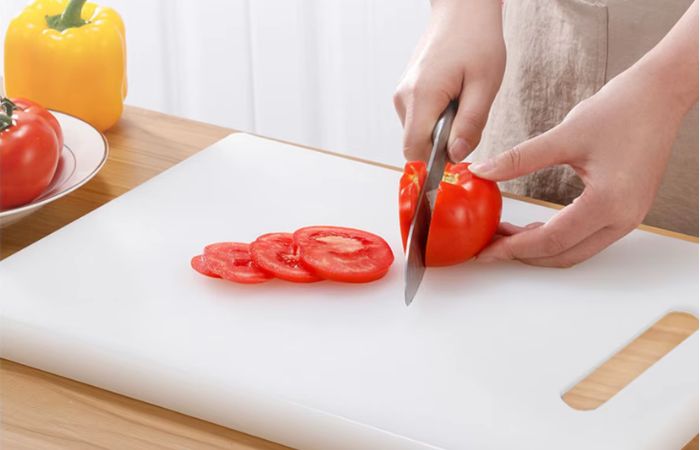
PP
PP stands for polypropylene; it is a lightweight thermoplastic and one of the most common food-grade plastics. It has a long-term operating temperature range of 0–100°C—offering higher heat resistance than PE—and a melting point of 160–170°C.
PP is frequently used to manufacture food containers, such as food packaging boxes and liquid storage tanks, and is suitable for use in microwaves and dishwashers. It is also used for components in food processing equipment, liquid transfer piping and fittings, valves, and laboratory apparatus.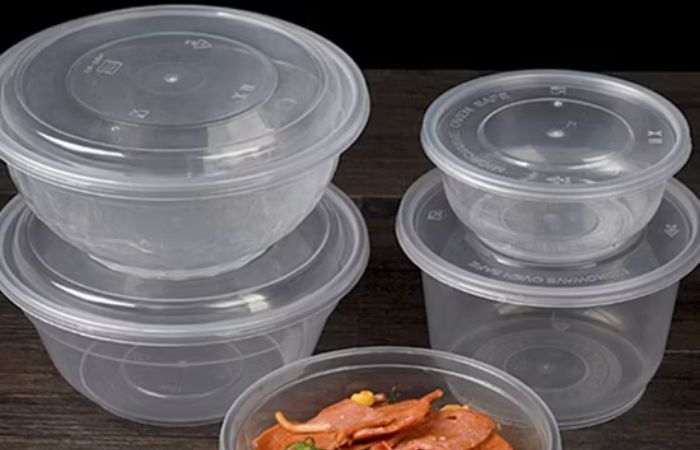
PTFE
PTFE (polytetrafluoroethylene) possesses numerous outstanding properties, earning it the industry moniker “King of Plastics.” Its core attribute is exceptional chemical resistance; it remains virtually inert when exposed to almost any chemical substance.Resistant to high and low temperatures, the long-term operating temperature range is -200 to 260°C. It also features low friction—with a coefficient of just 0.04—and low surface adhesion, resulting in non-stick characteristics that make cleaning easy.
Food-grade PTFE is suitable for use in food processing equipment, particularly for seals, conveyor system components, and sliding parts. It provides effective sealing while withstanding corrosive media such as acids, alkalis, and salt solutions.
Thanks to its non-stick properties, PTFE is ideal for baking equipment. PTFE-coated fiberglass fabric—often referred to as a “PTFE baking sheet”—is a high-temperature, food-contact-safe product. It serves as a durable alternative to disposable baking paper, offering a longer service life and helping to reduce costs.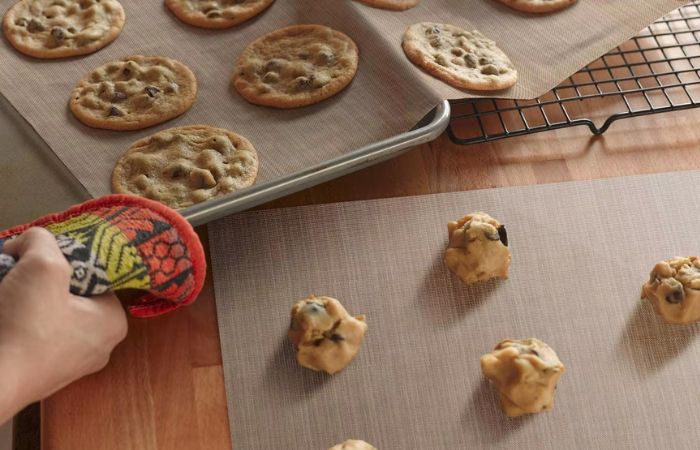
PTFE-coated fiberglass mesh is also widely used, notably for barbecue mesh bags that allow food to be grilled on both sides while contained within the mesh.
PTFE conveyor belt fabric is a common fixture in food processing plants, facilitating the transport of food products. The material’s low surface energy ensures easy cleaning and prevents food from sticking.
POM
POM stands for Polyoxymethylene (also known as Acetal). Its most notable feature is its mechanical performance; characterized by high mechanical strength, it can often serve as a substitute for metal. It offers excellent dimensional stability, enabling high-precision CNC machining suitable for intricate parts. Food-grade POM can be used to manufacture components for food processing machinery.
POM comes in two types: POM-H and POM-C.
POM-H (Homopolymer Acetal) offers high strength, hardness, and wear resistance, though its chemical resistance is slightly lower.
POM-C (Copolymer Acetal) offers superior chemical resistance and dimensional stability, and is easier to machine.
Consequently, POM-C is the most widely used variant, as it offers a more balanced overall performance profile.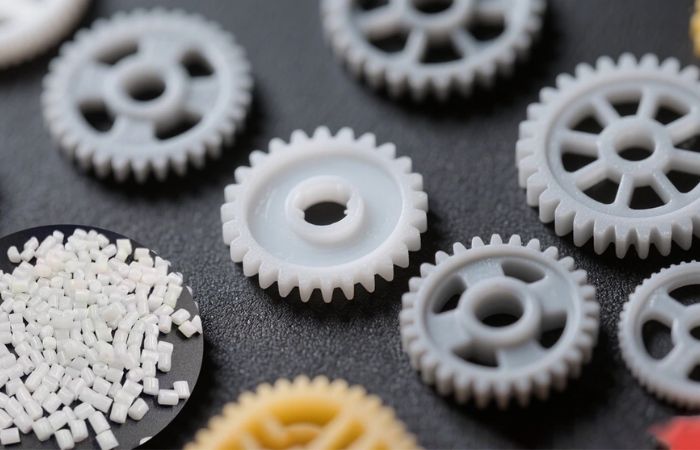
COUP D'OEIL
COUP D'OEIL (Polyether Ether Ketone) is a high-performance specialty engineering plastic widely used in high-end applications.
Food-grade PEEK is found in food processing equipment that requires repeated high-temperature cleaning or steam sterilization, as the material withstands temperatures up to 260°C (500°F) and steam exposure.
Additionally, PEEK offers excellent chemical resistance, good wear resistance, self-lubricating properties, and dimensional stability. While its use in the food industry is relatively limited, it is widely employed in sectors such as aerospace, medical technology, semiconductors, and oil and gas.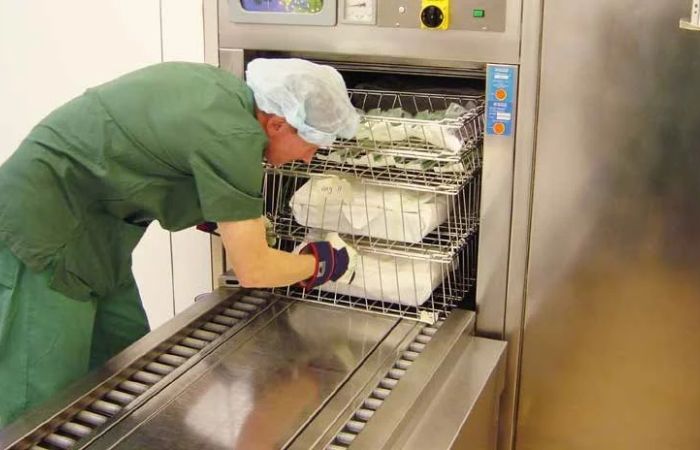
PVC
PVC stands for polyvinyl chloride and is commonly encountered in daily life; however, it is important to note that not all PVC is food-grade.
PVC is categorized into two types based on the presence of plasticizers: rigid PVC (also known as uPVC) and soft PVC. Soft PVC contains plasticizers, and its suitability for food contact depends on the specific formulation and the type of plasticizer used.
Therefore, before use, the material should undergo FDA testing to determine whether it complies with relevant FDA regulations.
PVC offers excellent chemical resistance and ease of processing. In the food industry, it is typically used for food-grade transfer hoses, drinking water pipes, and various components of food processing equipment.
Food wrap was formerly made from PVC, but the material has since changed; HDPE is now the more common choice.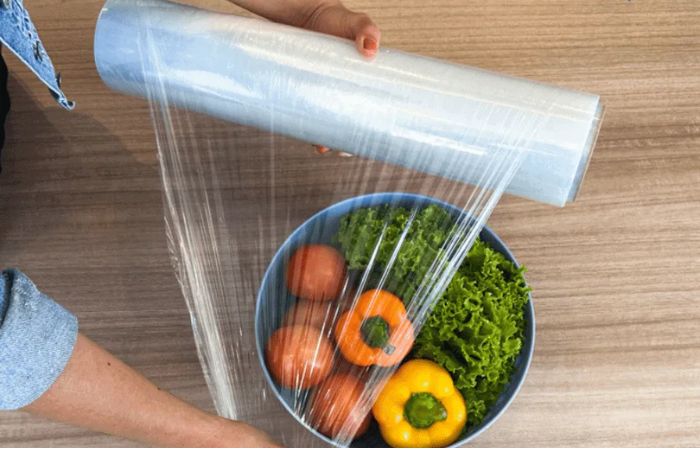
PPSU
Its full name is Polyphenylsulfone, and its key characteristics include high-temperature resistance, impact resistance, and resistance to steam sterilization. PPSU has a long-term service temperature range of -40 to 180°C (-40 to 356°F) and maintains excellent dimensional stability even when subjected to impact at high temperatures.
Food-grade PPSU is widely used in components for hot beverage equipment, high-temperature sterilization equipment, and drinking water systems, as well as in food processing equipment and baby products such as nursing bottles.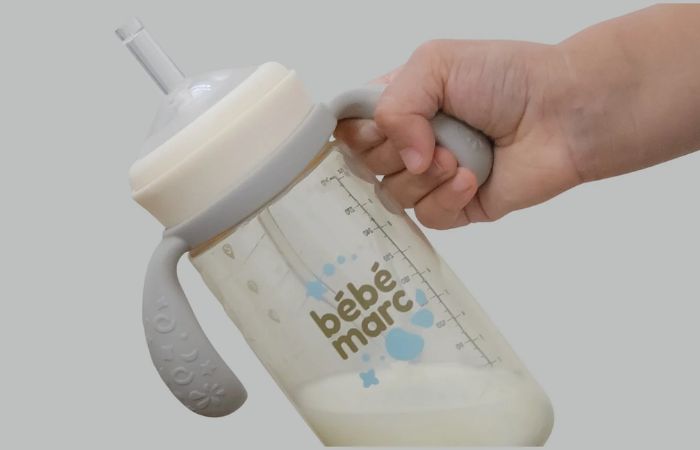
When Do You Need a Specific Food Grade Plastic?
High-Temperature Processing
UHMW-PE and HDPE cannot be used in high-temperature environments exceeding 100°C; instead, materials such as PTFE, PEEK, or PPSU must be used. This is because PE is only heat-resistant up to 80°C; prolonged exposure to higher temperatures causes the material to soften and degrade in performance, leading to a loss of dimensional stability and creating potential risks.
Heavy Wear Applications
For applications involving long-term, high-wear conditions, the use of PP or PVC plastics is not recommended. Their low wear resistance leads to more frequent replacements, indirectly increasing your project costs. UHMW-PE is the preferred choice, as HDPE does not match its wear resistance. Learn more about the differences in our UHMW vs. HDPE comparison guide.
UHMW is particularly well-suited for applications such as conveyor guide rails, chain guides, and sliding components.
Precision Moving Parts
POM and PEEK offer the best machinability and dimensional control, particularly for precision components like gears and bearings in food processing equipment; furthermore, PEEK is suitable for high-load applications. Avoid using HDPE, as it lacks sufficient rigidity and makes it difficult to maintain dimensional accuracy during machining.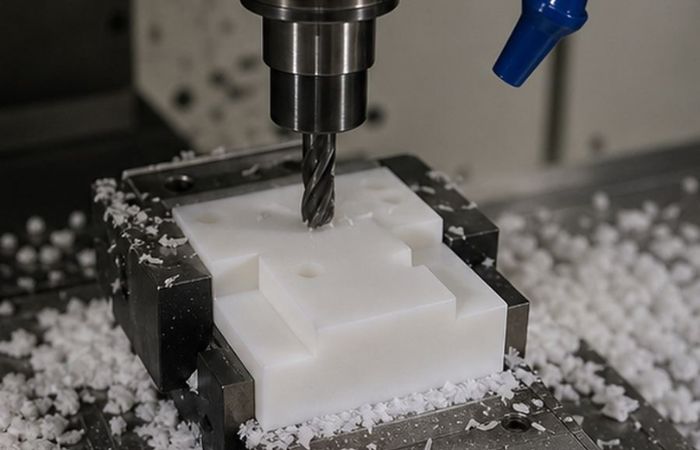
Strong Chemicals
To begin with, rule out POM and PVC; neither offers good chemical resistance, let alone suitability for environments involving strong acids or alkalis. PTFE is the most cost-effective food-grade plastic; alternatively, if the application involves high-end equipment requiring material rigidity, you could opt for PEEK. Of course, material cost considerations should also be taken into account.
Steam Sterilization
For equipment components used in steam sterilization applications—especially those requiring daily high-temperature sterilization—PEEK or PPSU are suitable choices. Other plastics tend to suffer performance degradation under conditions of prolonged, repeated steam exposure.
Note that PPSU is intended for use at temperatures below 180°C.
How to Choose the Right Food-Grade Plastic?
To select the right food-grade plastic for your project—or to determine whether a specific food-grade plastic is suitable—you need to consider several factors: operating temperature, chemical environment, mechanical properties, regulatory requirements, and budget.
For standard operating environments and conditions, HDPE or PP will suffice; using materials like PTFE or PEEK would result in performance overkill and unnecessarily drive up costs.
Final Thoughts
“Food-grade plastic” does not refer to a single specific type of plastic; rather, it denotes plastics that comply with relevant FDA regulations. Materials such as PTFE, UHMW, HDPE, PEEK, PP, and POM can all obtain food-grade certification. When making your selection, you can request documentation such as FDA compliance statements, material test reports, or material certificates from the supplier.
If you still have questions or are unsure which food-grade plastic is best suited for your needs, please Contactez-nous; HANSA can provide guidance on material selection.

 French
  English
  Arabic
  Tibetan
  German
  Spanish
  Hindi
Hindi  Indonesian
  Italian
  Japanese
  Korean
  Dutch
Dutch  Portuguese
  Thai
Thai  Russian
  Swedish
  Chinese