




Feuille de PTFE de Hansa
- Utilisations : Joints et lubrifiants pour divers milieux, ainsi qu'isolants électriques à différentes fréquences. Supports de condensateurs, isolation de fils, isolation d'instrumentation électrique.
- Équipements de traitement chimique, joints/chemises pour pipelines, vannes et réacteurs
- Systèmes d'étanchéité à bride, joints d'étanchéité haute température/haute pression (HTHP)
- Composants résistants à l'usure, patins d'usure à faible frottement pour guides linéaires et roulements
- Revêtements résistants à la corrosion, revêtements de cuves d'acide/bains de galvanoplastie (par exemple, résistance à l'acide sulfurique/nitrique)
Feuilles PTFE HANSA
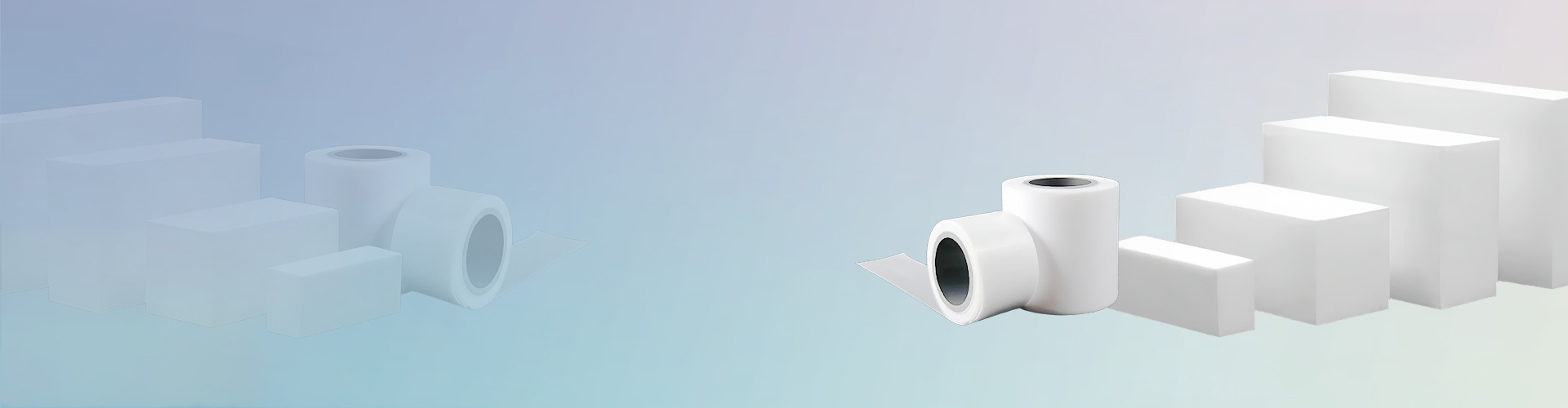
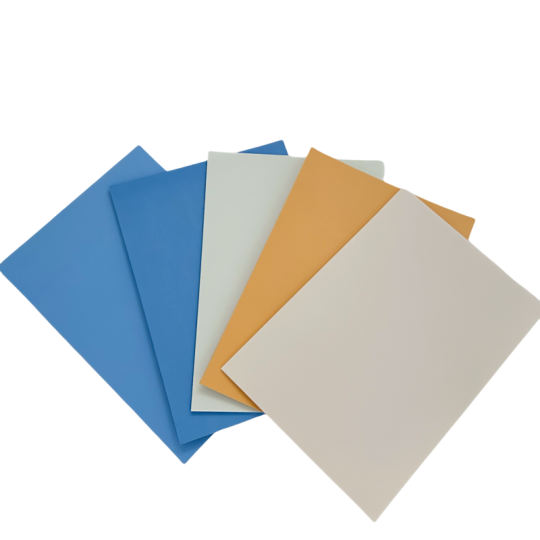
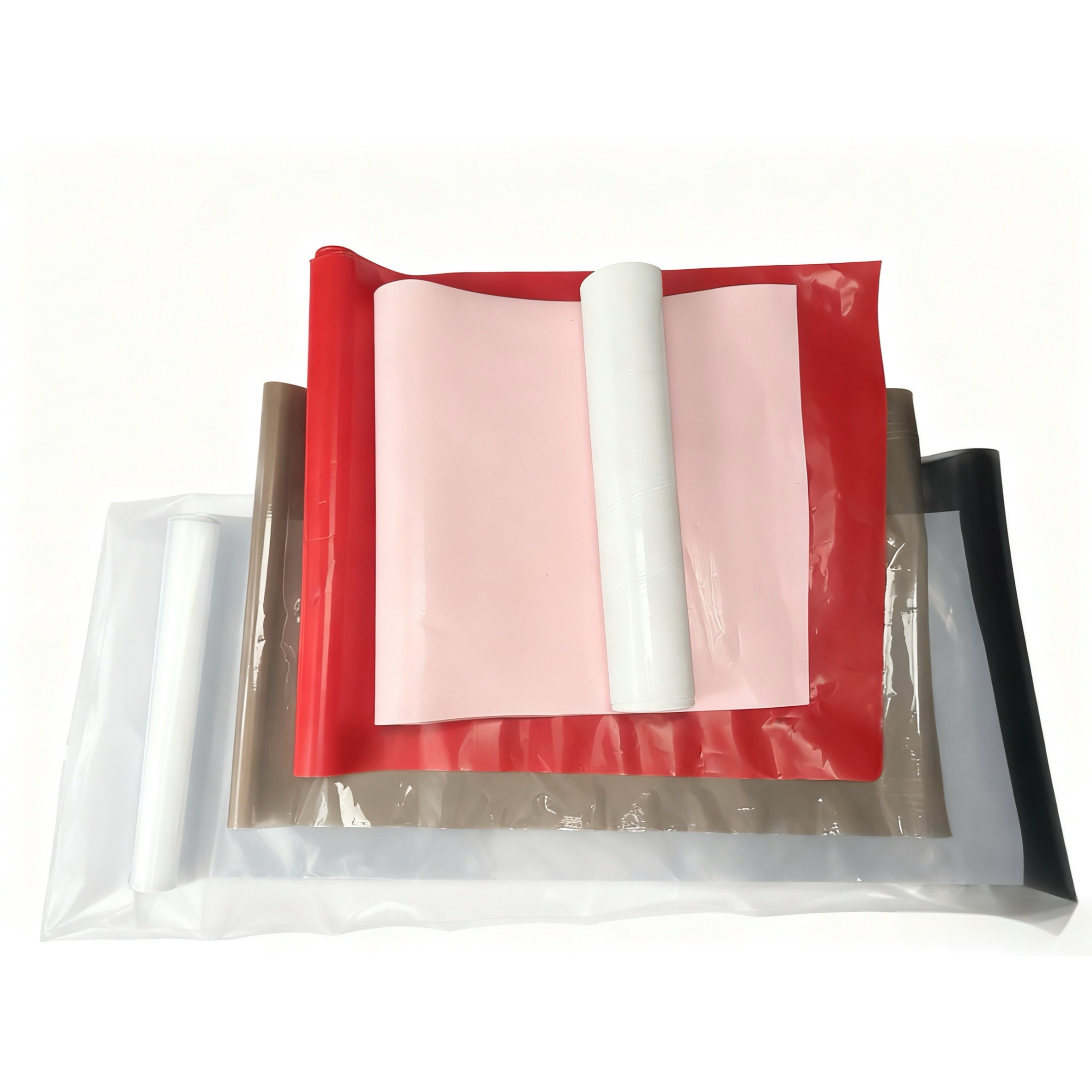
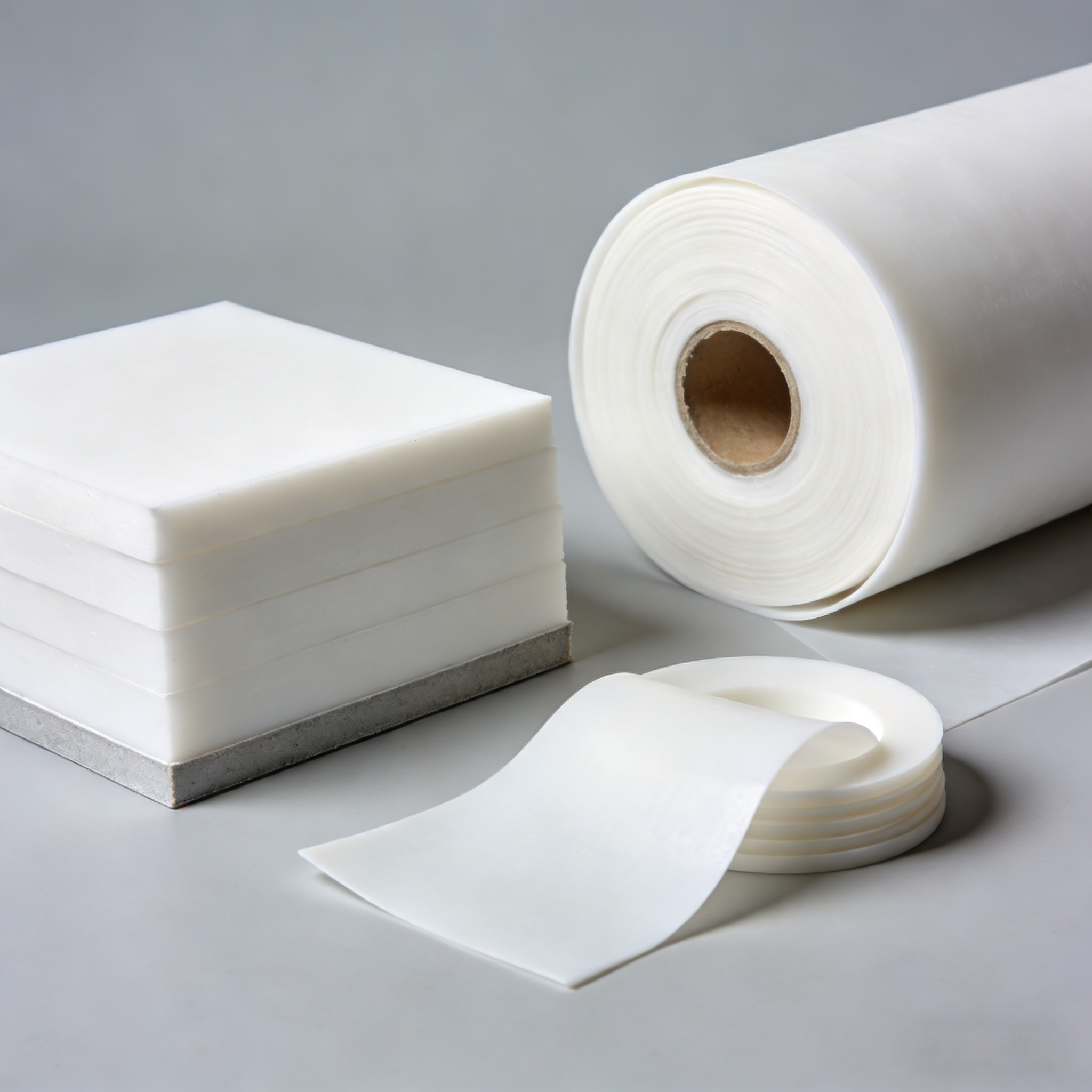
Hansa vous propose différents types de feuilles ou films PTFE. Que vous ayez besoin de feuilles PTFE en rouleau, renforcées ou découpées sur mesure, nous vous fournissons toujours des matériaux de qualité. Quelle que soit la taille, la couleur, le type ou l'épaisseur, envoyez-nous simplement votre demande et recevez un échantillon gratuit pour vérifier la qualité.
General-purpose PTFE sheets have a temperature resistance range of -180 to 260 degrees Celsius, making them suitable for most industrial applications. They have a low coefficient of friction, and their most notable characteristic is their chemical inertness, meaning they react with almost no chemical substances.
More Different Types Of PTFE Sheet You can Order From Hansa
Il existe différents types de feuilles de PTFE, qui peuvent être classées de plusieurs manières : 1. Par procédé de fabrication ; 2. Par charges/modifications ; 3. Par couleur ; 4. Par application ; 5. Par spécifications ; 6. Types spéciaux, notamment les feuilles de PTFE poreuses (communément appelées « panneaux de PTFE expansé »).
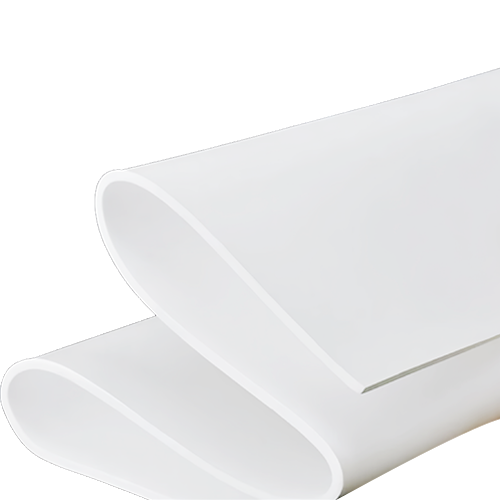
Une structure microporeuse fabriquée par un processus d'étirement, utilisée dans la filtration, les applications de membranes respirantes et les domaines biomédicaux.
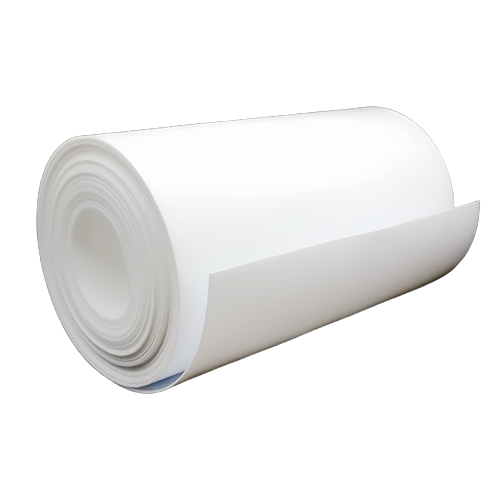
Taille personnalisable. Vente au détail autorisée. Largeur maximale : environ 3 mètres. Épaisseur maximale : 10 mm et plus.
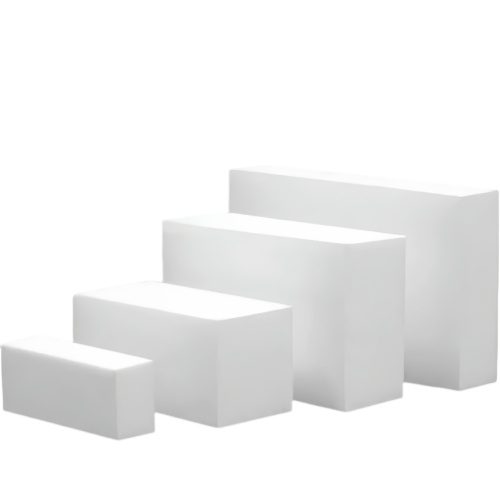
La taille peut être personnalisée, la vente au détail est autorisée. La largeur maximale peut atteindre 2 mètres, l'épaisseur maximale est proche de 600 mm.
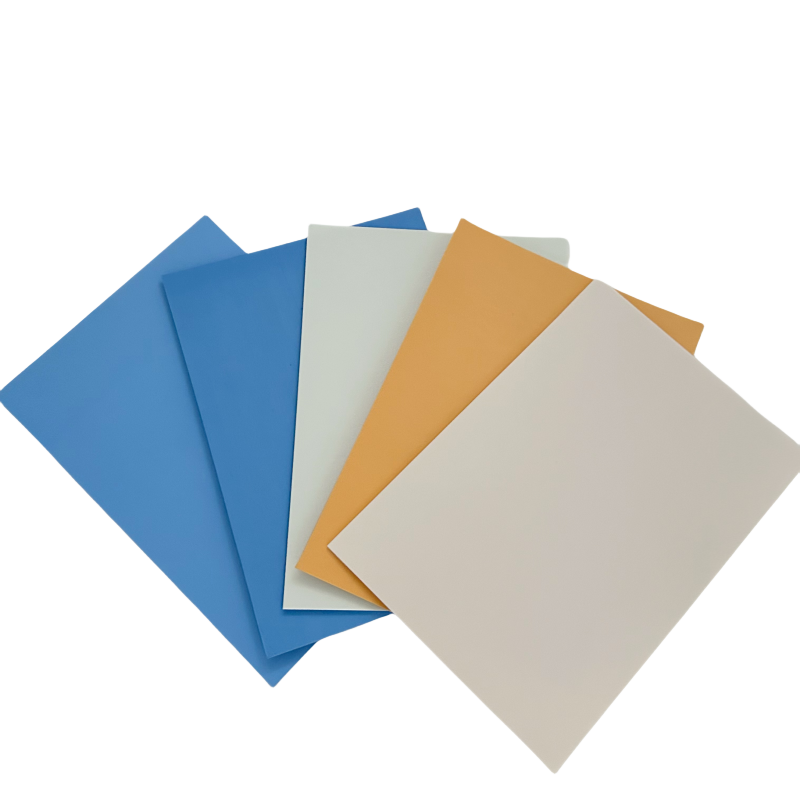
Formulations de charges spécialisées pour l'atténuation du flux à froid dans le PTFE avec des microbilles de verre bleues, du sulfate de baryum blanc et de la silice jaune.
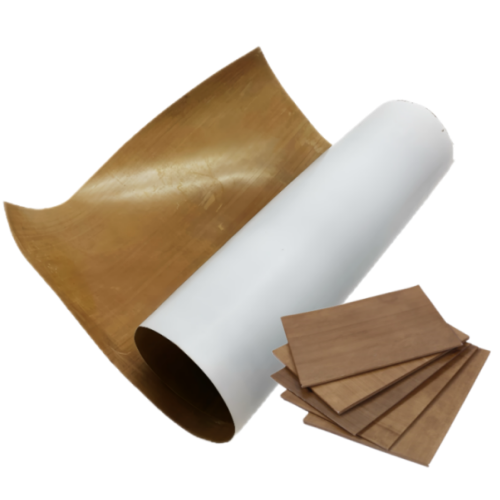
La surface du polytétrafluoroéthylène après traitement au sodium est hydrophile et peut être collée avec de la colle ordinaire pour élargir sa gamme d'applications.

Fabriqué par un procédé de moulage par extrusion, adapté aux applications de feuilles plus minces avec une efficacité de production élevée.
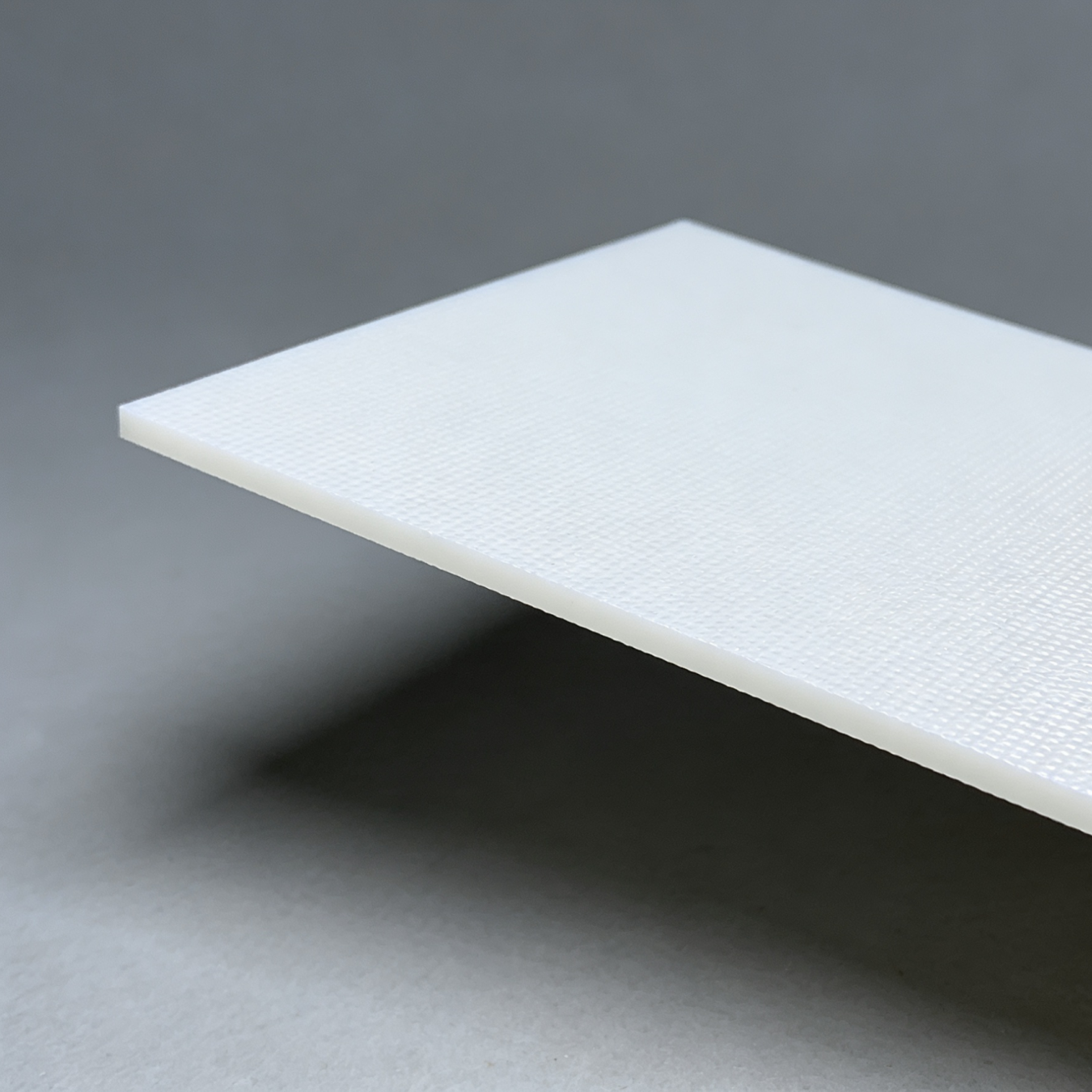
In fact, it involves bonding a fiberglass cloth to one surface of a PTFE skived sheet, giving it the ability to adhere to other surfaces and simultaneously overcoming the limitation of PTFE’s inability to be welded.
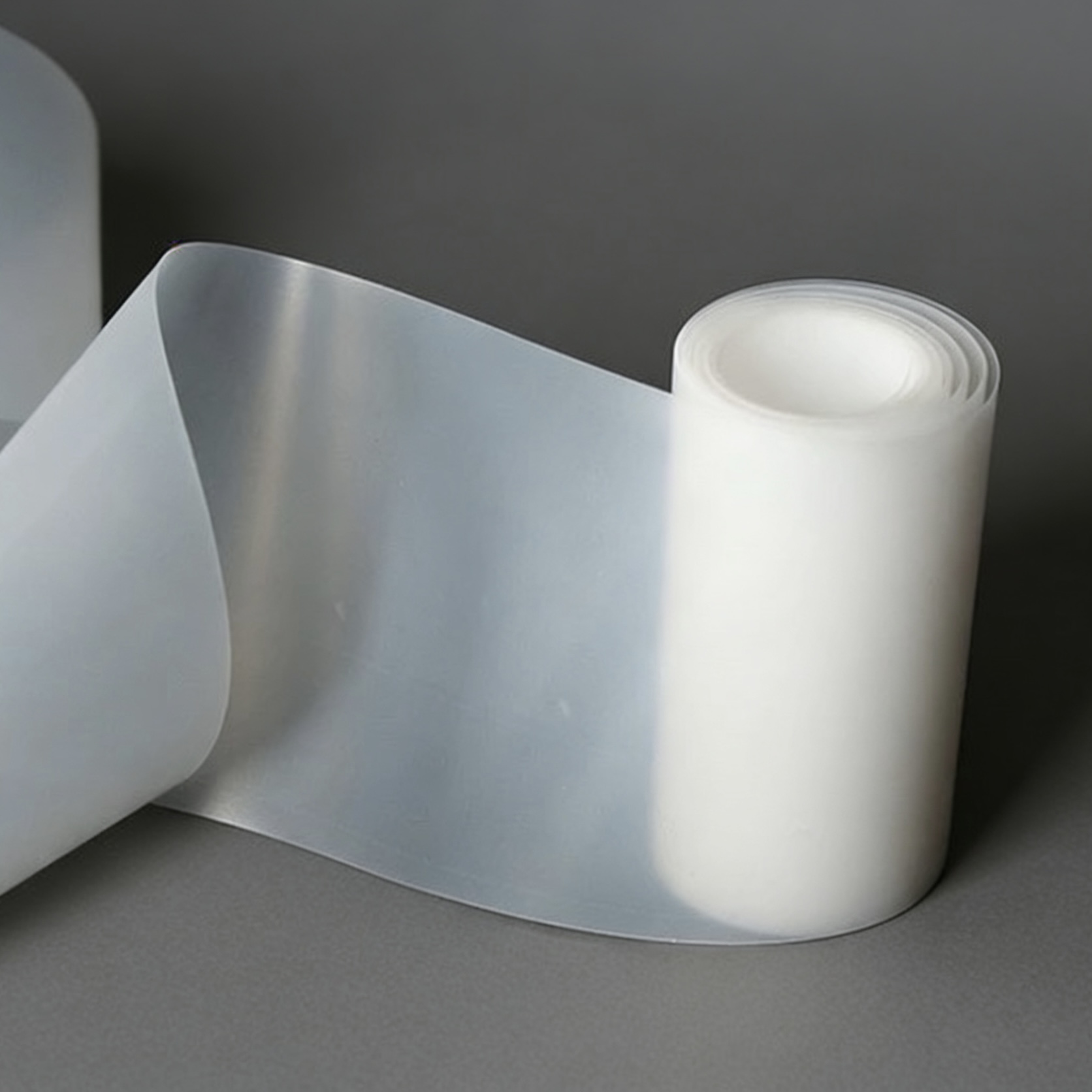
This is commonly used in the electronics industry, particularly in the flat panel display industry. Due to PTFE’s excellent high-temperature resistance and impact resistance, it effectively prevents conductive adhesive from overflowing and contaminating the substrate.
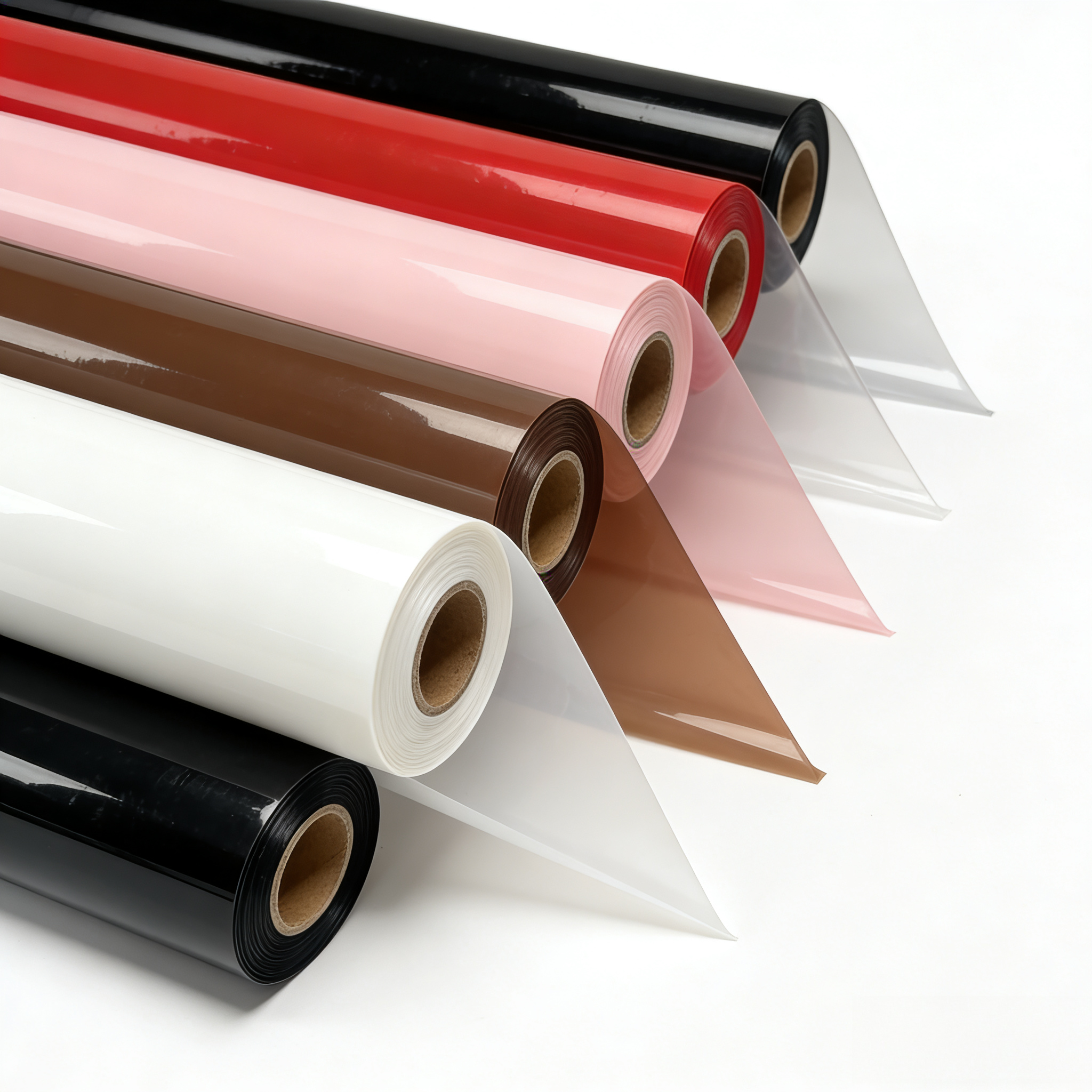
It comes in a variety of colors and serves for identification or decorative purposes. It is commonly used for wire harness classification, pipeline identification in the chemical industry, and as a decorative waterproof layer in high-end buildings.
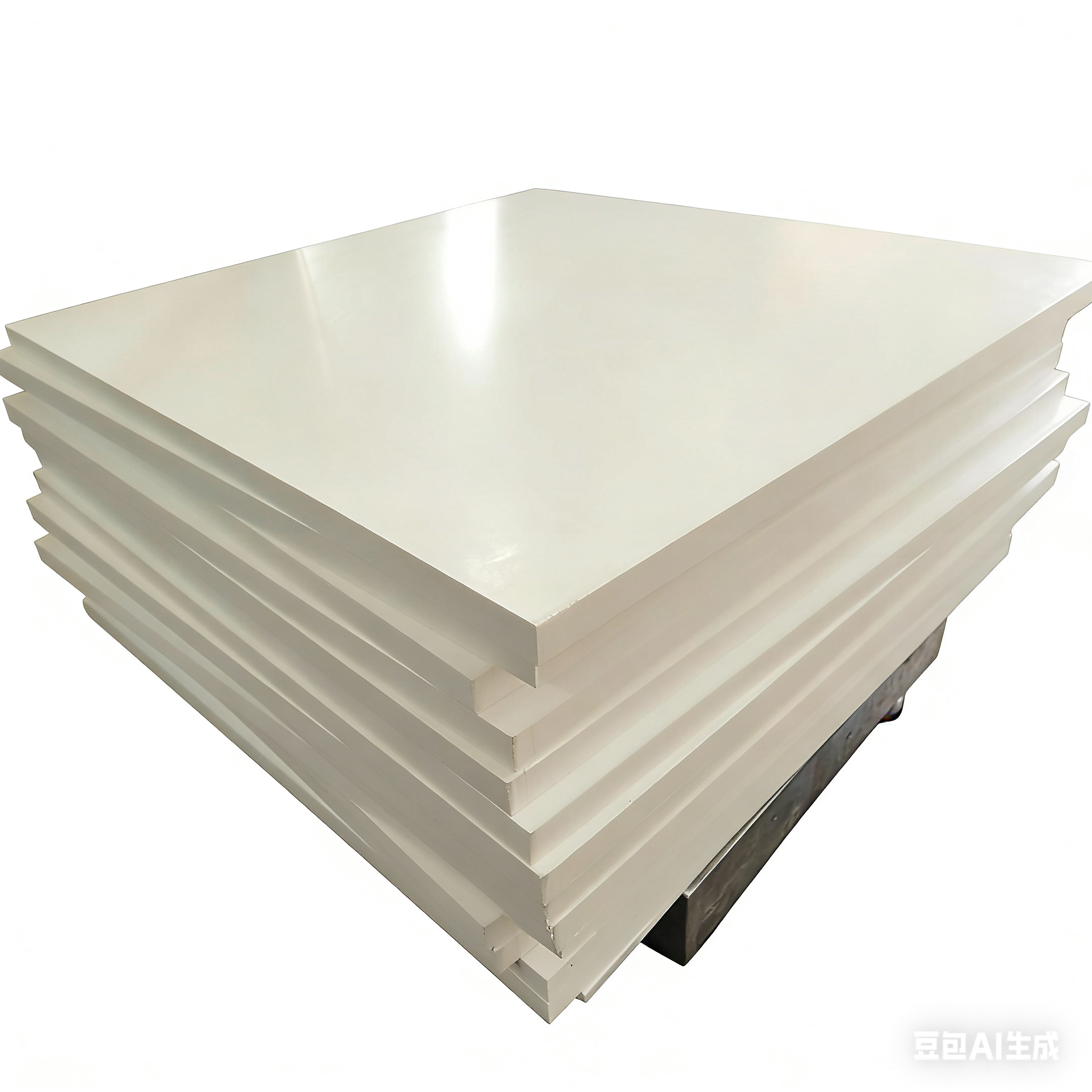
The glass fiber content is typically 15-30%, which greatly improves the mechanical strength of the PTFE sheet, making it twice as strong as general-purpose PTFE sheets and allowing it to maintain dimensional stability under high-pressure conditions.
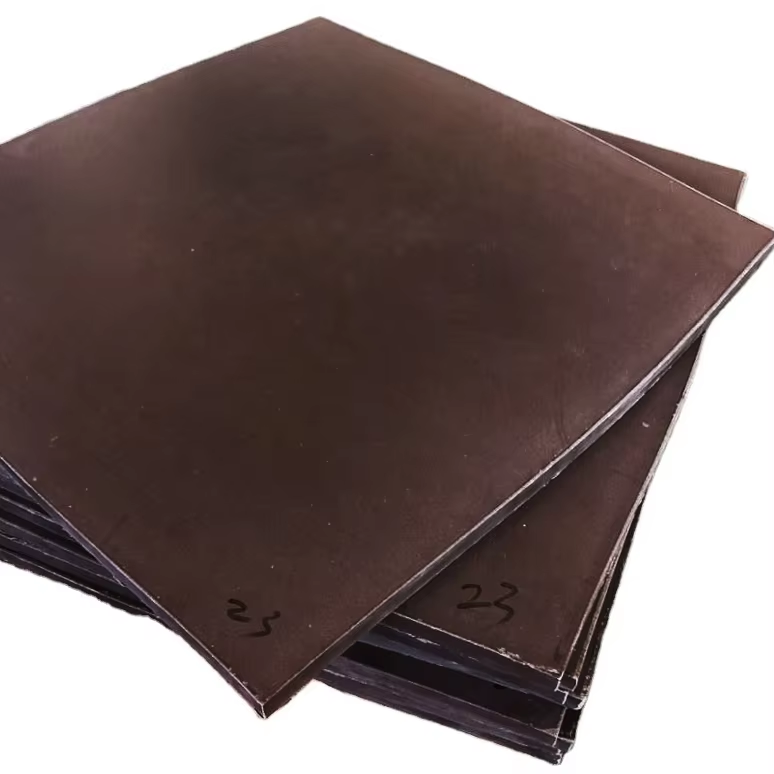
With a copper powder content of 20-40%, it exhibits excellent thermal conductivity, 5-10 times that of ordinary PTFE sheets, but its corrosion resistance is reduced, limiting its use to neutral corrosive media.
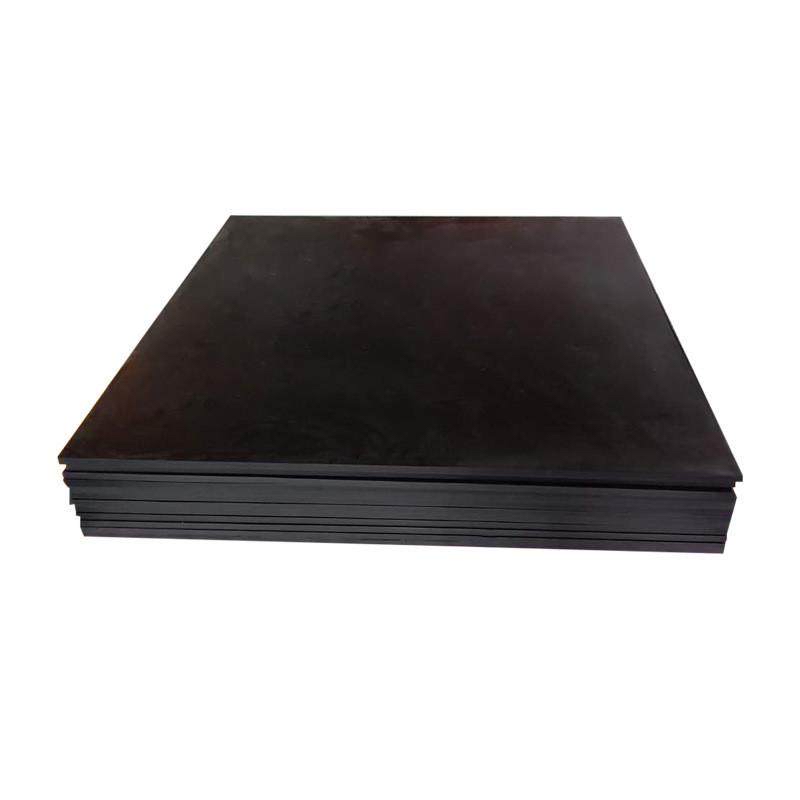
Typically, increasing the graphite content by 10-25% enhances the self-lubricating properties of general-purpose PTFE sheets, resulting in a very low coefficient of friction. However, it also leads to lower hardness, and the price is slightly higher than that of standard general-purpose PTFE sheets.
Principales caractéristiques de la feuille PTFE

Démontre une résistance favorable à la compression et au fluage à température ambiante, bien qu'il puisse se ramollir sous des températures élevées, adapté aux applications à faible contrainte.

Coefficient de frottement (COF) aussi bas que 0,04, doté d'une surface lisse avec des propriétés autolubrifiantes qui éliminent le besoin de lubrifiants externes.

Présente une résistance à la corrosion capable de résister aux agents agressifs et à la majorité des milieux chimiques (pH 0-14).

La plage de fonctionnement s'étend de -200°C à +260°C pour un service soutenu, avec une tolérance d'exposition à court terme jusqu'à 300°C.
Application de la feuille PTFE
Industriel: Joints, garnitures, roulements, composants de vannes et revêtements pour tuyaux et réservoirs.
Électronique: Isolation pour circuits imprimés, connecteurs et composants électroniques.
Automobile: Bagues, tuyaux et revêtements pour conduites de carburant ;
Alimentation et boissons: Bandes transporteuses, moules et conteneurs ;
Médical: Cathéters, dispositifs implantables et matériel de laboratoire.

Your Benefits
- HANSA possesses a complete product quality control system and holds certifications such as FDA, RoHS, and ISO, ensuring that our product quality meets international standards.
- HANSA offers customized services to meet your specific needs regarding the size, thickness, color, or filler materials of PTFE products, ensuring that the products fully meet your expectations. Our professional staff will stay in contact with you to answer any questions you may have.
- HANSA products offer both quality and competitive pricing, focusing on value for money. This not only saves you procurement costs but also eliminates concerns about delivery times. If you order standard products, we have ample stock and can guarantee shipment within 7 days. For customized products, we promise you will receive your order within the agreed timeframe, thanks to our stable and long-term international logistics partners.
- HANSA has 30 years of experience in the production of PTFE products and possesses mature manufacturing and processing technologies. Our sales team is professional and highly responsible, with 20 years of experience in the industry, and can provide comprehensive technical support.
Mature inventory management system
We maintain a readily available stock of standard PTFE sheets, and we have a dedicated inventory management system to facilitate the tracking and management of our stock. When you need to order specific specifications, we can accurately check the current quantity in stock and supply them promptly to meet your urgent needs.
Stable logistics partners
HANSA has established long-term partnerships with three international logistics companies: FedEx, DHL, and UPS, to meet your transportation needs to the greatest extent possible. For packaging, we use wooden crates with foam padding to protect your products and prevent damage during transit.
Company Resource

Is PTFE sheet suitable for your project? If you’re unsure, please contact us, and we will arrange for a professional to assist you. Here is our company’s catalog, which you can download and view.

Do you have doubts about product quality? Worried that the product you receive won’t be what you expected? HANSA can alleviate your concerns, as we provide professional test reports and product certificates. Click to learn more!

HANSA has professional personnel equipped for molding, turning, and CNC machining operations. This is our promotional video, which will allow you to learn about our company in the shortest possible time!
Typical Application Scenarios for PTFE Sheets
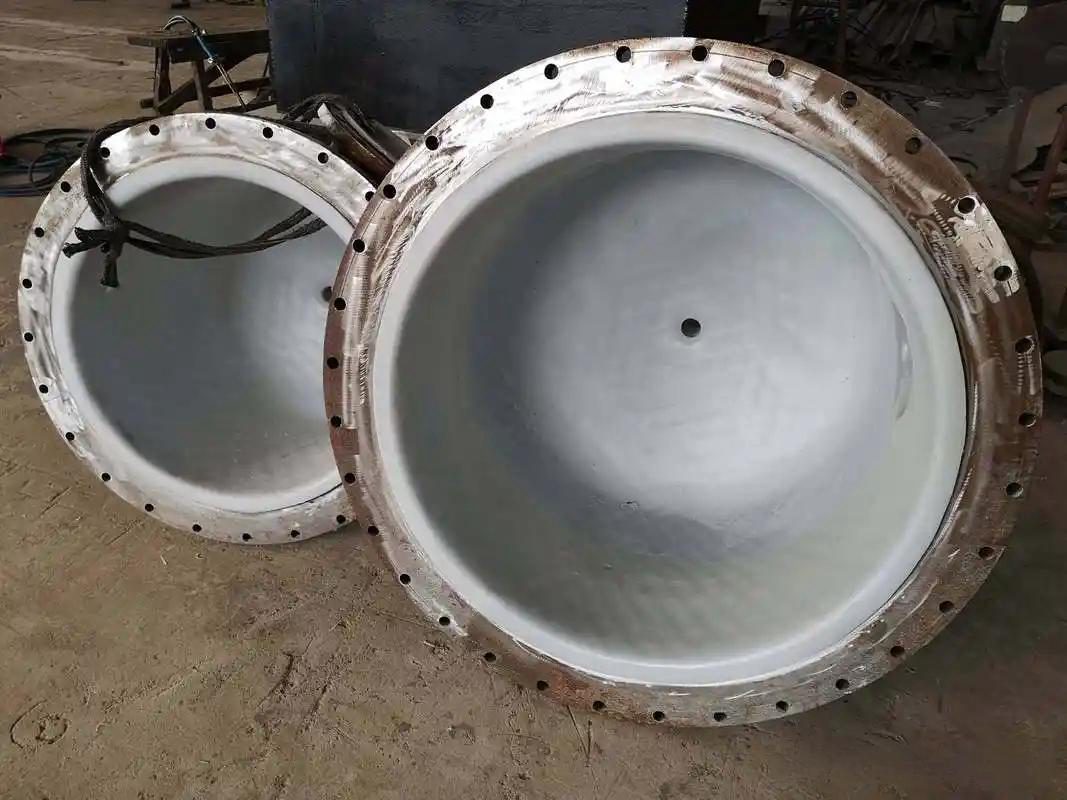
The most classic application of PTFE skived sheets is as a lining for chemical reactors, because PTFE has excellent chemical inertness and hardly reacts with any chemical substances, making it resistant to strong acids, strong bases, and other corrosive liquids. After adhesive treatment, the PTFE skived sheet adheres tightly to the reactor, and our professional technology ensures that it will not detach, extending the service life of your chemical equipment.
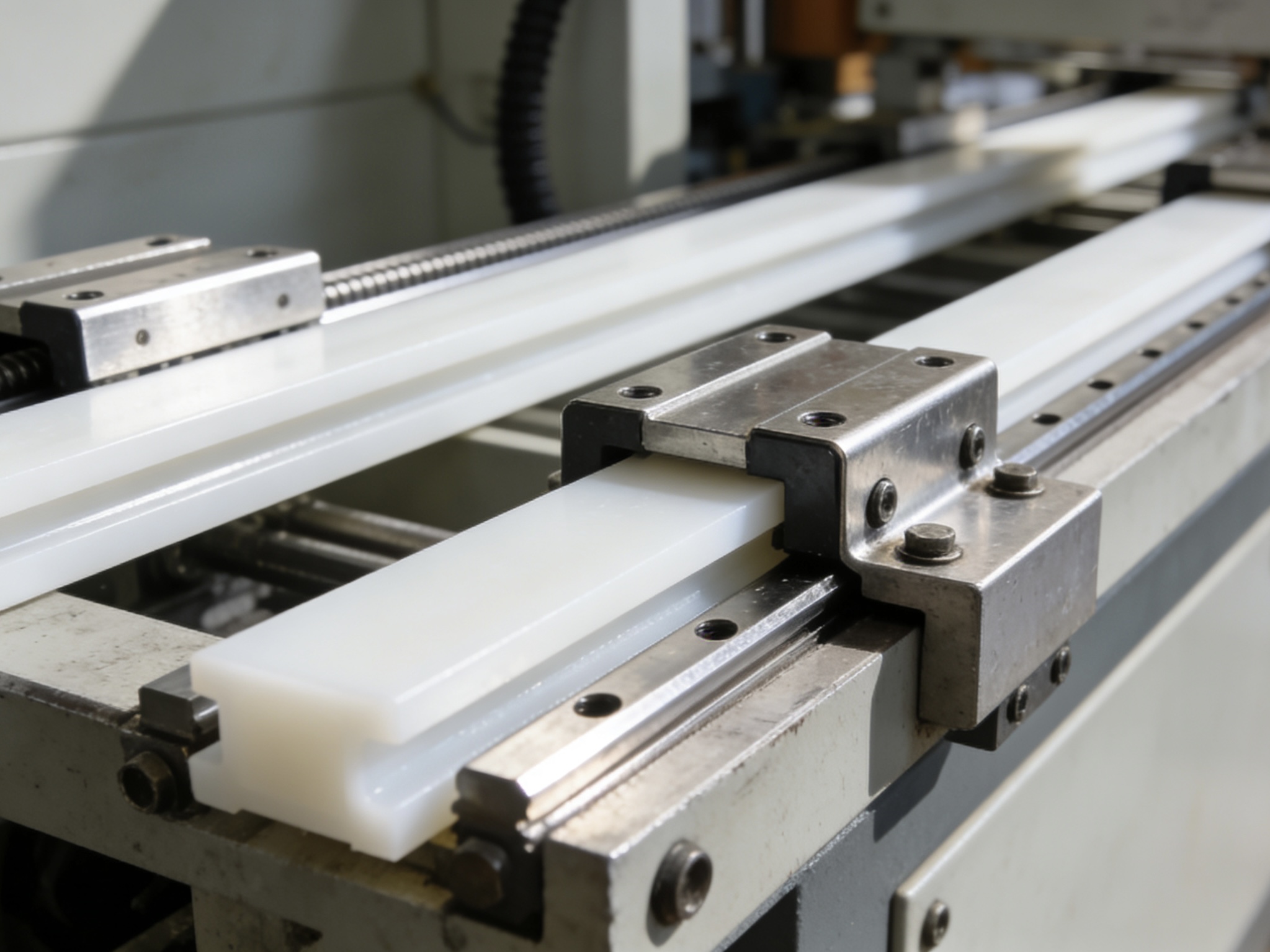
Due to PTFE’s extremely low coefficient of friction (only 0.04) and excellent self-lubricating properties, it is widely used in the manufacture of sliding bearings, guide rails, and piston rings, which can reduce equipment wear and save on production costs.
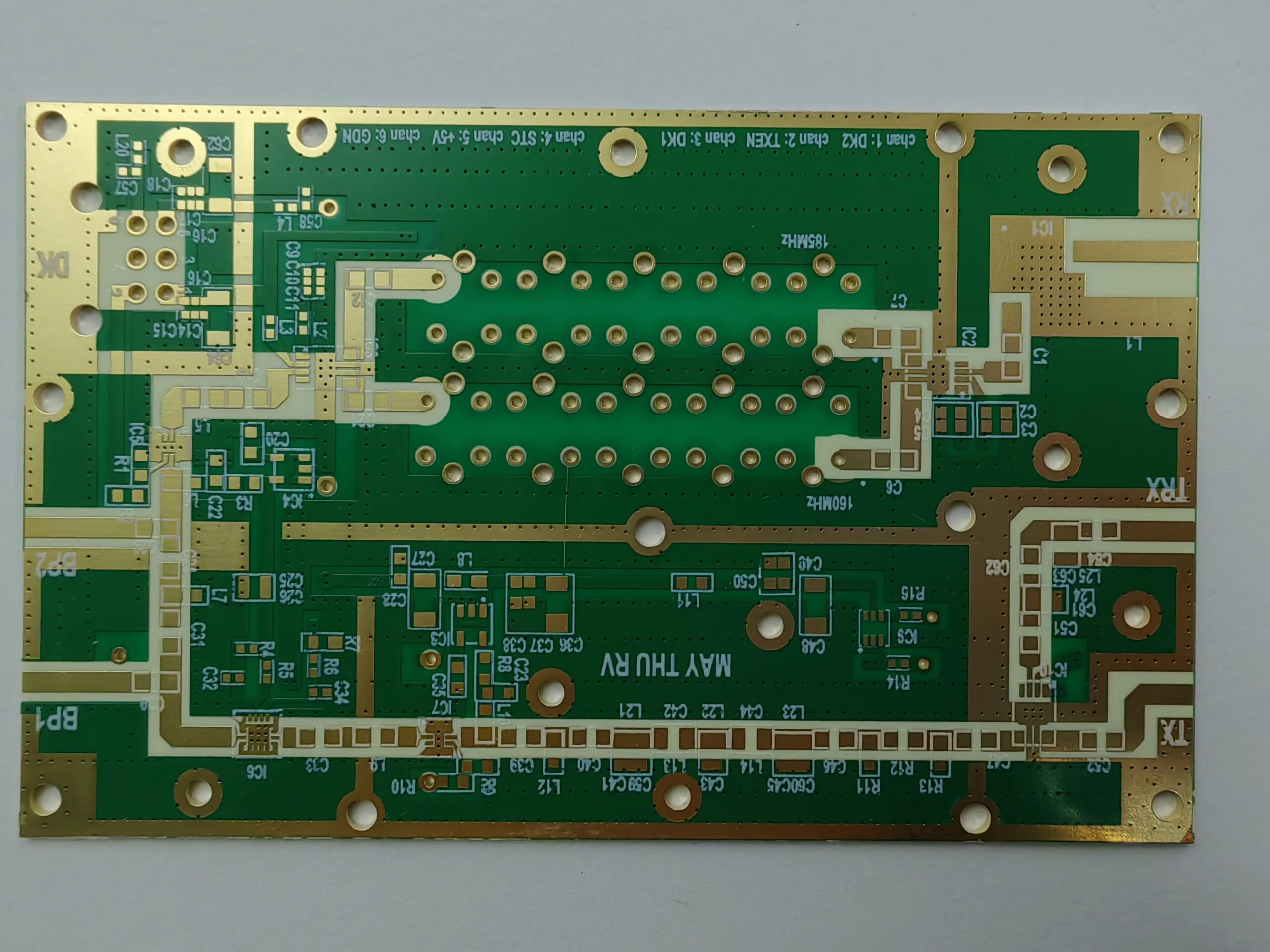
After processing, PTFE sheets can be used as substrates for printed circuit boards (PCBs), insulating gaskets, etc. This is because PTFE has excellent insulation properties, high temperature resistance, and very low dielectric constant and loss factor, resulting in minimal signal transmission loss.
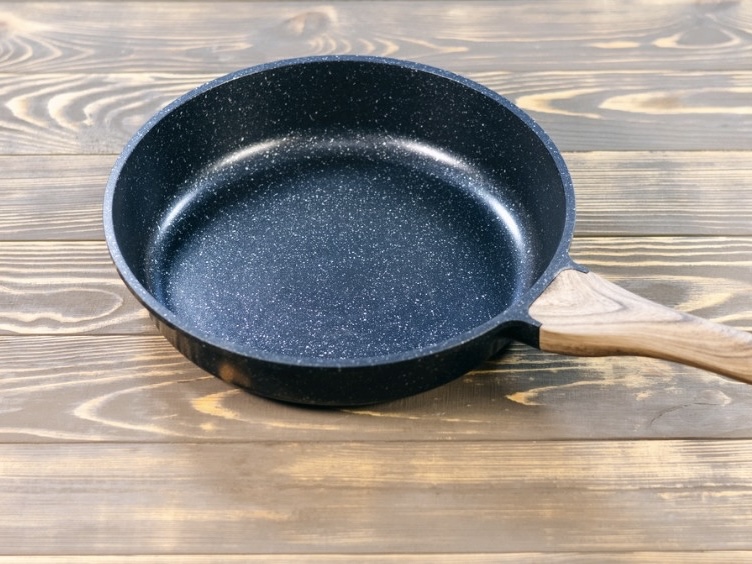
There are specialized medical-grade PTFE materials used in high-end medical equipment, such as sterile seals or artificial heart valves. There is also food-grade PTFE, specifically labeled as harmless to humans, which can be used as a lining for household baking utensils, such as non-stick pans and oven trays.
Spécifications du PTFE modifié de Hansa
- Description de la taille
- Propriétés du PTFE vierge
- Etched PTFE Properties
- Feuille de PTFE modifiée
| Taper | Size Description |
| Feuille moulée en PTFE | Regular size is Square: width x Length, from 150mm – 2000mm
Thickness: 4mm – 500mm |
| Feuille PTFE biseautée | Width 300,400,500,800,1000,1200,1300,1400,1500,1600,1800,2000,2200,2500,2700mm ,Length ≥200
Thickness: 0.1-6.5mm |
| PTFE Film | Thickness: 0.02-0.5mm
Length ≥100 |
| Feuille de PTFE expansé | Width and Length: regular 1500*1500
Thickness: 0.5-10mm |
| Propriétés | unité | Résultat |
| Densité apparente | g/m³ | 2.10~2.30 |
| Résistance à la traction (min) | MPa | 15.0 |
| Allongement à la rupture (min) | % | 150 |
| Résistance diélectrique (min) | KV/mm | 10 |
| Propriétés | Unité | Résultat |
| Densité | g/cm³ | ≥2.18 |
| Résistance à la traction | MPa | ≥30 |
| Allongement à la rupture | % | 300 |
| NO. | Filled Compound And | Résistance à la traction Mpa min | Force ultime % min | Compression Strength Mpa |
| Content By Wt | min | |||
| 1 | Fibre de verre 20% | 10 | 120 | 16 |
| 2 | Fibre de verre 25% | 10 | 100 | 16 |
| 3 | 20%Fibre de verre 5%Graphite | 10 | 120 | 16 |
| 4 | 60%Bronze | 10 | 80 | 20 |
| 5 | 15%Carbon Fiber | 11 | 130 | 16 |
| 6 | 24%Bronze 12%Glass Fiber | 9 | 100 | 16 |
| 6%Carbon | ||||
| 7 | 15%Glass Fiber 10% Poly – | 10 | 120 | 16.7 |
| imide5%Graphite |
Teflon and PTFE are essentially the same thing, both referring to the material polytetrafluoroethylene. The difference is that Teflon is a registered trademark, originally owned by DuPont, and now owned by Chemours, an independent company spun off from DuPont.
- Difficult to Process, High Cost: Due to PTFE’s unique properties, it has an extremely high melting point and requires special processing techniques, like “cold pressing,” which is time-consuming and requires specialized equipment. This makes PTFE expensive and challenging to process.
- Poor Creep Resistance: Compared to materials like nylon and PEEK, PTFE has lower hardness and rigidity. In practical applications, if PTFE is continuously under pressure, it may permanently deform over time.
- Decomposes and Releases Toxins at High Temperatures: When PTFE is exposed to temperatures above 260°C for long periods, it begins to break down and release toxic substances. At temperatures exceeding 350°C, the decomposition process accelerates, releasing harmful fumes.
- Non-Biodegradable: PTFE’s high thermal stability prevents it from naturally degrading. Recycling PTFE requires high temperatures, which can release toxic by-products, leading to environmental pollution and potential harm to human health.
The lifespan of PTFE depends on its application environment. Under clean conditions and normal operating temperatures, PTFE can last for 10-50 years. However, if it operates under high pressure for extended periods, its lifespan will be significantly shorter, possibly only 7-8 years, or even 4-6 years. Of course, this also depends on the grade of the PTFE material.
Currently, there are two methods for recycling PTFE:
- Mechanical Recycling: PTFE is ground into fine powder, compacted, and then sintered at a high temperature of 370°C.
- Chemical Recycling (also known as Pyrolysis): When exposed to temperatures over 400°C, PTFE decomposes into tetrafluoroethylene monomers.
After receiving the goods, you can quickly perform an acceptance inspection. First, check if the PTFE sheet is milky white and free of color variations. Secondly, measure its volume and weight to calculate the density of the PTFE sheet. If the density is within 2.1-2.2 g/cm³, it is considered acceptable. If you have sufficient time, you can immerse it in concentrated sulfuric acid solvent, observe it for 24 hours, then remove and weigh it. Compare the weight to the weight upon receipt; if the change rate is no more than 1%, and there are no cracks on the surface, it is considered acceptable.
PTFE, commonly known as “the king of plastics,” boasts excellent overall performance and is suitable for most applications. It also has a long service life, lasting 10-50 years or more. We can develop customized solutions for your specific project, providing personalized professional service to address your concerns.
Yes, PTFE is available in different grades, including general-purpose, food-grade, and medical-grade. Each grade is suitable for different applications. Furthermore, the raw materials for PTFE also vary, with different brands available from manufacturers such as DuPont and Daikin. In addition, there is both pure PTFE and recycled PTFE.
If you’re simply cutting PTFE sheets, you can do it yourself. For thin sheets, you can score the surface with a utility knife and then easily break it apart by hand; for thicker sheets, you’ll need a saw. First, secure the sheet, then mark the cutting line, and finally, saw along the marked line. However, if your project is large and involves a significant amount of PTFE sheets, you’ll need to use a CNC machine for cutting. This will greatly improve efficiency, but it may increase your costs.
Produits connexes
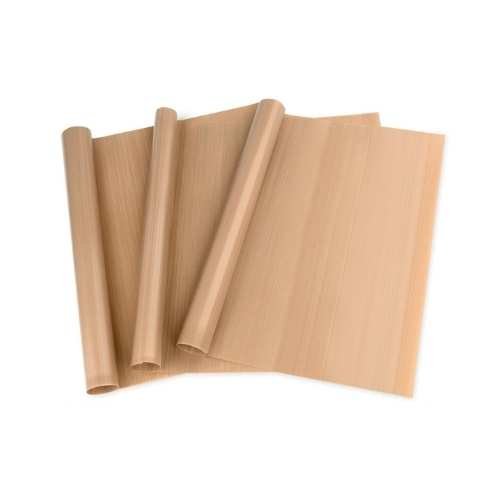

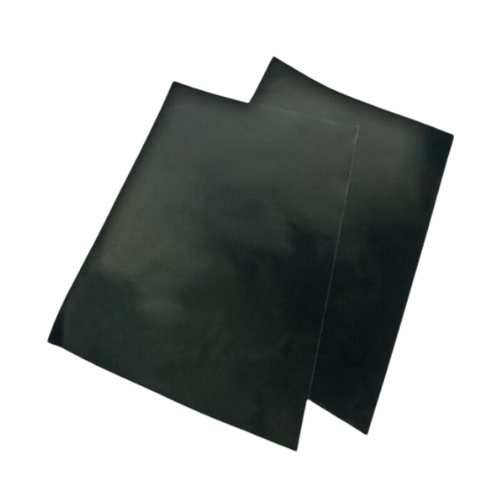
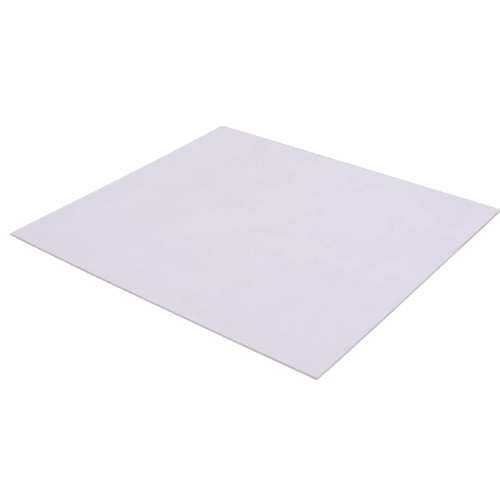

Feuilles de PTFE
Les feuilles de polytétrafluoroéthylène sont généralement appelées feuilles de PTFE. On les appelle aussi feuilles de Téflon. Bien sûr, les deux noms désignent le même produit, sauf que « Téflon » désigne le PTFE fabriqué par DuPont.
En général, ces feuilles sont constituées de liaisons fluor-carbone, d'où leur nom de polytétrafluoroéthylène.
En raison de leurs fortes liaisons carbone, ils sont considérés comme des feuillets moléculaires élevés, ce qui explique leur utilisation courante dans de nombreuses applications actuelles.
Types de PTFE Draps disponibles
Les feuilles de Téflon peuvent être classées selon des critères généraux grâce aux nombreuses options de personnalisation.
Idéalement, vous souhaiterez peut-être :
- Feuilles de PTFE avec adhésif – elles ont un substrat adhésif sur une surface
- Feuilles de PTFE découpées sur mesure – les PTFE sont découpés selon vos besoins spécifiques
- Feuilles d'épaisseur variable – vous pouvez choisir la feuille PTFE de 3 mm d'épaisseur ou de 100 mm d'épaisseur
En bref, les options disponibles dépendent des possibilités de personnalisation uniques. Plus important encore, elles déterminent également le prix de la feuille de PTFE.
Matériau en feuille de PTFE à usage général
Bien sûr, la personnalisation rend les feuilles de Téflon adaptées à des applications très spécifiques. Vous pouvez également opter pour des feuilles de PTFE à usage général.
| Propriété du matériau en feuille de PTFE | Notation |
| Résistance à la traction | Pauvre |
| résistant aux UV | Bien |
| Dureté | Moyennement doux |
| Résistance aux chocs | Bien |
| Dimensions | Cela varie, mais cela peut aller de 6 x 6 pouces à 48 x 48 pouces |
Feuilles de PTFE chargées de verre
Si vous recherchez des plaques offrant une résistance mécanique, une résistance aux chocs et à l'abrasion améliorées, optez pour celles en fibre de verre. Dans la plupart des cas, ces plaques contiennent environ 251 TP3T de fibres de verre.
Caractéristiques des feuilles de polytétrafluoroéthylène
Il existe de nombreuses raisons de choisir ces draps :
- La fusion élevée rend la résine parfaite pour la plupart des services continus
- À haute température, le PTFE reste stable. La plage de températures s'étend de -200 °C à +260 °C.
- Connu pour ses propriétés antiadhésives supérieures
- Propriétés d'isolation supérieures
- Le coefficient de frottement est relativement faible
- Meilleure résistance à la corrosion que le matériau plastique standard
- Ils sont hydrophobes – ils ont tendance à repousser l’eau
- Chimiquement inerte
- Sont approuvés par la FDA
- Sensible aux rayonnements gamma
Parfois, votre feuille de PTFE vierge ne présente pas toutes ces caractéristiques. C'est pourquoi il est nécessaire de la renforcer. Ces feuilles sont fabriquées à partir de résine de polytétrafluoroéthylène pur 100%.
Comparons deux feuilles intéressantes :
| Feuille de PTFE vierge | Feuille de PTFE mécanique |
| · Fabriqué à partir de résine de polytétrafluoroéthylène pure 100%
· Propriétés physiques élevées · Application normale · Sans additifs supplémentaires |
· Fabriqué à partir de résine de polytétrafluoroéthylène retraitée
· Faibles propriétés physiques · Applications hautes performances · Rempli d'additifs pour améliorer les propriétés |
Formes sous lesquelles vous pouvez expédier des feuilles de PTFE
Ces matériaux sont disponibles à plat ou en rouleaux. Les méthodes d'emballage varient selon l'épaisseur de la feuille.
Dans la plupart des cas, les rouleaux de feuilles de PTFE ont une épaisseur inférieure à 0,093 po. Dans le cas contraire, il est déconseillé de rouler des feuilles de polytétrafluoroéthylène d'épaisseur supérieure.
Utilisations
Vous pouvez usiner ou fabriquer la feuille de matériau PTFE pour réaliser de nombreuses pièces telles que :
- joints en PTFE
- douille en PTFE
- revêtement en PTFE
- plaque coulissante en PTFE
- Pièces d'isolation électrique en PTFE
- rondelles en PTFE

 French
  English
  Arabic
  Tibetan
  German
  Spanish
  Hindi
Hindi  Indonesian
  Italian
  Japanese
  Korean
  Dutch
Dutch  Portuguese
  Thai
Thai  Russian
  Swedish
  Chinese