


Nylon and rubber are two of the most used materials in industrial manufacturing. While they are both lightweight polymers and can easily be molded, there are differences in their physical properties and applications. This guide explores some of these differences to help you select the right material for your project.
What Are Nylon and Rubber?
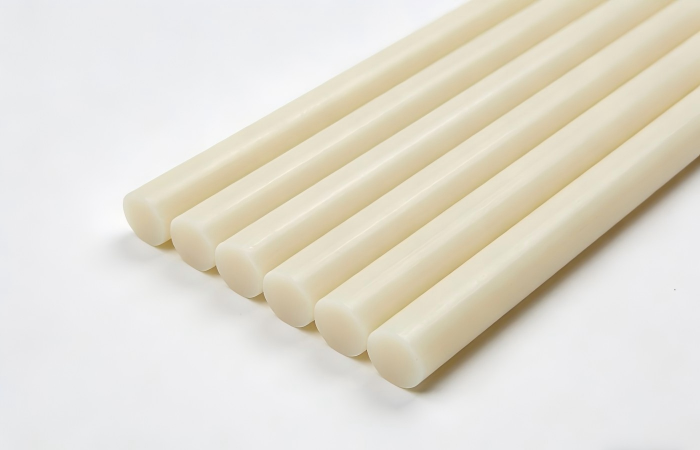
- Originally developed during World War II as a replacement for silk, nylon is a plastic material produced from chemicals. Widely known for its strength and heat resistance, the most common industrial grades of nylon are PA6 and PA66.
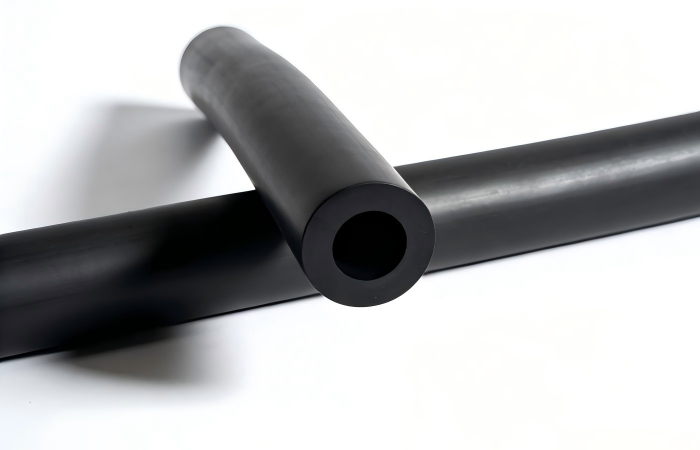
- Rubber, however, is a highly elastic soft material made from latex (natural) or petroleum (synthetic). It contains elastomer and is known for its ability to stretch and return to its original shape. Some of rubber’s industrial grades include NBR, EPDM, and SBR.
Nylon vs Rubber: Property Comparison
If you are a manufacturer, engineer, or investor trying to decide what to pick for your project between nylon and rubber, the table below gives you the key technical data you need to make the right choice:
| ملكية | Nylon (PA6 / PA66) | Rubber (NR / SBR / NBR) |
| قوة الشد | 70–85 MPa (PA66) | 15–30 MPa (NR) |
| الاستطالة عند الكسر | ~150–300% | Up to 800% |
| Continuous Operating Temp. | -40°C to +120°C | -50°C to +80°C (NR); up to +120°C (EPDM) |
| Abrasion Resistance | ممتاز | جيد |
| المقاومة الكيميائية | جيد | Moderate |
| Moisture Absorption | Moderate (PA66 < PA6) | Low |
| معامل الاحتكاك | ~0.2–0.4 | ~0.5–0.8 |
| Density (g/cm³) | 1.13–1.15 | 0.92–0.97 (NR) |
| Hardness (Shore) | Shore D 60–85 | Shore A 30–90 (grade-dependent) |
| Processability | Injection moulding, CNC, 3D printing | Vulcanisation, compression/transfer moulding |
Data references are ASTM D638, ISO 37, and manufacturer grade datasheets.
Which is Stronger? Nylon or Rubber
For industrial buyers, the outcome of the “strength” conversion should depend on what the application demands:
- If you are considering tensile strength and stiffness, nylon is stronger than rubber. Typical examples are gears and bushings
- If what you need to do requires elasticity and shock absorption, then rubber should be your go-to. Typical examples include gaskets, expansion joints and drive belts.
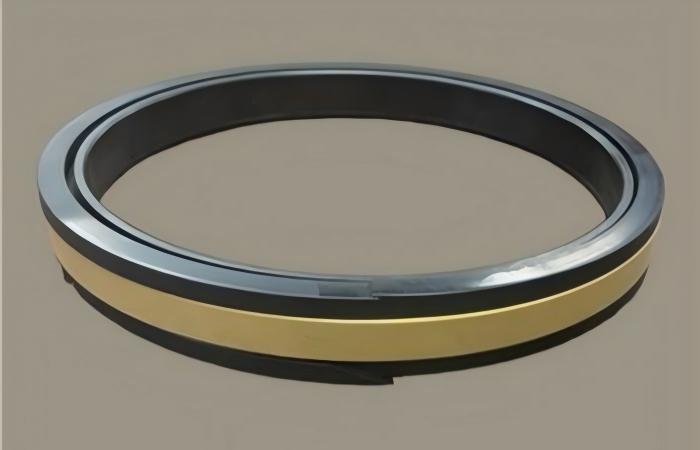
- In many industrial applications, nylon and rubber materials are used together. For example, a nylon structural housing works well with rubber sealing gaskets.
Common Industrial Grades: What to Specify When Ordering
Both nylon and rubber materials come in multiple grades with different performance profiles. Deciding on the correct grade in application is a very important decision.
Nylon Grades
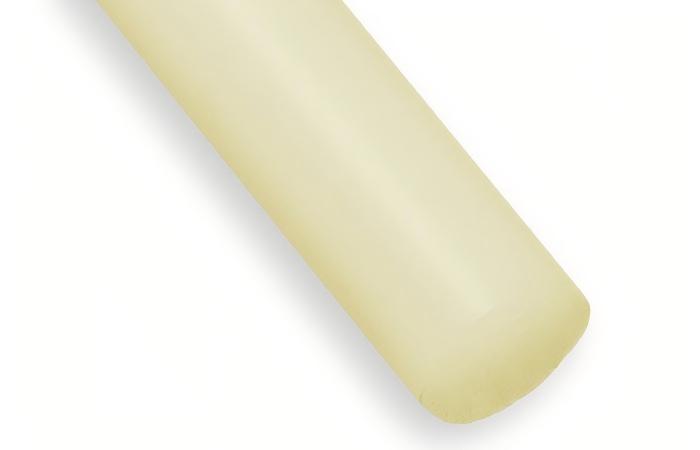
- PA6 – General-purpose grade. It has good mechanical properties and is typically used in gears, bushings, and structural parts.
- PA66 – Higher heat resistance (~120°C continuous). It is stiffer compared to PA6 and is preferred in the automotive and electrical industries.
- PA6 GF30 (Glass-Filled) – its 30% glass fibre reinforcement increases the tensile strength up to ~180 MPa. It is mostly used where maximum rigidity is required — for example, injection-moulded industrial parts.
Rubber Grades
- NR (Natural Rubber) – It has high tensile strength and tear resistance. Natural rubber is usually preferred for tyres.
- NBR (Nitrile Rubber) – Nitrile possesses excellent resistance to oils, fuels, and hydraulic fluids. NBR is a go-to choice in the oil & gas and automotive industries (o-rings and seals).
- SBR – SBR is a cost-effective general-purpose grade. It is widely used in conveyor belts and flooring where NR-level performance is not required.
Industrial Applications: Nylon vs Rubber Side by Side
Industrial Manufacturing
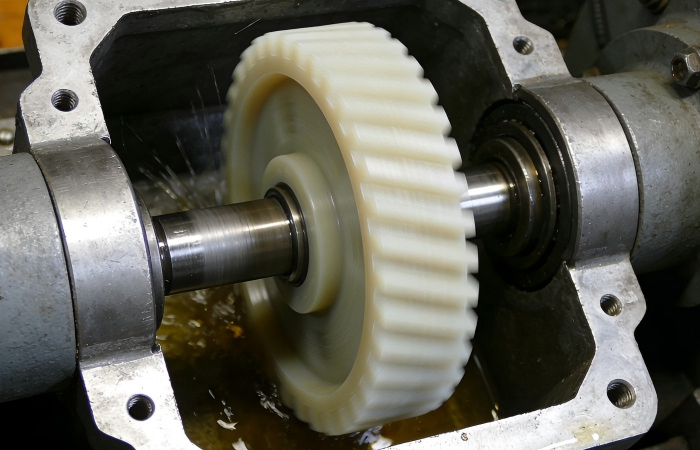
From an industrial manufacturing lens, nylon is better than rubber for machined and moulded components because:
- Dimensional stability: Nylon is a semi-crystalline thermoplastic in nature so its part can hold precise tolerances under load. This makes nylon more reliable for gears, cams, and other cases where rubber would deform.
- Machinability: Nylon is rigid compared to rubber and holds shape during machining so it can be CNC-machined to as tight as ±0.05mm. It is also very cost-effective for short runs and prototyping.
- Low friction without lubrication: Nylon’s low coefficient of friction (~0.2–0.4) helps to reduce the maintenance costs a whole lot in sliding components.
Heavy Industry and Construction
In heavy industrial processes and construction, understanding which material is suitable for specific applications is very important in deciding which to go for. Here are some of the applications:
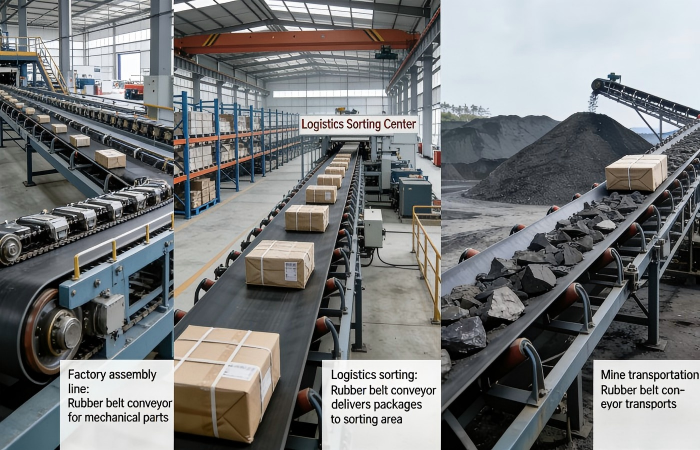
- Conveyor systems: Rubber belts are excellent for the belt surface not only for flexibility but for grip and impact resistance. Nylon works perfectly for rollers and structural pulleys which require load-bearing and abrasion-resistance.
- Pipework and valves: Rubber linings and gaskets are the best choices for corrosion protection as well as sealing. Nylon works best for valve bodies and structural pipe fittings that require pressure and load capacity.
- Construction equipment: Rubber components are applied in hydraulic systems where high-pressure fluid transfer is required while nylon components are perfect for pneumatic circuits.
Electrical and Electronics
Here are the applications of nylon and rubber in electrical systems:
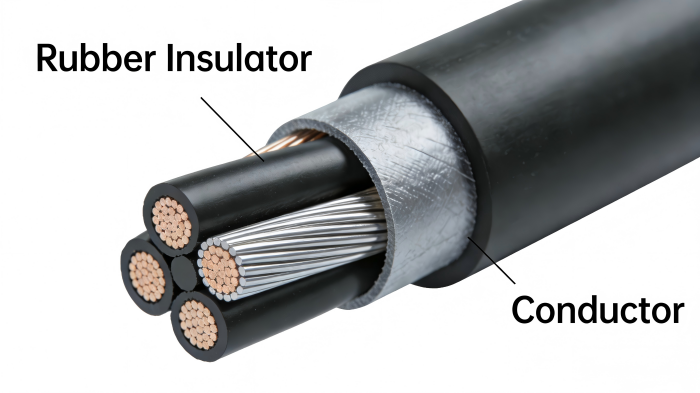
- Nylon (PA6/PA66): Nylon is typically used where you need a rigid insulating material that can also provide mechanical support. It is used in terminal blocks and connector shells.
- Rubber (EPDM / Silicone): Rubber, on the other hand, is preferred for flexible cable insulation as well as sealing components where cables must bend repeatedly without cracking.
Safety Equipment and Personal Protective Equipment (PPE)
Nylon and rubber are both primary materials used across PPE and safety equipment:
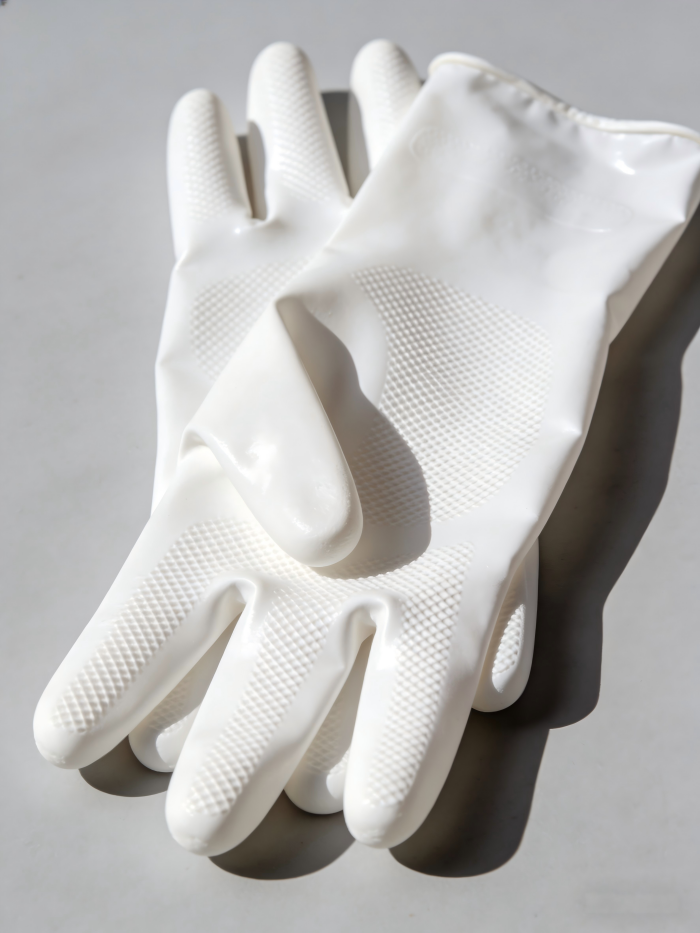
- Rubber: Rubber-based materials are used to produce chemical-resistant gloves (Nitrile for oil/solvent environments; neoprene for acid/alkali). Rubber is also used in production of hard hat liners and electrical insulating mats (usually rated under IEC 60903).
- Nylon: Nylon-based materials are typically used where tensile strength and impact protection are essential. Examples include hard hat shells and scaffolding buckles
خاتمة
Nylon and rubber are both essential materials in modern industry. As a manufacturer, engineer, or investor, you may be inclined to ask which material is suitable for a specific application. However, understanding the characteristics and applications of both materials ensures the right material is selected for the right purpose.
FAQs
Can nylon replace rubber for seals and gaskets?
Generally, no. Rubber elastomers are the best materials to use for seals and gaskets. They form a great seal against surface irregularities.
Which is better for outdoor industrial use — nylon or rubber?
The choice depends on the specific application. EPDM rubber is one of the best choices you could ever make when it comes to outdoor seals while nylon (UV-stabilised PA66) is best for outdoor structural fittings.
What rubber grade should I specify for oil and fuel resistance?
NBR (nitrile rubber) is the go-to for resistance to mineral oils, hydraulic fluids and fuels. For extreme oil resistance at very high temperatures, you can consider FKM (Viton)
What is the temperature limit for nylon vs. rubber in industrial applications?
Standard PA66 nylon has an operating temperature of up to ~120°C. However, glass-filled PA66 grades can be higher than this. Natural rubber (NR) has an operating temperature of up to ~80°C; EPDM can extend up to ~120°C and silicone rubber up to 180°C.
Which material is more cost-effective for high-volume industrial production?
Generally, nylon is considered more cost-effective for high-volume industrial production. Its thermoplastic nature makes it easier and less expensive to mold. Rubber moulding usually requires vulcanisation, which increases the cost of production.

 Arabic
  English
  Tibetan
  German
  Spanish
  French
  Hindi
Hindi  Indonesian
  Italian
  Japanese
  Korean
  Dutch
Dutch  Portuguese
  Thai
Thai  Russian
  Swedish
  Chinese